Written for a bar with a cabinet opening already framed. Six built-in kegerators ranked on front venting, keg capacity and where the CO2 cylinder actually goes.
Updated October 2026 · By Stephen V.
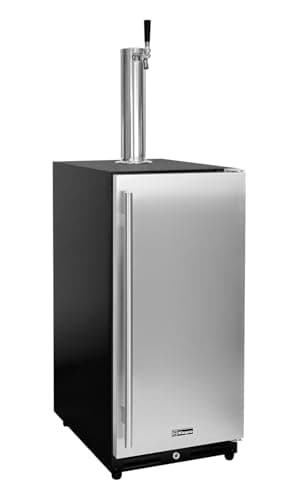
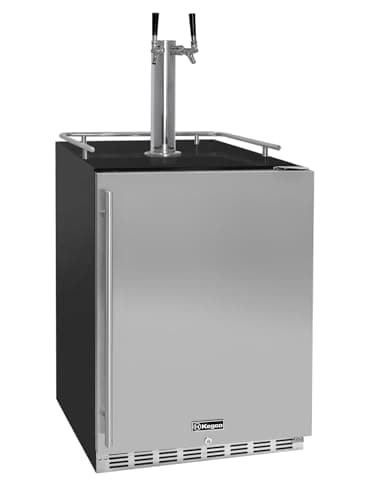
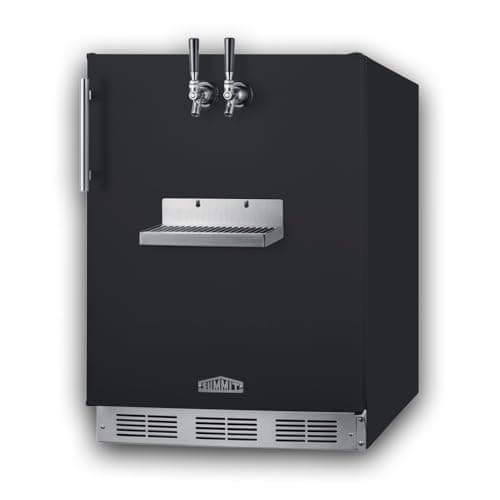
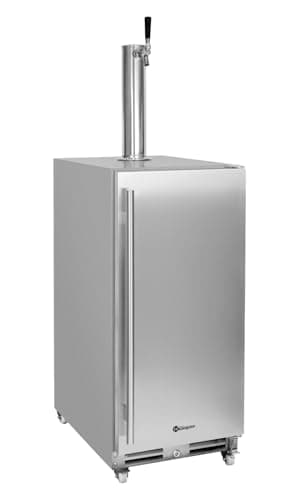
The best undercounter kegerator is the Kegco 15-inch built-in: a front-vented stainless cabinet that fits the 15-inch opening most home bars are framed for, from the brand that specializes in draft hardware rather than cabinets. For a wider opening and two beers on tap, the Kegco HK38BSU 24-inch dual-tap unit is the standard answer; Summit's 24-inch model is the one to buy if you do not want to drill a finished bar top; and the Kegco 15-inch outdoor unit is the only one here rated for a covered outdoor bar.
There is one specification that separates an undercounter kegerator from a freestanding one, and getting it wrong ruins both the appliance and the cabinetry. A built-in unit vents through the front, usually through a grille below or beside the door, so it can sit flush in a run of cabinets. A freestanding unit vents through the back or sides; enclose one and it runs hot, the compressor works permanently, the beer never gets properly cold and the unit fails early. Almost every kegerator sold is freestanding. Check for the words built-in or front-vented, and treat anything vague as freestanding.
The second thing to plan is the keg and the gas. A 15-inch cabinet takes a sixth barrel (sixtel) or a 5-gallon homebrew keg, not a half barrel; a 24-inch cabinet takes a full half barrel. Whichever you choose, the CO2 cylinder has to live somewhere — inside the cabinet, which costs keg room, or outside in the adjacent cabinet with the gas line routed through. Deciding that before the joinery is built is the difference between a tidy bar and a cylinder standing on the floor next to it.
We have not installed these units. The ranking is built from published venting and install ratings, cabinet widths, keg capacities, tap hardware and what ships in the box, plus owner-review consensus reported as other people's experience — see how we pick. Prices come live from Amazon and carry the date we verified them. Our main kegerator roundup covers the freestanding units.
The short answer
In a hurry? These are the picks we'd buy. Prices are live; tap a card below for the full reasoning.
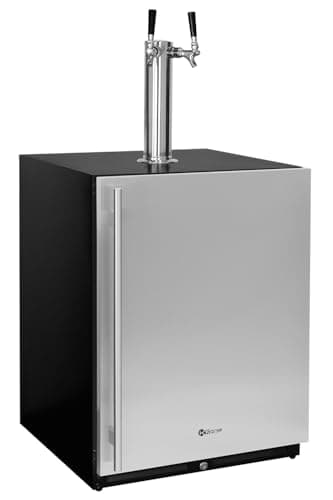
Kegco 24-in Built-In Dual-Tap Stainless Kegerator with Dispense Kit
A 24-inch built-in dual-tap kegerator supplied with the dispense kit — regulator, lines and couplers included, rather than assembled from a parts list.
Kegco 24-in Built-In Dual-Tap Stainless Kegerator with Dispense Kit
A 24-inch built-in dual-tap kegerator supplied with the dispense kit — regulator, lines and couplers included, rather than assembled from a parts list.
Width
24 in
Taps
Dual
Install
Built-in, right hinge
Includes
Dispense kit per listing
Pros
Dispense hardware included, so nothing is missing on install day
Built-in rated at the full 24-inch width
Two taps with a full half-barrel capacity
One order, one brand, one support line
Cons
Premium price for the bundled hardware
Right hinge fixed, so plan the door swing
A 24-inch built-in opening is a joinery decision, not a retrofit
Best for: A build where you want everything in one order.
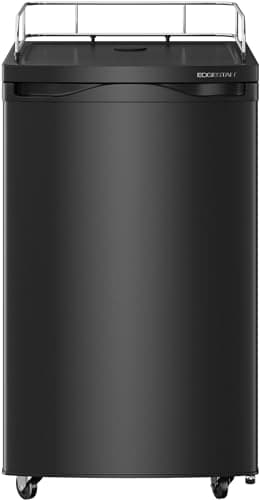
An ultra-low-temperature conversion refrigerator — the cheapest way to get a keg under a bar, as long as the cabinet is open at the back.
Type
Conversion refrigerator
Temperature
Ultra low temp
Hardware
Not included — buy to suit
Venting
Rear — not built-in rated
Pros
A fraction of the price of a built-in kegerator
You choose the tower, taps and regulator to suit the bar
Ultra-low temperature range, which is what draft beer needs
The usual starting point for a custom bar-front tap install
Cons
Not built-in rated — it needs rear and side air, so leave the cabinet open behind it
No draft hardware in the box at all
More planning and more parts than a complete unit
Best for: Putting taps through a bar front on a smaller budget.
Skip this
The budget traps that look cheap and cost you twice. We'd skip these.
A freestanding kegerator pushed into a cabinet opening
This is the mistake that this entire page exists to prevent. A freestanding unit rejects its heat out of the back and sides; sealed into cabinetry, it recirculates its own hot air, so the compressor runs continuously, the beer sits above its target temperature and foams at the tap, and the unit wears out years early. Nothing about the cabinet looks wrong, which is why people blame the beer. If a unit is not described as built-in or front vented, either leave real air gaps on three sides and above, or buy a built-in unit.
Planning the cabinet before deciding where the CO2 goes
A CO2 cylinder is around 18 inches tall for a 5 lb bottle and it has to stand upright. Inside a 15-inch kegerator it takes space that could have held a keg; outside, it needs a neighboring cabinet and a tidy route for the gas line. Both are fine, and both need to be decided before the joinery is cut, because retrofitting a gas-line penetration through a finished cabinet side is unpleasant work. Decide the cylinder's home on the drawing, not on install day.
How to choose (and what to skip)
Front venting is the whole decision
A built-in kegerator vents through a front grille and can be enclosed; a freestanding one cannot, whatever the cabinet looks like. This is the specification to filter on before anything else, and the one most buyers miss because nearly every kegerator on sale is freestanding. If a listing does not say built-in or front vented, assume it is not.
Match keg size to cabinet width
A 15-inch unit takes a sixth barrel or a 5-gallon homebrew keg; 24 inches takes a full half barrel or two smaller kegs. Decide which beer you actually buy before you frame the opening, because a half barrel is roughly 124 pints and goes flat long before a two-person household finishes it. For most home bars, a sixtel in a 15-inch cabinet is the better match to real drinking.
Decide how the beer leaves the cabinet
Three options. A tower through the bar top looks like a bar and means drilling a finished counter. Front-dispensing taps, like Summit's, need no hole at all but drip onto the cabinet face. A custom tower or shank through a bar front, usually on a conversion fridge, gives the most freedom and the most work. Pick one before the countertop is fabricated.
Measure the opening including clearances
Cabinet opening width, height and depth, plus whatever the manufacturer specifies for the front grille and the door swing. Check the hinge side: most of these units are right-hinge only, and a door opening into a wall is a permanent irritation. Allow for the cabinet floor being level, too — a kegerator that is not level dispenses unevenly.
Budget for the cleaning kit on day one
Draft lines need cleaning every few weeks to stay drinkable, and a line cleaning kit costs a tiny fraction of the appliance. An undercounter unit in finished cabinetry is harder to get behind than a freestanding one, which makes the discipline more important, not less. Our <a href="/guides/how-to-clean-a-kegerator">kegerator cleaning guide</a> covers the routine, and <a href="/guides/is-a-kegerator-worth-it">is a kegerator worth it</a> does the running-cost arithmetic.
What undercounter buys you over freestanding
Two things, and neither is beer quality. The first is a flush cabinet line: the kegerator sits in the run like a dishwasher instead of standing proud of it, which is the difference between a bar and a fridge next to a counter. The second is a usable countertop above it, since a built-in unit's top is not a heat-rejecting surface and can be built under stone or timber. What you give up is keg size at the 15-inch width, a little capacity to the CO2 cylinder, and flexibility — a built-in unit is part of the room, and moving it later means taking cabinetry apart.
Keg sizes, and the one most home bars should buy
A half barrel is 15.5 gallons, roughly 124 pints, and needs a 24-inch cabinet. A sixth barrel or sixtel is 5.16 gallons, about 41 pints, and fits a 15-inch cabinet. A 5-gallon homebrew keg is similar and is what most people with a brewing hobby use. Here is the practical argument for the smaller keg: tapped beer stays good for weeks under CO2, not months, so a half barrel only makes sense if your household genuinely drinks 120 pints before it tires of that beer. A sixtel means more variety and less waste, which is why the 15-inch cabinet is the right answer far more often than the spec sheet suggests.
Where the CO2 cylinder lives
Inside the cabinet is simplest and costs keg space; a 5 lb cylinder is around 18 inches tall and must stand upright. Outside is tidier and gives you a bigger cylinder, at the cost of a gas-line penetration through the cabinet side — drill it low, grommet it, and keep the run short and unkinked. Two safety notes that apply either way: strap or chain the cylinder upright so it cannot fall, and do not store it anywhere unventilated and sealed. A 5 lb bottle dispenses roughly five or six sixtels before it needs refilling, so it is not a frequent job.
Why built-in beer foams, when it does
Three causes, in order. Temperature: beer above about 40°F releases its CO2 at the tap, and a built-in unit that is actually a freestanding unit in a sealed cabinet runs warm, which is the whole reason venting matters. Pressure: too much applied pressure, or a regulator set for a different beer style, over-carbonates the pour. Line length and routing: a short line with no resistance pours fast and foamy, and a line that rises and falls traps gas. Fix them in that order, and check the simple thing first — a glass straight out of a hot dishwasher foams any beer.
Planning the rest of the bar around it
An undercounter kegerator is usually one of three or four appliances in a built bar, and the openings should be planned together: a kegerator, an undercounter beverage fridge for cans and bottles, an undercounter ice maker if there is a drain available, and often an undercounter wine fridge. Standard appliance widths are 15 and 24 inches, so framing openings to those dimensions keeps your options open even if you only fit one appliance now. Our home bar setup guide covers the order to do all of it in, and home bar ideas covers the layouts.
Frequently asked questions
What is the best undercounter kegerator?+
The Kegco 15-inch built-in, which is front vented and fits the 15-inch opening most home bars are framed for. For a 24-inch opening and two taps, the Kegco HK38BSU is the standard answer; Summit's front-dispensing 24-inch unit is the pick if you do not want to drill a finished bar top, and Kegco's outdoor-rated 15-inch model is the only one here for a covered patio bar.
Can you put a regular kegerator under a counter?+
Only if you leave real air gaps at the back, sides and top. A freestanding kegerator rejects heat out of the back and sides, so sealing one into cabinetry makes the compressor run continuously, the beer sit warm and foam at the tap, and the unit fail early. A built-in unit vents through a front grille and is designed to be enclosed.
What size keg fits in an undercounter kegerator?+
A 15-inch cabinet takes a sixth barrel (about 41 pints) or a 5-gallon homebrew keg. A 24-inch cabinet takes a full half barrel, around 124 pints, or two smaller kegs. For most households the sixtel is the better choice: tapped beer stays good for weeks rather than months, so a half barrel often goes stale before it is finished.
Where does the CO2 tank go in a built-in kegerator?+
Either inside the cabinet, standing upright, which costs keg space — a 5 lb cylinder is about 18 inches tall — or in an adjacent cabinet with the gas line routed through a grommeted hole. Decide which before the joinery is built. Strap the cylinder upright so it cannot fall, and do not seal it into an unventilated void.
Do you need a drain for an undercounter kegerator?+
No. Unlike an undercounter ice maker, a kegerator has no drain requirement — just power and a level cabinet floor. What it does need is front venting if it is being enclosed, somewhere for the CO2 cylinder, and a drip tray under the taps. That makes a kegerator a much easier retrofit into existing cabinetry than an ice maker.
How much does an undercounter kegerator cost to run?+
Electricity is comparable to a small fridge running continuously. The larger costs are the beer and the CO2: a 5 lb cylinder dispenses roughly five or six sixtels before refilling, which is not frequent. Draft beer works out cheaper per pint than bottles if the keg is finished while fresh — our kegerator worth-it guide runs the arithmetic.
Prices and availability shown here come from Amazon's live data and change often; we re-verify them regularly. Bar Bumper is an Amazon Associate and earns a commission on qualifying purchases at no extra cost to you. Read our full disclosure.