Written for ice that has started tasting stale, or a machine that has slowed down. Both are usually scale, and both are fixed by the same thirty-minute job.
Updated October 2026 · By Stephen V.
If your ice has started tasting stale or metallic, or the machine takes longer to fill the bin than it used to, the cause is almost always mineral scale in the water path. The fix is to run a nickel-safe ice machine cleaner through a cleaning cycle, scrub the reservoir and the ice chute, rinse until the water runs clear, and discard the first batch of ice. It takes about thirty minutes of attention and costs the price of a bottle of cleaner.
Two different things are going wrong at once and they need different treatments. Scale — the chalky white or gray deposit left by dissolved calcium and magnesium — builds up on the evaporator and inside the water lines. It does not smell, but it insulates the cold surfaces and narrows the water path, which is why the machine slows down before anything tastes wrong. Biofilm and mold grow in the standing water of the reservoir and the damp dark of the ice bin, and that is what you taste. A descaler handles the first. A brush and a rinse handle the second. Most jobs need both.
Before you start, one warning that matters more than anything else on this page: the cleaner has to be nickel-safe. Ice maker evaporators are commonly nickel- or tin-plated, and harsh agents — chlorine bleach above all — attack that plating, which can leave it pitted and flaking and expose the metal underneath. Purpose-made ice machine cleaners use mild acids, typically citric or phosphoric, precisely because they dissolve scale without doing that. Bleach does not belong anywhere near an ice machine.
Everything below applies to a countertop bullet machine, a nugget machine like the GE Opal, and a plumbed-in undercounter unit — the chemistry is identical and only the cycle button changes. Your manual is the authority on your specific machine's cleaning cycle and interval; this page is the method, the schedule and the products. Prices on the cleaners come live from Amazon with the date we checked them.
The short answer
In a hurry? These are the picks we'd buy. Prices are live; tap a card below for the full reasoning.
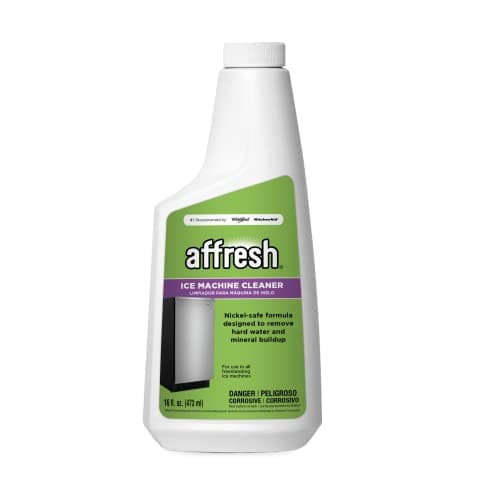
A 16 oz nickel-safe liquid descaler from a brand that specializes in appliance cleaners — universal compatibility, and the label sets a nine-month interval for a domestic machine.
Routine descaling of any countertop, nugget or undercounter machine
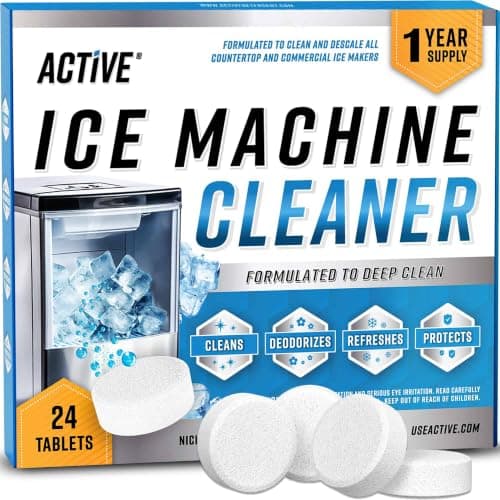
ACTIVE Ice Machine Descaler Tablets (24 tablets, nickel-safe)
Twenty-four pre-measured nickel-safe tablets — one tablet per cycle, no measuring, and enough in the box to keep a machine on schedule for a long time.
Anyone who has ever skipped a cleaning because measuring was a nuisance
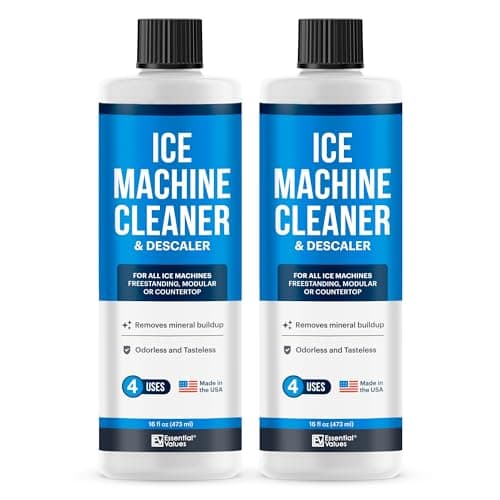
Two 16 oz bottles of cleaner and descaler in one purchase, listed as compatible with all major brands — the sensible buy if you have more than one machine to keep on schedule.
A home bar running both a countertop machine and an undercounter unit
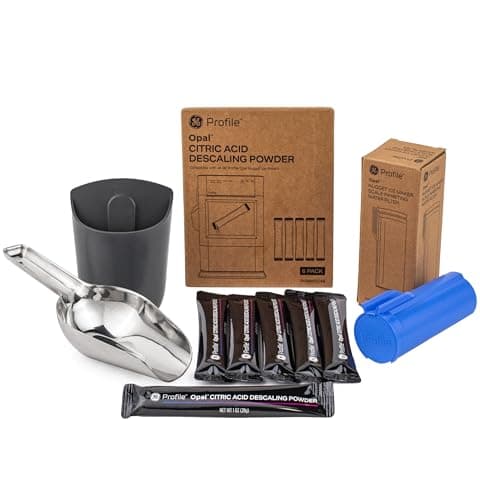
The maker's own kit: a scale-inhibiting water filter, six descaling powder packs, and a stainless scoop with a magnetic holder — it treats the cause as well as the symptom.
A 16 oz nickel-safe liquid descaler from a brand that specializes in appliance cleaners — universal compatibility, and the label sets a nine-month interval for a domestic machine.
Type
Liquid descaler
Size
16 fl oz
Nickel-safe
Yes
Label interval
Every 9 months
Compatibility
Universal
Pros
Nickel-safe formulation, which is the one specification that actually matters here
Affresh is an established appliance-care brand rather than a white-label bottle, so the formulation is consistent between purchases
Universal compatibility, so one bottle covers a countertop machine and an undercounter unit
The least expensive nickel-safe descaler on this page, and a 16 oz bottle covers several cycles
Cons
Liquid means you measure it yourself, and over-dosing wastes product without cleaning faster
The nine-month label interval is for typical water; hard water needs it far more often
A bottle of liquid in a bar cabinet is easier to knock over than a blister of tablets
Does nothing for biofilm in the bin — you still need a brush and a rinse
Best for: Routine descaling of any countertop, nugget or undercounter machine.
ACTIVE Ice Machine Descaler Tablets (24 tablets, nickel-safe)
Twenty-four pre-measured nickel-safe tablets — one tablet per cycle, no measuring, and enough in the box to keep a machine on schedule for a long time.
Type
Descaling tablets
Count
24 tablets
Nickel-safe
Yes
Listed for
Countertop and nugget machines
Named brands
Frigidaire, Opal, GE Profile, KitchenAid
Pros
Pre-measured, so the dose is right every time and the job takes one fewer step
Twenty-four tablets is a long supply — the box is the reason the schedule actually gets kept
Nickel-safe and listed specifically for countertop and nugget machines rather than commercial units
Tablets store indefinitely in a drawer with nothing to spill
Cons
One tablet is sized for a typical countertop reservoir; a larger undercounter machine may need two
Costs more than the equivalent volume in liquid
Tablets need to dissolve fully before the cycle starts, which adds a few minutes of waiting
Like every descaler here, it will not touch mold in the ice bin
Best for: Anyone who has ever skipped a cleaning because measuring was a nuisance.
Two 16 oz bottles of cleaner and descaler in one purchase, listed as compatible with all major brands — the sensible buy if you have more than one machine to keep on schedule.
Type
Liquid cleaner and descaler
Size
16 fl oz x 2
Compatibility
All major brands (listed)
Doubles as
Sanitizer step
Pros
Two bottles means the second machine, or the next cleaning, is already in the cabinet
Listed as both cleaner and sanitizer, so it covers more of the job than a pure descaler
Broad brand compatibility, which matters when a bar has machines from two makers
Two bottles in one purchase, so the per-ounce cost lands below buying the same volume as singles
Cons
Two bottles is more product than a single-machine household will get through before it ages
Liquid dosing again — you measure, and guessing wastes it
Costs more up front than the single Affresh bottle
Sanitizing claims vary by jurisdiction; follow the label's own contact time rather than assuming
Best for: A home bar running both a countertop machine and an undercounter unit.
The maker's own kit: a scale-inhibiting water filter, six descaling powder packs, and a stainless scoop with a magnetic holder — it treats the cause as well as the symptom.
Includes
Scale-inhibiting filter
Also includes
6-pack descaling powder
Plus
Stainless scoop + magnetic holder
For
GE Profile Opal nugget ice maker
Pros
The scale-inhibiting filter is the only item on this page that reduces how fast scale forms in the first place
Six descaling packs means roughly a year or two of scheduled cleanings for one purchase
First-party kit, so the chemistry and the dosing are matched to the machine
The scoop and magnetic holder solve the other Opal annoyance: no clean way to get ice out
Cons
Highest price on this page, and most of the value is only there if you own an Opal
Filters are a consumable — the inhibitor is spent after a few months and needs replacing
Not a cleaner for biofilm; the bin and chute still need a brush
Useless for any other machine, so it is the wrong buy if you might change brands
Best for: An Opal nugget machine on hard water.
#5Best for the half of the job a descaler cannot do
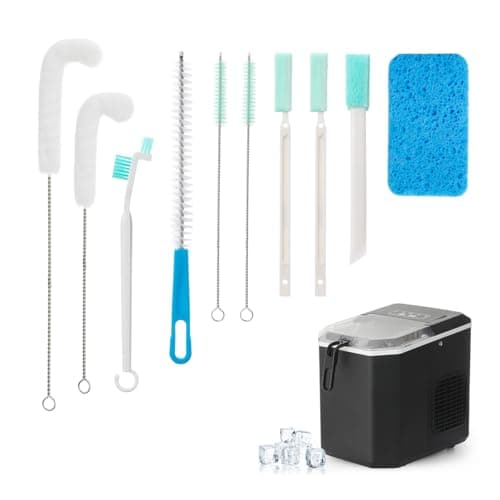
A ten-piece set of crevice brushes and a scrub sponge sized for countertop ice makers — the tools that reach the places biofilm actually grows.
Pieces
10
Includes
Crevice brushes, scrub sponge
Sized for
Countertop ice makers
Addresses
Biofilm, slime, residue
Pros
A descaler circulates through the water path but never scrubs anything — these reach the corners it cannot
The narrow crevice brushes fit the reservoir seams and the ice chute, which is where the smell comes from
Least expensive item on this page, and a set of brushes lasts for years
Means you stop improvising with a dish brush that is too big and a cloth that cannot reach
Cons
Brushes alone do nothing about scale — this is a companion to a descaler, not a substitute
Ten pieces is more than most machines need, and the surplus clutters a drawer
Brushes need rinsing and drying properly themselves or they grow the thing you are removing
Nothing here reaches inside a sealed water line on a plumbed machine
Best for: The reservoir corners, the ice chute and the drain hole.
Skip this
The budget traps that look cheap and cost you twice. We'd skip these.
Bleach, in any dilution
This is the mistake that ruins ice machines. Chlorine bleach can attack the nickel or tin plating on an evaporator, leaving it pitted and flaking and exposing the metal beneath to corrosion — and it leaves chlorine taste in ice for a long time afterward. Every purpose-made ice machine cleaner on this page is sold as <strong>nickel-safe</strong> specifically because bleach is not. If a cleaning guide tells you to run diluted bleach through an ice maker, stop reading it.
Plain white vinegar as a substitute for descaler
Vinegar is a mild acid and it will dissolve some scale, which is why it keeps getting recommended. Three problems: it is weak, so it needs long contact times to shift established scale; acetic acid is not what the plating specifications were written around, and makers will generally tell you to use their recommended cleaner; and the smell lingers in a plastic reservoir and ends up in the ice for several batches. A bottle of purpose-made descaler costs very little and does the job in one cycle.
Dish soap in the water reservoir
Detergent leaves a surfactant film on every surface it touches, and rinsing does not reliably remove it from a textured plastic reservoir. The result is ice that tastes faintly of soap for weeks. Use soap on the removable bin and the scoop if you like — rinsed thoroughly — but keep it out of the water path. The same rule applies to draft beer lines, for the same reason, which our <a href="/guides/how-to-clean-a-kegerator">kegerator cleaning guide</a> covers in more detail.
Leaving water in the machine between uses
This is not a cleaning mistake, it is the reason you are cleaning. Standing water in a warm reservoir is where biofilm starts, and a machine left full for a month will smell before a machine used daily for a year. If an ice maker is going unused for more than a few days, drain the reservoir, empty the bin, and leave the lid open so it dries out. Half the cleaning jobs on a countertop machine would never have been needed.
How to choose (and what to skip)
Nickel-safe is the only specification you have to check
Ice maker evaporators are commonly nickel- or tin-plated, and the reason purpose-made cleaners advertise nickel-safe on the front of the bottle is that the alternative damages that plating. Nickel-safe formulations use mild acids — citric or phosphoric — which dissolve calcium scale and leave the metal alone. Any product that does not say it, or that contains chlorine bleach, is the wrong product for this machine regardless of how well it cleans a kettle.
Tablets or liquid is a question about whether you will actually do it
Liquid is cheaper per cycle and you measure it. Tablets cost more and you do not. In practice the schedule is the hard part of ice maker maintenance, not the chemistry, so the format that removes a step is often the one that gets used. If you have ever put off a cleaning because you could not find the measuring cup, buy the tablets and stop thinking about it.
On hard water, a filter beats more cleaning
Descaling removes scale that has already formed. A scale-inhibiting filter reduces how fast it forms, which is a different and better intervention if your water is hard. GE sells one in the Opal kit here; for other machines, a simple filter jug of water poured into the reservoir achieves much of the same thing for almost nothing. Distilled water eliminates the problem entirely and is worth it for a machine that is used occasionally, though it gets expensive for daily use.
Buy brushes as well as chemistry
Nothing in a bottle scrubs. A descaling cycle circulates solution through the pump, the lines and the evaporator, and it does an excellent job there — but biofilm grows in the reservoir seams, around the water-level sensor, in the ice chute and in the bin, none of which the cycle touches with any force. A set of narrow crevice brushes is the cheapest item on this page and it is the difference between a machine that is descaled and a machine that is clean.
Check your own manual for the interval before trusting a label
The published figures disagree because the machines do. Affresh's label sets nine months for a domestic ice maker. GE's cleaning-kit guidance for the Opal is around every six months, sooner depending on water conditions, and the machine signals when it is due. Reports from hard-water households describe needing a cycle every few weeks. Your manual wins; and if your machine has an indicator, that wins over the manual.
What you need before you start
A nickel-safe ice machine cleaner or descaler — liquid or tablets, sized to your reservoir
Narrow crevice brushes and a soft sponge that reach the reservoir corners and the ice chute
A clean towel, and somewhere to put the ice that is currently in the bin
Your machine's manual, for the cleaning-cycle button sequence and the dose it expects
About thirty minutes, most of which is the machine running on its own
How to clean a countertop ice maker, step by step
Unplug it, empty the ice bin completely, and tip out whatever water is in the reservoir. Do not start a cleaning cycle on top of old water.
Take out everything removable — the bin, the scoop, the drain plug, any filter — and wash those separately in warm water. Rinse thoroughly and set them aside to dry.
Mix the descaler to the dose on its label with fresh water, and fill the reservoir to the fill line. Over-dosing does not clean faster; it just leaves more to rinse out.
Plug the machine in and run its cleaning or self-clean cycle. If it does not have one, run a normal ice-making cycle and discard every piece of ice it makes — that ice is cleaning solution.
While it runs, brush the parts the solution never reaches hard enough: the reservoir seams, around the water-level sensor, the ice chute and the inside of the lid. This is where the smell lives.
Drain the machine completely, refill with clean water, and run a full cycle. Discard that ice too. Repeat the rinse cycle a second time — two rinses is the difference between clean ice and ice that tastes of citric acid.
Wipe the exterior and the gasket, reassemble the dry parts, and run one final batch. Discard it. The next batch is the one you drink.
Nugget machines: the same job with one extra step
A nugget machine makes ice by compressing flaked ice through an auger rather than freezing cubes on prongs, so there is more wetted mechanism and more surface for scale to grab. The cleaning chemistry is identical, but two things differ in practice. The auger assembly and the chute carry residue that a cycle will loosen and not remove, so they need brushing every time rather than occasionally. And the water path is longer, which means nugget machines reward a second rinse cycle more than bullet machines do. If you are deciding whether a nugget machine is worth this upkeep in the first place, our guide on whether nugget ice makers are worth it is the honest answer, and the nugget machine roundup covers which ones have self-clean cycles.
Plumbed and undercounter machines
A plumbed-in machine has no reservoir to empty, which removes the biggest source of biofilm and adds a different problem: you cannot see the water path at all. These units generally have a dedicated cleaning cycle that you start with a button sequence, and they expect the cleaner to be poured into a specific point rather than a tank. Follow the manual rather than this page for the dosing. What you still have to do by hand is the bin — and on a machine with a drain, the drain line, which is the part that smells when it is neglected. Our undercounter nugget roundup covers which units ship with a drain pump, because a pumped drain line needs flushing on the same schedule as the machine.
How often to clean it
There is no single correct interval, and the published ones disagree because water hardness varies by more than the machines do. Affresh's own label sets every nine months for a domestic ice maker. GE's Opal cleaning-kit guidance is around every six months, or sooner depending on water conditions, and the machine lights up when it thinks it is due. Owners on hard water report needing a cycle every few weeks. The practical rule: follow your manual, obey the machine's indicator if it has one, and treat these three symptoms as a cleaning due regardless of the calendar — ice tasting stale or metallic, cycles taking noticeably longer, or visible white deposits in the reservoir or on the evaporator.
What cleaning will not fix
Two complaints get blamed on dirt and are not. The first is ice melting in the bin overnight: every countertop machine stores ice in an insulated bin rather than a refrigerated one, so a bin made in the evening is water by morning no matter how clean the machine is. That is a design property, and our page on ice makers that keep ice frozen covers the two real fixes. The second is cloudy ice, which is trapped air rather than contamination — freezer-style ice is cloudy because it freezes from all sides at once, and the only fix is a machine or tray that freezes in one direction, which our clear ice maker roundup explains. If a machine is still slow after a thorough descale, the next suspects are a clogged filter, a kinked supply line or a failing pump — not more cleaner.
The short version
Buy a nickel-safe descaler — the Affresh liquid if you are happy measuring, the ACTIVE tablets if measuring is the reason you keep putting this off — and a set of crevice brushes, because the chemistry and the scrubbing each do half the job. Run the cleaning cycle, brush the reservoir and chute while it runs, rinse twice, and throw away the first batch of ice. Then drain the machine when it is not in use, which is the habit that stops you needing to do any of this very often.
Frequently asked questions
How do you clean an ice maker?+
Unplug it, empty the bin and the reservoir, and wash the removable parts separately. Mix a nickel-safe ice machine cleaner to the dose on its label, fill the reservoir, and run the machine's cleaning cycle — or a normal cycle, discarding every piece of ice. Brush the reservoir seams and the ice chute while it runs, then drain, refill with clean water and run two rinse cycles, discarding that ice too.
How often should you clean an ice maker?+
It depends on your water and your machine. Affresh's label sets nine months for a domestic ice maker; GE's Opal cleaning-kit guidance is around six months or sooner depending on water conditions, and the machine indicates when it is due. On hard water it can be a matter of weeks. Clean it regardless of the calendar if ice tastes stale, cycles are getting slower, or you can see white deposits.
Can you use vinegar to clean an ice maker?+
It will dissolve some scale, but it is a poor substitute. Acetic acid is weak, so it needs long contact times on established scale; it is not what plating specifications are written around; and the smell lingers in a plastic reservoir and carries into several batches of ice. A purpose-made nickel-safe descaler costs very little and does it in one cycle.
Can you use bleach in an ice maker?+
No. Chlorine bleach can attack the nickel or tin plating used on ice machine evaporators, leaving it pitted and flaking and exposing the metal underneath to corrosion, and the chlorine taste persists in ice long afterward. This is exactly why purpose-made ice machine cleaners advertise themselves as nickel-safe. Never put bleach in an ice maker.
Why does my ice taste bad?+
Usually biofilm in the reservoir, the ice chute or the bin rather than scale, because scale itself has no taste. Standing water in a warm reservoir is where it starts. A descaling cycle alone will not fix it — you need to brush the reservoir seams, the area around the water-level sensor and the chute, then rinse twice and discard the first few batches.
Why is my ice maker slow or not making ice?+
Scale is the first suspect. Mineral deposits insulate the cold surfaces and narrow the water path, so output falls long before anything tastes wrong — a descaling cycle often restores it completely. If a thorough descale does not help, look at the water filter, the supply line and the pump rather than running more cleaner through it.
Does an ice maker need a nickel-safe cleaner?+
Yes, if the evaporator is nickel- or tin-plated, which is common. Nickel-safe cleaners use mild acids such as citric or phosphoric that dissolve calcium scale without degrading the plating. Harsher agents, bleach in particular, can pit and flake it. It is the one specification worth checking on the bottle before you buy.
Should I leave water in my ice maker when I am not using it?+
No. Standing water in a warm reservoir is the main cause of the off taste people blame on the machine. If it is going unused for more than a few days, drain the reservoir, empty the bin, and leave the lid open so the inside dries out. That one habit prevents most of the cleaning jobs a countertop machine ever needs.
Prices and availability shown here come from Amazon's live data and change often; we re-verify them regularly. Bar Bumper is an Amazon Associate and earns a commission on qualifying purchases at no extra cost to you. Read our full disclosure.