Seven small things that change what comes out of the shaker, ranked on what each one actually does. The jigger first, the decorative brass last, and a budget pick that costs less than a cocktail.
Updated November 2026 · By Stephen V.
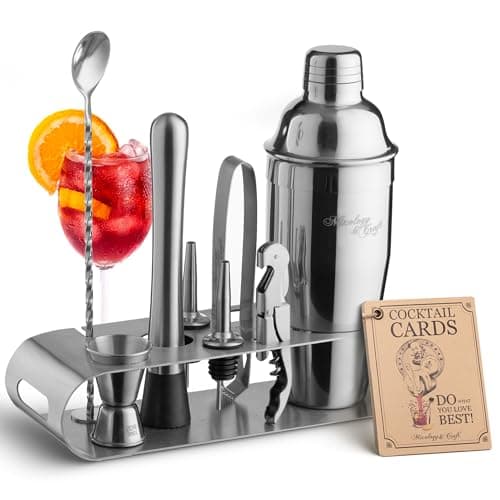
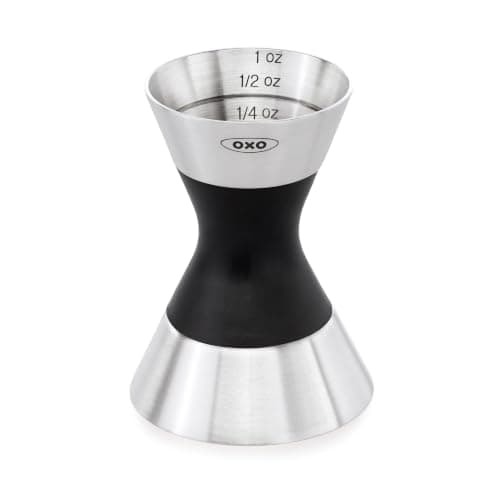
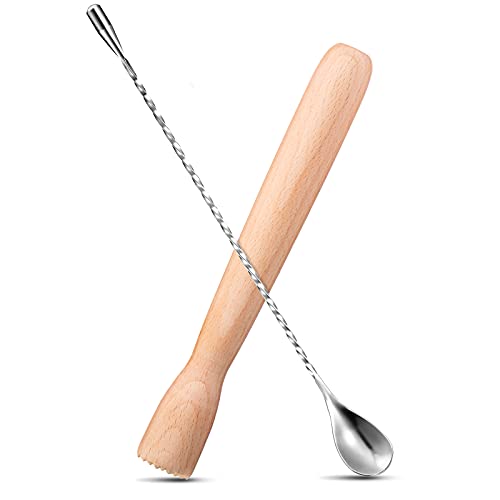
Start with the Mixology & Craft bar set on its stand. It covers the shaker, strainer, jigger, spoon and muddler in one order at a price below what buying three of those separately costs, and the stand is the reason the tools stay on the bar instead of in a drawer. If you already own a shaker and want the one accessory that most changes a drink, it is the OXO double jigger - measuring is the difference between a cocktail and a guess. The budget pick is the Briout twisted bar spoons, the cheapest item here and genuinely useful rather than a filler.
This page is deliberately about the small tools, not the appliances. A fridge, an ice maker and a kegerator are the equipment; our home bar equipment pillar covers those. Glassware is its own category and a large one - see the glassware guide. What is left is the handful of objects that sit on the bar top and decide whether the drink you make tastes the same twice, and that is what is ranked here.
How we judged these
One criterion dominates, and it is not quality. What does this object change about the drink? A jigger changes every drink you make. A copper-plated pineapple ice bucket changes none of them. The ranking is in that order, and the scores below reflect it.
Effect on the drink. Accuracy of measurement, dilution control, temperature, and whether the tool lets you repeat a drink you liked. Anything that only affects how the bar looks scores low here no matter how well made it is.
Published capacity or measurement markings. A jigger with interior markings at several volumes is a different tool from one with two ends and nothing else. A mixing glass with a published capacity tells you how many drinks it stirs. We quote only the figures the listings publish.
Whether it survives a home bar. These things get wet, knocked and put away damp. Stainless is the default for a reason; wood needs oiling; plated finishes wear at the edges where a hand holds them.
Whether you will actually use it. The honest test. A tool that lives in a drawer behind a blender is a tool you do not own, which is why a stand and a bar mat score better here than their price suggests.
We have not run blind tastings of drinks made with each tool, and nobody can tell you from a listing whether one stainless jigger pours more cleanly than another. The ranking is built from published capacities and markings, materials, what each tool does to a drink, and owner-review consensus reported as other people's experience — see how we pick. Prices come live from Amazon with the date we verified them.
The order to buy these in
If you are starting from nothing, buy in this order and stop whenever the drinks you make are good enough. A shaker, a jigger and a strainer make every shaken drink there is - that is the whole set, and the all-in-one kit covers it. A mixing glass and a bar spoon add every stirred drink, which is most of the classics worth learning. A muddler adds the handful of drinks built on fruit or herbs. A bar mat adds nothing to the drink and a great deal to the bar top.
What is not on that list is instructive. Fancy strainer sets, cocktail smokers, pourers, picks, stirrers, branded ice moulds and anything described as a gift set are all downstream of this page. Some of them are genuinely good - our cocktail smoker roundup covers one category honestly - but none of them belongs in a first order.
The short answer
In a hurry? These are the picks we'd buy. Prices are live; tap a card below for the full reasoning.
Mixology & Craft Cocktail Shaker Set with Metal Stand
A full cocktail toolkit on a metal stand - shaker, strainer, jigger, spoon and muddler - for less than buying three of them separately, and the stand keeps them in reach.
$29.9920% offPrice as of November 22, 2026·#addisclosure
2
Most useful single tool
OXO Steel Double Jigger
A steel double jigger with interior markings - the single object that turns guessing into measuring, which is most of what separates a good drink from an inconsistent one.
The one accessory that changes every drink you make
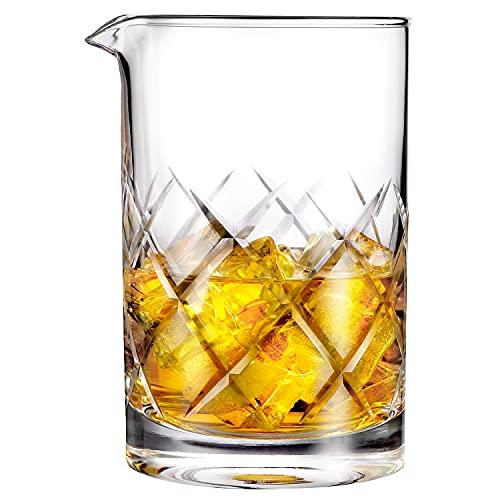
A 24-ounce crystal mixing glass with a heavy base - the one tool that unlocks stirred drinks properly, at a price well below the Japanese-style glasses.
$29.9920% offPrice as of November 22, 2026·#addisclosure
Mixology & Craft Cocktail Shaker Set with Metal Stand
A full cocktail toolkit on a metal stand - shaker, strainer, jigger, spoon and muddler - for less than buying three of them separately, and the stand keeps them in reach.
Format
Multi-piece kit with stand
Covers
Shaker, strainer, jigger, spoon, muddler
Material
Stainless steel
Storage
Metal display stand
Pros
Every tool needed for a shaken or stirred drink in one order, which is the fastest route from no bar to a working one
The stand is the underrated part: tools on a stand get used, tools in a drawer get forgotten, and that is the difference between owning a bar and owning a box
Stainless throughout, so nothing in the set is damaged by being put away damp
Cheaper than buying a decent jigger, strainer and shaker individually, which makes the spoon and muddler effectively free
Cons
Kit tools are compromises: the jigger is a two-sided cone rather than a marked multi-measure, and the OXO jigger here is a better tool on its own
The shaker is a cobbler-style three-piece, whose cap jams when it gets cold - a Boston shaker is easier to work with once you know what you are doing
No mixing glass, so stirred drinks still mean using the shaker tin
The stand takes a surprising amount of bar-top footprint
A steel double jigger with interior markings - the single object that turns guessing into measuring, which is most of what separates a good drink from an inconsistent one.
Type
Double jigger
Markings
Interior, multiple volumes
Material
Stainless steel
Maker
OXO
Pros
Measuring is the highest-leverage thing in cocktail making - a drink you measured is a drink you can make again, and a drink you poured by eye is not
Interior markings mean several usable volumes rather than just the two cone capacities, which is the difference between a jigger and a measuring cone
OXO builds kitchen tools as its entire business and this one has the thumb-grip waist that stops a wet jigger slipping
Cheap enough that there is no argument for not owning one, even if you own a kit already
Cons
Interior markings are hard to read at a glance in low bar lighting, which is the standing criticism of every marked jigger
A double cone drips down the outside when you pour from the smaller end
Steel markings wear with dishwasher use over years
Does nothing on its own - it is only useful next to a shaker and a recipe
Best for: The one accessory that changes every drink you make.
A 24-ounce crystal mixing glass with a heavy base - the one tool that unlocks stirred drinks properly, at a price well below the Japanese-style glasses.
Capacity
24 oz (published)
Material
Crystal glass
Base
Weighted
Use
Stirred cocktails
Pros
Spirit-forward drinks are stirred rather than shaken because shaking aerates and clouds them - a mixing glass is what lets you make them correctly
A published 24-ounce capacity is enough to stir two drinks at once, which is the volume that actually matters at home
A weighted base is the difference between stirring a drink and chasing a glass across the bar
Glass lets you see the dilution, which is the one part of stirring you have to judge by eye
Cons
Glass breaks, and a mixing glass lives in the wettest, most crowded part of a bar top
Plain pressed glass rather than the cut Yarai pattern, which is a looks difference rather than a function one but a visible one
Needs a bar spoon to be useful at all, so it is really a two-item purchase
A 24-ounce glass is large on a small bar cart
Best for: Every classic that should not be shaken.
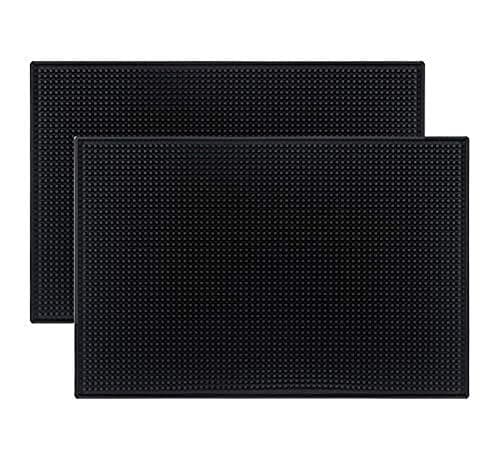
Two 18 by 12 inch rubber service mats - the accessory that does nothing for the cocktail and saves the surface you make it on.
Size
18 x 12 in (published)
Quantity
2 (published)
Material
Rubber
Use
Service and drying
Pros
A ribbed rubber mat catches spills, drips and condensation rings, which on a wooden or stone bar top is the difference between a bar that ages well and one that stains
A published 18 by 12 inches is a real service area rather than a coaster, and two of them cover a build station and a drying station
Rubber grips, so the shaker tin stops skating when you strain into a glass
Doubles as a drying mat for glassware, which is the job it quietly does most
Cons
Changes nothing about the drink, which is why it ranks below every tool above it
Rubber holds a smell if it is put away wet, and it will be put away wet
Ribbed mats trap citrus pulp in the channels and need rinsing rather than wiping
Two large mats take most of a small bar cart's top surface
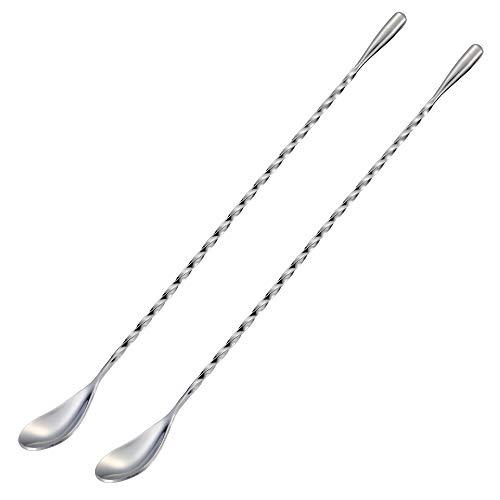
Two 12-inch twisted bar spoons for less than the price of a cocktail - the cheapest thing on this page and the correct partner for a mixing glass.
Length
12 in (published)
Quantity
2 (published)
Pattern
Twisted shaft
Material
Stainless steel
Pros
A twisted shaft is a functional design, not decoration - it lets the spoon rotate smoothly between your fingers so the ice turns instead of clattering, which is what controls dilution
A published 12 inches reaches the bottom of a 24-ounce mixing glass, which a teaspoon or a kit spoon does not
Two spoons means one stays at the bar and one goes in the kitchen, and the second one is free
Costs less than a single cocktail and improves every stirred drink you make
Cons
Only useful alongside a mixing glass - on its own it is a long spoon
Thin-gauge steel at this price flexes if you lever against a jammed ice block
No weighted or disc end, which some people prefer for layering
The twist traps sugar syrup and needs rinsing rather than wiping
Best for: The cheapest tool here that genuinely changes a drink.
Skip this
The budget traps that look cheap and cost you twice. We'd skip these.
Decorative gift sets in a presentation box
The category is full of plated, boxed sets priced on how they look wrapped rather than on what the tools do. The jigger in them is usually unmarked, the strainer is usually a slotted spoon, and the plating wears off the handles within a year of real use. If the tools are for you, buy the stainless kit on this page; if they are a present, buy the same kit and keep the difference.
Buying accessories before glassware
A measured, properly diluted drink in the wrong glass is still a good drink. The reverse is not true. If the budget only stretches to one of the two, buy the glassware - our <a href="/guides/what-glassware-do-you-need-for-a-home-bar">glassware guide</a> covers the four shapes that cover almost everything, and the <a href="/bar-gear/best-whiskey-glasses">whiskey glasses</a> and <a href="/bar-gear/best-highball-glasses">highball glasses</a> roundups cover the two that get used most.
A pour spout on every bottle at home
Free-pour spouts exist because commercial bartenders count to a measure and need speed. At home they let the bottle drip, collect dust in the open neck and remove the one habit worth building, which is reaching for the jigger. Buy the jigger and leave the caps on.
A second strainer before a mixing glass
Fine-mesh strainers are genuinely useful, and they are the third or fourth purchase rather than the second. A mixing glass unlocks a whole category of drinks - every stirred classic - while a fine strainer improves the texture of drinks you can already make. Get the category first and the refinement second.
What home bar accessories do you actually need?
Four things make every drink most people want: a shaker, a jigger, a strainer and a mixing glass with a long spoon. Everything else is either a refinement on those or a tool for a specific drink. The all-in-one kit on this page covers the first three; the mixing glass and spoon are two more cheap purchases, and at that point your bar can make almost any cocktail in a standard book.
The reason to buy the jigger even if you own a kit is worth stating plainly. A cocktail is a ratio. Change the ratio and you change the drink, and poured by eye the same recipe comes out differently every time - which is why home drinks are inconsistent in a way restaurant drinks are not. Measuring is the single habit that fixes it, and it costs about as much as one drink out.
Shaken or stirred, and why you need both tools
Shake anything with juice, dairy, egg or syrup in it. Shaking chills fast, dilutes hard and aerates, which is what gives a sour its texture and its slight cloudiness. Stir anything that is only spirits, vermouth and bitters. Stirring chills more gently and keeps the drink clear and heavy, which is the whole point of a martini or a Manhattan - shake one and you get a cloudy, over-diluted version of it.
That split is why a mixing glass is not a luxury: without one, every stirred drink is made in a shaker tin where you cannot see the dilution. A 24-ounce glass and a 12-inch spoon together cost very little and open up most of the classic canon. If you want to go further into shaker types, our Boston versus cobbler shaker comparison covers which tin to own, and the cocktail shaker roundup ranks the shakers themselves.
Where the money is worth spending, and where it is not
Spend on the jigger, because accuracy compounds across every drink. Spend on the mixing glass, because it is glass and the cheap ones chip. Spend on the shaker, because a tin that seals and releases cleanly is the difference between enjoying making a drink and dreading it.
Do not spend on plated finishes, which wear exactly where your hand holds them. Do not spend on boxed sets, where the box is a real fraction of the cost. And do not spend on anything whose job is to be photographed - a copper mug collection and a cocktail smoker are both legitimate purchases once the four core tools are in place, and both are poor first ones. For the stuff that is genuinely furniture rather than tooling, our bar cart roundup is the page.
Our verdict
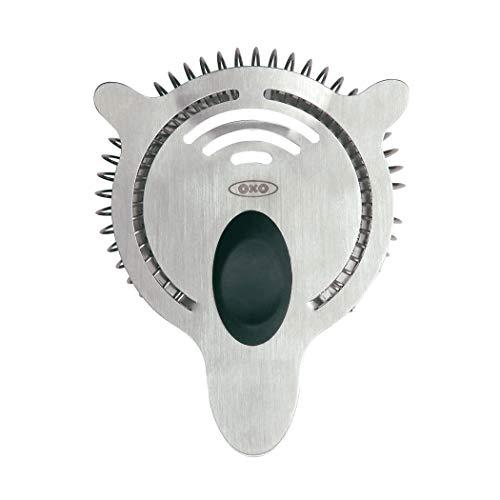
Buy the Mixology & Craft kit to go from nothing to a working bar in one order, then add the OXO jigger because the kit's jigger is the kit's weakest piece. Add the Hiware mixing glass and the Briout spoons together to unlock stirred drinks, the OXO strainer if you are building the set piece by piece, and the Patelai muddler if mojitos are part of the plan. Buy the Tebery mats last and only because your bar top deserves them.
Two pages worth reading alongside this one. How to set up a home bar covers the order to buy everything in, including the appliances this page leaves out, and what to stock on a bar cart covers the bottles - which is the part that actually decides what you can make.
Frequently asked questions
What home bar accessories do I actually need?+
Four things cover almost every cocktail: a shaker, a jigger, a strainer, and a mixing glass with a long bar spoon. An all-in-one kit covers the first three cheaply; the mixing glass and spoon are two more inexpensive purchases. A muddler adds the drinks built on fruit and herbs. Everything beyond that is refinement.
Is a jigger really necessary?+
It is the single most useful accessory on this page. A cocktail is a ratio, and poured by eye the same recipe comes out differently every time - which is why home drinks are less consistent than bar drinks. A marked jigger costs about as much as one cocktail out and fixes that permanently.
Do I need a mixing glass if I have a shaker?+
If you drink martinis, Manhattans, Negronis or anything else that is only spirits and vermouth, yes. Those drinks are stirred rather than shaken because shaking aerates and clouds them and dilutes harder. You can stir in a shaker tin, but you cannot see the dilution, which is the one part of stirring you judge by eye.
What is the difference between shaking and stirring a cocktail?+
Shake anything containing juice, dairy, egg or syrup: shaking chills fast, dilutes hard and aerates, which gives a sour its texture. Stir anything that is only spirits, vermouth and bitters: stirring chills gently and keeps the drink clear and heavy. Shaking a martini produces a cloudy, over-diluted version of it.
Are cocktail gift sets worth buying?+
Usually not for yourself. Boxed, plated sets are priced on presentation: the jigger is typically unmarked, the strainer is often a slotted spoon, and the plating wears off the handles within a year of real use. A plain stainless kit on a stand costs less and the tools are better.
What is a bar mat for?+
Catching spills, drips and condensation rings so your bar top does not stain, and stopping a shaker tin skating while you strain. A ribbed rubber mat also doubles as a glass drying mat, which is the job most home ones quietly do. It changes nothing about the drink, which is why it belongs at the end of the shopping list rather than the start.
Prices and availability shown here come from Amazon's live data and change often; we re-verify them regularly. Bar Bumper is an Amazon Associate and earns a commission on qualifying purchases at no extra cost to you. Read our full disclosure.