Barbell vs dumbbells: which to buy first for a home gym
A barbell buys you more strength per dollar. Dumbbells buy you a gym that fits in a bedroom and cannot drop on your chest. The right answer depends on three things, and none of them is which one is “better”.
Updated October 2026 · By Stephen V.
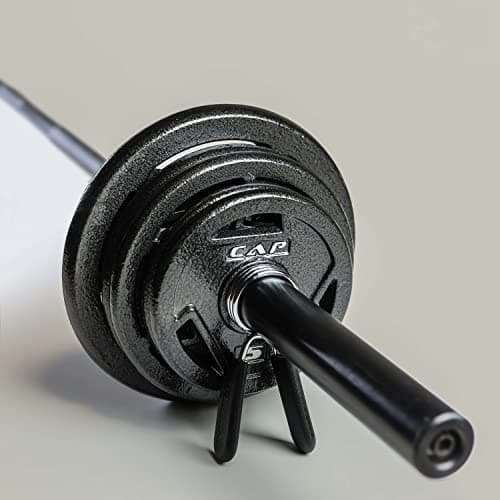
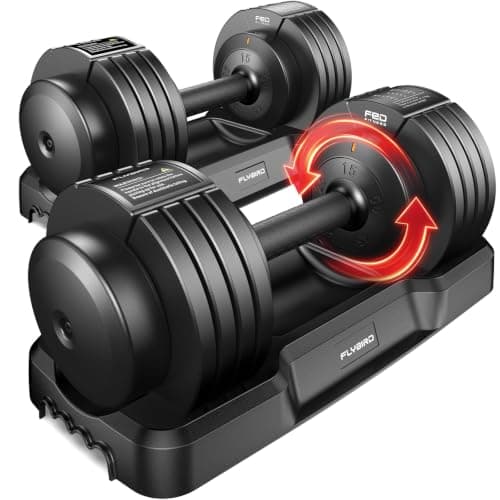
If you have a dedicated space with a rack and a bench, buy the barbell: the CAP Starter Olympic Weight Set — a 7 ft bar plus 110 lb of plates in one box — is the cheapest route to heavy squats, presses and pulls that exists. If you do not have that space, or you train alone and the idea of a loaded bar over your face bothers you, buy adjustable dumbbells instead, and the FLYBIRD DB2 pair at up to 55 lb per hand is the one to get. Those are the two honest answers, and which one applies to you is decided by floor space, not by training philosophy.
Start with the money, because it is the part people get wrong. A barbell set is dramatically cheaper per pound of iron. A starter Olympic set gets you a bar and over a hundred pounds of plates for roughly what a single pair of mid-range adjustable dumbbells costs, and plates are the cheapest weight you can buy — they are shaped lumps of cast iron with a hole in them. Adjustable dumbbells have selector mechanisms, housings and moulded parts, so you pay for engineering as well as mass. If your goal is “the most weight for the least money”, the barbell wins and it is not close.
Then the hidden cost, because it changes the answer. A barbell is not usable on its own. To squat you need a rack or stands; to bench you need a bench and ideally safeties; to deadlift on a hard floor without cracking it you want a mat. By the time a barbell is a working gym it has brought three more purchases and a permanent footprint with it. A pair of dumbbells is usable the moment it is out of the box, in a bedroom, with nothing else, and it goes back in a cupboard afterwards. That is the real comparison: a barbell system against a dumbbell pair.
And the third factor, which matters more in a home gym than anywhere else: what happens when a rep fails and nobody is there. A failed dumbbell press ends with two weights on the floor beside you. A failed barbell bench press ends with a loaded bar on your chest, and the only things between you and that are safety arms you have to own and set correctly. Our guide to lifting alone safely covers the mechanics; for the purposes of this page it is a genuine argument in the dumbbells' favour.
The short answer
In a hurry? These are the picks we'd buy. Prices are live; tap a card below for the full reasoning.
CAP Barbell Starter Olympic Weight Set (7 ft bar + 110 lb plates)
A 7 ft bar, 110 lb of Olympic plates and collars in one box, at a cost per pound no dumbbell can approach. This is the cheapest serious strength purchase on the site.
a garage or spare room where the gym can live permanently
Up to 55 lb per hand in a footprint the size of two shoeboxes, which is enough load for most people's pressing and all of their accessory work without a rack or a spotter.
a bedroom, apartment or shared space with no room for a rack
$269.995% offPrice as of October 6, 2026·#addisclosure
3
Cheapest way to start
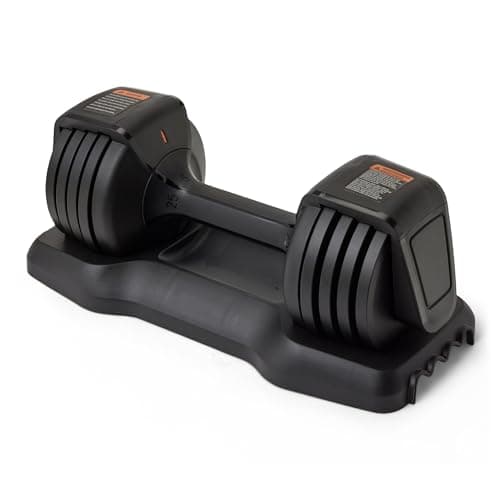
Amazon Basics Adjustable Dumbbell (25 lb)
A single 25 lb adjustable dumbbell is the lowest-risk entry into home training there is: buy two, train for a month, and find out whether you need a gym or a habit.
testing whether you will actually train before spending real money
Fixed rubber hex pairs are the answer to a question people stop asking once they own a barbell: what do I use for rows, carries, lunges and presses without reloading plates?
a gym that already has a bar and needs one reliable pair of fixed weights
CAP Barbell Starter Olympic Weight Set (7 ft bar + 110 lb plates)
A 7 ft bar, 110 lb of Olympic plates and collars in one box, at a cost per pound no dumbbell can approach. This is the cheapest serious strength purchase on the site.
Type
Bar + Olympic plates
Plates
4 x 5 / 4 x 10 / 2 x 25 lb (per listing)
Bar
7 ft, 28 mm, black powder coat
Also included
Spring clip collars
Total weight
110 lb of plates (per listing)
Pros
The best cost per pound of any weight purchase on this site. Plates are cast iron with a hole in them and they are priced accordingly
One box gets you squatting, pressing, rowing and deadlifting. Nothing else here trains the big lifts at the loads they need
Expands by adding plates, not by replacing anything. The bar you buy at the start is the bar you still use at twice the strength
Powder coat over steel handles a garage better than chrome does, which matters in an unheated space
Olympic 2-inch plates fit every bar in this category, including the trap bar and EZ curl bar, so later specialty bars cost you the bar only
Cons
110 lb of plates plus a 35 lb bar is 145 lb total, which a reasonably strong person will out-squat within months. Budget for more plates sooner than you expect
Unusable without a rack. On its own it does deadlifts, rows and floor presses — useful, but not the gym you are picturing
A cheap starter bar has a modest capacity, light knurling and sleeves that develop play. It is a bar to learn on, not a bar to end on
Needs real floor space permanently: a 7 ft bar is 7 ft long whether you are using it or not, plus loading room at both ends
Cast iron plates chip paint and rust at the bore in a damp garage — our rust guide covers the maintenance this set quietly requires
Best for: a garage or spare room where the gym can live permanently.
$269.995% offPrice as of October 6, 2026·#addisclosure
FLYBIRD DB2 Adjustable Dumbbells (55 lb pair)
Up to 55 lb per hand in a footprint the size of two shoeboxes, which is enough load for most people's pressing and all of their accessory work without a rack or a spotter.
Type
Adjustable dumbbells (pair)
Weight
Up to 55 lb per hand
Footprint
Two dumbbells' worth
Best for
Full-body strength training
Replaces
A rack of fixed pairs
Pros
55 lb per hand is 110 lb of total load in a press, which is a genuinely useful ceiling for most people's upper-body work
Usable immediately, anywhere, with no rack, no bench and no spotter. That is the whole case for dumbbells and it is a strong one
Replaces roughly a dozen fixed pairs, which is the only reason adjustable dumbbells justify their price at all
Unilateral work comes free. Single-arm presses, rows, split squats and carries all train the imbalances a barbell lets you hide
Stores out of sight. A barbell gym announces itself in a room; a pair of dumbbells goes under a desk
Cons
Several times the cost per pound of the barbell set above. You are paying for the selector mechanism, not for iron
55 lb per hand will not load a squat or a deadlift anywhere near hard enough once you are reasonably strong. The lower body is where dumbbells run out first
Adjustable dumbbells are mechanisms, and mechanisms fail. A dropped adjustable dumbbell is a repair; a dropped cast iron plate is a scratch
Changing weight mid-session takes seconds rather than instantly, which makes drop sets and supersets fiddlier than with fixed pairs
Bulkier at the ends than a fixed dumbbell of the same weight, which makes some positions — deep flyes, tight rows — awkward
Best for: a bedroom, apartment or shared space with no room for a rack.
A single 25 lb adjustable dumbbell is the lowest-risk entry into home training there is: buy two, train for a month, and find out whether you need a gym or a habit.
Type
Single adjustable dumbbell
Max
~25 lb per hand (per listing)
Adjust
Quick-adjust selector
Sold as
Single — buy two for a pair
Footprint
Desk-drawer small
Pros
The cheapest honest starting point on this site. Two of these cost less than almost any other way into resistance training
25 lb per hand covers every accessory movement and most beginners' pressing for the first couple of months
Amazon Basics is a returns-friendly house brand, so a failed experiment costs you nothing but the postage
Small enough to live in a drawer, which removes the last excuse for not training
Cons
Sold as a single dumbbell. Check the cart twice — people buy one and discover it when it arrives
25 lb per hand is a ceiling you will hit fast on presses and immediately on anything for legs
No upgrade path. When you outgrow it you buy something else entirely rather than adding to it
House-brand selector mechanisms are the part most likely to develop rattle over a year of use
Best for: testing whether you will actually train before spending real money.
$46.9921% offPrice as of October 6, 2026·#addisclosure
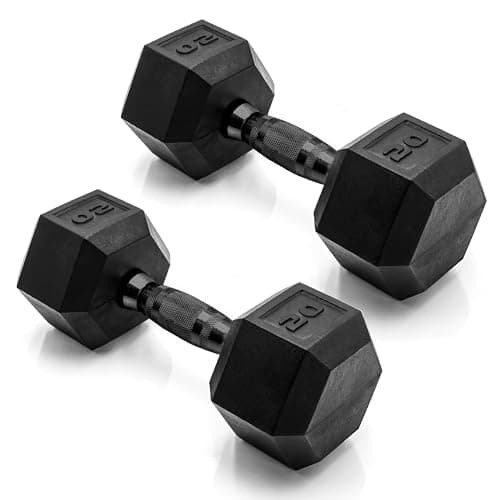
CAP 20 lb Rubber Hex Dumbbells (pair)
Fixed rubber hex pairs are the answer to a question people stop asking once they own a barbell: what do I use for rows, carries, lunges and presses without reloading plates?
Type
Fixed rubber hex pair
Weight
20 lb pair (this listing)
Adjust
None — fixed weight
Finish
Rubber-coated hex heads
Lifespan
Effectively permanent
Pros
Nothing to fail. A rubber hex dumbbell is iron in a rubber jacket and it will outlast every mechanism on this page
Instant weight changes with no selector, which is what makes supersets and drop sets actually work
Hex heads do not roll, so they stay where you put them and they are stable for push-ups and rows
Cheapest per pound of any dumbbell format, by a wide margin, as long as you only need one or two pairs
Cons
One weight, forever. A full set of fixed pairs costs more and takes more space than any adjustable pair
20 lb is an accessory weight, not a training weight, for most people's presses
Needs a rack or the floor. Fixed pairs multiply fast and a pile of them is how garages become obstacle courses
Rubber coating on budget dumbbells can smell strongly for the first few weeks in a closed room
Best for: a gym that already has a bar and needs one reliable pair of fixed weights.
Skip this
The budget traps that look cheap and cost you twice. We'd skip these.
Buying a barbell before you have anywhere to put it
A 7 ft bar needs about nine feet of clear length to load plates at both ends, plus a rack, plus a bench, plus somewhere the whole thing can stay set up. If you are planning to assemble and disassemble a barbell gym in a living room every session, you will stop training within a month. Buy dumbbells, train for six months, and move to a bar when you have the space. Our page on how much space a home gym needs has the real figures.
A full set of fixed dumbbells to replace a barbell
Fixed pairs are the cheapest dumbbells per pound and the most expensive dumbbells per gym. Covering 10 to 50 lb in fixed pairs costs several times a good adjustable pair, needs a rack to store, and still will not load a squat. Buy one or two fixed pairs as accessories alongside something else; do not try to build a gym out of them.
Spinlock dumbbell handles with 1-inch plates
They look like the obvious budget answer: cheap handles, cheap plates, adjustable. In practice you spend thirty seconds spinning collars for every weight change, the collars work loose under load, and the 1-inch plates fit nothing else you will ever buy. See our Olympic vs standard explainer for why the 1-inch standard is a dead end.
How to choose (and what to skip)
Cost per pound is the number that decides it on a budget
Olympic plates are the cheapest weight money can buy, because a plate is a casting with a hole in it and nothing else. Adjustable dumbbells cost several times as much per pound because you are also buying a selector mechanism, a housing and a cradle. If your constraint is money and you have the space, the barbell set is the obvious purchase: the same spend buys you two to three times as much iron. If your constraint is space, cost per pound stops being the relevant number entirely, because a barbell you cannot set up has a cost per pound of infinity.
Count the whole system, not the first item
This is where barbell-first advice goes wrong online. The bar and plates are the cheap part. A usable barbell gym is bar, plates, a rack or stands, a bench, and flooring, which together cost several times the set and occupy a permanent corner of a room. A dumbbell gym is the dumbbells, and optionally a bench. Price both as systems before you decide, and be honest about whether the rack and the bench are purchases you will actually make this year or ones you will keep meaning to make.
What each one cannot train
Dumbbells run out on the lower body first. Once you can squat for sets with 55 lb in each hand, the limit is how much weight you can get into position, not how strong your legs are, and no adjustable dumbbell on the market fixes that. A barbell runs out on unilateral work: single-arm presses, single-leg loading and anything that exposes a left-right imbalance are all easier and better with dumbbells. Most complete home gyms end up owning both, which is why the real question is only ever which one comes first.
Training alone changes the maths
A failed dumbbell rep is two weights on the floor. A failed barbell bench press is a loaded bar on your chest, and the only safe way to train that lift alone is inside a rack with the safeties set at the right height every single time, or with a rack you can roll the bar off. This is not a reason never to buy a barbell — it is a reason that the rack is not optional, which puts it back into the barbell's true cost. Our guide to lifting alone safely is worth reading before you buy either.
Noise, floors and neighbours
Barbells are loud. Plates clang when they are loaded, bars ring when they are racked, and a deadlift set down on a concrete floor travels through a building. Dumbbells are quieter but not silent, and a dropped dumbbell is a point load on a floor rather than a spread one. If you are above somebody, dumbbells plus a mat is the combination that keeps the peace; our page on reducing home gym noise covers what actually works and what only looks like it should.
The upgrade path, which only one of them has
A barbell set grows by addition: you buy more plates, then a rack, then a bench, then specialty bars, and the original bar stays in use the whole way. Adjustable dumbbells grow by replacement: when you outgrow 55 lb per hand your only move is a more expensive pair. That asymmetry is the strongest long-term argument for the barbell, and the reason we put it at the top of this page despite the dumbbells being the easier purchase. If you expect to still be training in five years, buy the thing that compounds.
Decide it in three questions
Can the gym stay set up? If yes, barbell. If the equipment has to be put away after every session, dumbbells.
Will you buy a rack this year? If no, dumbbells — a barbell without a rack is a deadlift-and-row machine, which is half a gym.
Are legs or upper body the priority? Legs push you towards the bar, because dumbbells cannot load a squat heavily. Upper body and general conditioning are perfectly well served by dumbbells for years.
Plates. The cheapest weight per pound. Cast iron costs what the iron costs; see cheap weight plates and cast iron vs bumper plates for the two formats and why the cheap one is usually right at home.
Bars. Cheap for a starter bar, expensive for a bar with real capacity and knurl. A budget bar is genuinely fine for a good while — our budget barbell roundup sets out where the limits are.
Adjustable dumbbells. Expensive per pound, cheap per square foot. You are buying the mechanism and the space saving.
Fixed dumbbells. Cheap per pair, ruinous per set. Buy one or two pairs for accessories; never build a gym out of them.
The rack. The real gatekeeper of the barbell route. Rack vs stands covers the cheapest way through it.
What most complete home gyms end up with
Both, in a predictable order. Bar and plates first, because they are cheap and they train the lifts that build the most strength. A rack and a bench next, because they are what make the bar usable. One or two pairs of fixed dumbbells after that for rows, carries and accessory work. And eventually a specialty bar — usually a trap bar — because it adds a whole lift for the price of a bar. The cheapest widening of all comes before any of that: a landmine attachment costs about as much as one plate and adds a press, a row and a rotation to the bar you already own. That is the sequence our complete budget home gym build lays out with prices at each step.
The reverse order is just as valid when space is the constraint, and nobody should feel talked out of it. Adjustable dumbbells, then a bench, then bands or a suspension trainer for pulling, then a pull-up bar. That gym fits in a bedroom, makes almost no noise, and will take a beginner a very long way. What it will not do is let you squat heavy, and that is the only thing you are giving up.
Brands worth knowing in both camps
In plates and bars, CAP is the default budget answer in the US and the one with the widest stock and the easiest spares. In adjustable dumbbells, FLYBIRD and the Amazon house brands dominate the low end, and the gap between the cheap and the premium mechanisms is real but narrower than the price difference suggests. Our budget home gym brands guide goes through who actually makes what, which is useful in a market where the same factory output appears under four different names.
One last note on buying second-hand, because it changes this comparison more than any product choice. Cast iron plates are the single best used buy in fitness — they are indestructible, they never go out of date, and they routinely sell for a fraction of retail. Adjustable dumbbells are one of the worst, because the mechanism is the part that wears and you cannot inspect it properly. If the barbell route is even slightly tempting, read buying used home gym equipment before you buy anything new.
Frequently asked questions
Should I buy a barbell or dumbbells first for a home gym?+
A barbell if the gym can stay set up and you will own a rack; dumbbells if it cannot or you will not. The barbell gives far more weight per dollar and a much higher strength ceiling, but it is only usable as a system with a rack, a bench and floor protection. Adjustable dumbbells work immediately in any room, store out of sight and are safe to push hard on alone.
Are dumbbells enough to build muscle without a barbell?+
Yes, for a long time and for most people. Dumbbells press, row, curl, lunge, split squat and carry, and they do unilateral work better than a barbell does. Where they run out is heavy lower-body loading: once you can squat with 55 lb in each hand for sets, your legs are limited by how much weight you can hold rather than how strong they are. That is the point at which a barbell starts to matter.
Is a barbell cheaper than dumbbells?+
Per pound of weight, dramatically. A starter Olympic set with a 7 ft bar and over 100 lb of plates costs roughly what one pair of mid-range adjustable dumbbells does. As a complete gym the gap closes, because the barbell needs a rack, a bench and flooring to be fully usable, and those cost more than the set itself. Compare systems rather than items.
Can you do squats with dumbbells?+
You can, and goblet squats, split squats and Bulgarian split squats are all genuinely hard with moderate dumbbells. What you cannot do is load a two-legged squat heavily, because the limit becomes getting the weight into position. Single-leg variations are the honest workaround: they halve the load requirement by halving the number of legs doing the work.
Do I need a rack if I buy a barbell?+
For squats and bench press, effectively yes — and especially if you train alone. Without a rack a barbell still does deadlifts, bent-over rows, floor presses, overhead presses from the floor and cleans, which is a real training programme but not a complete one. Budget for stands or a rack as part of the barbell decision rather than as a later upgrade.
Which is safer to train with alone?+
Dumbbells, clearly. A rep you cannot finish ends with weights on the floor beside you. A failed barbell bench press ends with a loaded bar across your chest, and the only reliable answers are a rack with correctly set safety arms or training inside a cage. If you are going to bench alone with a barbell, the rack and the safeties are not optional equipment.
How much weight do I need to start?+
Less than people assume. A 110 lb plate set plus a 35 lb bar covers a beginner's squat, press and row for months; 25 to 55 lb per hand in dumbbells covers almost all upper-body and single-leg work for a similar period. The mistake is buying a mountain of iron up front — our guide to how much weight you actually need works through it by lift.
What about kettlebells instead of either?+
Kettlebells are a third answer and a good one for conditioning, swings, carries and single-arm work in a very small space. They are a poor answer for progressive pressing and squatting, because the jumps between bells are large and each one is a separate purchase. Our kettlebell vs dumbbell comparison sets out where each wins.
Prices and availability shown here come from Amazon's live data and change often; we re-verify them regularly. Bar Bumper is an Amazon Associate and earns a commission on qualifying purchases at no extra cost to you. Read our full disclosure.