Cable machine vs functional trainer: one pulley or two?
Both are cables on a frame. The functional trainer has two independent pulleys, which unlocks a different half of the exercise library and roughly doubles the price.
Updated August 2026 · By Stephen V.
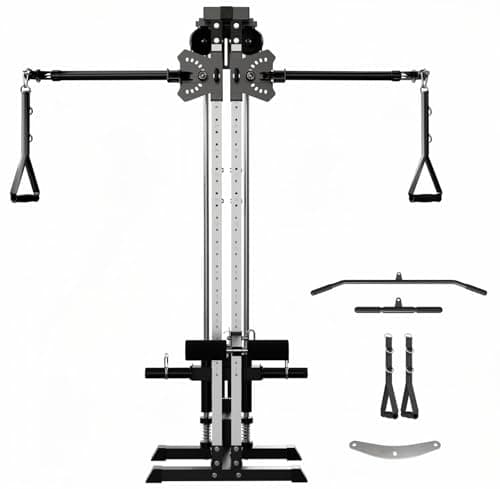
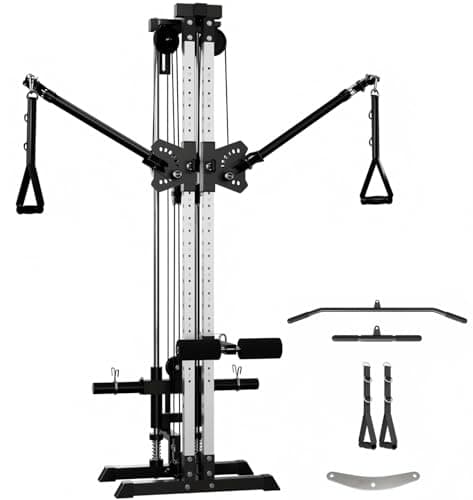
These two categories look nearly identical in a listing and get used almost interchangeably in product titles, which is why so many people buy the wrong one. The practical distinction is simple: a cable machine has one pulley, usually running on a single upright. A functional trainer has two independent pulleys, one on each side, each with its own adjustable height.
That second pulley is the whole comparison. It roughly doubles the frame, doubles the pulley hardware and roughly doubles the price. In exchange it unlocks every two-handed and crossover movement, plus the ability to train each side independently. Whether that trade makes sense depends entirely on what you already own and what you want the machine to do.
The short answer
In a hurry? These are the picks we'd buy. Prices are live; tap a card below for the full reasoning.
$189.995% offPrice as of September 14, 2026·#addisclosure
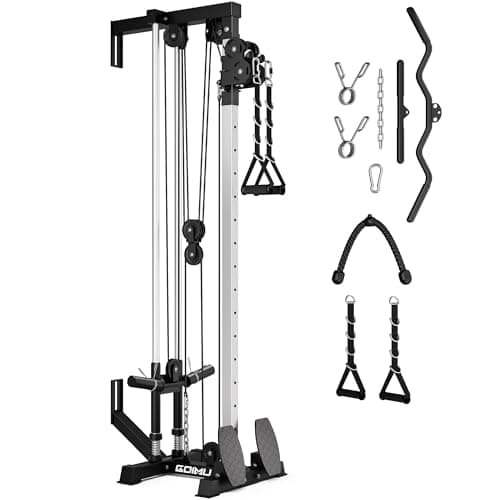
Goimu WM1 Wall-Mount Cable Crossover Station
A wall-mounted crossover station with a wide range of pulley positions — most of the functional-trainer benefit in a slimmer frame.
Pulleys
Crossover configuration
Positions
Multiple height settings
Mounting
Wall-mounted
Loading
Plate-loaded
Pros
Crossover capability without the depth of a freestanding trainer
Many pulley height positions, which is where most of the versatility lives
Wall mounting suits a garage where the floor is already committed
Cons
Still needs a solid, correctly located wall
Less adjustable than a full dual-arm trainer
Wall-mounted machines cannot be moved once installed
Best for: crossover work without a full trainer footprint.
Skip this
The budget traps that look cheap and cost you twice. We'd skip these.
A functional trainer as your first serious purchase
It is the most expensive way to start a home gym and it does none of the heavy compound work. A bar, plates and a rack cost less and build more strength. The functional trainer is an excellent third or fourth purchase and a poor first one.
Wall-mounted machines on a wall you have not verified
Both formats in this comparison are commonly wall-mounted, and the loads involved are real. Mounting into drywall, into an unknown block wall, or into anything other than located structural studs or properly rated anchors is the one genuinely dangerous mistake available in this category.
How to choose (and what to skip)
Count the exercises you would actually add
Write down the movements you want a cable for. If the list is pulldowns, rows, pushdowns and face pulls, one pulley does all of it. If the list includes flyes, crossovers, cable presses or independent single-arm work with the other side loaded differently, you want two. That list, not the specification sheet, decides this purchase.
Measure the wall and the floor in front
Single-pulley machines want one upright's worth of wall. Functional trainers want a wide span of wall and a clear working area in front, because crossovers need room to step forward and out. Measure both before you commit, especially in a garage where a car has to fit back in.
Understand the pulley ratio
Most plate-loaded home cable machines run a 2:1 ratio, meaning the weight you feel at the handle is roughly half the plate weight you loaded. That is not a defect, but it means you need more plates than you might expect for a given working load. Check the ratio before you assume your existing plates are enough.
Attachments are part of the budget
A cable machine without attachments does very little. A lat bar, a straight bar, a rope and two single handles cover almost everything, and they are cheap. Check what is included, because "machine only" listings are common and the attachment bundle can add meaningfully to the total.
Do not buy either one to replace free weights
Cables are excellent for constant tension, isolation and rehab-style work. They are not a replacement for squatting, pressing and pulling heavy. The right mental model is that cables complete a home gym rather than constitute one.
What the second pulley actually buys
Concretely: cable flyes and crossovers, two-handed cable presses, standing two-arm rows, and any movement where you want tension coming from two directions at once. It also lets you load each side independently, which is the cleanest way to work around a strength imbalance without buying two of anything.
What the second pulley does not buy is any improvement to the movements the single pulley already does. A lat pulldown on a functional trainer is the same lat pulldown. If the exercises you want are the ones a single pulley already covers, the second arm is purely additional cost.
Where each one fits a budget gym
The single-pulley machine is the natural add-on to a gym that already has a rack, a bar and plates: it fills the vertical-pull and isolation gaps for the least money and the least space. Our budget cable machine roundup covers that category in full, and if you have a rack already, our bolt-on pulley kit page covers an even cheaper route.
The functional trainer makes most sense when it is going to be the main machine — a small room where a rack is not practical, or a gym where free weights are already covered and the next purchase should broaden the exercise library rather than deepen it. Our cheap functional trainer roundup covers that side, and all-in-one versus separate pieces covers the wider version of this decision.
The cheapest version of both
If neither price works right now, resistance bands with a door anchor do a surprising amount of what a single-pulley machine does, for a tiny fraction of the price. The limitation is the loading curve — bands get harder as they stretch, cables do not — and there is no way around that. Our cable machine versus bands guide lays out where bands genuinely substitute and where they do not.
Frequently asked questions
What is the difference between a cable machine and a functional trainer?+
The number of pulleys. A cable machine has one pulley on one upright; a functional trainer has two independent pulleys, each with its own adjustable height. The second pulley unlocks crossovers, two-handed cable presses and independent loading per side, and it roughly doubles both the footprint and the price.
Is a functional trainer worth the extra money at home?+
It is if you will genuinely use the two-arm movements and if the machine is going to be the centerpiece of the gym. It is not if you already own a rack and plates and simply want to add pulldowns, rows and pushdowns, since a single-pulley machine does all of that for roughly half the price and half the space.
Why does the weight feel lighter than the plates I loaded?+
Most plate-loaded home cable machines use a 2:1 pulley ratio, so the resistance at the handle is roughly half the weight on the pin. It is normal and not a fault. Check the ratio before you buy so you know whether your existing plate collection is enough for the loads you want.
Can I wall-mount either type in a garage?+
Yes, and most budget models in both categories are designed for it, which is why they suit garages where floor space is contested. The condition is a genuinely solid wall with located structural studs or properly rated masonry anchors. If you cannot verify what is behind the surface, do not mount to it.
Prices and availability shown here come from Amazon's live data and change often; we re-verify them regularly. Bar Bumper is an Amazon Associate and earns a commission on qualifying purchases at no extra cost to you. Read our full disclosure.