Plates are the one purchase where cheap and good genuinely overlap. Here's what a pound of iron should cost you, and when to pay more for rubber.
Updated July 2026 · By Stephen V.
Weight plates are the least glamorous and most honest purchase in a home gym. A pound of cast iron is a pound of cast iron; the brand on it changes almost nothing except the price. What does change is the format — cast iron, grip plates, or rubber bumpers — and that decision is really about your floor, your noise tolerance, and whether you plan to deadlift. Below are the sets we'd buy at each format, and the cost-per-pound arithmetic that should drive the choice.
The short answer
In a hurry? These are the picks we'd buy. Prices are live; tap a card below for the full reasoning.
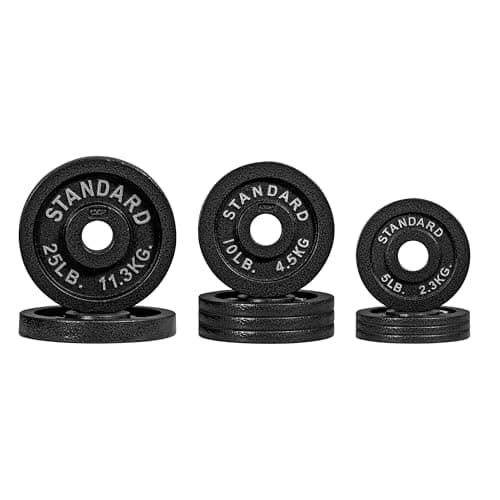
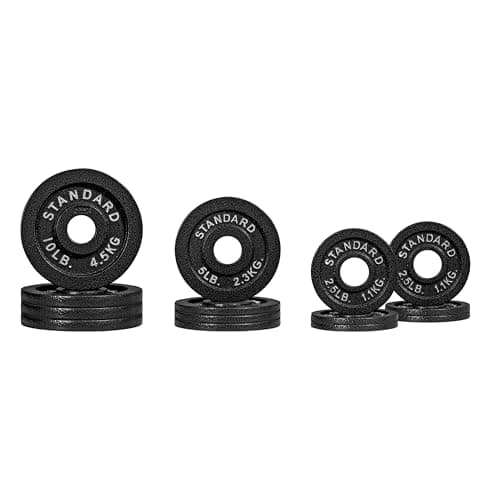
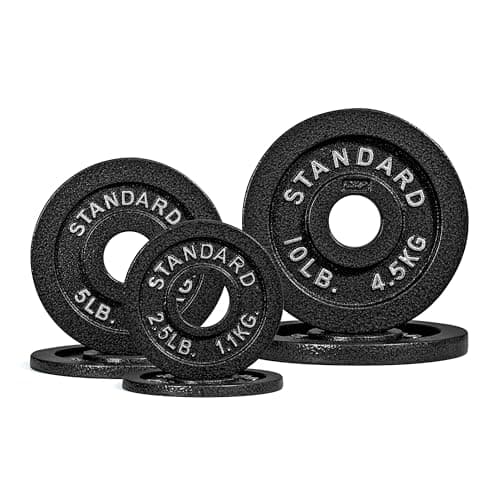
CAP Olympic Cast Iron Small Plate Set (2.5 / 5 / 10 lb pairs)
Pairs of 2.5, 5 and 10 lb plates — the cheap fix for a program that has stalled on 45s.
Type
Olympic cast iron small plates
Includes
2.5 / 5 / 10 lb pairs (per listing)
Bore
2-inch Olympic
Use
Incremental loading
Pros
Turns a 20 lb jump into a 5 lb jump
The cheapest way to keep linear progression going
Also useful for warm-up sets and accessory lifts
Cons
Not a standalone purchase — assumes you own big plates
Small plates go missing more than large ones
Bare cast iron chips easily
Best for: small jumps that keep the lifts moving.
Skip this
The budget traps that look cheap and cost you twice. We'd skip these.
1-inch standard plates for a gym you plan to grow
Standard 1-inch plates are cheaper today and a dead end tomorrow: they don't fit the Olympic bars, racks or cable machines you'll want later. Unless you already own a 1-inch bar and intend to stop there, buy 2-inch Olympic and never re-buy.
Cheap 'bumper' plates with no steel hub
The insert is what stops the bore deforming and the rubber tearing away from the center. A bumper plate with a bare rubber or thin-alloy bore ovals out, then rattles and sticks on the sleeve. Steel hub or cast iron — there's no good middle.
How to choose (and what to skip)
Work out your dollars per pound first
Divide the total price by the total weight. Cast iron sets typically land near $1-2 per pound, bumpers roughly double that, and singles always cost more per pound than sets. It's the single most useful number in this category and almost no listing shows it.
Cast iron or bumpers: it's a floor decision
If you deadlift and ever set the bar down hard, buy bumpers — they protect the slab, the bar and your ears. If you squat and press in a rack and lower the bar onto safeties, cast iron is cheaper and perfectly adequate. Many budget gyms end up with a pair of bumpers for the deadlift and cast iron for everything else.
Check the bore before you order
Olympic plates have a 2-inch bore; standard plates 1 inch. They're not interchangeable, and the cheapest listings are often standard plates in a search full of Olympic ones. Match the bore to your bar and to whatever rack or machine you might buy later.
Buy small plates early
The most common budget-gym mistake is owning nothing between 45s. A pair of 2.5s and 5s costs very little and is the difference between adding 5 lb a week and stalling for a month. Buy them with your first set, not after you get stuck.
Count sleeve space, not just weight
A 7-foot Olympic bar has a finite loadable sleeve, and thick rubber or cut-out grip plates use more of it than thin cast iron. If your goal is a heavy deadlift on a budget bar, plan the format around fitting the weight on the bar.
How much weight do you actually need?
Far less than most first-time buyers assume, and more than the smallest sets contain. A practical target for a first year of training is a 45 lb bar plus about 150-200 lb of plates. That covers a squat in the low 200s, a press, a row, and a deadlift heavy enough to be genuinely hard for a beginner. Buying 300 lb up front is money sitting on the floor; buying 75 lb means re-ordering within months and paying shipping twice.
Cast iron — cheapest per pound, thinnest on the sleeve, loudest on the floor. The default for racked lifts: squats, presses, rows.
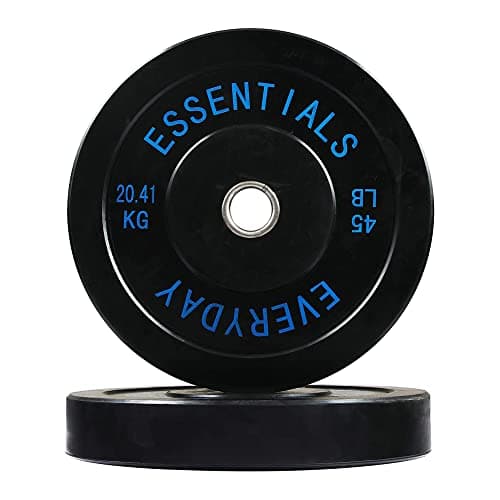
Rubber bumpers — same diameter at every weight, safe to drop, quiet, roughly double the price per pound. The right choice for deadlifts, Olympic lifts, and any floor you care about.
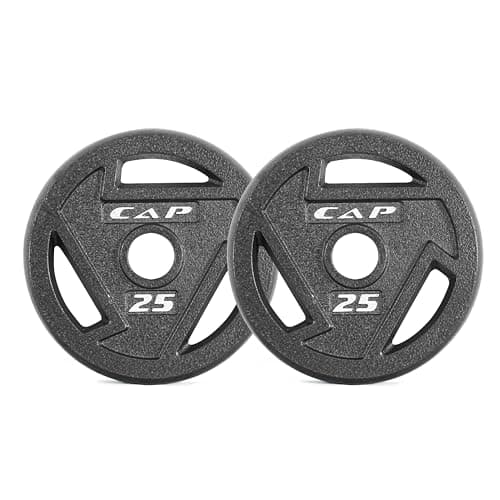
Grip plates — cast iron with cut-out handles. Easier to load and carry, and they double as standalone weights for carries and goblet squats. Slightly larger diameter for the same weight.
Small plates — 2.5 and 5 lb pairs. Not a format so much as a requirement: without them, progression stops.
Protecting your floor for less than the plates cost
A dropped 45 lb cast-iron plate will chip a concrete slab and dent a wood floor. The cheap fix is a rubber mat in the drop zone — a single horse-stall mat or a few interlocking tiles under the bar path costs a fraction of the plates and outlasts them. Our flooring roundup covers the options, and flooring over concrete deals with the moisture question that catches out garage and basement gyms.
Buying used, and when it's actually cheaper
Plates are the one item where used is genuinely as good as new: cast iron doesn't wear out, and rust on the edges is cosmetic. The catch is that used plate prices tend to sit close to new prices because everyone knows this, and shipping 200 lb of iron is expensive enough that local pickup is the only version that saves money. Check the live prices on this page first — a boxed set delivered to your door often beats a drive across town.
One warning on used bumpers: rubber does age. Look for cracking around the hub and check that the insert is still bonded. A bumper with a loose hub is scrap.
Plate accuracy, and why cheap plates aren't exact
Budget cast-iron plates are cast, not machined, and they're sold with a real tolerance — commonly around 2-3%, occasionally worse. On a 45 lb plate that's up to about a pound either way, so a loaded bar can be a few pounds off what the numbers say. This matters less than the internet suggests: what drives progress is adding weight consistently, and a plate that's 44.2 lb today is still 44.2 lb next week.
Where it does matter is symmetry. If you're unlucky enough to get a heavy plate and a light one in the same pair, the bar is unbalanced on every set. The cheap fix is to weigh your plates on a bathroom scale once, mark them, and pair the closest ones together. Calibrated plates exist and cost several times as much — that's a competition-lifter purchase, not a garage-gym one.
Storage: get them off the floor
Loose plates on a garage floor are how people chip plates, stub toes and eventually stop tidying up. The two cheap answers are a plate tree (a small vertical stand, often under $60) or the plate storage pegs built into most budget racks — which have the bonus of adding base weight to the rack itself. If neither is in budget yet, stand plates on their edge against a wall rather than stacking them flat: it's easier on your back when you pick them up, and it stops the bottom plate rusting to a damp slab.
Frequently asked questions
Are cheap weight plates any good?+
Cast iron plates are one of the few categories where cheap and good genuinely coincide — the material is the product, and a budget plate weighs the same as a premium one. Check the bore is a true 2 inches and that the tolerance is reasonable, and the brand barely matters.
Cast iron or bumper plates for a home gym?+
Cast iron if you lift in a rack and lower the bar onto safeties — it's roughly half the price per pound. Bumpers if you deadlift, drop the bar, or lift over a floor you care about. Plenty of budget gyms buy one pair of bumpers and cast iron for everything else.
How much do weight plates cost per pound?+
Cast iron typically lands around $1-2 per pound and bumpers roughly double that, though prices move constantly. Divide any listing's price by its total weight before comparing — the live prices on this page make that easy.
Do I need 2-inch Olympic plates or 1-inch standard?+
Olympic (2-inch) for anything you plan to grow. Standard 1-inch plates are cheaper but lock you out of Olympic bars, most racks with plate storage, and plate-loaded cable machines. The exception is if you already own a 1-inch bar and are certain you'll stop there.
Prices and availability shown here come from Amazon's live data and change often; we re-verify them regularly. Bar Bumper is an Amazon Associate and earns a commission on qualifying purchases at no extra cost to you. Read our full disclosure.