Skip to content
Bar Bumper
Guide

Budget home gym ideas, organized by the room you actually have

Most home gym inspiration shows a converted three-car garage. These are the layouts that work in a corner, a spare bedroom, a basement with low beams, or a garage that still has to hold a car.

Updated August 2026 · By Stephen V.

Search for home gym ideas and you get photographs of converted three-car garages with rubber floors, mirrored walls and a color-matched rack. Beautiful, useless. Almost nobody has that room, and the useful question isn't "what would a nice gym look like" — it's "what will fit in the space I've actually got, and what will it cost me?"

So this guide is organized by room, not by aesthetic. Twelve layouts across four kinds of space, with the constraint each one solves, what goes in it, and the honest limitations. Every one of them is a real configuration a budget gym can be built in, and none of them requires knocking a wall down.

The short answer

In a hurry? These are the picks we'd buy. Prices are live; tap a card below for the full reasoning.

The idea that unlocks a shared garage
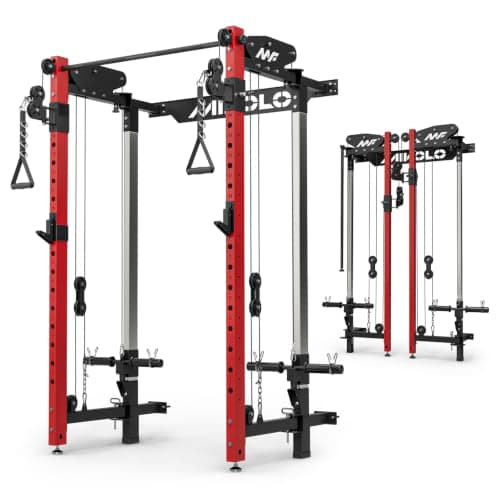
Mikolo Folding Wall-Mounted Rack (cable crossover + lat)

Mikolo Folding Wall-Mounted Rack (cable crossover + lat)

$499.99 · View on Amazon
Price as of September 14, 2026#addisclosure
The idea that fits in a cupboard
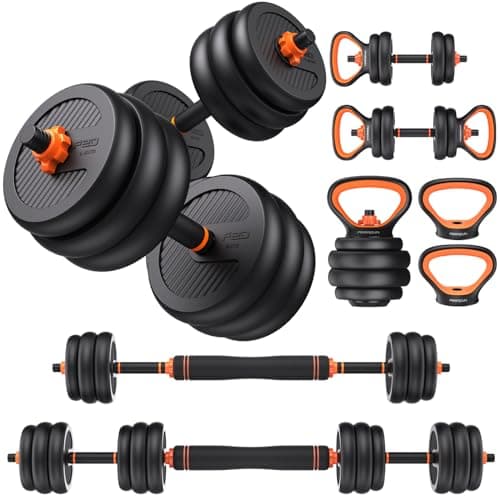
FEIERDUN Adjustable Dumbbells (70 lb set)

FEIERDUN Adjustable Dumbbells (70 lb set)

$129.97 · View on Amazon
$199.99 35% offPrice as of September 14, 2026#addisclosure
The idea that makes any room feel like a gym
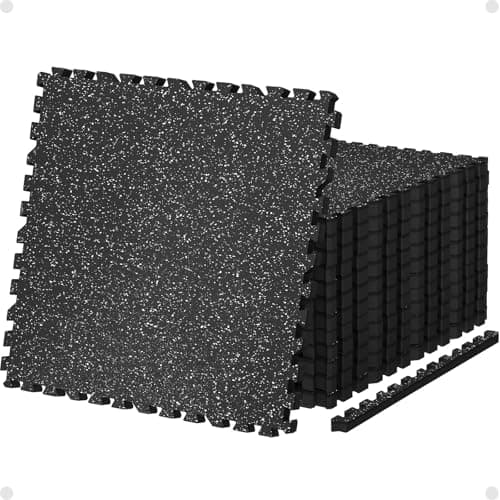
AIRHOP Rubber-Top Gym Tiles (48 sq ft)

AIRHOP Rubber-Top Gym Tiles (48 sq ft)

$139.95 · View on Amazon
Price as of September 14, 2026#addisclosure

Quick picks

#ProductBest forScorePrice
1
Mikolo Folding Wall-Mounted Rack (cable crossover + lat)
The idea that unlocks a shared garage
Mikolo Folding Wall-Mounted Rack (cable crossover + lat)
Folds to the wall between sessions — the single piece that makes a dual-purpose garage work.
a garage that still has to hold a car8.38.3 out of 10
$499.99 · View on Amazon
Price as of September 14, 2026#addisclosure
2
FEIERDUN Adjustable Dumbbells (70 lb set)
The idea that fits in a cupboard
FEIERDUN Adjustable Dumbbells (70 lb set)
A whole gym in about a cubic foot — the layout where the equipment lives in the wardrobe.
a spare bedroom or apartment corner8.98.9 out of 10
$129.97 · View on Amazon
$199.99 35% offPrice as of September 14, 2026#addisclosure
3
AIRHOP Rubber-Top Gym Tiles (48 sq ft)
The idea that makes any room feel like a gym
AIRHOP Rubber-Top Gym Tiles (48 sq ft)
Laying a rubber zone is the cheapest change that turns 'a corner with weights in it' into a gym.
defining the training zone in a shared space8.18.1 out of 10
$139.95 · View on Amazon
Price as of September 14, 2026#addisclosure

Scores are our own editorial ratings from the spec-scoring method — not lab tests. Tap a row for the full write-up.

The picks, reviewed

#1The idea that unlocks a shared garage
Mikolo Folding Wall-Mounted Rack (cable crossover + lat)
8.38.3 out of 10Mikolo
$499.99 · View on Amazon
Price as of September 14, 2026#addisclosure

Mikolo Folding Wall-Mounted Rack (cable crossover + lat)

Folds to the wall between sessions — the single piece that makes a dual-purpose garage work.

Solves
Permanent floor space
Stowed
Folds flat to the wall
Includes
Cable crossover + lat
Needs
A structural wall

Pros

  • The room goes back to being a room in seconds
  • Squat, press, pull and cable work from one wall
  • Bolted to the building, so it can't tip

Cons

  • Permanent fixings — not a renter's option
  • Installation quality is the entire safety margin
  • You still need floor protection where the bar lands

Best for: a garage that still has to hold a car.

#2The idea that fits in a cupboard
FEIERDUN Adjustable Dumbbells (70 lb set)
8.98.9 out of 10FEIERDUN
$129.97 · View on Amazon
$199.99 35% offPrice as of September 14, 2026#addisclosure

FEIERDUN Adjustable Dumbbells (70 lb set)

A whole gym in about a cubic foot — the layout where the equipment lives in the wardrobe.

Solves
No dedicated room at all
Footprint
About a cubic foot
Covers
Press, row, squat, hinge, carry
Needs
A clear 6x6 ft to train in

Pros

  • Stores completely out of sight between sessions
  • No rack, no spotter, nothing to get pinned under
  • The one purchase that makes a non-room work as a gym

Cons

  • Caps out below what a barbell reaches
  • Adjusting weight mid-superset costs a few seconds
  • Heavier sets are awkward to carry

Best for: a spare bedroom or apartment corner.

#3The idea that makes any room feel like a gym
AIRHOP Rubber-Top Gym Tiles (48 sq ft)
8.18.1 out of 10AIRHOP
$139.95 · View on Amazon
Price as of September 14, 2026#addisclosure

AIRHOP Rubber-Top Gym Tiles (48 sq ft)

Laying a rubber zone is the cheapest change that turns 'a corner with weights in it' into a gym.

Solves
Shared-room ambiguity
Coverage
48 sq ft
Surface
Rubber top, foam backing
Good under
Rack, bench, dumbbells

Pros

  • Visually defines the gym zone in a multi-use room
  • Protects the floor where the weight actually lands
  • Quieter and more comfortable than training on a slab

Cons

  • Not enough for repeatedly dropped barbells alone
  • Edges need trimming to fit an odd-shaped corner
  • Heavier to move than foam if you rearrange often

Best for: defining the training zone in a shared space.

Skip this

The budget traps that look cheap and cost you twice. We'd skip these.

  • Designing the gym around a photo you saw

    Mirrored walls, color-matched racks and turf strips look superb and cost more than the equipment. Every dollar spent on the look is a dollar not spent on weight, and it's the weight that makes you stronger. Get the layout and the gear right first; the aesthetics can wait for year two.

  • Building around a piece you don't own yet

    Leaving a 4x4 ft hole in your layout for the rack you'll buy next year means training in a compromised space now for a purchase that might change. Lay the room out for what you actually have, and rearrange when the rack arrives — it takes an afternoon.

  • Putting the gym in the least convenient room

    The gym in the far corner of the basement behind the boxes gets used in January. The one you walk past twice a day gets used in November. Convenience beats square footage almost every time, and it's free.

Garage layouts (the room that has to do two jobs)

The classic constraint: the garage is the best gym space in the house and it also has to hold a car, a lawnmower and everything else. Three layouts that solve it.

1. The folding wall gym

A folding rack on the strongest wall, a pull-up bar above it, plate storage beside it. Everything mounts to about eighteen inches of wall depth and folds flat. The car parks over the training area, and the whole gym deploys in under a minute. This is the highest-value layout in the whole guide if you have a wall you're allowed to drill — the full detail is in our wall-mounted home gym guide.

2. The single-bay corner

A free-standing cage tucked into the corner furthest from the door, with a rubber zone under it and the bench stored inside the cage between sessions. Needs about 6x8 ft including loading room. The car still parks; you just lose the storage in that corner. It's the layout most garage gyms actually end up as, and it works because the cage doubles as storage for the bar and plates.

3. The deep-bay end wall

If the garage is longer than the car, the four to six feet at the end wall is dead space that makes an excellent gym. A rack against the end wall, a bench that slides under a shelf, dumbbells on the wall. The constraint is the garage door track overhead, so measure to the track rather than the ceiling before buying anything tall.

Spare bedroom layouts (the room with a floor limit)

Bedrooms have two constraints garages don't: a suspended floor with a weight limit, and neighbors or family below. That rules out dropped deadlifts and points the whole layout toward dumbbells and controlled work.

4. The dumbbell-and-bench room

One pair of adjustable dumbbells, a folding bench, a doorway pull-up bar, and a mat. Total footprint when stored: a corner. Total footprint when training: about 6x6 ft. This covers a complete program and it's exactly the setup in our beginner buying order — not a compromise, just a different tool set.

5. The half-office, half-gym

Desk along one wall, training zone defined by a rubber mat on the other. The trick that makes it work is a wall-mounted or under-desk storage solution so the gym gear isn't visible from the desk chair — a room that looks like a gym is a bad office, and vice versa. A walking pad under the desk fits this layout better than any other.

6. The wardrobe gym

The minimum viable layout: everything lives in a wardrobe or under the bed, and the training space is the floor of the room with the bed pushed a foot to one side. Adjustable dumbbells, a band set, a mat that rolls. It takes ninety seconds to set up and it is a genuinely complete gym for most people's first two years.

Basement layouts (the room with the ceiling problem)

Basements are the best-kept secret in home gyms — concrete floor, no neighbors below, naturally cool — with one recurring issue: headroom, and the pipes and ducts that eat into it.

7. The low-ceiling squat corner

If you can't stand and press overhead, you can still squat, bench, row and deadlift, which is most of a strength program. A shorter half rack or squat stand under the lowest section, with the pressing station moved to a taller corner or replaced by seated dumbbell pressing. Measure your standing overhead reach with a bar and plan around that number, not the ceiling height.

8. The between-the-joists layout

In an unfinished basement, the space between exposed joists is often four to six inches of extra headroom — enough to matter for a pull-up bar. Mounting the bar directly to the joists and positioning the rack so the bar path runs between them, rather than under a duct, is the difference between a usable and unusable basement.

9. The dry-corner setup

Basements run humid, and humidity is what rusts a barbell. The layout answer is to put the gear on the driest wall — away from external walls and any sump — and to store the bar horizontally on a rack rather than standing in a corner where moisture collects. More on this in our rust prevention guide.

Apartment layouts (the room with the neighbor problem)

In a flat, noise is the binding constraint and floor loading is a real one. These layouts are built around zero-impact training.

10. The balcony-door corner

A magnetic bike or compact rower positioned near a window or balcony door, a mat under it, dumbbells beside. Silent, zero impact, and it takes up the corner nobody uses anyway. Our quiet cardio picks cover which machines actually stay quiet through a floor.

11. The doorway gym

A doorway pull-up bar, a band set anchored to it, and a pair of dumbbells. Entire gym stores in a drawer, makes essentially no noise, and leaves no marks beyond what a picture hook would. It's the layout for a rented studio flat where nothing else is permitted.

12. The under-bed system

A walking pad and a folding mat live under the bed; a band set and adjustable dumbbells live in a cupboard. Nothing is visible in the room at any time, and setup takes a minute. It sounds minimal, and it is — but it's used daily, which is more than most impressive garage gyms manage.

What every layout needs, whatever the room

  1. A defined zone. Even a mat on the floor. A space that's "the gym" gets trained in far more than a space where the gym happens to be.
  2. Floor protection where the weight lands. Rubber under iron, always. Foam is for comfort, not for impact.
  3. Storage that isn't the floor. The fastest way to kill a small gym is to leave gear where you have to move it before you can train.
  4. Somewhere to see yourself. A cheap tempered mirror is the best free coaching you'll get — see our mirror sizing guide.
  5. Light and air. A garage in August and a basement in February are both places you'll find excuses not to go. A fan and a decent bulb cost very little and buy a lot of sessions.

None of these are equipment ideas, and all of them are the difference between a gym that gets used and one that becomes storage. Once the room is right, our step-by-step setup guide covers what to put in it, in what order.

Frequently asked questions

What's the best home gym idea for a small space?
A pair of adjustable dumbbells, a folding bench and a doorway pull-up bar, with everything stored in a cupboard between sessions. It covers a complete program, needs about 6x6 ft of clear floor only while you're training, and leaves no permanent footprint. In a garage you're allowed to drill, a folding wall-mounted rack is the equivalent answer for barbell training.
Can you have a home gym in a garage that still parks a car?
Yes, and it's one of the most common setups. Either mount a folding rack to a wall so the whole gym stows flat, or tuck a free-standing cage into a corner and accept losing that storage. The car parks over the training area either way. Measure to the garage door track rather than the ceiling before buying anything tall.
How much space do you need for a home gym?
Less than most people assume. A dumbbell-and-bench setup works in about 6x6 ft of clear floor, and a full power cage needs roughly 4x4 ft plus loading room and ceiling height for pressing. The number that catches people out is not floor area but ceiling height, especially in basements with ducts and pipes.
Is a basement or a garage better for a home gym?
Basements have a concrete floor, no neighbors below, and stable cool temperatures — excellent for lifting. Garages have height, wider doors for moving equipment, and don't matter if you're loud. The usual deciding factor is headroom: basements often can't accommodate overhead pressing or a pull-up bar, and that's harder to work around than a garage's temperature swings.
How do I make a home gym look good on a budget?
One rubber zone, one mirror, and storage on the wall rather than the floor. Those three changes do more for how a gym looks and feels than anything else, and together they cost a fraction of a single piece of equipment. Skip the turf strips and color-matched accessories until the training gear is complete.

Keep reading

Prices and availability shown here come from Amazon's live data and change often; we re-verify them regularly. Bar Bumper is an Amazon Associate and earns a commission on qualifying purchases at no extra cost to you. Read our full disclosure.