Home gym with low ceilings: measure first, then buy
A low ceiling does not stop you building a real gym. It stops you building the wrong one. Here is the measurement that decides everything and what fits under it.
Updated August 2026 · By Stephen V.
Ceiling height is the constraint people discover after they have bought the rack. It rarely appears in a product listing, it is not obvious from a photo, and the number that matters is not the one on your house plans — it is the clear height under the lowest obstruction in the space where you will actually train. Get that measurement first and every other decision becomes straightforward.
The good news is that a low ceiling rules out fewer things than people fear. Pressing overhead and pull-ups are the two genuine casualties, and both have workarounds. Squats, deadlifts, benching, rows, cardio and almost every accessory movement are unaffected. Here is how to measure properly and what to buy under the number you get.
The short answer
In a hurry? These are the picks we'd buy. Prices are live; tap a card below for the full reasoning.
$119.9917% offPrice as of September 14, 2026·#addisclosure
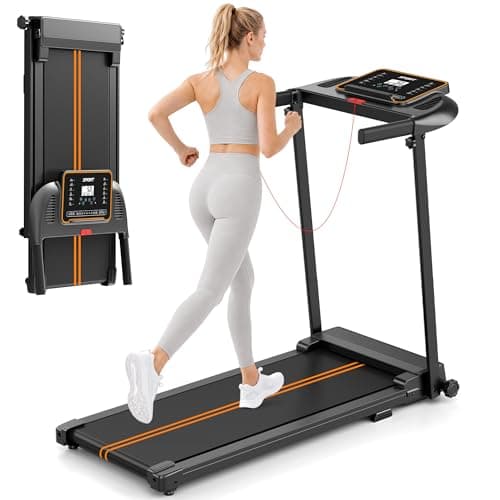
Folding Walking Pad Treadmill
Walking needs the least headroom of any cardio, and a folding pad needs the least floor too.
Type
Folding walking pad
Headroom needed
Standing height plus deck
Storage
Folds flat
Best for
Basements, low garages
Pros
Needs less headroom than a rower, a bike or skipping
Folds flat and slides under a bed or against a wall
Quiet enough for a basement under a living room
Cons
Walking only — the deck is not built for running
Deck height eats a few inches of your clearance
Modest motor compared with a full treadmill
Best for: cardio where running is impossible.
Measure the number that actually matters
Stand where you will train and measure from the floor to the lowest thing above you. Not the ceiling in the middle of the room — the lowest thing. In a basement that is usually a duct, a beam, a pipe or a light fitting. In a garage it is often a door track or a folded-back garage door. Write that number down; it is your working height, and it is frequently four to ten inches lower than the ceiling itself.
Then subtract your flooring. Foam tiles cost you half an inch, rubber tiles a little more, a stall mat around three quarters of an inch, and a deadlift platform can take two inches. That final number is what your equipment has to live under.
What a low ceiling actually stops you doing
Two things. Overhead pressing, because the bar finishes above your head with arms locked out — for most adults that needs somewhere around eight feet of clear height, more if you press standing on a platform. And pull-ups, because you need to hang with your feet clear of the floor and your head above the bar.
Everything else is fine. Squats need your standing height plus the bar on your back, which is less than your reach. Deadlifts, rows, benching, hip thrusts, split squats, curls, cable work and every machine are all well under head height. The common belief that a low ceiling rules out a home gym is simply wrong; it rules out two movements.
Working around the overhead press
The straightforward substitution is to press seated on an incline bench, which keeps the bar path lower and is a perfectly good pressing movement. Landmine presses, where one end of a barbell is anchored at floor level, press at an angle rather than straight up and need almost no headroom. Dumbbell presses seated on a high incline are another option and let you keep the load close.
If you genuinely need a standing overhead press, the answer is to press outside — a garage with the door open, or a driveway. Plenty of people with basement gyms do exactly that for one movement.
Working around pull-ups
The usual answer is horizontal pulling plus a cable. Inverted rows on a bar set low, ring rows, and heavy dumbbell rows cover a great deal of the same territory. For the vertical pulling pattern specifically, a lat pulldown is the direct substitute, and if you already own a rack a bolt-on pulley kit is the cheap way to get one — see our lat pulldown setups page.
There is also a partial workaround: a bar mounted between joists rather than below them can buy several inches, and kneeling or bent-knee pull-ups work at heights that would otherwise be unusable. Our cheap pull-up bar roundup covers the mounting options, including the joist-mounted type.
Racks under a low ceiling
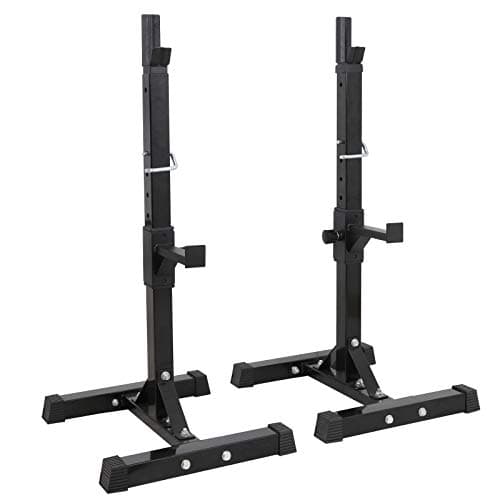
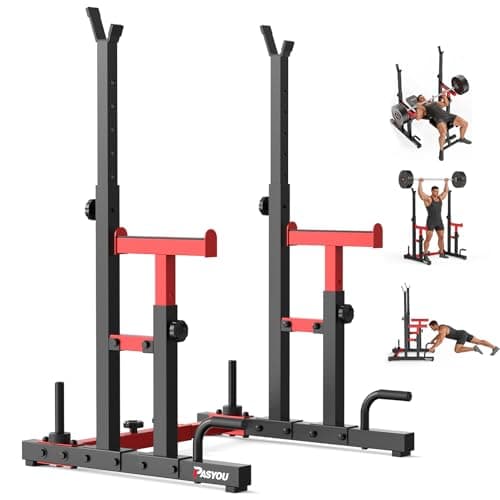
A full power cage is typically the tallest thing you would put in a home gym, and many will not fit under seven feet at all. The alternatives, in order of how much height they need: a folding wall-mounted rack, an adjustable squat rack set low, and a pair of independent squat stands, which have nothing above bar height at all.
The trade with all three is safeties. A cage gives you catch bars that will hold a failed squat; stands generally do not. If you train alone under a low ceiling, that is the risk to manage deliberately — our guide to lifting alone safely covers how, and power rack versus squat stand covers the wider comparison.
Cardio and conditioning
Skipping needs about a foot of clearance above your head with your arms down, which rules it out in many basements. Rowers are low but the seat position means you finish upright, so check your seated height. Bikes and ellipticals put you upright too — an elliptical in particular raises you several inches onto the pedals, which catches people out. Walking pads and floor-based conditioning are the safest bets under a genuinely low ceiling.
The rest of the room
Low ceilings usually come with other basement problems: humidity, hard floors and noise carrying upward. Our rust prevention guide covers the damp side, flooring over concrete covers the floor, and reducing home gym noise covers keeping the peace with whoever is upstairs.
Frequently asked questions
What ceiling height do you need for a home gym?+
For everything except overhead pressing and pull-ups, your standing height plus a little clearance is enough — which almost every room has. For standing overhead presses most adults want somewhere around eight feet of clear height, and pull-ups need enough to hang with your feet off the floor. Measure to the lowest obstruction, not the ceiling.
Can I put a power rack in a basement with a low ceiling?+
Often not a full cage, which is usually the tallest item in a home gym. An adjustable squat rack set low, a folding wall-mounted rack or a pair of independent squat stands will fit where a cage will not. The trade is safety catches, so plan your solo-training rules accordingly.
How do I do overhead presses with a low ceiling?+
Press seated on an incline bench, which lowers the whole bar path, or use a landmine press where one end of the bar is anchored at floor level and you press at an angle. Both are genuinely good pressing movements. If you specifically want the standing barbell press, the practical answer is to do that one lift outdoors.
Does gym flooring reduce my usable ceiling height?+
Yes, and it is worth including in the measurement. Foam tiles take about half an inch, rubber tiles a little more, a stall mat around three quarters of an inch, and a deadlift platform can take a couple of inches. If you are close to the limit for pull-ups or pressing, that difference decides it.
Prices and availability shown here come from Amazon's live data and change often; we re-verify them regularly. Bar Bumper is an Amazon Associate and earns a commission on qualifying purchases at no extra cost to you. Read our full disclosure.