Quiet cardio for apartments: what won't annoy the neighbors
Impact noise travels through a floor, not through the air — which is why the quiet answer isn't the machine with the lowest decibel claim. Here's what actually stays silent downstairs.
Updated August 2026 · By Stephen V.
If you rent, or your gym is above someone else's ceiling, noise is the spec that decides your cardio machine — not the motor, not the console, not the price. And almost every listing measures the wrong thing. Manufacturers quote airborne noise, the sound you'd hear standing next to the machine. What gets you a knock on the door is structure-borne noise: the thump of a footfall or a flywheel vibration traveling through the floor joists into the room below, where it arrives as a low, maddening drum you can hear with the TV on.
That distinction reorders the whole category. A magnetic bike is close to silent both ways. A rower is quiet through the air but slides a moving seat and puts a rhythmic pull into the frame. A treadmill — even a quiet one — is a series of impacts, and impacts are the one noise a floor transmits best. Below are the four budget machines we'd put in an apartment, scored on floor-transmitted noise as heavily as on training value.
The short answer
In a hurry? These are the picks we'd buy. Prices are live; tap a card below for the full reasoning.
$44.9912% offPrice as of September 14, 2026·#addisclosure
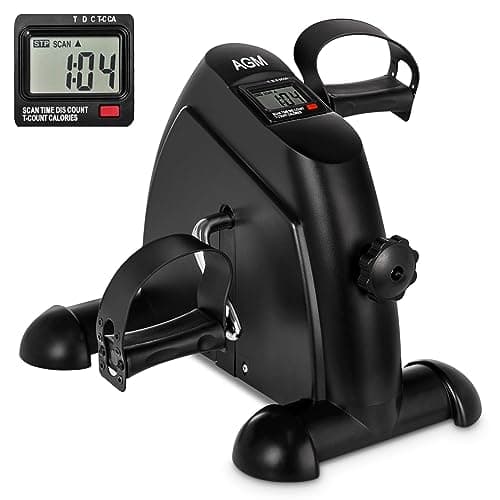
AGM Under-Desk Mini Pedal Exerciser
A pedal unit that weighs a few pounds and makes no noise a neighbor could identify as exercise.
Type
Under-desk pedal exerciser
Resistance
Adjustable tension
Footprint
Fits under a desk
Impact noise
None
Pros
Almost literally silent, and tiny
Costs less than a month of most gym memberships
Can be used while working, which is how it gets used at all
Cons
Light training stimulus — this is movement, not conditioning
Slides on hard floors without a mat under it
Tension mechanism is the wear point
Best for: under a desk, in a studio flat.
Skip this
The budget traps that look cheap and cost you twice. We'd skip these.
Air / fan rowers and air bikes in a flat
They're excellent machines and completely wrong for this room. Air resistance works by moving air through a cage, so the machine is literally a fan — noise rises with effort, which means your hardest intervals are your loudest minutes. Magnetic resistance gives you a quiet machine at every intensity.
A full folding treadmill on an upper floor
Running is a series of two-to-three-bodyweight impacts into a deck standing on four small feet. No mat fully fixes that, and no decibel rating on the box describes it, because the problem is vibration through the structure rather than sound through the air. If you want to run and you live above someone, run outside.
Thin foam tiles as your noise solution
Quarter-inch foam compresses instantly under a point load and passes the impact straight through. Isolation comes from mass and density, not softness — a dense rubber mat under the machine does far more than a thick soft one. Our flooring guide covers which is which.
How to choose (and what to skip)
Ask which noise you're solving
Airborne noise annoys people in your own room and is easily handled by a door. Structure-borne noise annoys the flat below and is what causes complaints. Machines with no impact (bikes, rowers, pedal units) are quiet in the way that matters; anything you land on is not.
Magnetic resistance, always
Magnetic resistance works without contact, so it makes no noise and never wears. Friction pads squeak as they age and air resistance gets louder the harder you work. In a flat, magnetic is not a preference, it's the requirement.
Belt drive beats chain drive
On bikes, the drive is the second noise source after resistance. A belt is near-silent and needs no maintenance; a chain rattles and needs occasional oil. Most budget indoor cycles now use belts, but it's worth confirming in the listing.
Put mass under the machine, not softness
A dense rubber mat decouples the feet from the floor and absorbs vibration. Soft foam squashes flat and transmits it. One 4x6 rubber mat under a bike or rower does more for your neighbor relations than anything else on this page.
Consider the time of day as part of the spec
The honest version of this decision includes when you train. A machine that's borderline at 7 p.m. is a genuine problem at 6 a.m. If your only available slot is early or late, weight the quietness score above everything else and accept the smaller training stimulus.
Why decibel claims on the box are useless here
A decibel figure, when a budget listing gives one at all, is measured a meter from the machine in open air. That number tells you whether you can hold a conversation while training. It tells you nothing about what happens below the floor, because the two travel completely differently. Airborne sound loses energy fast and is blocked by any solid barrier — a closed door does most of the work. Structure-borne vibration travels through joists and studs with very little loss and re-radiates as sound from the ceiling below, often louder in the neighbor's room than in yours.
This is why the machine that feels quiet to you can be the one generating the complaint, and why the practical ranking runs: no impact and no contact (bikes, pedal units) → no impact but a moving mass (rowers) → repeated impact (any treadmill). Sort by that and you'll be right far more often than by sorting on the spec sheet.
The three quiet formats, and what each actually trains
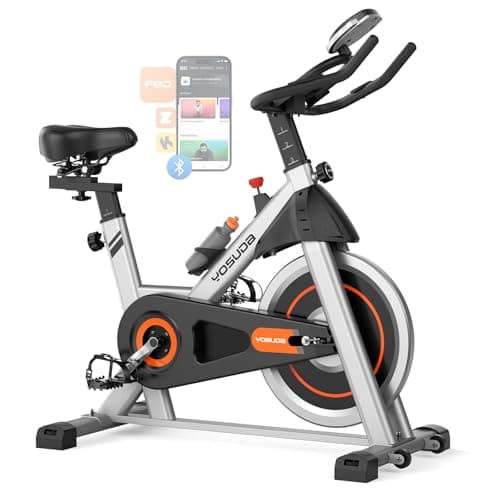
Magnetic bikes — the safe answer
A magnetic indoor cycle is as close to silent as home cardio gets. A magnet moves nearer or further from a steel flywheel; nothing touches, nothing wears, nothing squeaks. Your feet never leave the pedals, so there's no impact to transmit. The trade-off is that it's a legs-only machine, and you'll want to add some upper-body work — a band set or a pair of adjustable dumbbells covers that for very little money and no noise.
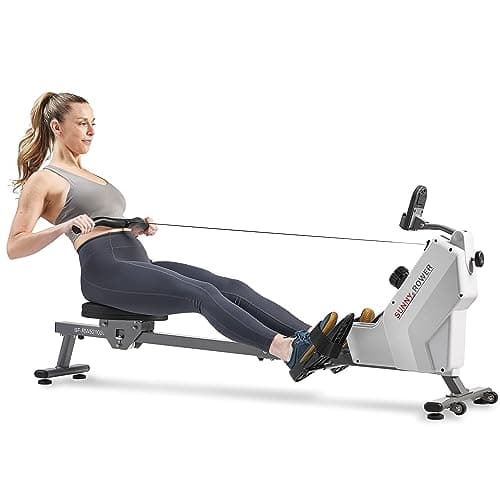
Magnetic rowers — the best training value
A rower gives you legs, back and arms in one movement, at zero impact, from a machine that stands upright in a cupboard. It's the best single cardio purchase for a small flat, and it's quiet — but not silent. Two things make noise: the seat rolling on the rail, which is a rhythmic rumble the floor carries reasonably well, and the catch at the start of each stroke, which sends a small pull through the frame. Both are largely solved by putting the machine on a dense mat. Our full picks are in the budget rowing machine roundup.
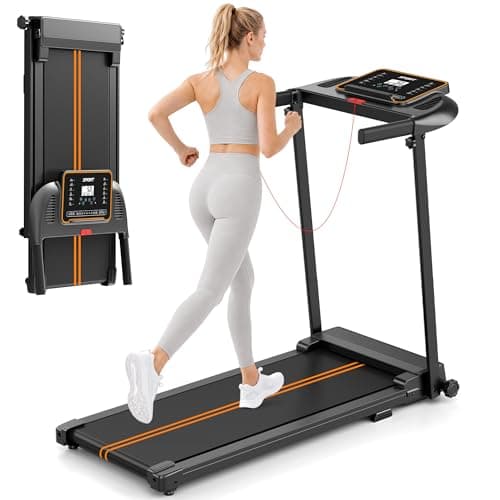
Walking pads — the compromise that works
If you specifically want to walk indoors, a walking pad is the version of a treadmill that's viable upstairs. It sits low and flat rather than on four tall feet, the motor is small and quiet, and walking impacts are perhaps a third of running impacts. It's still the noisiest thing on this page for the flat below, so it needs a dense mat and some judgment about when you use it — but plenty of people run one for an hour a day without a complaint. The wider treadmill options are covered in our budget treadmill roundup.
What to put underneath: the cheapest big win
Whatever you buy, the mat under it matters as much as the machine. The goal is to decouple the feet from the floor structure and to add mass that absorbs vibration rather than passing it on. In rough order of effectiveness for the money:
A dense rubber stall mat — heavy, thick, and by far the most effective thing you can put under a machine. One 4x6 mat covers a bike or rower with room to spare.
Rubber-top interlocking tiles — nearly as good, easier to carry up a stairwell, and easier to size to an odd corner.
Rubber feet or isolation pads under each foot — cheap, targeted, and surprisingly effective on a bike, where all the load sits on four small contact points.
Thin EVA foam — comfortable to stand on and close to useless for impact isolation. Fine under a pedal unit; not a solution for anything heavier.
It's also worth positioning the machine over a load-bearing line rather than the middle of a floor span. A joist near a wall flexes far less than the same joist mid-room, and less flex means less energy going into the structure. Moving a bike three feet is free; it sometimes solves the whole problem.
The non-equipment fixes worth trying first
Before you spend anything: talk to the neighbor. Almost every noise complaint about home exercise is really a complaint about unpredictability — an unexplained rhythmic thump at 6 a.m. is far more irritating than a known one you've been told about. Agreeing a rough window ("nothing before 8 or after 9") solves more of these than any mat.
Then check your lease. Many rental agreements have clauses about heavy equipment and floor loading, and a few explicitly mention treadmills. It is much cheaper to find that out before the delivery than after. And if you're in a flat where none of this works, remember that a band set plus bodyweight circuits makes genuinely no noise at all — the quietest cardio equipment is sometimes the equipment you don't buy.
Our verdict
For most flats, a magnetic indoor bike is the machine to buy: silent in both directions, cheap, compact, and impossible to complain about. If you want one machine that trains your whole body, take the compact magnetic rower and put it on a rubber mat. Add a walking pad only if walking indoors is specifically the goal, and skip full treadmills, air bikes and air rowers entirely unless you're on a ground floor slab. Check the live prices below — on this page the cheapest pick is also the quietest, which doesn't happen often.
Frequently asked questions
What is the quietest cardio machine for an apartment?+
A magnetic indoor cycling bike. The resistance is contactless so nothing wears or squeaks, and your feet never leave the pedals, so there is no impact for the floor to carry downstairs. A magnetic rower is a close second and trains far more of your body, but its rolling seat does put a rhythmic rumble into the floor unless you set it on a dense mat.
Can I use a treadmill in an upstairs apartment?+
A walking pad, usually yes — walking impacts are a fraction of running impacts and the deck sits low and flat. A full treadmill used for running, usually no. Running loads a floor at two to three times bodyweight, repeatedly, and that energy travels through joists as low-frequency thump that no mat completely removes.
Do gym mats really reduce noise for the neighbors below?+
Dense ones do, and soft ones mostly don't. Isolation comes from mass and density decoupling the machine from the floor structure, not from squashiness. A thick rubber stall mat or rubber-top tile under the machine makes a real difference; quarter-inch EVA foam compresses under load and passes the impact straight through.
Are magnetic rowers quiet enough for a flat?+
Yes, considerably quieter than air rowers, which are effectively fans that get louder the harder you pull. A magnetic rower's remaining noise is the seat rolling on the rail and a small pull through the frame at the catch. Set it on a rubber mat, and it becomes one of the quietest full-body machines you can own.
Is an under-desk pedal exerciser worth buying?+
As a training tool, it's light — this is movement rather than conditioning, and it won't replace real cardio. As a way to add a couple of hours of gentle activity to a working day in a studio flat with no room and no noise tolerance, it's genuinely useful and costs less than a month of most memberships. Buy it as a supplement, not as your cardio plan.
Prices and availability shown here come from Amazon's live data and change often; we re-verify them regularly. Bar Bumper is an Amazon Associate and earns a commission on qualifying purchases at no extra cost to you. Read our full disclosure.