Cast iron vs bumper plates: where the extra money actually goes
Bumpers cost several times more per pound and do one thing cast iron can't. Whether that one thing matters is entirely about your floor.
Updated August 2026 · By Stephen V.
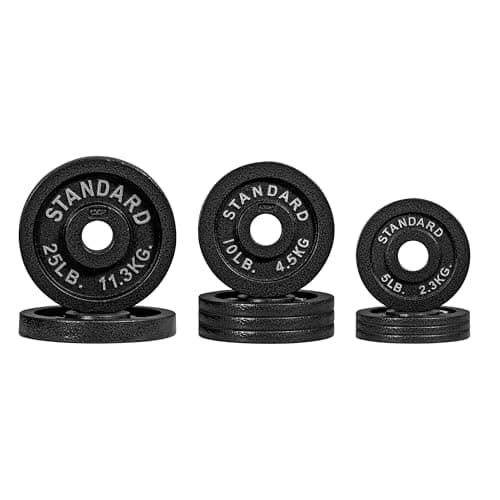
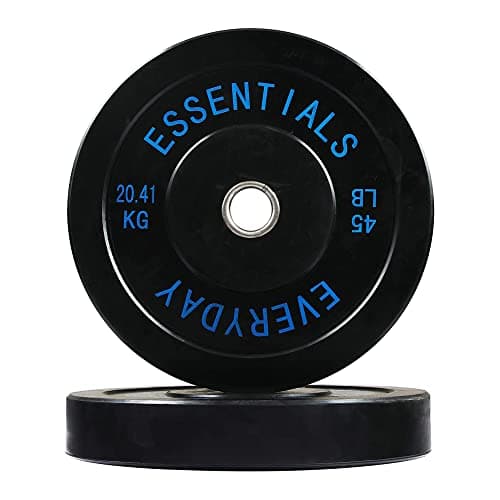
The short version: cast iron is the value buy, bumpers solve exactly one problem, and most budget home gyms should own mostly iron with one pair of bumpers. Bumper plates are rubber-encased, all the same diameter regardless of weight, and built to be dropped from overhead onto a floor. Cast iron is bare metal, gets physically smaller as the weight drops, and is roughly a third to a half the price per pound.
That price gap is the whole decision, and the honest way to make it is to ask a single question: are you going to drop the bar? Not "might you", not "would it be nice to" — will you actually be doing deadlifts you release at the top, or Olympic lifts you have to bail out of? If yes, you need bumpers or you will damage your floor and your plates. If no, the extra money buys you almost nothing.
The short answer
In a hurry? These are the picks we'd buy. Prices are live; tap a card below for the full reasoning.
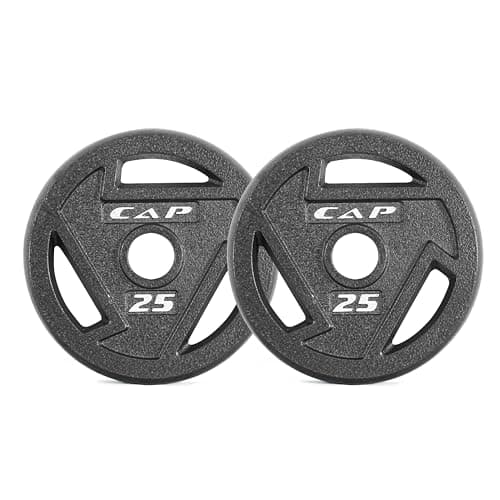
Cast-iron economics with cut-out handles — the version of iron that's actually pleasant to move around.
Material
Cast iron with grip handles
Weight
25 lb pair
Fit
2-inch Olympic sleeve
Extras
Usable for carries and raises
Pros
Handles make loading a bar one-handed genuinely easier
Doubles as a tool for plate carries, halos and raises
Still cast-iron pricing
Cons
Slightly more expensive than plain iron
Handles mean the plate is physically larger
Still not for dropping
Best for: loading, carrying and plate-only exercises.
Skip this
The budget traps that look cheap and cost you twice. We'd skip these.
A full bumper set as your first plate purchase
It's the most common way to overspend in a budget gym. A complete bumper set costs two to three times a comparable iron set, and for the pressing, rowing and squatting that fills most programs, the rubber does nothing you'll notice. Buy iron for the bulk of your weight and add bumpers where the drops happen.
Vinyl or cement-filled plates
The plastic-shelled, sand or cement-filled plates that show up at the very bottom of the market are neither cast iron nor bumpers. They're wildly bulky for their weight, the shells split, and the contents leak. Cast iron costs about the same per pound and lasts forever.
Bumpers on a bar you'll never drop
If you deadlift by lowering the bar under control — which is what most home lifters do, and what neighbors prefer — the rubber's whole reason for existing goes unused. You're paying a premium for a feature you've decided not to use.
How to choose (and what to skip)
Start with the floor, not the plates
What's underneath decides everything. On a garage slab with rubber mats where the bar lands, iron is fine for controlled lifting. On a suspended timber floor upstairs, or a tiled or laminate surface, you want rubber and a mat, or you want to not deadlift there at all. Sort the floor first and the plate question mostly answers itself.
Do the dollars-per-pound math before comparing anything
Divide the price by the pounds for each option you're looking at and write the number down. It's the only honest way to compare a 110 lb iron set against a pair of bumpers, and it's how you'll notice that bumpers usually run two to three times higher.
Watch the sleeve space
This one surprises people. Bumpers are thick because rubber has to be. A loadable Olympic sleeve is finite, so an all-bumper setup runs out of room at a weight where an all-iron setup still has half the sleeve free. If you expect to deadlift heavy, iron (or thin competition-style bumpers, which cost far more) is what keeps the bar loadable.
Match your smallest jump to your training, not your budget
Whichever material you choose, buy small plates. A pair of 2.5s turns a 10 lb jump into a 5 lb one, and progressive overload on a home program lives or dies on being able to add a little. Small plates are cheap in iron and rarely made in bumper form at all.
Buy the hybrid, not the ideology
The setup that serves most budget home gyms: a cast-iron set as the bulk of your weight, plus one pair of 45 lb bumpers that live on the bar for deadlifts. You get the iron price on most of the weight, the correct bar height, and a soft landing where the drops happen.
What bumper plates are actually for
Bumpers exist for one job: letting a loaded barbell hit the floor from height without destroying the floor, the bar or the plates. That comes from Olympic weightlifting, where the whole sport involves dropping the bar from overhead. The rubber absorbs the impact and, crucially, the plates all share the same large diameter regardless of weight, so the bar always lands flat.
That last property has a second, quieter benefit that gets overlooked. A full-diameter bumper plate puts the bar at the standard 8.5 inches off the floor for a deadlift setup. With cast iron, the bar height changes with the weight — a 25 lb iron plate is much smaller than a 45, so a light deadlift starts from a lower position and a different hip angle than a heavy one. If you're learning to deadlift, one pair of full-diameter bumpers keeps the starting position consistent at every load, which is genuinely useful.
What cast iron is actually for
Everything else. Cast iron is the cheapest way to own weight, and weight is what you're buying. It's dense, so it takes up less room on the bar and less room in the corner. It doesn't degrade, doesn't smell, doesn't compress, and a used set from thirty years ago works exactly as well as a new one — which is why cast iron is the best-value thing you can buy second-hand.
The trade-offs are real and small: it's loud, it will chip a concrete floor and itself if you drop it, and bare iron surface-rusts in a damp garage if you never wipe it down. None of those are dealbreakers if the bar isn't going to be dropped, and if you're deadlifting by lowering under control, it isn't.
The money, plainly
Rather than quote numbers that move, here's the method: divide price by pounds for whatever you're looking at today. Do that across our weight plate picks and a consistent pattern shows up — cast iron sets land at the bottom of the range, grip plates a little above them, and bumpers roughly two to three times higher for the same poundage.
Applied to a real build, that gap decides how much weight you own. The same budget that buys a full bumper set will usually buy the iron set and a bar and flooring. On a budget, more weight beats nicer weight almost every time, because your progress is capped by the pounds available, not by what they're coated in.
The hybrid setup we'd actually build
A cast-iron plate set as the base. This is the bulk of your weight and the bulk of the money. Everything you press, row, squat and curl runs on it.
One pair of 45 lb bumpers. They live on the bar. They set the pull height correctly, they make a dropped deadlift a thud instead of a crash, and they're the pair that saves your floor.
Small iron plates. 2.5s, 5s and 10s in iron, because bumpers in those weights are either unavailable, absurdly thick, or expensive.
A rubber mat where the bar lands. Cheaper than any plate and does more for floor protection than the plate material does. Our flooring guide covers what works over concrete.
That's the setup we'd recommend to almost every budget home gym, and it's what the under-$1,000 build ends up looking like once the basics are in.
When you genuinely need a full bumper set
Three cases. If you train Olympic lifts — snatches, clean and jerks — bailing a failed lift is routine, and every plate on the bar will hit the floor from overhead. If you're on an upper floor or share a wall and noise is the binding constraint, rubber everywhere is worth the money for the peace. And if you train in a space where the floor is genuinely precious — a finished basement, a garage with tiled flooring — the cost of one repair exceeds the cost of the plates.
Outside those, a full bumper set is a luxury purchase, and there's nothing wrong with that as long as you know it's what you're buying.
Things that catch people out
A few practical notes worth knowing before you order either type. Bumper thickness varies enormously by price — cheap bumpers are thick, competition bumpers are thin and expensive; the thin ones are what let heavy lifters load a bar fully in rubber. New rubber smells, sometimes strongly, for a few weeks in a closed room. Cast iron is often sold with a slightly loose sleeve fit, which produces the rattle you hear on a bar; collars fix it. And both types are sold by set weight, not by pair, so read carefully — a "110 lb set" and a "110 lb pair" are very different purchases.
Finally, on rust: a wipe with an oiled rag once a season keeps bare iron looking new in a damp garage. It takes five minutes and it's covered properly in preventing rust in a garage gym.
Frequently asked questions
Are bumper plates worth it for a home gym?+
Only if you're going to drop the bar. Bumpers exist so a loaded barbell can hit the floor without damage, and they set the bar at a consistent pull height. If you deadlift by lowering under control and never do Olympic lifts, you're paying two to three times the price per pound for a feature you won't use. One pair of 45 lb bumpers plus cast iron for the rest is the sensible middle.
Can you drop cast iron plates?+
You can, once or twice, and then you'll stop. Cast iron chips itself and cracks concrete, and the noise in a garage is genuinely startling. Iron is for lifting and lowering under control. If dropping is part of your training, buy rubber for the plates that will hit the floor.
How much cheaper is cast iron than bumper plates?+
As a rule of thumb, bumpers run roughly two to three times the price per pound of cast iron, though it varies by brand and sale. The reliable way to check is to divide price by pounds for each option you're comparing — that single number makes the gap obvious and is the only fair way to compare a set against a pair.
Do bumper plates take up more room on the bar?+
Considerably. Rubber has to be thick to absorb impact, so a budget bumper set uses up the loadable sleeve much faster than the same weight in iron. Heavy lifters loading in rubber either buy expensive thin competition bumpers or run out of sleeve — which is a real argument for iron on the bulk of your weight.
What plates should I buy first for a budget home gym?+
A cast-iron set covering the bulk of the weight you'll use, plus small iron plates (2.5s and 5s) so you can make small jumps. Add one pair of 45 lb bumpers when you start deadlifting, and put a rubber mat where the bar lands. That combination gives you the most pounds for the money with the floor protection where it's actually needed.
Prices and availability shown here come from Amazon's live data and change often; we re-verify them regularly. Bar Bumper is an Amazon Associate and earns a commission on qualifying purchases at no extra cost to you. Read our full disclosure.