Best home gym equipment for beginners: the first four buys
Not the biggest list — the shortest one. Four pieces cover every movement a first-year lifter needs, and buying them in this order means nothing sits unused.
Updated August 2026 · By Stephen V.
Every beginner home-gym list makes the same mistake: it's a list of everything, ranked. That's useful if you already know what you'll use and terrible if you don't, because the most expensive beginner error isn't buying cheap gear — it's buying the right gear in the wrong order and leaving half of it unused while you save for the piece that would have made it work.
So this is a shorter list. Four pieces, in the order we'd buy them, each chosen because it unlocks the next one. It covers pressing, pulling, squatting, hinging and carrying — every movement pattern a first-year program uses. If you buy nothing else for a year, you'll still be able to train hard, and everything here stays useful when you do expand. The full multi-category build, with a barbell and a rack, is in our complete budget build.
The short answer
In a hurry? These are the picks we'd buy. Prices are live; tap a card below for the full reasoning.
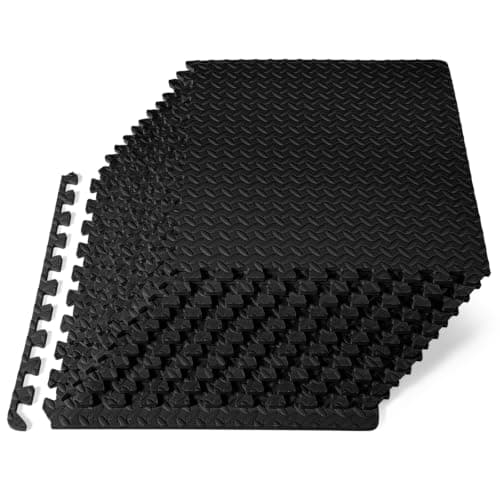
Foam tiles are the least exciting purchase here and the one that decides whether you train on the floor at all.
Type
EVA foam puzzle tiles
Coverage
48 sq ft
Good under
Dumbbells, bodyweight, a bench
Not for
A loaded rack or dropped weights
Pros
Makes floor work and stretching actually pleasant
Protects a slab or a laminate from dumbbell dings
Cheapest way to define the gym area in a shared room
Cons
Too soft for heavy iron — rubber is needed for that later
Tiles shift on smooth floors until they settle
Can dent under a bench's feet
Best for: protecting the floor and your knees.
Skip this
The budget traps that look cheap and cost you twice. We'd skip these.
A barbell and rack as your first purchase
Not because they're bad — they're the best long-term buy in a home gym. But they're the expensive end of a first purchase, they need floor space and safety discipline, and plenty of people find out in month three that they prefer dumbbell training. Start with dumbbells, and buy the rack when you know you'll use it. The under-$500 build is waiting when you get there.
A big fixed dumbbell set
A rack of fixed dumbbells looks like a real gym and is the worst value for a beginner. You'll outgrow the light pairs within months and never touch the heaviest ones, and the whole set occupies floor space permanently. One adjustable pair does the same job in a cubic foot.
An all-in-one machine as a starter gym
The pitch is compelling: one machine, every exercise, no setup. The reality is a fixed light weight stack you outgrow, a large permanent footprint, and no path to add a barbell later. For the same money you can buy everything on this page and have change.
Plastic-selector 'adjustable' dumbbells
The sub-$60 sets with plastic pins and plastic-shelled plates are the one trap in the beginner dumbbell category. The selector strips and the shells crack, and you rebuy in metal anyway. Buy metal mechanisms even at the bottom of the budget — the honest picks are in our adjustable dumbbell roundup.
How to choose (and what to skip)
Buy for the weight you'll reach in a year
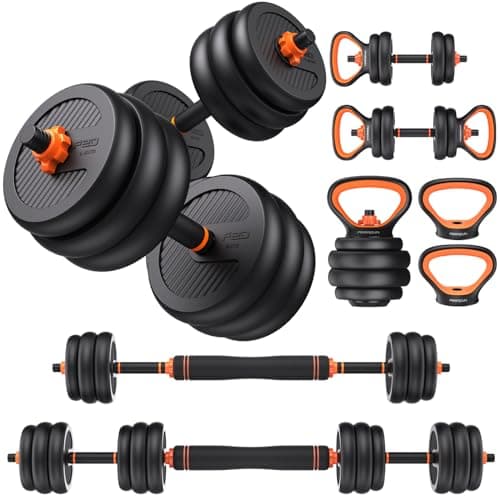
The single most common beginner regret is dumbbells that cap out at 25 lb per hand. Rows and goblet squats pass that within months. Buying a heavier pair once costs less than buying a light pair and then a heavy pair, and the heavier set is just as usable at light weights.
One piece at a time, a few weeks apart
Buying everything on day one is how gear ends up unused. Buy the dumbbells, train with them for a few weeks, and you'll know from your own sessions whether the next thing you need is a bench or a bar to hang from. That order will not be the same for everyone.
Check the door frame before you order the pull-up bar
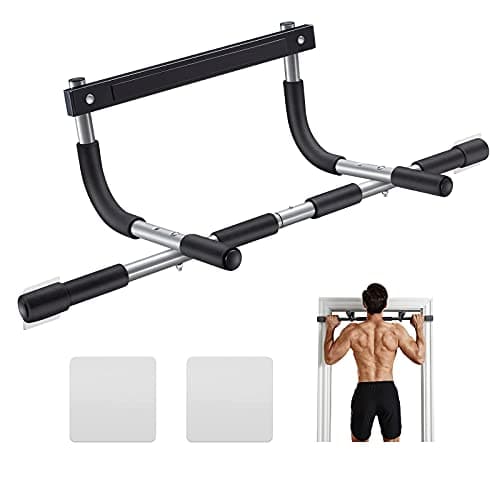
Doorway bars fit a specific range of frame widths and need enough trim depth to grip. Measure the width of the opening and the depth of the molding, and check the door swings clear. It's a two-minute check that prevents the most-returned item on this list.
Space beats specifications for a beginner
The gear you use is the gear that's set up. If a piece has to be dragged out of a cupboard, you will skip it on tired days. Choose the layout that lets the dumbbells and bench live where you'll train, even if that means a slightly smaller set.
Nothing here needs a spotter
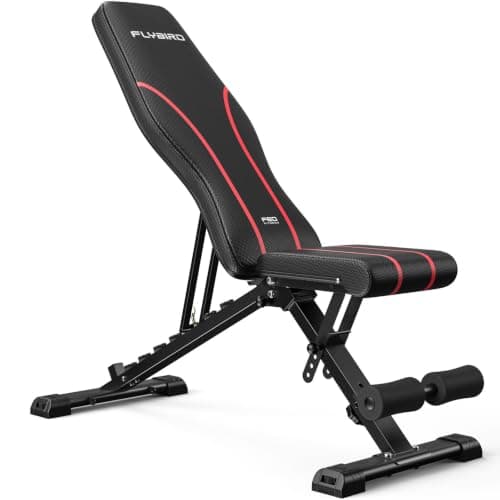
That's deliberate. Every pick on this page can be failed safely on your own — dumbbells can be dropped, the bench has no bar over your chest, and the bar is a hang. That's the right property for a first gym, and it's why the barbell comes later, alongside a rack with safety arms.
Why these four, and in this order
A beginner program needs five things: a way to push, a way to pull, a way to squat, a way to hinge, and a way to load all of it progressively. The four pieces above cover all five, and each one is chosen because it multiplies the value of the ones before it.
Adjustable dumbbells alone cover pushing, squatting, hinging and carrying — roughly seventy percent of a sensible first-year program, standing on the floor with nothing else. Add a bench and you get incline pressing, supported rows and hip thrusts, which is the biggest single jump on the list. Add a pull-up bar and you've closed the one real gap dumbbells leave, the vertical pull. Add flooring and the whole thing becomes somewhere you actually want to train.
Anything you add after that — a barbell, a rack, a cable station, cardio — is an expansion, not a fix. That's the test we used: the four pieces here have no hole between them.
What a first month actually looks like with just these
It's worth being concrete, because "covers every movement pattern" is easy to say. With one pair of adjustable dumbbells, a bench and a bar to hang from, a beginner can run a complete two- or three-day-a-week full-body program:
Push — flat and incline dumbbell press, seated shoulder press, dips off the bench.
Pull — single-arm rows braced on the bench, chest-supported rows on the incline, pull-ups and negatives on the bar.
Squat — goblet squats, split squats, step-ups onto the bench, Bulgarian split squats.
Hinge — Romanian deadlifts, single-leg RDLs, hip thrusts with your back on the bench.
That's a genuinely complete program, and the limiting factor for the first six to twelve months is almost never the equipment — it's how heavy the dumbbells go. Which is exactly why we'd spend the money there rather than spreading it across four cheaper pieces.
What a beginner gym costs, honestly
All four pieces together land in the same territory as our under-$300 build — roughly six months of a typical commercial membership, paid once, and about a year's worth if you buy the heavier dumbbell set. The live prices on this page are pulled from Amazon and stamped with a verification date, so the total you see is today's, not one we typed in months ago.
The comparison people forget to make is against the gym they're actually considering. A membership costs the same every month forever and stops the day you cancel; this gear holds resale value and doesn't. We run that arithmetic properly in home gym vs gym membership.
When to add a barbell
Roughly when two things are true: you've trained consistently for three months or more, and the dumbbells have stopped being heavy enough for your squats and deadlifts. That's usually somewhere between six and eighteen months in, and it's a real threshold rather than an arbitrary one — a pair of dumbbells caps at roughly 110 lb total, while a bar and plates keep going.
When that day comes, buy the rack at the same time as the bar, not after it. A barbell without a rack means every heavy set starts and ends from the floor, which caps your squat at what you can clean and makes benching genuinely unsafe. Our budget power rack picks cover what to look for, and do you need a power rack covers whether you're at that point yet.
The mistakes that cost beginners the most
Buying light. Dumbbells that stop at 25 lb per hand are outgrown in months on rows and squats. Buy for next year.
Buying wide instead of deep. Five cheap pieces spread thin beat one good piece almost never. A better dumbbell set does more for your training than a bench, a mat, a band set and a mini-stepper combined.
Buying a machine to avoid learning technique. The learning is the training. Dumbbells teach you to control a load, which transfers to everything you buy later.
Buying before you've measured. The bench that doesn't fit beside the bed and the pull-up bar that doesn't fit the frame are the two most common returns in this category.
Buying all of it at once. Sequence the purchases weeks apart and let your own sessions tell you what's next.
None of those are about spending more. Three of the five are about spending less, in a better order — which is the whole idea behind this page and the reason it's four items instead of fifteen. When you're ready to see what the full build looks like, the essentials checklist lays out every category in sequence.
Frequently asked questions
What home gym equipment should a beginner buy first?+
One pair of adjustable dumbbells, bought heavy enough to last a year. They cover pressing, rowing, squatting, hinging and carrying with no rack and no spotter, and they take up about a cubic foot. Add a bench second, a pull-up bar third, and flooring fourth — in that order, each purchase makes the previous one more useful.
Do beginners need a barbell and squat rack?+
Not to start. A barbell and rack are the best long-term purchase in a home gym, but they're expensive, need floor space, and require safety discipline. Most beginners are better served buying dumbbells first, training for three to six months, and adding the barbell and rack together once they know they'll use them.
How much should a beginner spend on home gym equipment?+
The four pieces on this page land around the cost of six months of a typical commercial membership, paid once. Spending more than that as a beginner usually buys convenience rather than capability. Check the live prices above for today's actual total — they're pulled from Amazon and dated.
Are adjustable dumbbells good for beginners?+
They're the single best beginner purchase, with one caveat: buy metal mechanisms. The cheap plastic-selector sets crack and strip, and you end up rebuying. A metal adjustable pair covers your entire first year of training, can't pin you, and stores in a corner.
Can you get in shape with just dumbbells and a bench?+
Yes, comfortably, for the first year and usually well beyond. Dumbbells and a bench cover every movement pattern except the vertical pull, which a doorway bar fixes for very little money. The limiting factor is how heavy the dumbbells go, not the variety of exercises available.
Prices and availability shown here come from Amazon's live data and change often; we re-verify them regularly. Bar Bumper is an Amazon Associate and earns a commission on qualifying purchases at no extra cost to you. Read our full disclosure.