Best budget elliptical: the three specs that decide if it is usable
Ellipticals are the joint-friendly cardio option, and the category where cheap gets bad fastest. Stride length, flywheel and frame rating tell you almost everything.
Updated August 2026 · By Stephen V.
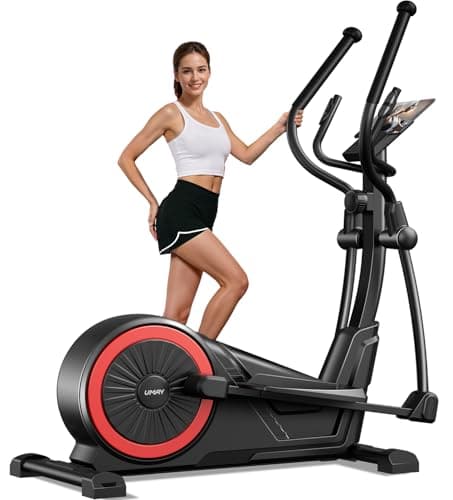
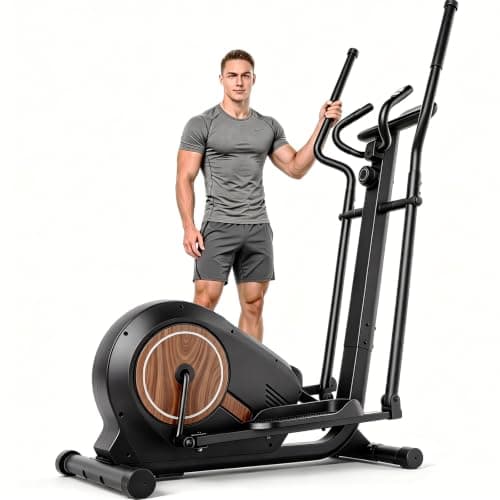
The elliptical is the machine people buy when running hurts. Your feet never leave the pedals, so there is no impact through the knees, hips or lower back, and you can hold a steady effort for a long time without the joint cost of a treadmill. For a lot of people that is the difference between doing cardio at home and not doing it.
It is also the cardio category where the budget end gets genuinely bad. A short stride turns a smooth glide into a choppy shuffle, a light flywheel makes the pedals feel like they are catching on something, and a frame rated too close to your bodyweight will rock at speed. Three specifications tell you most of what you need to know before you look at anything else. Here are the ones worth buying and how to read the numbers.
The short answer
In a hurry? These are the picks we'd buy. Prices are live; tap a card below for the full reasoning.
$139.9914% offPrice as of September 14, 2026·#addisclosure
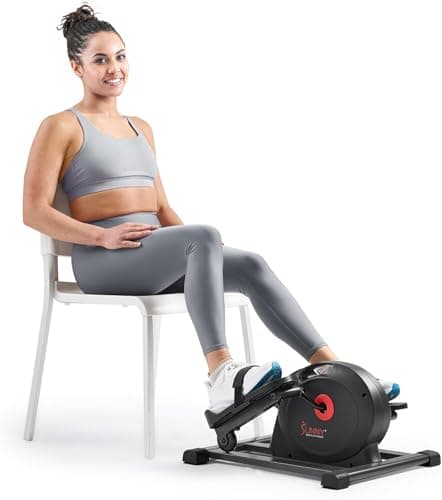
Sunny Health Under-Desk Elliptical
Not a full elliptical and not pretending to be — a pedal unit that puts easy movement into a room with no space for a machine.
Type
Under-desk elliptical
Footprint
Fits under a desk
Resistance
Adjustable
Best for
Low-impact movement, small spaces
Pros
A fraction of the price and a fraction of the floor space
Genuinely usable while working, which is how it accumulates volume
Light enough to move between rooms with one hand
Cons
Seated pedaling is far less demanding than a full elliptical
No upper-body involvement at all
Not a substitute if real cardio conditioning is the goal
Best for: apartments, desks, and very small rooms.
Skip this
The budget traps that look cheap and cost you twice. We'd skip these.
Ellipticals with a very short stride bought by tall users
Stride length is the specification that decides whether the machine feels like gliding or shuffling. Gym ellipticals typically run around 18-20 inches; budget machines are often well short of that. If you are over about 5 foot 10 and the listing does not state a stride length at all, assume it is short and expect a cramped, choppy motion.
Any elliptical with a frame rating close to your bodyweight
The frame rating on cardio equipment is a static number, and elliptical use is anything but static — you are pushing down and forward on alternating sides, several times a second. A rating that barely clears your weight means a machine that flexes and rocks, and flex is what kills bearings and welds on cheap cardio gear.
How to choose (and what to skip)
Stride length first
This is the specification that decides how the machine feels. A longer stride lets your legs move naturally; a short one forces a cramped shuffle that gets uncomfortable within minutes. Taller users need more. If a listing does not publish a stride length, treat that silence as an answer.
Flywheel weight, second
The flywheel is what carries the pedals through the dead spots. A heavier one gives a smooth, continuous motion; a light one feels like it catches and surges. Budget machines run lighter flywheels than gym equipment, which is the main reason they feel different, so take the heaviest one in your price range.
Frame rating, third
Look for meaningful headroom over your actual bodyweight, not a number that just about clears it. The rating is a proxy for how much steel is in the frame, and on cardio equipment the frame is what keeps the thing from rocking at speed. Rocking is the failure that leads to every other failure.
Magnetic resistance is standard now, and worth insisting on
Magnetic resistance is quiet, has no contact parts to wear, and adjusts in defined levels. Friction-pad resistance is cheaper, noisier, and wears out. In this price band magnetic is normal — if you find a machine that is unusually cheap, check whether this is where the saving came from.
Ignore the console
The displays on budget cardio equipment are approximate at best, and the calorie figures in particular are guesses. Do not pay extra for a bigger screen or a longer list of preset programs. Use a heart-rate strap or a phone app if you want numbers you can trust, and judge machines on stride, flywheel and frame.
Elliptical, treadmill, bike or rower?
The elliptical's specific case is zero impact with a full range of leg motion and some upper-body involvement from the handles. That combination is what makes it the go-to for people with knee, hip or ankle problems, and for anyone in an upstairs apartment where running is not neighborly.
Against the alternatives: a budget treadmill is better if walking and running are your actual goals and impact is not a problem. A budget exercise bike is cheaper, quieter and takes less floor space, but works less of the body. A budget rower is the best full-body option and the hardest to do badly-formed. Our treadmill versus rower comparison covers that decision when space is the constraint.
Noise, floors and neighbors
A magnetic elliptical is one of the quietest pieces of cardio equipment you can own — there is no impact and no fan noise. What noise there is comes from the frame moving against a hard floor. A rubber-top tile or a mat under each foot kills almost all of it and stops the machine marking the floor. Our budget flooring roundup covers the cheapest way to cover a machine footprint, and quiet cardio for apartments covers the whole noise question if you share walls.
What a cheap elliptical will not do
It will not feel like a commercial machine. The stride will be shorter, the flywheel lighter and the motion less smooth, and no amount of shopping around fixes that at this price. What a good budget machine does do is give you consistent, joint-friendly cardio at home for less than a few months of gym membership — which, per our home gym versus membership breakdown, is usually where the money argument lands.
Also worth knowing: ellipticals are among the largest single items in a home gym and almost none of them fold. Measure the footprint before you order, and read how much space a home gym needs if the room is tight.
Frequently asked questions
Are cheap ellipticals any good?+
The better ones are genuinely usable, provided you match the machine to your body. The specifications that decide it are stride length, flywheel weight and frame rating — get those right for your height and weight and a budget elliptical gives you real low-impact cardio. Get them wrong and you get a short, choppy stride on a machine that rocks, which is why so many end up unused.
What stride length do I need on an elliptical?+
Taller users need more. Commercial machines commonly sit around 18-20 inches, and budget home machines are usually shorter, which is the single biggest compromise in the category. If you are tall, prioritize stride length over every other feature, and treat a listing that never states the stride as a warning sign.
Is an elliptical better than a treadmill?+
For joint comfort, yes — your feet never leave the pedals, so there is no impact. For specificity, no: if you want to get better at walking and running, a treadmill trains that directly. Ellipticals also involve the upper body through the handles, which treadmills do not. Choose on impact tolerance and what you actually want to be good at.
How much space does an elliptical need?+
More than most people expect and, unlike treadmills, almost none of them fold. Measure the machine footprint from the listing, then add clearance behind for the moving pedals and enough room to get on and off safely. If the space is genuinely tight, an exercise bike or a rower is the more realistic buy.
Prices and availability shown here come from Amazon's live data and change often; we re-verify them regularly. Bar Bumper is an Amazon Associate and earns a commission on qualifying purchases at no extra cost to you. Read our full disclosure.