Cheap landmine attachments: the four that are worth buying, and which anchoring style fits your gym
A landmine is the cheapest way to add a whole category of exercises to a barbell you already own. The decision is not which brand — it is how the thing stays on the floor.
Updated October 2026 · By Stephen V.
For most people the right buy is the cheapest one: a plate-pinned floor base like the Yes4All landmine attachment, which fits both 1-inch and 2-inch bars and costs about as much as a single 10 lb plate. If you own a power rack, the SYL Fitness rack-mounted landmine gets the pivot off your floor and out of the way. If you want a base that stays put with nothing on top of it, the REP Fitness free-standing landmine is the one with real published numbers behind it — 33 lb of steel and a 500 lb rated capacity.
A landmine is the least glamorous and probably the highest-value attachment in a budget gym. It is a sleeve that one end of your barbell drops into, with a pivot so the bar can travel in an arc. That single hinge gives you a shoulder-friendly press, a heavy row, a rotational core movement, a goblet-style squat and a single-leg RDL variation — exercises you otherwise need a cable stack or a dumbbell rack to train. For a budget gym built around one barbell and a pile of cheap plates, nothing else adds that much range for that little money.
Which is why the buying decision is almost never about the steel. Every attachment on this page is a powder-coated steel tube with a pivot; the differences that matter are how it stays anchored while you pull against it, which bar diameters the sleeve accepts, how long that sleeve is, and what capacity the maker publishes. Get the anchoring wrong and you will spend every set chasing a base that creeps across the floor.
There are three anchoring styles, and they map cleanly onto three kinds of home gym. A plate-pinned base is a flat plate with a sleeve on it; you drop a weight plate over a post or set it in a corner and your own plates hold it down. A rack-mounted unit clamps or pins to a rack upright, so the rack is the anchor and the floor stays clear. A free-standing base is heavy enough on its own — 33 lb in the case of the REP — that nothing has to hold it at all. We have not load-tested these units; every capacity and dimension below is the manufacturer's or the retailer's published figure, labelled as such.
The short answer
In a hurry? These are the picks we'd buy. Prices are live; tap a card below for the full reasoning.
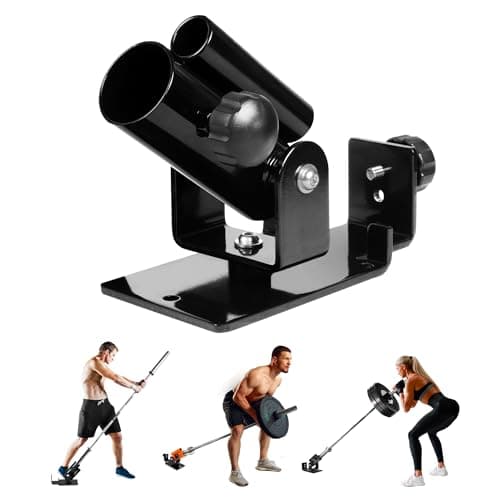
Yes4All Landmine Attachment with Weight Plate Holder (1 in & 2 in)
A plate-pinned base with a 360-degree swivel that fits both 1-inch standard and 2-inch Olympic bars, at the price point where the only real alternative is going without.
anyone who owns a barbell and plates and wants landmine work for the least money
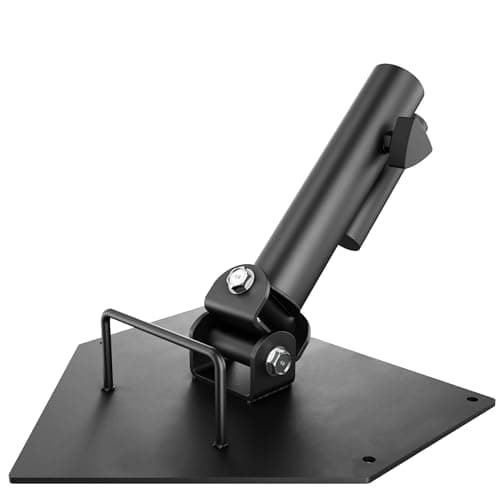
A 12.5 lb base with a published 350 lb capacity unbolted and 750 lb bolted, with sleeves for both 1-inch and 2-inch bars, from a brand that actually publishes its numbers.
heavy rowing from a base that will not move once you put a plate on it
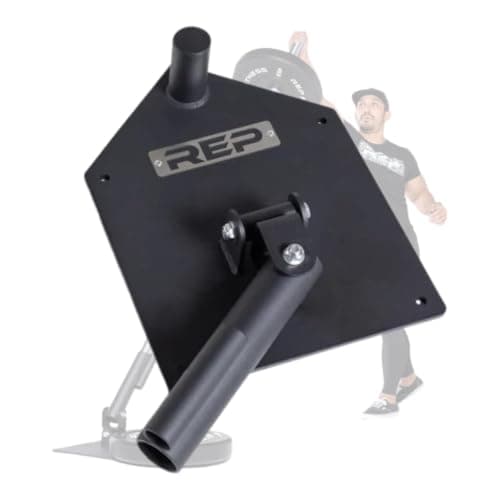
33 lb of base, a published 500 lb capacity and a 10.3 inch sleeve from a brand with a real warranty department — the version of this product you buy once.
a gym with no rack, no bolts and no patience for a base that moves
$27.5622% offPrice as of October 6, 2026·#addisclosure
Yes4All Landmine Attachment with Weight Plate Holder (1 in & 2 in)
A plate-pinned base with a 360-degree swivel that fits both 1-inch standard and 2-inch Olympic bars, at the price point where the only real alternative is going without.
Anchoring
Floor, pinned by a plate
Bar fit
1 in and 2 in (listing)
Sleeve
9.4 in long (listing)
Swivel
360 degrees (listing)
Plate holder
Yes (listing)
Capacity
Not published
Pros
Fits both 1-inch standard and 2-inch Olympic sleeves, which matters because plenty of cheap home gyms still run a 1-inch bar — most landmines on the market are Olympic-only
A full 360-degree swivel, so rotational work (landmine twists, half-kneeling presses that travel across your body) is on the table rather than fighting the hinge
The integrated plate holder means the plate doing the anchoring is also stored there between sessions, which is one fewer plate on your floor
Cheap enough to be an impulse buy. If landmine pressing turns out not to suit your shoulders you have lost roughly the price of a protein tub
Yes4All is the most established name at this price tier and sells the widest range of landmine accessories, so handles and bases match up later
Cons
It is only as anchored as whatever you put on it. With a light bar and no plate holding the base down, a hard row will drag it across the floor — load the holder first, every time
No published weight capacity, which is the single biggest gap in the listing. Treat it as a tool for sensible landmine loads, not a place to hang every plate you own
Bare steel on a bare concrete or tile floor marks both. It wants a rubber mat under it, which the cheapest buyers often skip
The base plate is small, so on a slick surface the whole unit can rotate as well as slide if you row with any lateral pull
The sleeve is shorter than the premium bases, so the bar sits slightly less deep — fine in practice, but it is why this is not the pick for the heaviest loading
Best for: anyone who owns a barbell and plates and wants landmine work for the least money.
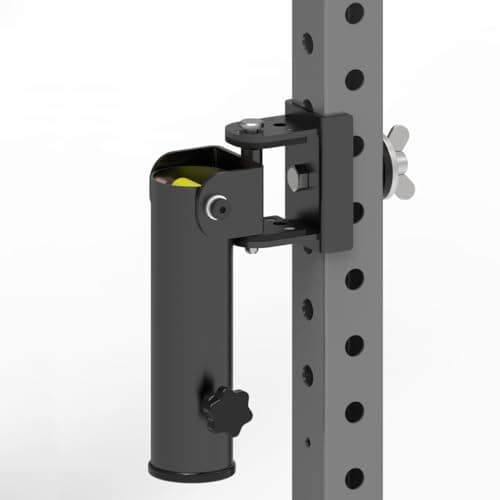
Mounts to a rack upright so the rack is the anchor and your floor stays clear, which solves the sliding problem that every cheap floor base has.
Anchoring
Rack upright (bolted)
Fits tube
2x2 in or 3x3 in (variant)
Bar fit
2 in Olympic (listing)
Pivot height
Set by mount position
Floor space
None
Capacity
Not published
Pros
The rack is the anchor, so nothing slides. That removes the most common frustration with landmine work in a home gym at a stroke
Zero floor footprint. The attachment lives on the upright and you walk past it without noticing it, which in a one-car garage is worth more than any spec
Sold in variants for both 2x2 inch and 3x3 inch square tube, which between them cover almost every budget rack on the market
You can mount it at the height that suits the movement — low for presses and rows, higher if you want a steeper angle
No plate needed to hold it down, so you are not spending a 45 to keep your landmine still
Cons
You have to order the right variant. Buying the 3x3 version for a 2x2 rack (or the wrong hole size — 5/8 inch versus 1 inch) is the single most common complaint in this whole category and it is entirely avoidable: measure your upright and your hole diameter before ordering
Useless without a rack, which makes it the wrong first purchase if you train with a bar and plates on an open floor
A rack-mounted pivot sits higher than a floor pivot, and that changes the bar path. Presses feel steeper and landmine squats get awkward — mount it as low as the rack allows
No published capacity figure, and the mount is now loading your rack's upright in a direction the rack maker never specified
SYL Fitness is a marketplace brand. The steel looks the same as everyone else's at this price, but there is no independent testing behind it
Best for: a garage gym built around a 2x2 or 3x3 power or squat rack.
A 12.5 lb base with a published 350 lb capacity unbolted and 750 lb bolted, with sleeves for both 1-inch and 2-inch bars, from a brand that actually publishes its numbers.
Anchoring
Floor, 12.5 lb base (mfr)
Bar fit
2 in (10 in sleeve) + 1 in (5.7 in)
Capacity
350 lb unbolted (mfr)
Bolted capacity
750 lb+ (mfr)
Footprint
14 x 14 x 12 in (mfr)
Finish
Powder-coated steel
Pros
Real published numbers: 12.5 lb base weight, a 350 lb capacity unbolted and 750 lb-plus bolted to the floor. Nothing cheaper on this page publishes a capacity at all
Two sleeves — a 10-inch sleeve for 2-inch Olympic bars and a 5.7-inch sleeve for 1-inch bars — so it covers both bar standards without an adapter
The 14 by 14 inch base is wide enough to resist the twisting that drags a small plate base sideways during a row
Can be bolted down if you want it permanent, which more than doubles the published capacity
Synergee is a mid-tier brand that publishes specs, which is unusual at anything near this price and is the reason it is on the list
Cons
Roughly three to four times the cost of the cheapest pick, which for a lot of budget buyers is the whole argument against it
12.5 lb is not enough to hold a heavy bar down by itself. The published 350 lb figure is a capacity, not a promise it will not tip — you still want a plate on the base or a bolt in the floor
It is a base, not an elevated platform. There are no footplates to stand on, so if you specifically want the raised T-bar row setup you see in commercial gyms, this is not it
Stock on this model runs thin and the listing has been intermittent. Check availability before you plan a session around it
Takes a permanent 14-inch square of floor unless you are willing to carry 12.5 lb of steel in and out
Best for: heavy rowing from a base that will not move once you put a plate on it.
33 lb of base, a published 500 lb capacity and a 10.3 inch sleeve from a brand with a real warranty department — the version of this product you buy once.
Anchoring
Free-standing, 33 lb base (mfr)
Capacity
500 lb (mfr)
Bar fit
2 in sleeves + 1.3 in (mfr)
Sleeve
10.3 in (mfr)
Footprint
18.4 x 13.8 in base (mfr)
Finish
Matte black powder coat (mfr)
Pros
33 lb of base means it stays where you put it with nothing on top of it — no plate, no bolt, no corner. That is the entire point and it is worth the premium if sliding has annoyed you before
A published 500 lb capacity, the highest on this page, and the only figure here that comes from a company that sells to commercial gyms
The 10.3 inch sleeve is the longest here, which means more of the bar end is supported and less leverage on the pivot
Takes a 1.3 inch sleeve as well as a standard 2 inch Olympic sleeve, so an odd older bar still works
REP Fitness is a real brand with real customer service. On a product you will own for a decade, that is the difference worth paying for
Cons
Three to five times the price of the cheapest pick, which on a site about building a gym cheaply has to be said plainly: most people do not need this
33 lb is heavy to shift. If your gym is a corner of a living room that has to be put away, this is the wrong product
The 18.4 by 13.8 inch base claims a permanent patch of floor, and the sleeve extends the total length to over two feet
Redundant if you already own a rack — a rack-mounted unit costs a third as much and takes no floor
No warranty terms are published on the product page, so do not assume the brand's rack warranty carries across to an accessory
Best for: a gym with no rack, no bolts and no patience for a base that moves.
Skip this
The budget traps that look cheap and cost you twice. We'd skip these.
Clamp-on 'landmine' sleeves that grip the bar end
A sleeve that clamps onto your barbell and provides the pivot at the other end puts all the bending load on the bar sleeve and the clamp. It is the wrong place for that force, and it is the design most likely to mark or bend a cheap bar. Pay the extra few dollars for a base the bar drops into.
Plastic-bushed swivels
The pivot is the only moving part on the whole product, so it is the one place not to save money. A plastic bushing in the swivel develops slop, then grit gets in, then the movement gets gritty under load. Steel-on-steel is the baseline expectation here, and it is available at the cheapest price point.
The wrong tube size for your rack
Rack-mounted landmines are sold per upright size, usually 2x2 inch or 3x3 inch, and often per hole diameter as well (5/8 inch or 1 inch). The listing photo looks identical across variants. Measure the tube and the hole on your own rack before you order, because this is a return, not a workaround.
Jamming the bar into a wall corner instead
It works, which is why people do it, and it will wreck the corner and the bar sleeve knurling in a few months. The cheapest real landmine base costs less than the drywall repair, and it swivels, which a corner does not.
How to choose (and what to skip)
Decide the anchoring style first
Everything else is detail. If you own a rack, buy the rack-mounted unit and keep your floor clear. If you train on an open floor and you already own plates, buy a plate-pinned base and put a 25 or a 45 on it. If you want something that never moves and never needs a plate, buy the heavy free-standing base and accept that it costs more and weighs 33 lb. Those are the three real choices, and brand names barely enter into it.
Check your bar diameter before anything else
A 2-inch Olympic sleeve and a 1-inch standard sleeve are not interchangeable, and a surprising amount of cheap home gym equipment is still 1-inch. Most landmine attachments are Olympic-only. Two of our four picks take both standards, which is the main reason they are here. If you are not sure which you own, measure the bar end, not the plate hole.
Sleeve length is the spec nobody checks
The sleeve is the tube the bar end sits in. Longer means more of the bar is supported and less leverage is working on the pivot when you load it up. Published figures on this page run from 9.4 inches on the cheapest pick to 10.3 inches on the REP. It is a small range, but it correlates with how much slop you feel at the bottom of a heavy row.
Treat published capacity as a label, not a test
Two of these four publish a capacity figure and two do not. A published number from a brand that sells to gyms means something; a number absent from a marketplace listing means you should load conservatively. Nothing on this page has been independently load-tested, including by us. If you are loading a landmine with 200 lb or more of plates, buy the base that publishes a figure above that with real margin.
Budget for a mat and maybe a handle
Two small extras change the experience. A rubber mat under the base stops steel marking concrete and damps the noise, and cheap interlocking tiles are enough. A double-D or V-handle that slips over the bar sleeve turns awkward T-bar rows into a proper neutral-grip pull. Neither is essential on day one, and both are cheaper than almost anything else in a gym.
What a landmine will not replace
It is not a cable machine. There is no constant tension, no adjustable pulley height and no isolation work beyond what an arcing barbell can do. It is also not a substitute for a rack if what you need is to squat and bench safely alone. Buy it as a cheap way to widen what one barbell can train, which is exactly what it is good at.
What a landmine actually adds to a one-barbell gym
The honest case for a landmine is that it turns a barbell into four or five tools. The press is the headline: because the bar travels on an arc rather than straight overhead, the shoulder works in a plane that a lot of people find far more comfortable than a strict overhead press, and you can press one arm at a time. The row is the other big one — a bar end on the floor with plates loaded on the other end gives you a heavy, braced, back-biased pull that is hard to replicate without a cable stack. Add rotational work, a goblet-ish squat holding the bar end at your chest, and single-leg RDLs, and one twenty-dollar accessory has widened the gym more than any other purchase at that price.
It is also the attachment that makes a cheap plate collection more useful. If you have been building toward the setup in our best budget home gym equipment pillar — a bar, a bench, some plates, a rack if you have the space — the landmine is the next thing to buy, ahead of almost any machine. It costs less than a single pair of adjustable dumbbells and it adds exercises rather than duplicating them.
Rack-mounted or on the floor?
If you own a rack, mounting it on the rack is usually right — there is nothing to anchor, nothing to trip over and nothing to slide. The one real downside is the pivot height. Mounted even a foot off the floor, the bar's arc starts higher, which makes pressing steeper and makes landmine squats and RDLs awkward. Mount it in the lowest hole the rack offers and the problem mostly goes away. If your rack is a cheap 2x2 frame, check the upright gauge and hole size before you order: an attachment is only as strong as the tube it clamps to.
If you do not own a rack — and plenty of budget gyms run a bar, plates and a bench on an open floor — the choice is between a cheap plate-pinned base and a heavy free-standing one. The cheap base is fine as long as you remember to weight it. The heavy base is the version you buy when you are tired of remembering. Both are legitimate; the gap between them is about forty dollars and one habit.
The mistake that ruins the cheap ones
Almost every one-star review in this category is the same story: the base slid, scratched the floor, or tipped. Nearly all of it is the anchoring, not the steel. A plate-pinned base with no plate on it is a sled. Put a 25 lb or 45 lb plate over the post, and the same unit becomes solid. Put it on a rubber mat instead of bare concrete, and the sliding mostly stops before the plate is even involved. These two steps cost nothing and they decide whether a cheap landmine feels like equipment or like a gimmick.
The second-most-common complaint is the one that is genuinely the buyer's fault: ordering a rack-mounted unit that does not fit the rack. Uprights come in 2x2 inch and 3x3 inch, and hole diameters in 5/8 inch and 1 inch, and the listings look identical. Measure first. It is the same discipline that makes a lat pulldown attachment purchase work or fail.
What to buy alongside it
A landmine makes the most sense if you already have plates to load it with. Our cheap weight plates roundup covers which cheap plate sets are worth buying and which are sized so oddly they will not fit a standard sleeve, and the best budget barbell page covers the bar itself — the single most important purchase in a barbell gym and the one where cheap has real limits. If you are still deciding between a barbell setup and dumbbells in the first place, barbell vs dumbbells for a home gym works through that trade honestly, and the landmine is one of the arguments on the barbell side.
And if the attraction here is specifically heavy back work, it is worth reading cheap trap bars alongside this page. A trap bar and a landmine solve overlapping problems from opposite directions — one changes your grip on a deadlift, the other changes the bar path on a row and a press — and between them they cover most of what a budget gym is missing without a cable machine.
Frequently asked questions
What is the cheapest way to add a landmine to a home gym?+
A plate-pinned floor base, which is the style our top pick uses. It is a flat steel plate with an angled sleeve and a swivel; you drop one of your own weight plates over the post to hold it down and slide your barbell end into the sleeve. It is the cheapest option by a wide margin, it needs no rack and no bolts, and it works with the plates you already own.
Do I need a power rack to use a landmine attachment?+
No. Only the rack-mounted style needs a rack; floor bases and free-standing bases work on an open floor. If you do own a rack, the rack-mounted version is usually the better buy because the rack provides the anchoring and the attachment takes no floor space — just make sure you order the variant that matches your upright size and hole diameter.
Will a cheap landmine attachment slide across the floor?+
A plate-pinned base will, if you forget the plate. Load the post with a 25 lb or 45 lb plate and it stops. A rubber mat underneath helps as much as the plate does, and also stops the steel marking concrete. A heavy free-standing base like the REP, at a published 33 lb, stays put with nothing on it at all — that is what the extra money buys.
Does a landmine attachment fit a 1-inch standard barbell?+
Some do. Most landmines are made for 2-inch Olympic sleeves only, but two of our four picks publish fits for both 1-inch and 2-inch bars. If you are running a cheap 1-inch standard bar, check that explicitly before ordering — it is the single most common compatibility mistake in this category. Measure the bar sleeve itself, not the hole in your plates.
How much weight can a landmine attachment hold?+
It depends entirely on the unit, and half of the market does not publish a figure. Of our picks, Synergee publishes 350 lb unbolted and 750 lb-plus bolted, and REP publishes 500 lb; the two cheapest publish nothing. None of these has been independently load-tested, including by us. If you plan to load heavy, buy one that publishes a number comfortably above what you intend to put on the bar.
Is a landmine attachment worth it for a beginner?+
Yes, and arguably more so than for an advanced lifter. The landmine press is one of the friendlier ways to learn overhead pressing mechanics, the landmine row is easy to brace, and the whole category gives a beginner with one barbell several more exercises for about twenty dollars. It is one of the better value purchases in our beginner home gym ordering.
Landmine or cable machine for a budget home gym?+
They are not substitutes. A landmine costs twenty to a hundred dollars and adds arcing barbell movements; a cable machine costs several hundred and adds constant-tension pulling at adjustable heights. If money is the constraint, buy the landmine now and read budget cable machines later — or cable machine vs bands, which covers the cheapest route to cable-style work.
Do I need a special handle for landmine rows?+
No, but a double-D or V-handle that slips over the bar sleeve makes T-bar rows considerably more comfortable and lets you pull with a neutral grip. Without one you are gripping the bar sleeve itself, which works and is what most people start with. Buy the base first and decide about the handle after a few sessions.
Prices and availability shown here come from Amazon's live data and change often; we re-verify them regularly. Bar Bumper is an Amazon Associate and earns a commission on qualifying purchases at no extra cost to you. Read our full disclosure.