Cheap suspension trainers: what the brand-name premium buys
Two straps, two handles and an anchor. The expensive version has better hardware and a real warranty. Here is when that matters and when it does not.
Updated August 2026 · By Stephen V.
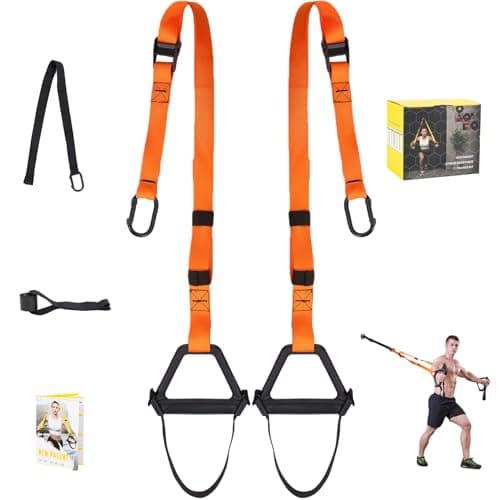
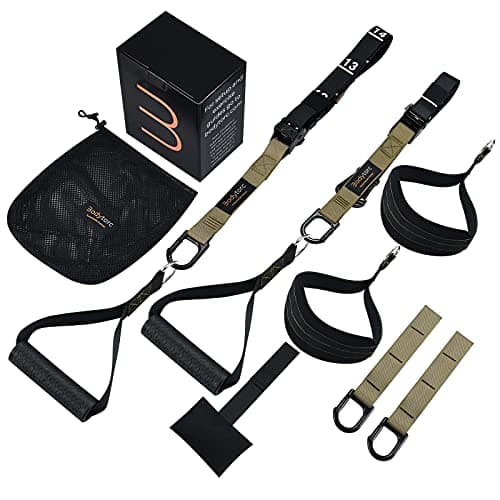
A suspension trainer is two adjustable straps with handles, anchored above you, that let you load your own bodyweight at any angle you like. Change your foot position and a row goes from easy to brutal without touching a plate. It packs into a bag, hangs from a door, a beam or a rack, and takes about a minute to set up. For travel, small apartments and rentals, nothing else in home fitness is quite so useful per cubic inch.
The category was defined by one expensive brand, and the honest question for a budget buyer is what the premium buys. The answer: better webbing and buckle hardware, more refined handles, a proper warranty, and a support ecosystem. What it does not buy is a different exercise. Here are the three we would look at, including the brand-name version so you can see the trade for yourself.
The short answer
In a hurry? These are the picks we'd buy. Prices are live; tap a card below for the full reasoning.
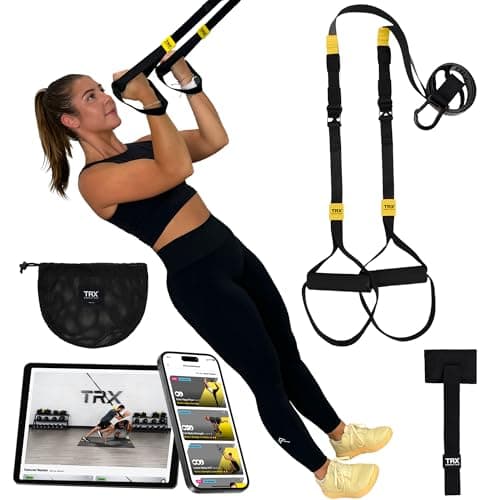
The brand-name compact trainer — better hardware and a real warranty, at several times the price of the budget kits.
Type
Compact suspension trainer
Weight
Travel-oriented, packs small
Anchors to
Door, beam, rack
Best for
Travel, long-term ownership
Pros
Hardware and webbing quality are visibly a level above the budget kits
Packs smaller and lighter than most of the cheap sets
Backed by an actual warranty and a support ecosystem
Cons
Several times the price for the same set of exercises
Compact design means less padding than the full-size versions
Hard to justify against a $35 kit for occasional home use
Best for: seeing exactly what the premium buys.
Skip this
The budget traps that look cheap and cost you twice. We'd skip these.
Door anchors used on doors that open toward you
Every door anchor works the same way: a soft block on the far side of a closed door, with the strap passing through the gap at the top or the hinge side. It only holds if the door opens away from you, and it only stays safe if nobody can open that door mid-set. Lock it, or use another anchor.
Suspension straps as a replacement for weights
Suspension training loads a percentage of your own bodyweight, and the maximum is your bodyweight at the hardest angle. That is excellent for rows, core and single-leg work, and it has a ceiling. If your goal is to get strong at pressing and pulling heavy, this is an accessory to a barbell setup, not a substitute for one.
How to choose (and what to skip)
Check the anchor before the straps
The best strap set in the world is useless without somewhere to hang it. Options are a door anchor, a beam or joist wrap, a rack crossmember, or a wall or ceiling mount. Door anchors suit renters, wraps suit garages, and hard mounts suit permanent setups. Work out which applies to you first.
Buckle and webbing quality is the real difference
This is where budget kits save money and it is also the only part carrying your bodyweight. Look at the buckle mechanism, the stitching where the webbing loops back on itself, and any wear point where the strap passes over an edge. Inspect all of that every few months, whatever you paid.
Handles and foot cradles
Handle comfort decides how long you can train before your hands give out, and foot cradles decide whether inverted and single-leg work is pleasant. Cheap kits usually have thinner padding on both. It is a comfort difference rather than a capability difference, but it is the one you notice most.
Length adjustment speed
Suspension work involves changing strap length constantly between exercises. Faster adjustment mechanisms are the main practical advantage of the premium products. If you plan to follow structured circuits, that speed is worth something; if you will do three exercises at one setting, it is not.
Buy the cheap one first
This is the rare category where we would actively suggest starting at the bottom. A $35 kit tells you within a month whether suspension training suits you. If it does, upgrading later costs less than buying the premium version and discovering it lives in a cupboard.
What suspension straps are genuinely good at
Three things. Rows, because there is no cheaper way to get a scalable horizontal pull at home and most budget gyms are short of pulling volume. Core work, because a suspended plank or fallout is far harder than the floor version and instantly adjustable. And single-leg work, because holding the straps lets you get into split squats and pistol progressions that would otherwise need a balance you have not built yet.
That makes them a good complement to a barbell gym rather than a competitor to one. For pulling, they pair naturally with the vertical work in our cheap pull-up bar roundup, and with gymnastic rings, which do a similar job with a different feel.
Rings or straps?
They overlap heavily. Rings rotate freely and are better for dips, muscle-up progressions and anything where free rotation helps the shoulder; they need a high anchor and are harder to use at shallow angles. Suspension straps have fixed handles, come with a door anchor, and are easier for rows and core work at floor level. If you have a high beam, buy rings. If you have a door and a suitcase, buy straps.
Setting up safely
Whatever you anchor to, three rules cover almost everything. Anchor above head height wherever possible, so the strap angle works with you rather than against. Test any new anchor with your full weight in a static hang before you do anything dynamic on it. And put something soft under the strap wherever it passes over an edge, because webbing wears through on corners faster than most people expect.
If your anchor is a garage joist, our shed and outbuilding gym guide and the rings page both cover what to look for structurally, and the same rules apply here.
Frequently asked questions
Are cheap suspension trainers as good as the brand-name one?+
For the exercises, yes — the movements are identical, and a budget strap set does them all. What you pay extra for is webbing and buckle quality, handle comfort, faster length adjustment and a real warranty. For occasional home use, the cheap kit is the sensible buy; for daily use over years, the better hardware starts to earn its price.
Where can I anchor a suspension trainer?+
A door anchor over a closed door that opens away from you, a strap wrapped around a beam or exposed joist, the crossmember of a squat rack, or a dedicated wall or ceiling mount. Test any new anchor with a static hang at full bodyweight before doing anything dynamic on it, and never use a door that somebody could open mid-set.
Can suspension training replace weights?+
No, and it is not meant to. It loads a proportion of your own bodyweight, so the ceiling is your bodyweight at the hardest angle. It is excellent for rows, core and single-leg work and it complements a barbell gym extremely well, but it cannot progressively overload the way plates do.
Rings or suspension straps for a home gym?+
Straps if your anchor is a door or you want something that travels — they are easier for rows and floor-level core work. Rings if you have a high beam or rack and want free rotation, dips and gymnastics progressions. Both cost little enough that plenty of people end up owning each.
Prices and availability shown here come from Amazon's live data and change often; we re-verify them regularly. Bar Bumper is an Amazon Associate and earns a commission on qualifying purchases at no extra cost to you. Read our full disclosure.