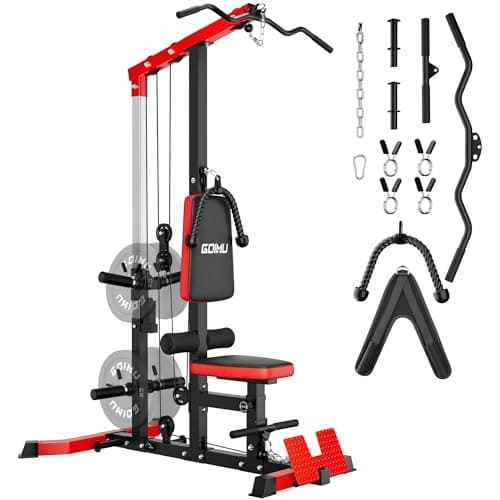
Best budget cable machine
Best budget cable machine: 4 cheap towers that earn their spot
The cheap cable machines worth the floor space, ranked — and why plate-loaded beats a stack on a budget.
Updated July 2026 · Stephen V.
Cable machines, lat towers, functional trainers and all-in-ones. Which add real value on a budget, and which are just an expensive way to lift less weight.
Machines are the category where budget buyers most often overspend on the wrong thing. Here's the honest framing: for pure strength and value, a rack, a bench, and free weights beat almost any budget machine. Machines earn their place when you want cable movements (lat pulldowns, rows, face pulls, tricep pushdowns) that free weights can't replicate — not as a replacement for the barbell.
Two things drive machine price: the weight stack (selectorized stacks cost more than plate-loaded) and the pulley/cable quality. On a budget, plate-loaded is the smart call — you already own plates, and it's cheaper and infinitely expandable. A selectorized stack is convenient but adds cost and caps you at the stack's max weight.
The mistake budget buyers make: buying a $500 all-in-one as their first purchase, then outgrowing its light stack in months. Build the free-weight base first; add a cheap lat tower for the cable movements you actually miss. That order gets you more capability for less money.
Each with live prices, our spec-scoring, and the budget traps to skip.
The cheap cable machines worth the floor space, ranked — and why plate-loaded beats a stack on a budget.
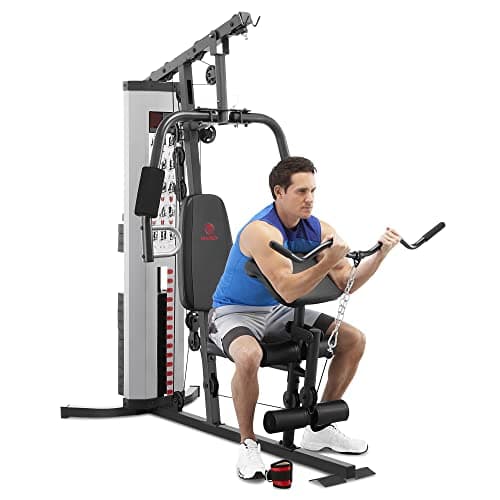
The cheap all-in-one multi-stations worth buying, and an honest look at the fixed-stack trade-off.
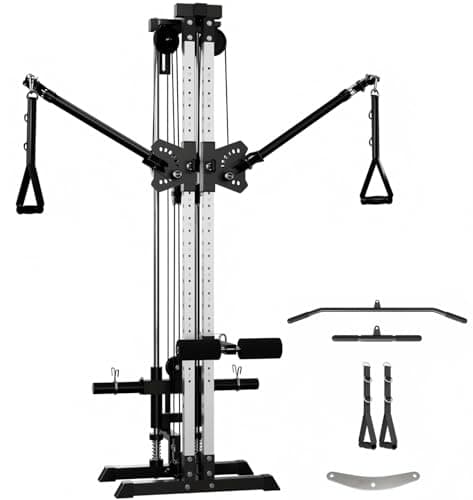
Budget dual-pulley trainers and cable stations ranked on pulley count, mounting and load.
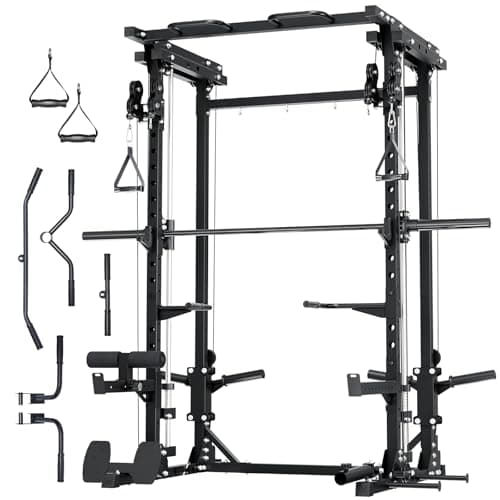
The budget Smith machine worth buying, honestly compared against the cage and folding rack that undercut it.
Our top pick
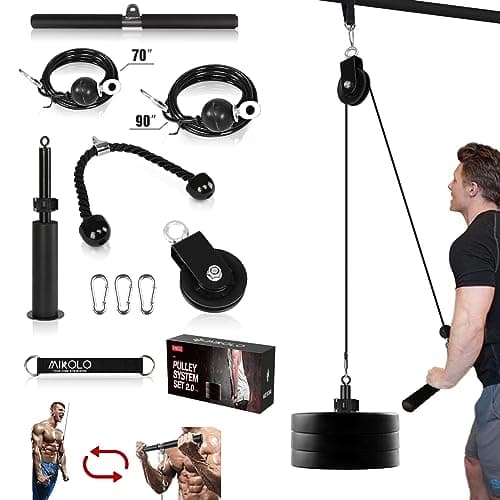
A bolt-on pulley kit turns a rack you already own into a lat station. What fits, what does not, and the cheaper standalone options.
Our top pick
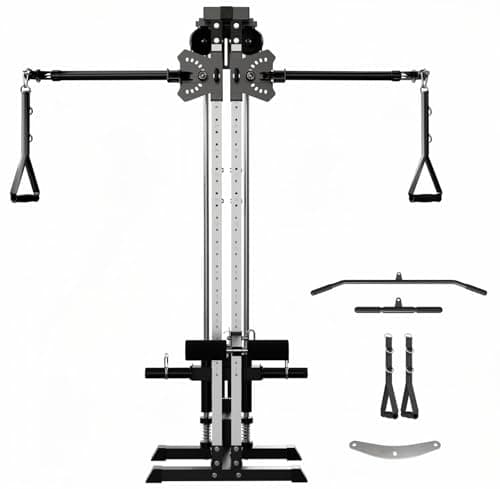
One pulley or two? What the second arm actually unlocks, what it costs, and which format suits a budget garage gym.
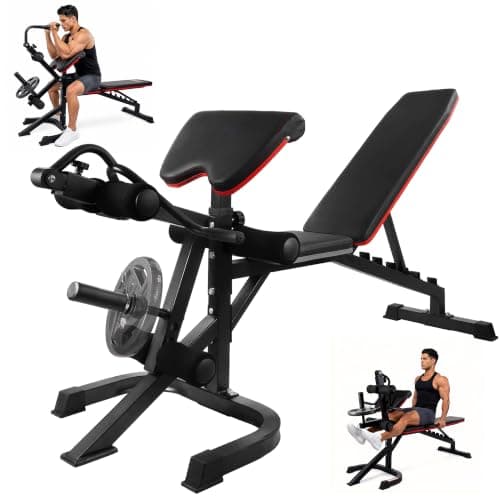
The one lower-body machine that is genuinely cheap. What plate diameter, machine weight and capacity tell you before you buy.
Our top pick
These complete builds put every category together with a live, itemized total — so you know the real all-in cost before you buy a single piece.
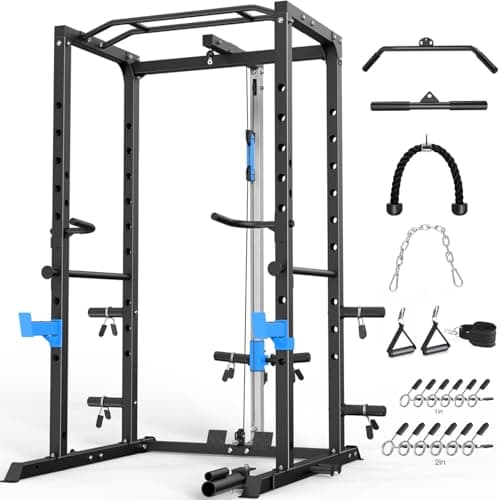
The whole build: one top pick per category, with a live total cost.
Our top pick
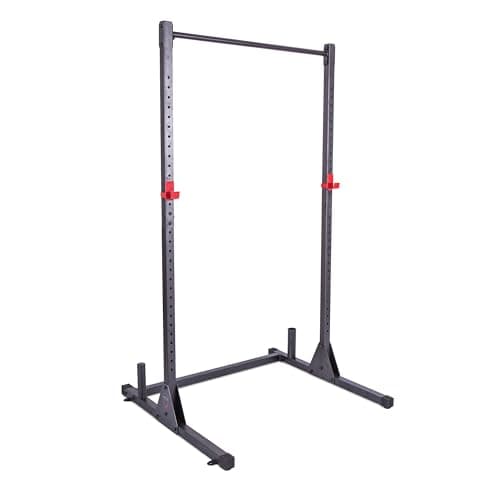
A full barbell gym — rack, bar, plates, bench, floor — under $500, priced live.