The trap bar is the least glamorous and most useful specialty bar there is. It lets you pull heavy with a neutral grip, and the cheap ones do the job the expensive ones do.
Updated August 2026 · By Stephen V.
The trap bar is the specialty bar that earns its keep. You stand inside it, grip two neutral handles at your sides, and pull. The load line runs closer to your hips than a straight-bar deadlift, which is why so many people who cannot deadlift comfortably with a barbell can pull heavy with a hex bar and no complaints the next morning. It is also the easiest heavy lift to learn without a coach standing over you.
This is one of the categories where the budget answer is genuinely close to the expensive answer. A trap bar is a welded steel frame with two handles and two sleeves. There are no bearings, no rotating parts and no finish that matters much. What you are choosing between is closed frame versus open frame, handle height, and how much the thing weighs. Here are the three we would buy and how to pick.
The short answer
In a hurry? These are the picks we'd buy. Prices are live; tap a card below for the full reasoning.
$119.9925% offPrice as of September 14, 2026·#addisclosure
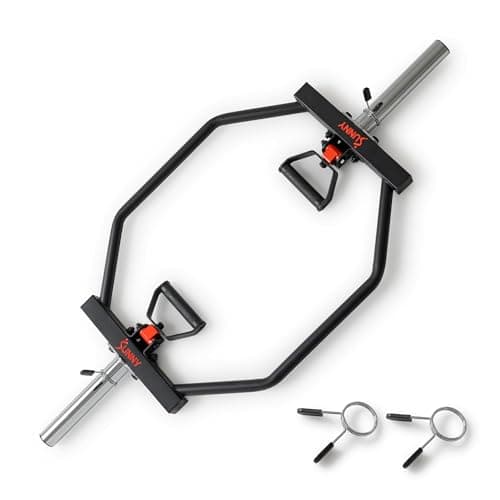
Sunny Health Olympic Hex Trap Bar (swivel handles)
Swivel handles that stay level as the bar tilts — the one meaningful comfort upgrade in the category.
Frame
Closed hex
Handles
Swivel
Sleeves
2-inch Olympic
Best for
Heavy pulls, wrist comfort
Pros
Rotating handles keep the wrist neutral through the whole pull
Noticeably kinder on the elbows during high-rep shrug and carry work
Same plate compatibility and similar money to the fixed-handle bars
Cons
Swivels are one more thing that can develop play over years
Rotating handles feel unstable to some lifters on their first session
Still a closed frame, so no carries
Best for: wrist and elbow comfort on heavy sets.
Skip this
The budget traps that look cheap and cost you twice. We'd skip these.
A trap bar bought before you own plates
The bar is only half the purchase. A trap bar with nothing to load on it is a very awkward 45-60 lb object. If you do not already have Olympic plates, buy the plates and a straight bar first — that combination covers far more training than a hex bar alone.
Standard 1-inch trap bars
They exist, they are cheaper, and they lock you into the 1-inch plate ecosystem for a bar you will want to load heavily. Every trap bar we recommend takes 2-inch Olympic sleeves for the same reason we recommend an Olympic straight bar: the plates outlive the bar.
How to choose (and what to skip)
Open frame or closed frame
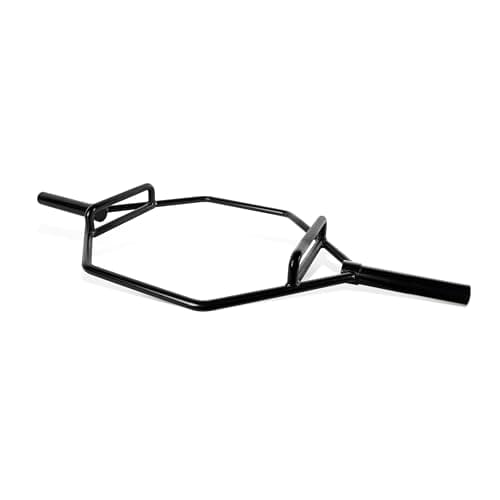
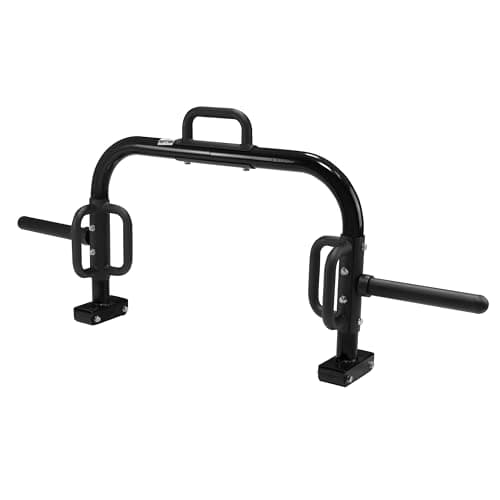
Closed frames are the classic hex: stiff, compact and cheapest. Open frames leave one end unwelded so you can step in and walk out, which unlocks farmer carries, walking lunges and split squats from the same bar. If you only ever deadlift and shrug, buy the closed one. If you want conditioning work too, the open frame is worth the small premium.
Handle height decides how it feels
Most budget trap bars have a high handle and a low handle — flip the bar over to switch. The high handle shortens the range and is far more forgiving for beginners and anyone with limited hip or ankle mobility. The low handle is closer to a conventional deadlift range. A bar that offers both is more useful than a bar with one perfect height.
Know the bar weight before you do the math
Trap bars are not all 45 lb. Budget hex bars commonly land between about 35 and 60 lb depending on frame size and steel, and the listing does not always shout about it. Weigh yours or check the spec before you start logging totals, or your numbers will be wrong by a plate.
Sleeve length limits your top end
Short sleeves are the real capacity limit on budget hex bars, not the frame rating. Count how many of your plates will physically fit before you buy: thin cast-iron plates stack far better than thick rubber bumpers, so a bumper-plate gym runs out of sleeve much sooner. Our cast iron versus bumper guide covers that trade-off.
Storage is the honest downside
A hex bar does not lean against a wall, will not fit a normal bar holder, and takes up floor space in a way a straight bar does not. Plan for that: most people end up standing it in a corner or hanging it from two wall hooks. It is the single most common regret in this category.
Who a trap bar is actually for
The trap bar is the best first heavy pull for two groups of people. The first is anyone whose lower back complains about conventional deadlifts — the neutral grip and the more upright torso position usually settle that down. The second is anyone training alone with no coach: the hex bar is much harder to do badly than a straight-bar deadlift, and the failure mode is dropping it straight down between your feet rather than rounding forward over a bar.
It is not a replacement for a barbell. You cannot squat with it, you cannot bench with it, and you cannot press it. If you own neither, buy the straight bar first — our budget barbell roundup covers that, and Olympic versus standard explains why sleeve size is the decision that outlives the bar.
Loading a trap bar in a budget gym
Because trap bar pulls tend to be your heaviest lift, this is the bar that exposes how many plates you actually own. Cast iron is the cheap way to add weight here — it is denser than rubber, so it fits the short sleeves better and costs less per pound. Our cheap weight plates roundup covers the sensible order to buy plates in, and cast iron versus bumper plates covers when rubber is actually worth the money.
One safety note specific to hex bars: because you can pull more with them than with a straight bar, people tend to load them heavier sooner. Collars matter more here, not less. And if you train alone, read our guide to lifting alone safely before you start chasing a number.
Does the cheap one hold up?
For a home gym, yes. There is very little to fail on a welded steel frame with two handles. The parts that separate a $80 hex bar from a $300 one are the finish, the knurl quality, the tolerance on the sleeves and the weld consistency — all real, none of them things that break under home-gym loads. Where cheap bars genuinely lose out is knurl: budget handles are usually smooth or lightly knurled, so heavy pulls end up needing chalk or straps sooner than they would on a premium bar.
Frequently asked questions
Is a trap bar better than a barbell for deadlifts?+
It is not better or worse, it is different. The trap bar keeps the load closer to your hips and lets you use a neutral grip, which usually means a more upright torso, less lower-back demand and more quad involvement. Most people can pull more with it. If your goal is a competition deadlift you need the straight bar; if your goal is to pull heavy safely at home, the hex bar is often the better tool.
How much does a cheap trap bar weigh?+
It varies more than people expect — budget hex bars commonly fall somewhere between about 35 and 60 lb depending on frame size and steel used, and not every listing states it clearly. Check the specification before you record any totals, because assuming 45 lb like a standard barbell will put every number you log out by a plate.
Do I need the open or the closed trap bar?+
Closed if you only deadlift, shrug and row with it; it is cheaper and slightly stiffer. Open if you also want farmer carries, walking lunges or split squats, since you can step in and walk out of it. For a general-purpose home gym, the open frame usually earns its small premium.
Can I use a trap bar with 1-inch standard plates?+
Only with a bar built for 1-inch sleeves, and we would not recommend buying one. The trap bar is likely to be your heaviest lift, and the 1-inch ecosystem runs out of good, cheap plate options quickly. Buy the 2-inch Olympic version so it shares plates with the rest of the gym.
Prices and availability shown here come from Amazon's live data and change often; we re-verify them regularly. Bar Bumper is an Amazon Associate and earns a commission on qualifying purchases at no extra cost to you. Read our full disclosure.