Cheap weight plate storage: get the iron off your floor
Storage is the second purchase every home gym makes and the first one everyone puts off. A $45 tree gives you back more floor than the plates it holds.
Updated August 2026 · By Stephen V.
Every home gym goes through the same phase. You buy a bar, you buy plates, and for a while the plates live in a stack against the wall. Then the stack becomes two stacks, then you are stepping over a 45 to get to the bench, then you drop one on your toe and finally buy a rack. The rack costs less than one plate and gives back more floor than the plates take up.
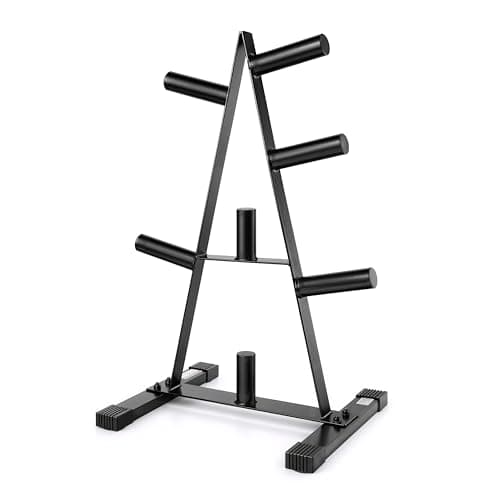
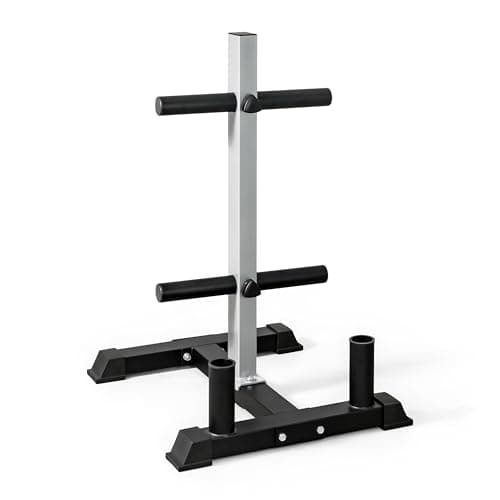
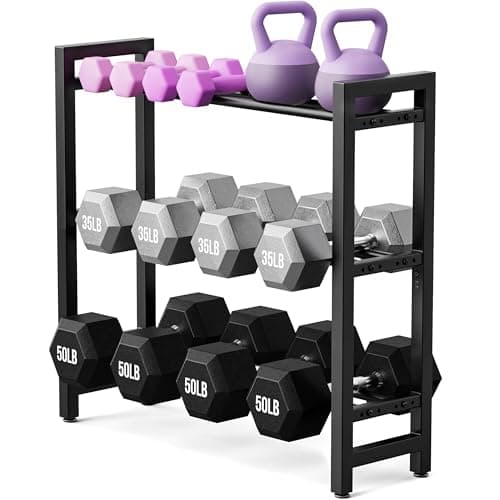
There is no complexity to this purchase, but there is one real decision: what you are storing. Olympic plates, rubber bumpers, 1-inch standard plates and dumbbells all want different holders, and buying the wrong one is the only way to get this wrong. Here are the four we would buy, sorted by what they hold.
The short answer
In a hurry? These are the picks we'd buy. Prices are live; tap a card below for the full reasoning.
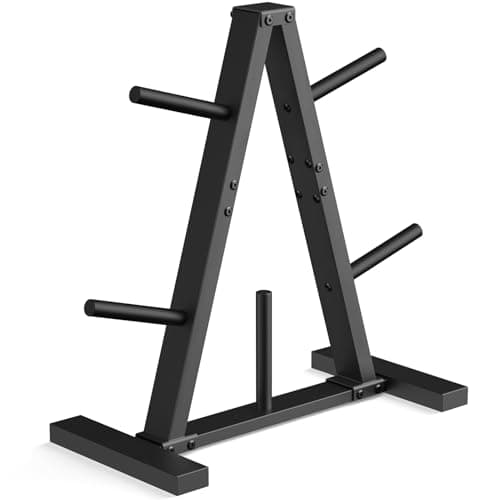
The 1-inch version, for the many home gyms that were built on standard plates and cannot use an Olympic tree.
Holds
1" standard plates
Type
Upright plate tree
Capacity
300 lb (mfr rating)
Best for
Standard plate sets
Pros
The correct holder for a 1-inch collection, which Olympic trees will not hold securely
Cheap, compact and quick to assemble
Sorting by size speeds up loading on standard bars
Cons
Useless if you later switch to Olympic plates
Lower capacity rating than the Olympic trees
Thinner posts mean plates rattle more in transit
Best for: standard plate sets.
Skip this
The budget traps that look cheap and cost you twice. We'd skip these.
Storing plates flat on a concrete floor
Flat stacks are the worst of everything: they take the most floor, they are the slowest to load from, and dragging a plate off a stack chips both the plate and the slab. They are also how toes get broken. A tree costs less than most single plates and fixes all of it.
Buying an Olympic tree for bumper plates
A standard 2-inch tree is sized for the thickness of cast iron. Thick rubber bumpers fill those posts after two or three plates, so you end up with a full-price tree holding a third of what you own. If your set is rubber, buy the bumper-specific tree with longer posts.
How to choose (and what to skip)
Match the holder to the plate
Four different products for four different collections: 2-inch cast iron, thick rubber bumpers, 1-inch standard, and fixed dumbbells. Each needs a different post diameter, post length or shelf shape. Work out which of those describes your gym before you compare anything else, because everything else in this category is close to interchangeable.
Count your plates before you count posts
A four-post tree holds four sizes, not four plates, and it fills up faster than you expect once you own several pairs. Count how many distinct plate sizes you own and how many of each, then buy a tree with the post count and post length to hold them plus room for the next pair.
Base weight is what stops it tipping
A plate tree loaded on one side is a tipping hazard. What resists that is base width and base weight. Cheap light trees are fine when loaded evenly and unpleasant when they are not, so favor a wide, heavy base and get into the habit of loading opposite posts in pairs.
Barbell holders are worth having
Bars stored on the floor get stepped on, rolled into, and rusted by contact with concrete. Trees with two integrated bar holders solve that for no extra footprint, which is why they are usually worth the small premium over a plain plate tree.
Wheels, if the gym shares a room
If your gym is also a garage that a car parks in, some trees include wheels on one end so a loaded tree tips and rolls. That is a genuinely useful feature in a shared space, and a completely pointless one in a dedicated gym. Buy it only if you will use it.
Why storage is a training upgrade, not a tidiness upgrade
It sounds like a house-proud purchase, but plate storage changes how you train. Loading a bar from a sorted tree takes seconds; loading it from a floor stack means shifting plates you do not want to get to the ones you do, and that friction is enough to make people skip warm-up sets and stop changing weights between exercises. Anything that reduces friction between you and the next set is worth more than it costs.
It also protects the plates. Cast iron stacked flat on concrete chips at the edges and rusts where it meets a damp floor. Our garage rust guide covers the humidity side of that, and it starts with getting iron off the slab.
How much storage you actually need
A typical budget gym that has been running for a year owns a bar, somewhere between 150 and 300 lb of plates in three or four sizes, a pair or two of dumbbells and a couple of accessories. That is one plate tree with bar holders plus a small dumbbell rack — comfortably under a hundred dollars for the pair, and roughly a square meter of floor recovered.
Plates and dumbbells are the bulk of the problem but not all of it. Bars, benches, bands, ropes and small accessories all need somewhere to live, and the cheapest answers are usually wall-mounted rather than freestanding. Our home gym storage ideas guide covers the whole-room version of this, including the wall-hook and pegboard approaches that cost almost nothing.
Frequently asked questions
Do I really need a weight plate tree?+
You need something. Plates stacked flat on a floor take up more space than the same plates on a tree, slow down every weight change, chip the plates and the slab, and are a genuine hazard to feet. A tree costs less than most individual plates and pays for itself in recovered floor space and faster training.
Will an Olympic plate tree hold bumper plates?+
Only a few. Standard 2-inch trees have posts sized around the thickness of cast iron, and thick rubber bumpers fill them after two or three plates. If your collection is rubber, buy a bumper-specific tree with longer posts, or you will end up with a full-price tree holding a fraction of your set.
How do I store a barbell at home?+
Vertically in a bar holder, on a plate tree with integrated bar holders, or horizontally on two wall hooks. What you want to avoid is leaving it on the floor, where it gets stepped on, rolls into things, and picks up moisture from a concrete slab. Vertical storage takes the least floor space.
Are cheap plate trees stable enough?+
Loaded evenly, yes. The failure mode is not the frame breaking but the whole tree tipping when all the weight is on one side. Choose a wide, heavy base and load opposite posts in pairs. On the very lightest trees, keep the heaviest plates on the bottom posts.
Prices and availability shown here come from Amazon's live data and change often; we re-verify them regularly. Bar Bumper is an Amazon Associate and earns a commission on qualifying purchases at no extra cost to you. Read our full disclosure.