Skip to content
Bar Bumper
Gym Setup

Best budget home gym flooring: match the floor to the load

The cheapest flooring mistake is buying one soft foam mat for a whole gym. Foam under light work, rubber where iron lands — here's how to split it and what each layer costs.

Updated July 2026 · By Stephen V.

Home gym flooring is one purchase where the right answer is almost never one product. The floor under a spin bike has a completely different job from the floor under a loaded rack, and the cheapest way to get it wrong is to buy a single soft foam mat and roll it out everywhere. Foam that feels great under a plank turns into a squashed, torn mess under a 300 lb rack — and a rubber stall mat under a stationary bike is money you didn't need to spend.

So the rule here is simple: match the floor to the load. Light stuff — bikes, bodyweight, mat work, light dumbbells — sits fine on cheap EVA foam. Anywhere iron gets racked, dropped, or stood on gets rubber. Below are the three we'd actually buy at each level, plus the one flooring trap that wrecks a budget gym.

The short answer

In a hurry? These are the picks we'd buy. Prices are live; tap a card below for the full reasoning.

Best all-rounder
AIRHOP Rubber-Top Gym Tiles (48 sq ft)

AIRHOP Rubber-Top Gym Tiles (48 sq ft)

$139.95 · View on Amazon
$178.95 22% offPrice as of July 22, 2026#addisclosure
Best under heavy iron
IncStores 4x6 Rubber Gym Mat

IncStores 4x6 Rubber Gym Mat

$189.99 · View on Amazon
Price as of July 22, 2026#addisclosure

Quick picks

#ProductBest forScorePrice
1
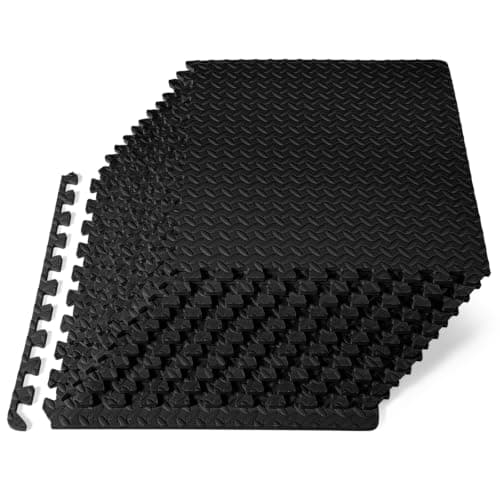
ProsourceFit ½-inch Puzzle Exercise Mats (48 sq ft)
Best for light zones
ProsourceFit ½-inch Puzzle Exercise Mats (48 sq ft)
The cheapest way to cover a light-training zone — foam that's great everywhere the weight stays light.
bikes, mat work, light dumbbells7.67.6 out of 10
$49.99 · View on Amazon
Price as of July 22, 2026#addisclosure
2
AIRHOP Rubber-Top Gym Tiles (48 sq ft)
Best all-rounder
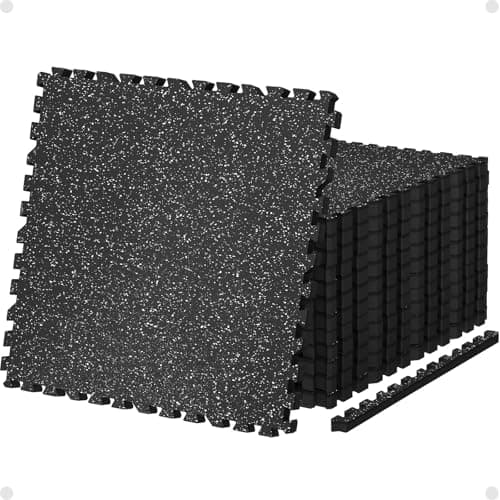
AIRHOP Rubber-Top Gym Tiles (48 sq ft)
The budget sweet spot: a rubber top that protects the floor under a rack and bench without a stall mat's weight.
rack + bench zone on a budget8.18.1 out of 10
$139.95 · View on Amazon
$178.95 22% offPrice as of July 22, 2026#addisclosure
3
IncStores 4x6 Rubber Gym Mat
Best under heavy iron
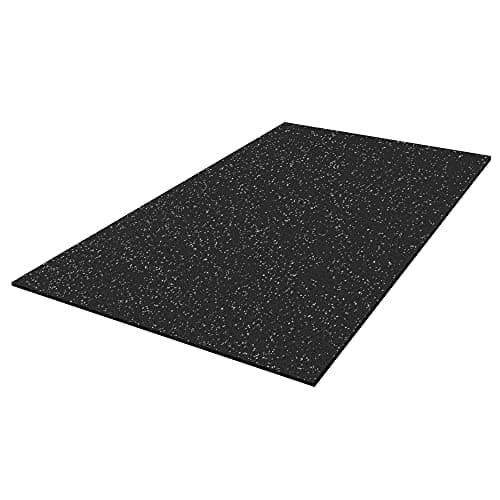
IncStores 4x6 Rubber Gym Mat
The gold standard under heavy iron — a 4x6 rubber slab that's near-indestructible and cheapest per sq ft at scale.
under a rack or deadlift platform8.78.7 out of 10
$189.99 · View on Amazon
Price as of July 22, 2026#addisclosure

Scores are our own editorial ratings from the spec-scoring method — not lab tests. Tap a row for the full write-up.

The picks, reviewed

#1Best for light zones
ProsourceFit ½-inch Puzzle Exercise Mats (48 sq ft)
7.67.6 out of 10ProsourceFit
$49.99 · View on Amazon
Price as of July 22, 2026#addisclosure

ProsourceFit ½-inch Puzzle Exercise Mats (48 sq ft)

The cheapest way to cover a light-training zone — foam that's great everywhere the weight stays light.

Type
EVA foam puzzle tiles
Coverage
48 sq ft (24 tiles)
Thickness
1/2 inch
Best under
Bike, mat, light DBs

Pros

  • Cheapest cost to cover a big area
  • Soft and warm for floor and mat work
  • Interlocks in minutes with zero tools

Cons

  • Compresses and tears under a loaded rack
  • Dented by dropped dumbbells and plate edges
  • Not a base for heavy or dropped iron

Best for: bikes, mat work, light dumbbells.

#2Best all-rounder
AIRHOP Rubber-Top Gym Tiles (48 sq ft)
8.18.1 out of 10AIRHOP
$139.95 · View on Amazon
$178.95 22% offPrice as of July 22, 2026#addisclosure

AIRHOP Rubber-Top Gym Tiles (48 sq ft)

The budget sweet spot: a rubber top that protects the floor under a rack and bench without a stall mat's weight.

Type
Rubber-top interlocking tiles
Coverage
48 sq ft
Surface
Rubber over foam base
Best under
Rack, bench, DB station

Pros

  • Rubber surface shrugs off plate edges and rack feet
  • Much lighter and easier to move than stall mats
  • Interlocking tiles fit odd-shaped rooms

Cons

  • Pricier per sq ft than plain foam
  • Thinner cushion than a 3/4-inch stall mat
  • Not for repeatedly dropping loaded bars

Best for: rack + bench zone on a budget.

#3Best under heavy iron
IncStores 4x6 Rubber Gym Mat
8.78.7 out of 10IncStores
$189.99 · View on Amazon
Price as of July 22, 2026#addisclosure

IncStores 4x6 Rubber Gym Mat

The gold standard under heavy iron — a 4x6 rubber slab that's near-indestructible and cheapest per sq ft at scale.

Type
Solid rubber stall mat
Size
4 ft x 6 ft (24 sq ft)
Thickness
3/4 inch
Best under
Rack, platform, drops

Pros

  • Near-indestructible under racks and dropped plates
  • Cheapest per sq ft when you buy several
  • Heavy enough to stay put without interlocking

Cons

  • Very heavy — awkward to carry and place
  • New rubber smell that takes weeks to fade
  • Overkill (and pricey to ship) for a light zone

Best for: under a rack or deadlift platform.

Skip this

The budget traps that look cheap and cost you twice. We'd skip these.

  • Thin 1/4-inch foam under a loaded rack or heavy dumbbells

    The cheapest thin foam is fine under a yoga mat, but put a loaded rack on it and it compresses under the feet, tears at the plate edges, and lets the whole rack rock as the foam gives. Under heavy iron you want rubber — a rubber-top tile or a 3/4-inch stall mat — not more foam.

  • Buying one soft mat for the whole gym

    A single foam type can't do both jobs. It'll be too soft under the rack and needlessly bulky under a bike. Splitting the floor — foam in the light zone, rubber under the iron — usually costs less overall and lasts far longer.

How to choose (and what to skip)

Start from the load, not the room

Sketch where the heavy stuff lands — the rack footprint, the deadlift or drop zone, the bench — and plan rubber there first. Everything else (bike, mat work, stretching) can sit on cheaper foam. Buying by zone almost always beats one flooring for the whole space.

Foam thickness and density

For light work, 1/2-inch EVA foam is the comfortable minimum; 1/4-inch is really just a scratch guard. Higher-density foam dents less under a bike or bench, but no foam is a substitute for rubber under a loaded rack.

Rubber thickness where iron lands

Under a rack, 3/4-inch rubber is the standard for a reason — it protects the slab and quiets the room. If you deadlift or drop loaded bars, double up the rubber in just the drop zone rather than paying for thickness across the whole floor.

Cost per square foot, not per pack

Compare flooring by cost per sq ft, not sticker price. Foam packs look cheap but cover small areas; stall mats look expensive but are the cheapest per sq ft once you're covering real space. Work out your square footage first, then compare.

Over concrete vs over a finished floor

On a bare slab you mainly need protection and a little cushion. Over hardwood or laminate, prioritize a firm, non-marking surface so a rack foot or dropped plate can't dent the floor underneath. Our concrete guide covers the moisture and subfloor details.

Frequently asked questions

Is foam or rubber better for home gym flooring?
Neither is 'better' — they do different jobs. Foam is cheaper, softer, and warmer, which is ideal under a bike, a mat, or light dumbbells. Rubber is denser and near-indestructible, which is what you want under a loaded rack, a bench, or a spot where you drop weight. The cheapest good gym floor usually uses both: foam in the light zone, rubber under the iron.
Can I put a power rack on foam tiles?
Not on thin foam. The rack's feet concentrate a lot of weight on a small area, so soft or 1/4-inch foam compresses, tears, and lets the rack rock — which is both annoying and unsafe. Put a rack on rubber: either rubber-top interlocking tiles or a 3/4-inch stall mat rated for that load.
How much flooring do I actually need?
Measure your training footprint, not the whole room. A common budget setup is one or two 4x6 stall mats under the rack and lifting area (about 24-48 sq ft) plus a pack of foam tiles for the bike or stretching zone. Sketch the layout, add up the square footage per zone, then buy rubber for the heavy zone and foam for the rest.
Do rubber stall mats smell?
New rubber mats do have a strong smell for the first few weeks — it's the natural and recycled rubber off-gassing. It fades faster with airflow: unroll them, let them air out in a garage or open room, and wipe them down. It's normal and not a sign of a defective mat.

Sources & further reading

Keep reading

Prices and availability shown here come from Amazon's live data and change often; we re-verify them regularly. Bar Bumper is an Amazon Associate and earns a commission on qualifying purchases at no extra cost to you. Read our full disclosure.