Cheap pull-up bars that won't wreck your door frame
The cheapest real strength purchase you can make — if you pick the mount that matches your walls. Doorway, wall and ceiling options ranked.
Updated July 2026 · By Stephen V.
A pull-up bar is the highest return per dollar in a home gym: about $30 buys the single best upper-body exercise there is. The catch is that the cheapest bars borrow their strength from your house. A leverage-mounted doorway bar puts several hundred pounds of force into a trim board that was installed with finish nails; a wall bar puts it into whatever is behind the drywall. Picking the right mount type for your building matters more than picking the right brand. Here are five we'd buy, sorted by how they attach.
The short answer
In a hurry? These are the picks we'd buy. Prices are live; tap a card below for the full reasoning.
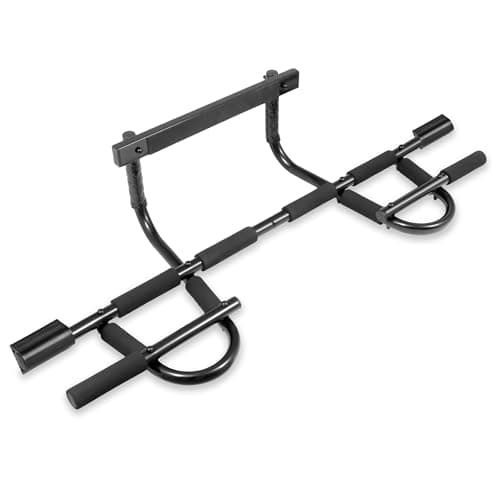
A simple multi-grip doorway trainer from an established budget brand — the safe, boring choice.
Mount
Doorway (leverage)
Grips
Multi-grip
Install
No drilling
Brand
ProsourceFit (established)
Pros
One of the cheapest bars from a brand with a track record
Multiple hand positions for a bar at this price
Doubles as a floor push-up and dip handle
Cons
Lighter tube than the top doorway picks
Padding is minimal — expect trim marks
Narrow grip spacing for very wide shoulders
Best for: buyers who want a brand with a track record.
Skip this
The budget traps that look cheap and cost you twice. We'd skip these.
Screw-in doorway bars in rented or plastered openings
The bracket-mounted bars that screw into the frame hold well in solid timber and tear out of soft plaster or MDF trim. In a rental you also lose the deposit. Use a leverage bar or a joist mount instead.
Any doorway bar on a frame with loose or hollow trim
Press upward on the trim above your door. If it flexes or you hear it click, that trim is nailed, not screwed, and a leverage bar will pull it off the wall — usually mid-rep. Test before you hang, every time.
How to choose (and what to skip)
Match the mount to your building, not your budget
Exposed joists in a garage or basement? Buy the joist mount — it's the strongest option and the cheapest per pound of capacity. Solid masonry or known stud positions? Wall mount. Finished rooms or a rental? Leverage-style doorway bar. The mount decides safety far more than the brand does.
Understand how a leverage bar works
A doorway bar doesn't clamp; it uses your weight to lever a bracket against the wall above the frame. That means the load lands on the trim and the wall surface, and it means the bar must be seated square with the full bracket in contact. Padding under the bracket protects paint and spreads the load.
Capacity ratings and what they mean
A 440 lb rating describes the bar, not your house. Every doorway bar is limited by the weakest part of the assembly, which is almost always the trim. Treat published capacities as a comparison between bars rather than a promise about your door frame.
Grip variety is worth a few dollars
Neutral (palms-facing) grips are easier on the shoulders and let you keep training when a wide overhand grip aggravates something. A multi-grip bar costs a little more and effectively adds two exercises, so it's the upgrade we'd take first.
Check your head clearance before ordering
In a standard 80-inch door opening, a doorway bar leaves a tall lifter tucking their chin at the top. Measure from the top of the opening to your chin with arms overhead; if it's tight, a joist or wall mount with a proper stand-off is the version that actually works.
The three mount types, honestly compared
There are only three ways to hang a cheap bar, and each one fails differently:
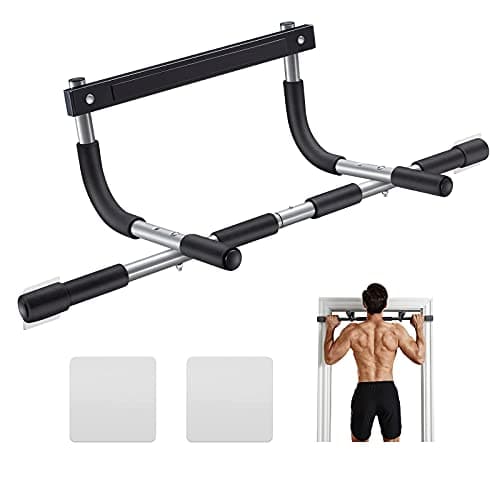
Doorway leverage bars — no tools, no damage, come down in seconds. They transfer load to the trim above the opening, so their real capacity is whatever your trim can take. Best for renters and finished rooms.
Wall mounts — bolted into studs or masonry, with a stand-off that gives you room to pull your chin past the bar. Strong, permanent, and completely dependent on hitting structure rather than drywall.
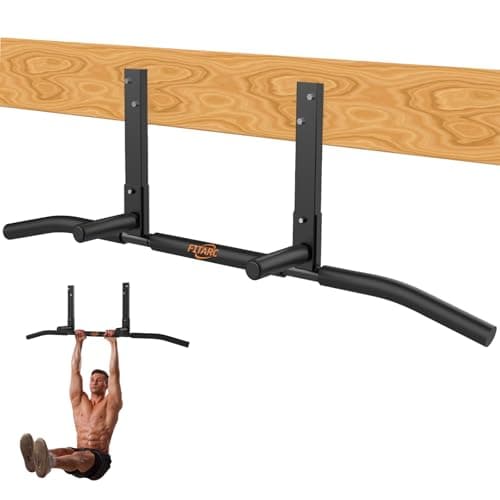
Joist / ceiling mounts — lag-bolted into the lumber overhead. Structurally the strongest and cheapest-per-pound option, with full swing clearance. Requires exposed or findable joists and enough ceiling height.
How to test a door frame in ten seconds
Before you hang anything, stand under the opening, push up firmly on the underside of the trim, and then push on the wall surface directly above the frame. You're looking for movement, hollow sounds, or a click. Solid, screwed trim on a wood-framed opening barely moves. Trim that shifts, or a wall that sounds hollow immediately above the opening, means the leverage bar has nothing safe to push against — go with a joist or wall mount instead.
Two more checks worth doing: confirm the door casing is at least as deep as the bar's bracket, and put a folded towel or the supplied foam between bracket and wall. Most reported paint damage comes from bare steel on flat paint, not from the bar being too heavy.
Can't do a pull-up yet? Buy the bar anyway
The bar is the cheapest piece of equipment that will still be useful in five years, and there are three real ways to build up to your first rep: dead hangs for grip and shoulder tolerance, negatives (jump to the top, lower for five seconds), and band-assisted reps looped over the bar. A resistance band set costs about $20 and turns the bar into a full progression system.
If you'd rather have the assistance built in, a power tower that ships with bands does the same job in a free-standing frame — useful when no door frame in the house passes the test above.
Where a pull-up bar fits in a budget build
In every one of our price-tier builds, the pull-up bar is either free (built into the rack) or the cheapest line item. If you're assembling a gym from scratch, buy it early: it costs less than a month of most gym memberships, it trains the muscles a beginner's push-heavy program usually neglects, and it doesn't become redundant when you later add a rack. See the full picture in our under-$300 build and the essentials checklist.
Bar diameter, coating and grip comfort
The spec nobody checks and everybody feels. Most budget bars use roughly 1.25-inch tube, which suits average hands well. Thicker tube looks premium and quietly makes every set a grip exercise — fine if that's what you want, frustrating if your back gives out after your fingers. Foam sleeves are comfortable for the first year and then compress and tear; knurled or powder-coated steel is less kind to soft hands and lasts indefinitely. If a bare bar tears your palms, a pair of $10 gloves or a wrap of hockey tape fixes it for less than the price difference between bars.
One more comfort factor: neutral (palms-facing) grips. They sit kinder on most shoulders than a wide overhand grip, and having both on the same bar means you can keep training through a week when one grip angle is irritating something. That's why we'd take a multi-grip bar over a single straight tube almost every time, even at a small price premium.
Frequently asked questions
Will a doorway pull-up bar damage my door frame?+
It can, and the risk is almost entirely about your trim rather than the bar. Leverage bars press against the wall above the opening, so soft plaster, MDF trim or finish-nailed casing can mark, crack or pull away. Pad the contact points, test the trim for movement before every install, and use a joist or wall mount if your frame feels at all loose.
How much weight can a cheap pull-up bar hold?+
Most publish 300-440 lb, but that number describes the steel, not your wall. On a doorway bar the real limit is the trim above the opening; on a wall or joist mount it's the anchors and the lumber. Buy the mount that puts the load into structure and the published rating stops being the limiting factor.
Doorway bar or wall-mounted pull-up bar?+
Doorway if you rent, want it out of sight, or don't want holes. Wall or joist mount if you own the space, want full clearance for knee raises and kipping, and can hit studs or joists. The mounted versions are stronger and only slightly more expensive; the doorway bar wins on reversibility.
Do I need a pull-up bar if my rack has one?+
No. A rack-mounted bar is stronger than any of these and already paid for. Spend the money on a band set for assisted reps, or on dip handles to cover the pushing side.
Prices and availability shown here come from Amazon's live data and change often; we re-verify them regularly. Bar Bumper is an Amazon Associate and earns a commission on qualifying purchases at no extra cost to you. Read our full disclosure.