Cheap dip bars: the least expensive serious pressing station there is
A pair of dip bars costs less than a single adjustable dumbbell and gives you a loadable pressing movement, an ab station and a row bar. Here is what to buy and what the specs actually mean.
Updated August 2026 · By Stephen V.
Dips are the best value movement in a budget home gym and almost nobody plans for them. A pair of parallel bars costs less than one adjustable dumbbell, takes up about four square feet, and gives you a pressing movement you can load with a belt or a vest for years. Compare that with the usual first upgrade path — a bigger dumbbell set, a heavier bar, more plates — and the math is not close.
The trap is that dip bars look identical in a listing photo. Two black steel A-frames, two handles, one price that is half the other. The difference shows up the first time you lean forward at the bottom of a rep and the whole frame skates sideways. Below are the three we would actually buy, what the capacity number does and does not tell you, and the specific failure to check for before you order.
The short answer
In a hurry? These are the picks we'd buy. Prices are live; tap a card below for the full reasoning.
$139.9910% offPrice as of September 14, 2026·#addisclosure
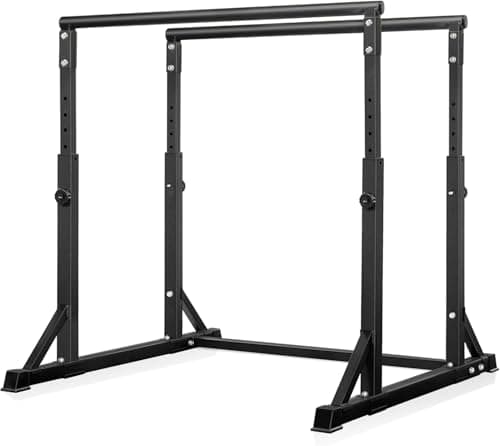
Bongkim 7-Level Dip Station (800 lb)
The one to buy if you are heavy, tall, or already planning to hang plates off a belt — double the frame rating, seven height settings.
Type
Heavy-duty dip station
Capacity
800 lb (mfr rating)
Height levels
7
Adjustment
Height and width
Pros
Width adjustment matters more than people expect for shoulder comfort
Doubled frame rating is real headroom for weighted dips
Seven height settings cover everything from floor rows to full dips
Cons
Costs roughly double the entry-level pairs
Heavier to move once assembled — this stays where you put it
Overkill if you are only ever doing bodyweight sets
Best for: 200 lb+ bodyweight, or weighted dips.
Skip this
The budget traps that look cheap and cost you twice. We'd skip these.
Dip bars with a capacity rating under about 300 lb
The rating is a static frame number, not a dynamic one. A 180 lb lifter dropping into the bottom of a dip loads the frame with well over 180 lb, and every weighted dip you ever do adds to it. If the listing quotes a number close to your bodyweight, the useful life of that purchase is measured in months.
Dip attachments clamped to a thin-tube power tower
Dip handles bolted onto a light power tower put a big lever arm on tubing that was sized for vertical pull-up load. That is where the flex and the creaking come from. If you already own a heavy tower, use its dip station; if you are buying specifically to dip, a dedicated pair of bars is cheaper and stiffer.
How to choose (and what to skip)
Read the capacity rating as a floor, not a ceiling
Manufacturer capacity numbers are static ratings taken on a flat surface. Real dips are dynamic: you drop into the bottom position, you sometimes swing, and eventually you hang plates from a belt. A useful rule for budget gear is to want at least double your bodyweight on the label, which is why the 400 lb class is the sensible entry point rather than the 220 lb class.
Width matters more than height
Dip bars set too wide push your shoulders into an uncomfortable, high-risk position at the bottom of the rep. Roughly shoulder-width is what most people want. Height adjustment is easy to work around by bending your knees; width usually is not, so if a station only adjusts one dimension, prefer the one that adjusts width.
Two stands versus one frame
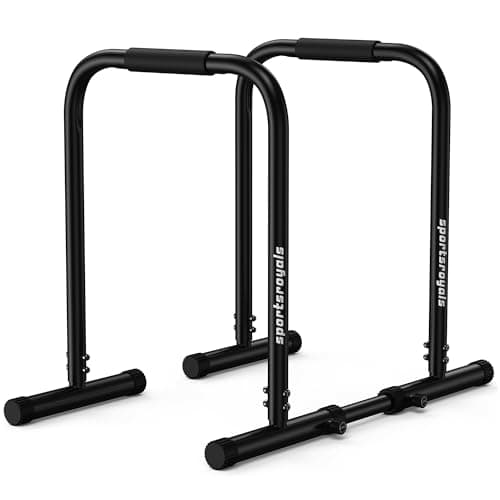
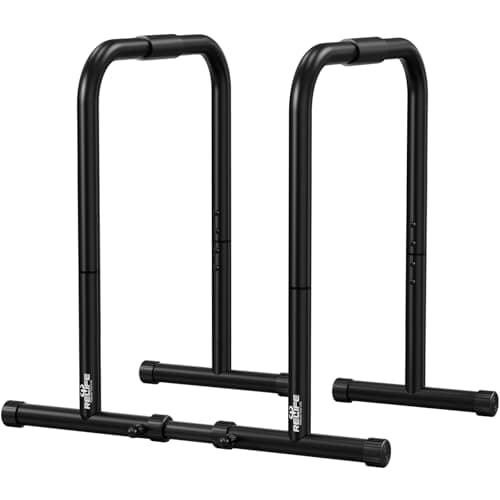
Separate stands fit awkward rooms and store flat. A single welded frame will not drift apart mid-set. On a rubber mat or carpet, separate stands are fine. On sealed concrete or laminate, either put mats under them or buy the single frame — chasing a sliding bar across a garage floor gets old fast.
What else the bars will do
Set low, parallel bars are a decent inverted row station and a good place for elevated push-ups, feet-up planks and L-sits. That secondary use is a real part of the value: it is why a $55 pair of bars often replaces two or three single-purpose gadgets in a budget gym.
Plan the load progression before you buy
Bodyweight dips stop being hard sooner than people expect. The cheap progression from there is a dip belt and the plates you already own, which is why frame rating headroom is worth paying for once. A weighted vest works too, though it tops out lower than a belt.
Where dips fit in a budget build
If you are working from one of our build lists, dip bars slot in after the bench and before any machine. On the under $500 build they are the cheapest way to add a second pressing angle once you already own a bar, a bench and plates. On the under $300 build they can arguably come first, because a pair of bars plus a pull-up bar covers most of the upper body for well under $100 combined.
What dips are not is a substitute for a rack. They give you a vertical-ish press and nothing for the legs. If you are choosing between dip bars and a squat rack with your one purchase this month, buy the rack — our budget power rack roundup and the rack versus squat stand comparison cover that decision properly.
Assembly and floor setup
Every dip station in this price range ships flat and bolts together. Two things are worth doing carefully. First, tighten in stages — snug every bolt, square the frame, then torque everything down, or you will end up with a frame that rocks because it was assembled out of square. Second, check the bolts again after the first few sessions. Dip loading is impact loading, and hardware backs off.
For flooring, a rubber-top tile or a section of stall mat under each stand stops the drift and takes the ring out of the noise. Our budget gym flooring roundup covers the cheapest way to cover just a training footprint rather than a whole room.
Frequently asked questions
Are cheap dip bars safe?+
The cheap ones with a real capacity rating are, provided you match the rating to your actual use. Look for a frame rated at roughly double your bodyweight, assemble it square, re-tighten the bolts after the first week, and put something grippy under the feet. The stations that fail are the very light ones bought by heavy lifters, and stations that were never re-tightened after assembly.
Do I need a dip station if I already have a power tower?+
Usually not. Most power towers include a dip station, and if yours is one of the heavier ones it will do the job. A dedicated pair of bars is worth adding when your tower flexes noticeably at the dip handles, when you want to set the bars low for rows, or when you want a station you can carry outside.
What can I do on dip bars besides dips?+
Set low, they are an inverted row station, an L-sit and knee-raise station, a base for elevated or feet-up push-ups, and a support for stretching work. That versatility is most of the reason they earn their space — for the money, very little else in a home gym covers that many movements.
How do I add weight to dips cheaply?+
A dip belt and the plates you already own is the cheapest route and scales furthest. A weighted vest is more convenient and works well early, but caps out at whatever the vest holds. Either way, add weight in small jumps: dips load the shoulder and elbow harder than the numbers suggest.
Prices and availability shown here come from Amazon's live data and change often; we re-verify them regularly. Bar Bumper is an Amazon Associate and earns a commission on qualifying purchases at no extra cost to you. Read our full disclosure.