Written for a galley counter that moves. Five machines compared on how they are powered, how they travel, and what happens to the water in the tank when you drive.
Updated October 2026 · By Stephen V.
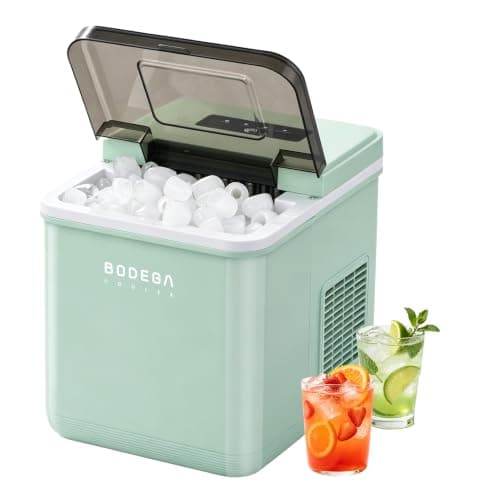
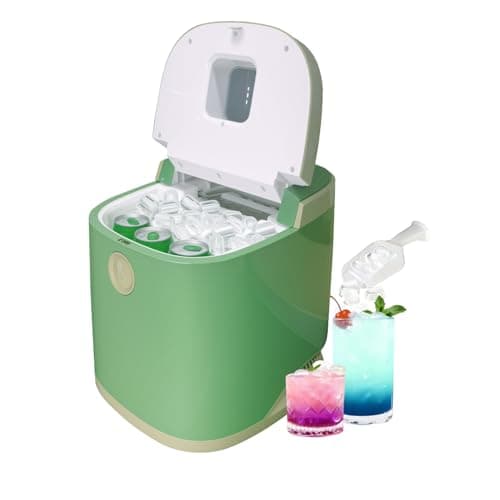
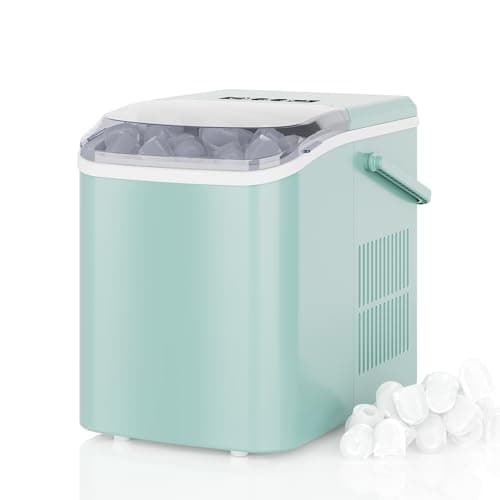
The best ice maker for an RV is the BODEGA 12 V machine: it runs on DC as well as mains, which means it makes ice while you are driving or off-grid instead of only when you are hooked up. The GSEICE 12 V is the higher-output alternative with four cube sizes; the DUMOS and Silonn handled machines are the cheap mains-only answers for a camper that is usually on shore power; and the EUHOMY nugget machine with a handle is the one to take if soft ice is the reason you are camping at all.
Buying for an RV changes the question completely. In a house, every ice maker has the same power supply. In a camper, power is the whole decision. A standard countertop machine needs mains AC, which means a hookup or an inverter big enough for a compressor's startup surge. A 12 V machine runs straight off the house battery or the vehicle socket, which is why it costs more and why it is usually the right answer.
The second thing that changes is travel. These machines hold water, and water moves. Any ice maker travelling with a full reservoir will slop, and the tank is not sealed. Empty it before you drive, every time — it takes a minute and it is the difference between an ice maker and a leak. A machine with a side or front drain plug makes that minute easier than one you have to turn upside down over a sink.
We have not tested these in a vehicle. The ranking is built from published power input, output, footprint, drain design and the presence of a carry handle, plus owner-review consensus reported as other people's experience — see how we pick. Prices come live from Amazon with the date we verified them.
The short answer
In a hurry? These are the picks we'd buy. Prices are live; tap a card below for the full reasoning.
$67.9927% offPrice as of October 13, 2026·#addisclosure
4
Best small mains machine
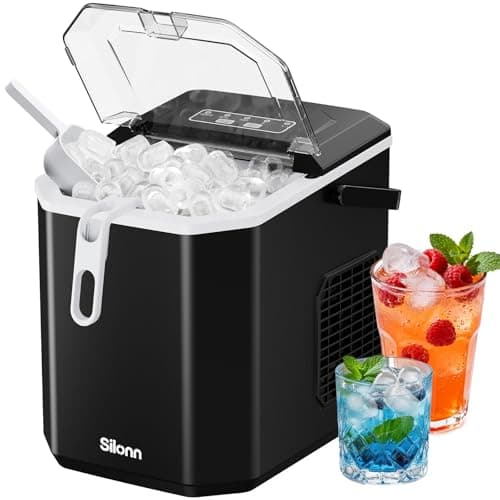
Silonn Countertop Ice Maker with Carry Handle
One of the smallest footprints that still makes nine cubes a cycle, with a handle for stowing it — the mains machine to pick when space is tighter than the budget.
$109.9837% offPrice as of October 13, 2026·#addisclosure
Silonn Countertop Ice Maker with Carry Handle
One of the smallest footprints that still makes nine cubes a cycle, with a handle for stowing it — the mains machine to pick when space is tighter than the budget.
Power
AC mains
Feature
Carry handle
Cycle
9 cubes per cycle
Type
Compact countertop
Pros
Small enough to stow in a cupboard rather than strapped to a counter
Handle makes it a one-hand move when you are breaking camp
Established brand in the countertop category
Same output as machines that take up twice the counter
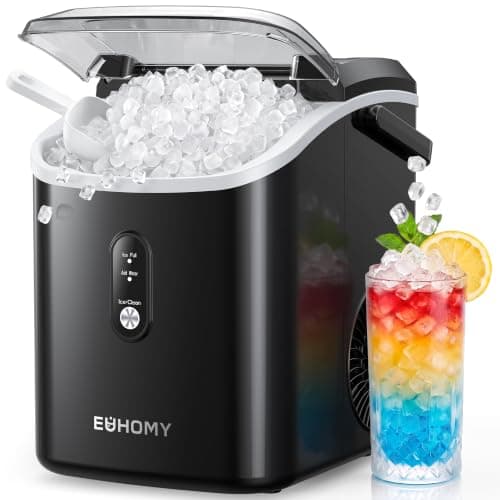
EUHOMY Countertop Nugget Ice Maker with Carry Handle (34 lb/day)
34 lb of nugget ice a day with a carry handle — the machine to take if chewable ice is the point and you camp with power.
Ice
Nugget (chewable)
Output
34 lb / day
Power
AC mains
Feature
Carry handle, auto-clean
Pros
Nugget ice in a machine designed to be carried
Higher output than the bullet machines here
Removable top cover makes filling and cleaning easier in a small space
Auto-clean cycle, which matters when the water source changes every trip
Cons
Mains only, and nugget machines draw more than bullet machines
Auger and gearmotor are more vulnerable to vibration than chilled fingers
Tallest machine here, so galley clearance needs checking
Best for: Soft chewable ice on a trip, with a hookup.
Skip this
The budget traps that look cheap and cost you twice. We'd skip these.
Driving with water in the reservoir
The tank on a countertop ice maker is open to the pump and the overflow, and none of it is sealed for motion. A full machine on a moving vehicle sloshes water into the base, out of the vents, and sometimes into the electronics underneath. Empty the reservoir through the drain plug and run the machine dry for a minute before every drive. This is the single most important habit with an ice maker in an RV, and it is also the one nobody tells you.
Running a mains ice maker off a small inverter
An ice maker has a compressor, and a compressor's startup surge is several times its running draw. A cheap 300 W inverter will see that surge and either shut down or overheat, which looks like a faulty ice maker. If you want to make ice away from a hookup, buy a machine with a real 12 V DC input rather than trying to fake mains power — that is the whole reason the DC machines exist and the reason they cost more.
How to choose (and what to skip)
Decide how often you camp without power
That one answer picks your machine. Mostly hooked up: buy a cheap mains machine with a handle and spend the difference elsewhere. Regularly off-grid, or you want ice to appear during a drive: buy a 12 V machine and accept the premium. There is no clever middle — an inverter big enough for a compressor surge costs more than the price difference between the two machine types.
Check the drain, because you will use it constantly
In a house you empty an ice maker occasionally. In an RV you empty it before every drive. A side or front drain plug you can reach with a cup underneath is worth real money over a bottom plug that means lifting the machine over the galley sink. Look for the drain in the product photos — it is rarely mentioned in the text.
Measure the galley, including the lid swing
RV counters are shallower than kitchen counters and often have a cabinet or a window right above. These machines fill from a top lid, so they need their height plus the lid swing. And check the stowed home too: a machine that lives in a cupboard between trips needs to fit that cupboard, which is usually tighter than the counter.
Think about water quality, not just water supply
Campsite water varies wildly in hardness, and mineral scale on the chilling fingers is what stops these machines making ice. A self-cleaning or auto-clean cycle is close to essential in a vehicle for that reason, and a descale every few months of use is cheap insurance. If your rig has a filter, run the ice maker off the filtered tap.
Secure it for travel
A 10 to 20 lb appliance on a counter becomes a projectile over a speed bump. Stow it in a cupboard or a floor locker for travel if it fits; if it has to stay out, strap it. Nugget machines are the most vulnerable because the auger and gearmotor are heavier and more precisely aligned than a bullet machine's chilled fingers — another small reason the simpler machines travel better.
Why 12 V is the specification that matters
Everything else about these machines is similar — they make bullet cubes from a hand-filled tank on a six to nine minute cycle — so the only question that changes the ownership experience is where the power comes from. A 12 V DC machine wires to the house battery or plugs into a vehicle socket, so it makes ice while you drive, while you are parked in the wild, and while the generator is off. A mains machine needs a hookup. If you camp with hookups every night, the cheaper mains machine is genuinely the better buy and the DC premium is wasted; if you do not, the DC machine is the only one that works.
What about running one from an inverter?
It can be done with a large pure sine inverter and a battery bank that can take the hit, but it is the expensive route to the same place. The problem is the compressor's locked-rotor surge at startup, which is several times the running wattage and far more than the inverter's continuous rating suggests it can handle. Small modified-sine inverters either trip or cook. Before buying an inverter for this, price the 12 V machine — it is usually cheaper and always simpler, and it is the setup that will not annoy you on a trip.
Ice makers for camping versus for an RV
They are nearly the same purchase with one difference: a tent camper has no fixed counter and no house battery, so the machine runs from a portable power station or a vehicle socket and needs to be genuinely portable. That pushes you harder toward the 12 V machines and toward the ones with handles. If you are buying for camping rather than for a motorhome, prioritize the handle and the DC input over output, and expect to make ice in batches while the engine runs rather than continuously.
Living with one in a camper
Three habits make it painless. Empty it before every drive, through the drain, and run it dry for a minute. Bag the ice into the freezer compartment as it is made rather than leaving it in the basket, because the basket is not insulated and the ice will melt back into the tank — the same complaint people have at home, just more annoying when water is finite. Descale it a few times a season, because campsite water is harder than most domestic supplies. Do those three and a cheap machine will last several seasons; skip them and it will not see two.
If the rig has room for something better
Larger motorhomes sometimes have cabinet space for a proper built-in, and the physics are much nicer: a plumbed machine with an insulated bin keeps the ice it makes instead of remaking it all day. Our undercounter ice maker picks cover those, with the drainage and water-line requirements spelled out. For most rigs, though, the honest answer is a portable machine — and if you want the smallest possible one for the galley, the compact ice maker page is the shortlist by footprint.
Frequently asked questions
What is the best ice maker for an RV?+
The BODEGA 12 V machine. It runs on DC as well as AC, so it makes ice while you drive or camp without a hookup, which is the only specification that genuinely changes with an RV. If you are almost always on shore power, a cheap handled mains machine like the DUMOS is the better value.
Can you run an ice maker in an RV?+
Yes. On a hookup, any countertop machine works. Off-grid, you need a machine with a 12 V DC input — trying to run a mains machine from a small inverter usually fails, because a compressor's startup surge is several times its running draw. And empty the water tank before every drive: the reservoir is not sealed for motion.
Do 12 V ice makers work well?+
They work the same way mains machines do — chilled fingers, nine bullet cubes a cycle — just with a DC power input, so output figures are similar if slightly lower. What you are buying is the ability to make ice without a hookup or an inverter. The trade is price: expect to pay noticeably more than for an equivalent mains machine.
Should you empty an RV ice maker before driving?+
Always. The reservoir is open to the pump and the overflow and is not sealed for motion, so water sloshes into the base and the vents, and sometimes into the electronics. Drain it through the plug, run the machine dry for a minute, then stow or strap it. It is the single most important habit with an ice maker in a vehicle.
What is the best ice maker for camping?+
The same 12 V machines, chosen for portability — a DC input and a carry handle matter more than output when there is no fixed counter and no house battery. Expect to make ice in batches while the engine runs or from a portable power station, rather than continuously.
Will an RV ice maker keep the ice frozen?+
No. The basket is uninsulated and sits above the reservoir, so ice melts back down and is remade — which wastes both power and water in a camper. Bag the ice into the freezer compartment as it is produced, which is the habit that makes these machines worth having on a trip.
Prices and availability shown here come from Amazon's live data and change often; we re-verify them regularly. Bar Bumper is an Amazon Associate and earns a commission on qualifying purchases at no extra cost to you. Read our full disclosure.