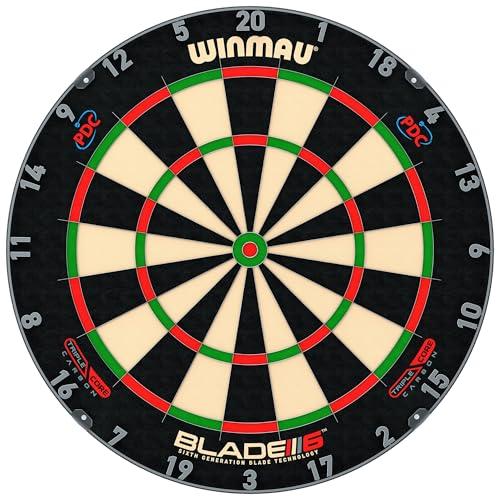
The Blade 6 is the default recommendation in steel-tip darts for good reasons. These are the boards that match it on the things that matter, or cost less.
Updated November 2026 · By Stephen V.
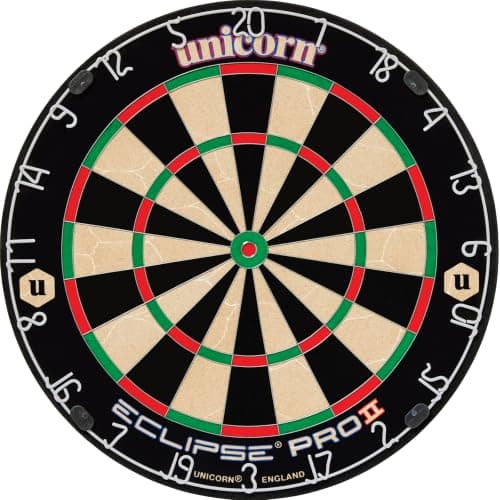
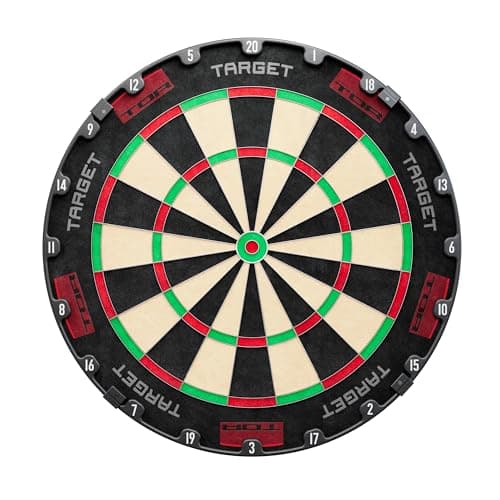
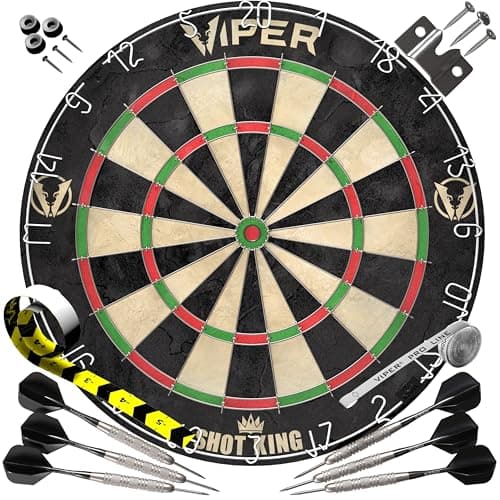
The best alternative to the Winmau Blade 6 is the Unicorn Eclipse Pro 2: it is a bristle board from the other long-established name in the sport, it is specified for competition play, and it comes with a cabinet — so it matches the Blade on board class and adds something the Blade does not include. It suits anyone who wants a tournament-grade board that can be shut away. If the attraction of the Blade was the price, the Target Darts TOR matches it on sisal construction and includes a fixing kit for less. The budget pick is the Viper Shot King set, which is the cheapest board here that is still genuine sisal.
First, what the Blade 6 is known for, in terms that are fair to it. It is a sisal bristle board sold to tournament specification, in Winmau's long-running Blade line, and it is the board most buying advice recommends by default. Two properties drive that reputation and both are category properties you can check on any board: sisal fibre self-heals, closing around the dart so the board does not develop holes; and a thin, blade-profile spider — the wire web between segments — deflects fewer darts than thick round wire, which means fewer bounce-outs and more scoring. If you are happy with the Blade 6, it is a good board and there is no reason to change.
People look for alternatives for three reasons, and they lead to three different boards. It is out of stock, in which case you want another board of the same class — the Unicorn or the Target. You want more board, in which case the step up is a multi-core construction or a slimmer spider. You want to spend less, in which case the question is how cheap you can go and still get sisal, because the moment you drop to paper coil you have changed product rather than saved money.
Every pick below is a board we rank elsewhere on its own merits, and each one is matched to the Blade on a stated property — sisal construction, competition dimensions, or a lower price. Live Amazon prices with the date we checked them are under each button.
The short answer
In a hurry? These are the picks we'd buy. Prices are live; tap a card below for the full reasoning.
$52.9931% offPrice as of November 22, 2026·#addisclosure
Viper Shot King Sisal Bristle Dartboard Set (with 6 darts)
A sisal bristle board with six darts for a fraction of the Blade's price — the floor of the category before boards stop being sisal.
Matches on
Sisal construction
Includes
6 darts
Costs
Well under the Blade 6
Brand
Viper
Pros
Still genuine sisal, so it self-heals rather than tearing like paper coil
Six darts included means it is playable immediately
Cheap enough for a garage or a second board where the Blade would be over-specified
The honest budget answer: below this price, boards stop being sisal
Cons
Thicker spider than any of the competition boards here, so noticeably more bounce-outs
Included darts are brass starter darts
Will wear faster than the tournament boards even with rotation
Best for: The cheapest alternative that is still a self-healing sisal board.
Skip this
The budget traps that look cheap and cost you twice. We'd skip these.
Dropping to a paper-coil board to save money
This is the one substitution that is not a saving. Paper coil is rolled paper rather than packed sisal fibre: it tears instead of closing, and the triple twenty becomes a visible crater within a few months of regular throwing. The cheapest board on this page is still sisal for exactly that reason. If your budget is below the Viper, the better move is to wait rather than to buy paper — and our <a href="/darts/best-dartboard-under-100">dartboards under $100</a> page shows how much board a modest budget actually gets.
Swapping to an electronic board because the steel-tip board is unavailable
They are not substitutes. An electronic soft-tip board scores itself and damages nothing, which makes it an excellent family-room purchase, but the dart, the weight, the throw and the segment feel are all different. If you are practising for steel-tip play, a soft-tip board is not a stand-in. Our <a href="/darts/steel-tip-vs-electronic-dartboard">steel tip versus electronic comparison</a> sets out what changes, and the <a href="/darts/best-electronic-dartboard">electronic roundup</a> covers that category properly.
How to choose (and what to skip)
Work out which of the three reasons applies to you
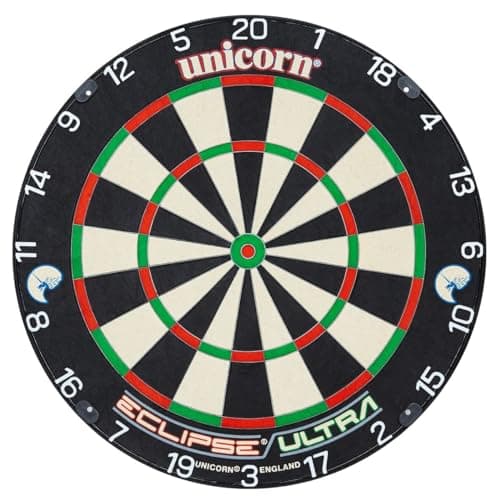
Out of stock means buy the same class of board: the Unicorn Eclipse Pro 2 or the Target TOR. Wanting more board means a slimmer spider or a multi-core construction, which is the Eclipse Ultra or the Blade 6 Triple Core. Wanting to spend less means staying in sisal, which is the Target or, at the floor, the Viper. Those are genuinely different answers.
Match on sisal first, then on spider
Sisal construction is the non-negotiable property: it is what makes a board last. The spider — thin blade wire versus thick round wire — is the second property and the one you feel in play, because it determines how many darts deflect instead of scoring. Every other difference between competition boards at this price is marginal.
Dimensions are standardised, so do not shop on them
Any board sold as official or tournament size has the same 15.5-inch playing diameter and the same segment layout. That means switching brands does not change your throw. What changes is bounce-out behaviour and how long the board lasts, which is why those are the two things to compare.
A cheaper board plus a surround often beats a better board alone
If the alternative you pick saves money against the Blade, the best use of the saving is a surround or a cabinet. Protecting the wall and stopping darts hitting a hard floor improves the experience more than a slightly thinner spider does, and bent dart points cost real money over a year.
Rotate whichever board you buy
Every sisal board wears out at the twenty first, because that is where everyone throws. Rotate the number ring a segment or two every few weeks and the board lasts years longer. This applies to the Blade and to every alternative here equally.
What the Blade 6 is actually doing well
Two things, both checkable on any board. The first is sisal: compressed plant fibre packed end-on, so a dart parts the fibres and they close behind it. That is why a sisal board does not develop holes and a paper-coil board does. The second is the spider — the wire web separating the segments. The Blade line is named for its thin, blade-profile wire, and thin wire deflects fewer darts than thick round wire. Fewer deflections means fewer darts on the floor and fewer bent points. Those are the properties to match when you substitute, and they are the properties every pick on this page is matched against.
Why brand matters less than it looks in darts
Board dimensions are standardised: a tournament board is a tournament board, with the same 15.5-inch playing area and the same number layout whoever makes it. That means switching from Winmau to Unicorn or Target does not change where you aim or how you throw, which is unlike almost every other piece of game-room equipment. What brand buys you is consistency of sisal density and spider manufacture — which is real, and which is why all four of the competition boards here come from established darts makers rather than from generic sellers. Our dartboard brands page covers who actually makes what.
When a cheaper alternative is the right call
If you throw a few times a month, the difference between a thin-spider tournament board and a mid-tier sisal board is a handful of bounce-outs an evening. If you throw most days, that handful becomes the difference between practice that builds a group and practice that is interrupted. So the honest advice splits on frequency: casual throwers are better off buying the Target TOR or the Viper Shot King and spending the saving on a surround and better darts; frequent throwers should stay at the Blade's level or go up to the Eclipse Ultra.
The accessories that change more than the board does
If your current setup is frustrating, the board may not be the problem. Three things change the experience more than a board swap at this level. A purpose-made light, because a board lit from the ceiling shadows exactly the segment you are aiming at. A surround, because bounce-outs hitting a hard floor is what bends points and ruins a dart's flight. And tungsten darts, because a dense, slim barrel groups tighter in the same space than a fat brass one. Any of those is a better use of money than replacing a working sisal board.
Our verdict
If the Blade 6 is simply unavailable, buy the Blade 6 Triple Core for the closest match or the Unicorn Eclipse Pro 2 for the same board class plus a cabinet. If price drove you here, the Target TOR is the one to buy — same sisal, same dimensions, fixing kit included, less money. If you want a genuinely better board, the Eclipse Ultra is the slimmer-spider step up. And if the board is for a garage wall rather than for practice, the Viper Shot King set is sisal, playable out of the box and a fraction of the price.
Frequently asked questions
What is a good alternative to the Winmau Blade 6?+
The Unicorn Eclipse Pro 2 is the closest substitute from another established darts brand, and it includes a cabinet. For a cheaper board of similar construction, the Target Darts TOR matches it on sisal and competition dimensions and includes a fixing kit.
Is the Blade 6 Triple Core better than the Single Core?+
The Triple Core is the higher-specified version within the same Blade 6 line, and it is priced accordingly. If you like the Blade and want more board, it is the simplest step up; if the Single Core's price was the attraction, it is not the alternative you want.
What should I look for when replacing a dartboard?+
Sisal construction first, because that is what makes a board self-heal and last. Then the spider: thin, blade-profile wire deflects fewer darts than thick round wire, which means fewer bounce-outs. Board dimensions are standardised, so they are not a point of comparison.
Will switching dartboard brands change my throw?+
No. Tournament boards share the same 15.5-inch playing diameter and the same number layout whoever makes them, so the aim points are identical. What differs between boards is bounce-out behaviour and how long the surface lasts.
Is it worth paying more than the Blade 6 for a dartboard?+
Only if you throw often. The money above this level buys a slimmer spider and more consistent sisal density, which shows up as fewer bounce-outs over hundreds of darts. For a few games a month, a surround, a proper light and better darts are all better uses of the same money.
Prices and availability shown here come from Amazon's live data and change often; we re-verify them regularly. Bar Bumper is an Amazon Associate and earns a commission on qualifying purchases at no extra cost to you. Read our full disclosure.