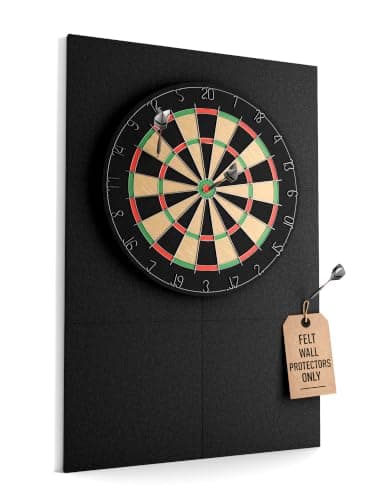
A stray dart in drywall leaves a hole you will be filling later. Five surrounds and wall protectors, ranked by how much wall they genuinely cover and how well they hold up.
Updated October 2026 · By Stephen V.
The best dartboard wall protector is the Viper Wall Defender III: a thick reversible surround that fits 17.75 and 18 inch bristle boards and takes the near misses that put holes in drywall. The Defender II is the same idea for less money; the Winmau Pro-Line ring is the one to buy if the board is a Winmau and you want it to look right; the Afumazi splicing panels cover a far bigger area for the money; and the Fluxynara felt sheet is the cheapest way to protect a rented wall.
There is a reason this is the accessory experienced throwers buy first. The darts that damage a wall are not the wild ones — they are the near misses, the ones an inch outside the double ring. Those land in a band a few inches wide right around the board, which is exactly the band a surround covers. Get that band protected and the occasional wild dart is the only thing left to worry about.
Two shapes do the job. A surround ring is a thick foam or cork collar that clips around the board itself, standing proud of the wall and taking points in the face — best protection, neatest look, smallest coverage. Panels or tiles are flat sheets you hang behind and around the board, covering several square feet for less money, at the cost of a less finished look and less stopping power on a fast dart.
We have not thrown at these in a controlled test. The ranking is built from published material, thickness, dimensions and fitment, plus owner-review consensus reported as other people's experience — see how we pick. Prices come live from Amazon with the date we verified them.
The short answer
In a hurry? These are the picks we'd buy. Prices are live; tap a card below for the full reasoning.
The thick, reversible Viper surround — the most protection you can put around a board without rebuilding the wall, and it fits both common board diameters.
A wall you care about, behind a board that gets used
$89.9911% offPrice as of October 13, 2026·#addisclosure
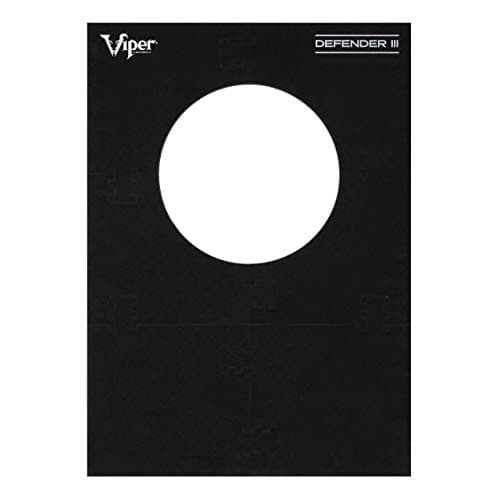
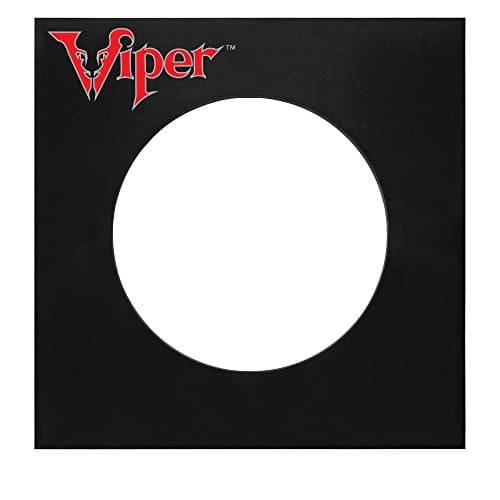
Viper Wall Defender III Dartboard Surround
The thick, reversible Viper surround — the most protection you can put around a board without rebuilding the wall, and it fits both common board diameters.
Type
Surround ring
Fits
17.75 and 18 in boards
Feature
Reversible
Brand
Viper (GLD Products)
Pros
Thick enough that a near miss stops in the surround rather than passing through
Reversible, so a chewed face can be turned around for a second life
Fits both the 17.75 and 18 inch boards sold in the US
Sits tight to the board, so there is no gap for a dart to find
Cons
The most expensive surround on this page
Only covers the band immediately around the board
Foam compresses over years of heavy use
Best for: A wall you care about, behind a board that gets used.
Fluxynara Felt Dartboard Wall Protector (35.4 x 23.6 in)
A single felt sheet behind the board — the lightest, cheapest, least permanent way to keep points out of a wall you do not own.
Type
Felt sheet
Size
35.4 x 23.6 in
Color
Black
Install
Hangs flat on the wall
Pros
One piece, no seams, hangs with minimal fixings
Covers a useful rectangle rather than only the ring
Cheapest protection here by a wide margin
Comes off a rented wall without leaving a mark
Cons
Felt slows a dart rather than stopping it — soft walls will still mark
No real thickness, so it is protection for misses, not for wild throws
Looks like a mat on the wall rather than part of the board
Best for: Renters, and boards that move around.
Skip this
The budget traps that look cheap and cost you twice. We'd skip these.
A surround on its own, on a plaster wall, with new throwers in the house
A surround ring covers a band of a few inches around the board, which catches the near misses and nothing else. That is the right trade for someone who throws regularly and misses narrowly. It is the wrong trade for a party or a house with teenagers learning, where darts land a foot wide. For that, put panels or a felt sheet behind the surround and cover the whole zone — the two together cost less than filling and repainting a wall.
Thin adhesive foam tiles sold as dartboard protection
The soft, thin, peel-and-stick foam tiles that turn up in this category do not stop a dart; they hold it for a second and then let it through, and the adhesive takes paint off when it comes away. If you want coverage, use cork panels or a felt sheet of real size. If you want stopping power, use a thick surround ring. The thin sticky tiles do neither job and damage the wall on the way out.
How to choose (and what to skip)
Work out which darts you are protecting against
Experienced throwers put darts an inch or two outside the double ring. That band is what a surround ring covers, and a ring is all they need. Occasional players and parties put darts a foot wide, which no collar reaches. Be honest about who throws in your house, because it decides whether you are buying a surround, a backboard, or both.
Check the board diameter before you buy a ring
US boards come in 17.75 and 18 inch diameters, and a surround that fits one is loose or tight on the other. The good ones say they fit both — the Viper Defenders do. A loose surround leaves a gap right where the near misses land, which defeats the point, so this is the one fitment detail worth reading twice.
Thickness beats surface area for stopping power
Material depth is what arrests a dart. A thick compression-molded foam ring will hold a point that a quarter-inch felt sheet passes straight through. Coverage and thickness are a trade at a given budget: buy thickness around the board and coverage behind it if the wall matters, and buy coverage alone if the wall is garage drywall nobody will ever look at closely.
Consider a cabinet if the room has guests in it
A cabinet does the same wall-protection job with its open doors and adds the ability to close the whole thing away, which matters in a living room or a finished basement. It costs more and covers a different shape. Our <a href="/darts/best-dartboard-cabinet">dartboard cabinet picks</a> cover that route, and a surround inside a cabinet is the belt-and-braces setup we would choose on a wall we cared about.
Protect the floor too, while you are at it
Dropped darts land point-first, and on hardwood that leaves a mark as surely as a wall does. A dart mat under the throw line is the cheap fix, and it also gives you a permanent, repeatable throw line without taping the floor — which is a small accuracy gain you get for free. The <a href="/guides/how-to-hang-a-dartboard">height and distance guide</a> has the measurements to mark.
What is a dartboard surround, exactly?
A collar of thick foam or cork that clips around the outside of the board and stands proud of the wall. Its whole job is the band of wall immediately around the scoring area, because that is where almost every damaging dart lands. Surrounds are usually one piece or four interlocking quarters, often reversible so a face that has taken a season of hits can be turned around. The word is used loosely online — people call felt sheets and cork panels surrounds too — but the collar is the real thing, and it is the one that actually stops a point.
Surround or backboard?
A surround gives maximum stopping power over a small area; a backboard gives modest stopping power over a large area. The honest answer for most homes is both, because they cost little together: a thick ring for the near misses and a cork or felt panel behind it for the wide ones. If you have to choose one, choose by who throws. A regular player with a steady release needs the ring. A house where everyone has a go at a party needs the area.
Foam, cork or felt?
Compression-molded foam is the standard surround material: thick, grippy on a point, and it compresses rather than splitting. It shows hits over time. Cork self-heals better and looks intentional on a wall, which is why it is the common choice for backboard panels, but at panel thickness it will not stop a hard dart. Felt is the thinnest and cheapest; it slows a dart and protects paint, and it is the right answer for a rented wall precisely because it does not need serious fixings. Match the material to the job rather than treating them as interchangeable.
How to install one without wrecking the wall
Hang the board first and get the height right — bullseye at 5 ft 8 in — then fit the surround around it so there is no gap at the bottom edge, where surrounds tend to sag. Rings usually hang on the board's own bracket or clip to the board itself, which is why so few of them need their own fixings. Panels want either adhesive strips rated for the weight or a couple of small screws into the drywall, and the screws are the better choice: adhesive strips on painted plaster come off with the paint. If you are renting and cannot drill at all, a felt sheet on removable strips plus a freestanding dartboard stand gets you a full setup with nothing fixed to the wall.
The rest of the wall
Once the wall is protected, the next two upgrades are light and height. A dartboard ring light removes the shadow your own body throws across the board from a ceiling fixture behind you, which is the single most common thing wrong with a home setup. And the geometry has to be right or nothing else matters: the dartboard height and distance guide has the numbers, including the diagonal measurement that catches a throw line marked from the wrong point. If you have not bought the board yet, start at the dartboard roundup.
Frequently asked questions
What is the best dartboard wall protector?+
The Viper Wall Defender III. It is a thick reversible surround that fits both 17.75 and 18 inch bristle boards and stops the near misses that put holes in drywall. For a bigger protected area at a lower price, cork splicing panels cover several times the square footage, and the best setup on a wall you care about is a thick ring with panels behind it.
Do dartboard surrounds work?+
Yes, for what they are designed to catch. Most damaging darts land an inch or two outside the double ring, and that is exactly the band a surround covers — with enough material depth to stop a point rather than slow it. What a surround cannot do is catch a dart thrown a foot wide; for that you need a backboard panel or a cabinet with doors.
What is the difference between a dartboard surround and a cabinet?+
A surround is a foam or cork collar that hugs the board and takes near misses; a cabinet is furniture that holds the board, catches misses with its open doors and closes to hide everything. The surround protects better in the band right around the board; the cabinet covers more wall and makes the board disappear in a room used for other things.
What can I use to protect my wall behind a dartboard?+
A thick surround ring for the near misses, and a cork panel or felt sheet behind it for the wide ones. Avoid thin peel-and-stick foam tiles: they do not stop a dart and their adhesive takes paint with it when removed. If you rent, a felt sheet on removable strips plus a freestanding stand keeps everything off the wall entirely.
Will a dartboard surround fit any board?+
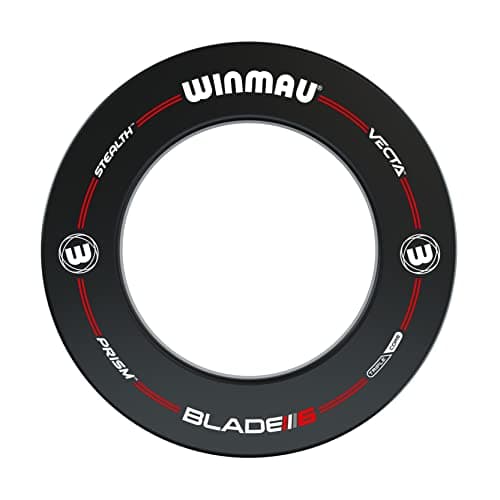
Check the diameter. US bristle boards come as 17.75 and 18 inch, and a surround sized for one is loose or tight on the other — a loose fit leaves a gap exactly where the near misses land. The Viper Defender surrounds state both sizes; brand-specific rings like Winmau's are cut for that brand's boards.
How do you fit a dartboard surround?+
Hang and level the board first with the bullseye at 5 ft 8 in, then fit the surround around it so there is no gap at the bottom edge where surrounds tend to sag. Most rings hang on the board's own bracket or clip to the board itself, so they need no separate fixings. Panels want small screws rather than adhesive strips, which pull paint off plaster.
Prices and availability shown here come from Amazon's live data and change often; we re-verify them regularly. Bar Bumper is an Amazon Associate and earns a commission on qualifying purchases at no extra cost to you. Read our full disclosure.