The most common fault in a home dart setup is your own shadow across the board. Four lighting systems that fix it, from a tournament-style ring to a cheap LED that does the job.
Updated October 2026 · By Stephen V.
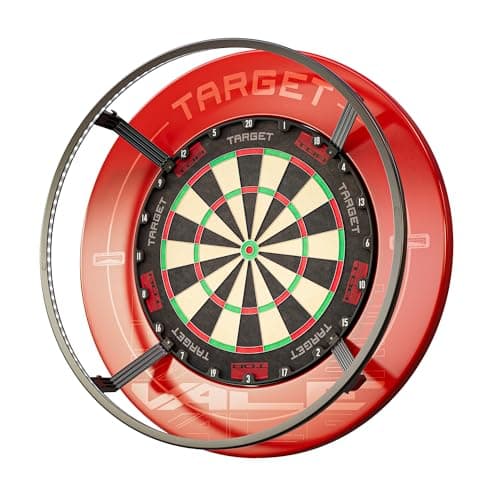
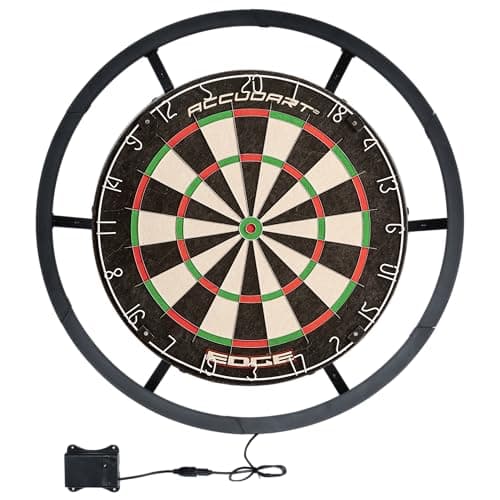
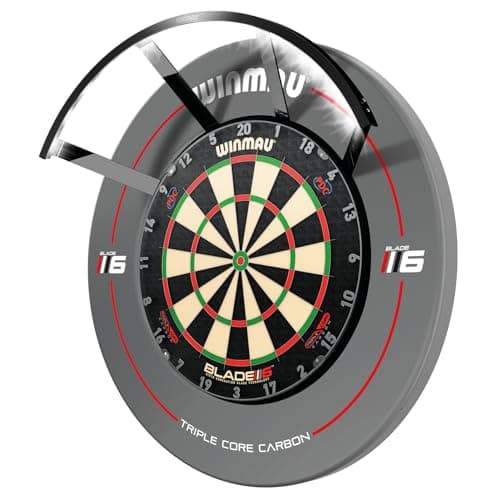
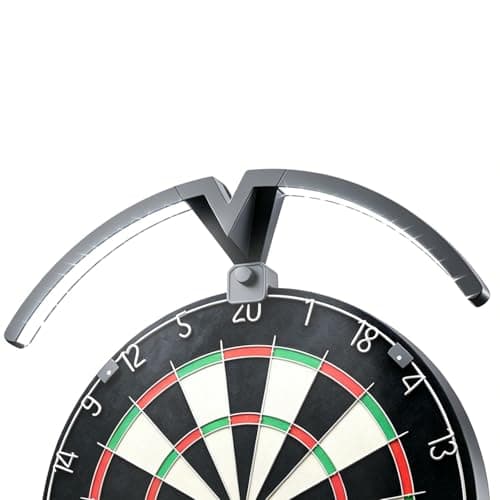
The best dartboard light is the Target Darts Corona Vision: a framed white-LED ring that lights the board evenly from every angle and throws no shadow of its own. The Accudart Vortex is the cheaper 360-degree alternative; the Winmau 120-degree ring light is the neat magnetic-mount option for a Winmau board; and the BrightArk LED is the one to buy if you just want the shadow gone for the least money.
Here is the problem every one of these solves. A room light is almost always behind the thrower, which means the thrower stands in front of it and puts their own shadow on the board at the exact moment they are aiming. You can see the board fine when you walk up to it; you cannot see it at the point of release. That is why a dart wall with a single overhead light feels harder to score on than the same board in a pub.
The fix is light that comes from the board's own plane — a ring that sits around the board and shines inward, so the illumination arrives from all sides and nothing in the room can cast a shadow across the scoring area. Everything on this page is a version of that idea. What separates them is how far around the board the ring goes, how it mounts, whether it dims, and how the cable gets to power.
We have not measured these in a lux test. The ranking is built from published coverage angle, mounting method, power and dimming, plus owner-review consensus reported as other people's experience — see how we pick. Prices come live from Amazon with the date we verified them.
The short answer
In a hurry? These are the picks we'd buy. Prices are live; tap a card below for the full reasoning.
$29.9910% offPrice as of October 13, 2026·#addisclosure
BrightArk LED Dartboard Light (3 m power cable)
A plain LED dartboard light with a long power cable — no frame, no app, just the one thing that improves a home dart wall most.
Type
LED dartboard light
Cable
3 m power cord
Fits
Standard dart boards
Brand
BrightArk
Pros
A fraction of the price of a framed system
The long cable solves the real-world problem of no outlet near the board
Fits standard boards without brand-specific hardware
Easy to justify as a first upgrade before a better board
Cons
Build is basic next to Target, Accudart or Winmau
No replacement parts sold — a failure means a new unit
Less even coverage than a true 360-degree ring
Best for: Getting the shadow gone this week.
Skip this
The budget traps that look cheap and cost you twice. We'd skip these.
A spotlight or a clamp lamp aimed at the board
This is the obvious DIY fix and it makes things worse in two ways. A single-source lamp aimed from above and in front throws hard shadows off the wires and the darts already in the board, so a dart in the treble 20 shadows the bed you are aiming at. And the lamp itself is usually in your eyeline. Even coverage from the board's own plane is the whole point of a ring; one bright source from one direction is what you are trying to get away from.
Assuming a lit cabinet replaces a ring light
Cabinet LEDs help a lot in a dark room and they are a tidy single purchase — our <a href="/darts/best-dartboard-cabinet">cabinet picks</a> cover the lit ones. But cabinet lighting sits in the doors, which puts the light source either side of the board rather than all around it, and most cabinet lights are dimmer than a dedicated ring. If the room is genuinely dark, a lit cabinet is enough; if you want to see the wires clearly from the oche, the ring is the upgrade.
How to choose (and what to skip)
Buy coverage before brightness
A dim light that surrounds the board beats a bright one that comes from a single direction, because what you are fighting is shadow rather than darkness. 360-degree rings are the specification to look for. 120-degree partial rings are a real improvement over a ceiling light but can leave a soft shadow from the uncovered side, which is worth knowing before you buy the cheaper half-ring.
Check how it mounts before you check anything else
Ring lights either clip to the board, hang on the board's own bracket, mount magnetically, or screw to the wall around the board. A magnetic mount is the easiest and the quickest to remove; a wall-mounted frame is the most solid and the best-looking. What will catch you out is a light designed for a specific brand's board — Winmau's magnetic ring is built around Winmau boards. Match the mount to the board you own.
Work out where the power is coming from
Dart walls are rarely next to an outlet, and a short captive cable is the most common reason a light goes back. Check the cable length against the real distance to your outlet, measured along the wall rather than across the room. A cheap light with a 3 m cord can be the better buy than a premium ring with a short lead, unless you are willing to run a cable channel.
Dimming matters in a room people sit in
A dartboard light bright enough for scoring is bright enough to be unpleasant in a small basement bar where people are also sitting and talking. If the board is in a social room rather than a games room, a dimmable light earns its keep. If it is in a garage, it does not — buy the brightest even coverage you can and be done.
Fix the geometry first
Lighting is the biggest improvement you can make to an existing setup, but only once the board is in the right place. Bullseye at 5 ft 8 in, throw line 7 ft 9¼ in from the board face, measured with the diagonal check — the <a href="/guides/how-to-hang-a-dartboard">dartboard height and distance guide</a> walks through it. A perfectly lit board at the wrong height is still the wrong board.
Why your own shadow is the real problem
Stand at the oche with a ceiling light behind you and look at the board. Your head and shoulders block a cone of that light, and the cone lands on the board — often right over the top half, which is where the 20 is. You will not notice it standing still, because your eyes adjust. You notice it as inconsistency: the wires read clearly on some throws and not others, depending on how you lean. A ring light removes the variable entirely, which is why it is the one accessory that changes how well people throw rather than how the wall looks.
360 degrees or 120 degrees?
A full ring puts light on the board from every direction, so nothing — not you, not the darts already in the board — can shadow the scoring area. A 120-degree partial ring lights the board from one arc, which kills your own shadow but leaves a faint one on the opposite side of each dart. In a bright room that difference is invisible. In a dark basement it is noticeable. Buy the full ring if the room is dark or if you play seriously; buy the partial ring if the mount convenience matters more, which is a legitimate reason.
What a ring light does to the wall
Two useful side effects. First, most framed lights double as a border, which tidies up the junction between board and wall — a surprising amount of why a pub board looks right is that it has a defined edge. Second, a framed light physically occupies the band immediately around the board, which is the band near misses land in, so it takes some hits a bare wall would have taken. It is not a substitute for a surround, and a dart into an LED strip is worse than a dart into drywall — but the two fit together, and the usual order is surround first, light over it.
Running the cable without an electrician
Almost nobody has an outlet where a dartboard wants to go. Three honest options: a long-corded light, which is why cable length is on our spec tables; a surface-mounted cable channel painted to match the wall, which is a half-hour job and looks far better than a dangling lead; or a floor-level outlet with the cable routed down the corner of the room. What not to do is run a thin extension across the throwing lane, because that is exactly where people walk back and forth collecting darts.
The rest of a proper dart wall
In the order that gives you the most for your money: get the height and distance right, protect the wall with a surround or a cabinet, add the light, then upgrade the darts. If you rent and cannot fix anything to the wall, a freestanding stand takes the board, and several stands will carry a light as well. And if the board itself is the weak link, the dartboard roundup is the place to start.
Frequently asked questions
What is the best dartboard light?+
The Target Darts Corona Vision. It is a framed white-LED ring that lights the board evenly from every direction, so neither you nor the darts already in the board can shadow the scoring area — and the frame tidies up the wall. The Accudart Vortex gives the same 360-degree coverage for less, and the BrightArk LED is the cheapest way to get the shadow gone.
Do you need a light for a dartboard?+
If the board is lit only by a ceiling light behind the throwing line, yes — that arrangement puts your own shadow across the board at the moment you release. A ring light around the board removes the shadow entirely and is the single biggest improvement most home setups can make, ahead of better darts or a better board.
How do you light a dartboard properly?+
With even light from the board's own plane, not from a single source in front of it. A ring that surrounds the board and shines inward gives illumination from all sides, so nothing in the room can cast a shadow on the scoring area. Avoid aiming a spotlight or clamp lamp at the board: it creates hard shadows off the wires and the darts already in the board.
Is a 120-degree dartboard light enough?+
In a reasonably lit room, yes — it kills your own shadow, which is the main problem. In a dark basement or garage, a full 360-degree ring is noticeably better because it also removes the small shadows each dart casts across the bed next to it. Partial rings often mount more easily, which is a fair reason to choose one.
Can you use a dartboard light with a surround?+
Yes, and they work well together — fit the surround to the board first, then mount the light around or over it. Check the combined depth: a thick surround plus a framed light stands the whole assembly further off the wall, which does not affect play but can matter in a tight alcove. Note that a dart into an LED strip is worse than a dart into drywall, so the surround is the part doing the protecting.
Do lit dartboard cabinets need a separate light?+
Not usually. Cabinet LEDs sit in the doors and are enough for a dark room, which is why a lit cabinet is a tidy single purchase. They are dimmer than a dedicated ring and light the board from either side rather than all around, so a serious player in a dark basement will still prefer a ring light.
Prices and availability shown here come from Amazon's live data and change often; we re-verify them regularly. Bar Bumper is an Amazon Associate and earns a commission on qualifying purchases at no extra cost to you. Read our full disclosure.