Weight first, material second, everything else is preference. A straight answer on dart weight for beginners, then four sets that cover the way most people actually play.
Updated October 2026 · By Stephen V.
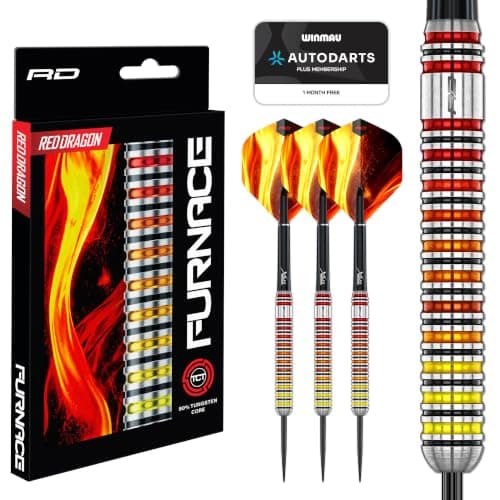
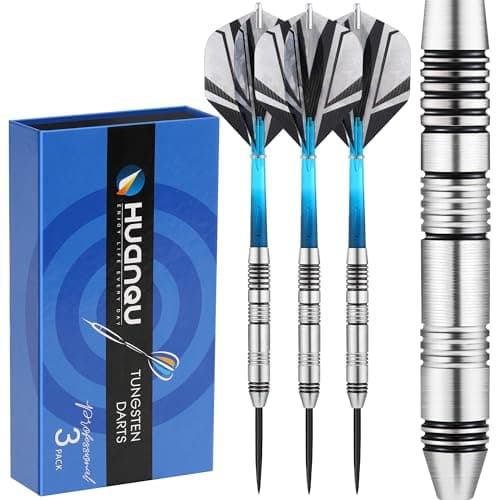
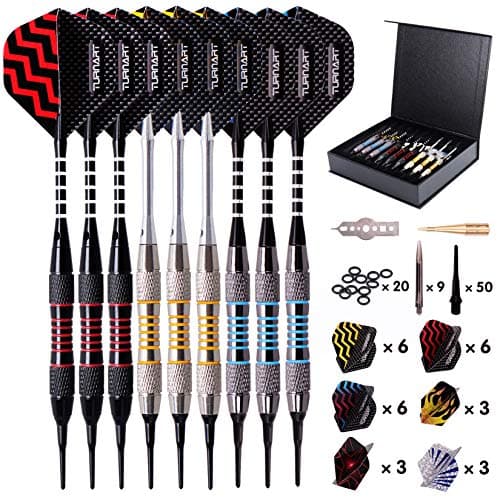
Start at 22 to 24 grams in steel tip, and buy tungsten if you can afford it. That one line answers most of the question. A 24 g dart is heavy enough to fly flat and land where you pointed it, light enough not to tire your arm over a few hundred throws, and it is the weight most sets are sold in because it is the weight most people settle on. Our pick is the RED DRAGON Furnace at 24 g in 90% tungsten; the HUANQU set is the same weight for much less; the Winmau brass twin pack is the cheapest honest way to find your weight; and the Turnart soft tips are the set to buy for an electronic board.
Everything else you read about choosing darts — barrel shape, grip knurling, stem length, flight size — matters, but it matters after you have thrown a few hundred darts and formed an opinion. Nobody can tell you from a listing whether you prefer a front-loaded barrel. What a listing can tell you is weight, tip type and tungsten content, and those are the three things that actually decide whether a set suits you.
There is one hard fork before weight, and it is not a preference: steel tip for a bristle board, soft tip for an electronic board. Steel tips destroy the plastic segments of an electronic board, and soft tips will not stick in sisal reliably. If you do not know which board you have or are buying, the steel-tip versus electronic comparison settles it in a page.
We have not thrown these sets in a controlled test, and anyone who claims a dart set is objectively more accurate than another is selling something. The picks are built from published weight, tungsten percentage, barrel style and what is in the box, plus owner-review consensus reported as other people's experience — see how we pick. Prices come live from Amazon with the date we verified them.
The short answer
In a hurry? These are the picks we'd buy. Prices are live; tap a card below for the full reasoning.
18 g soft tips in a nine-pack — the right weight for an electronic board and enough darts that a snapped tip does not end the game.
Weight
18 g
Tip
Soft tip (plastic)
Quantity
9 darts
For
Electronic boards
Pros
18 g is in the normal soft-tip range, which runs lighter than steel tip
Nine darts means three full sets or a long supply of spares
Soft tips are the safe choice around a wall and a floor you care about
Cheap enough to keep a bag of spare tips alongside them
Cons
Will not hold reliably in a sisal board — electronic boards only
Plastic tips snap; they are consumables, not parts
Lighter darts are more affected by a bad release
Best for: An electronic board, with spares for the tips that snap.
Skip this
The budget traps that look cheap and cost you twice. We'd skip these.
Buying the heaviest darts you can find
A heavy dart does not fly straighter, it just drops less over the throw — and tires your arm faster. The common steel-tip range is roughly 21 to 26 grams for a reason: inside that band the flight is flat enough to be predictable and the weight is low enough to throw a few hundred times. Darts at the extremes exist for people who have thrown for years and know exactly why they want them.
Mixing soft-tip darts and a bristle board (or the reverse)
This is the single most common mistake in the category. Steel tips punch through the plastic segment holes of an electronic board and break the matrix underneath; soft tips bounce out of sisal because they cannot part the fibers. Both failures look like a faulty product and neither is. Match the tip to the board, every time — and if you own both kinds of board, own both kinds of dart.
How to choose (and what to skip)
Pick a weight: 22 to 24 g for steel tip, 16 to 20 g for soft tip
If you have never thrown, start at 22 or 24 g in steel tip. Lighter darts need more force and punish a loose release; heavier darts drop less but fatigue your arm. Soft-tip darts run lighter because electronic boards need less energy to register a hit, so 18 g is a normal place to be. You will drift a gram or two either way once you have thrown a few hundred darts, and that is the point at which a second set makes sense.
Then pick a material: tungsten if you can, brass to learn
Tungsten is about twice as dense as brass, so a 24 g tungsten barrel is appreciably slimmer than a 24 g brass one. A slim barrel is what lets three darts sit side by side in the treble bed instead of knocking each other out. That is the whole reason tungsten costs more, and it is a real advantage rather than marketing. Brass is the right buy for a first month, a garage set or a houseful of occasional players.
Ignore the tungsten percentage past about 80%
Sets advertise 80%, 90% and 95% tungsten, and the difference in barrel diameter between 90% and 95% is small enough to be invisible in play. Anything at 80% or above is a real tungsten dart. Do not pay a premium for the last five percent unless the barrel shape is the one you want anyway — the grip and the profile will affect your throw far more than the alloy will.
Treat flights and shafts as consumables
The barrel is the dart; the plastic shaft and the flight are parts that wear out and get destroyed by other darts hitting them. Buy a set from a brand that sells replacements — RED DRAGON, Winmau, Target and Viper all do — and keep a few spares in the box. Nothing is more annoying than a good set of barrels sidelined by a snapped stem you cannot replace.
Buy the wall protection before you buy a second set of darts
The usual order people go in is darts, better darts, then a surround once the wall is pitted. Reverse it. A set of 24 g tungsten darts and a bare drywall wall is a worse setup than brass darts with a <a href="/darts/best-dartboard-surround">surround</a> and a <a href="/darts/best-dartboard-light">light</a> behind them. Lighting in particular changes how well you throw, because your own shadow is the thing most home dart walls get wrong.
How to choose darts for beginners, in order
One: pick the tip for your board. Steel for bristle, soft for electronic; no judgement calls. Two: pick 22 or 24 g. If you genuinely cannot decide, 24 g is the more common answer and the easier weight to find replacements in. Three: pick brass or tungsten by budget — brass to learn on, tungsten if you already know you will keep playing. Four: throw them for a month before changing anything. New throwers blame the dart for inconsistency that is coming from their stance and release, and swapping sets early just hides the signal. Everything after that — barrel shape, grip, stem length — is a preference you develop rather than one you can choose in advance.
What dart weight should you throw?
Most steel-tip darts sold sit between 21 and 26 grams, and most players end up between 22 and 25. The weight written on a barrel is the barrel weight, so a complete dart with its stem and flight weighs a little more, which is why two 24 g sets can feel slightly different. Heavier darts fly flatter and need less lift; lighter darts need a firmer push and reward a cleaner release. There is no correct answer, only a comfortable one, and the fastest way to find yours is a cheap brass twin pack in two weights rather than a forum argument.
Brass, nickel-silver or tungsten?
Brass is the cheapest, the least dense and the fattest at a given weight — perfectly good to learn on, and it wears smooth over time so the grip changes. Nickel-silver sits between brass and tungsten on both price and density, and is the least interesting choice. Tungsten alloy is roughly twice as dense as brass, so the same weight comes in a much slimmer barrel, which is the only material advantage that shows up in your scoring: slim darts group tightly in the treble bed instead of deflecting off each other. If you will keep playing, tungsten is the upgrade worth making; nothing else about the dart is.
Grip, barrel shape and the parts that wear
Barrel shapes come in straight, torpedo (front-loaded) and scalloped profiles, with grip from fine knurling to deep-cut rings. Front-loaded barrels suit a thrower who releases late; straight barrels are the neutral choice and what most sets are. Deep grip helps a dry hand and shreds a sweaty one. None of this can be chosen usefully from a product page, which is why our picks are weight-and-material first. What is worth knowing is which parts are consumable: flights get shredded by following darts, plastic stems snap, and soft tips break constantly. Buy a set whose brand sells those parts separately, and keep spares in the wallet.
What to buy with your first set
A board, if you do not have one: our dartboard roundup covers bristle boards and the brand page explains who makes what. Then the wall: a surround if the board is out in the open, or a cabinet if the room has guests in it. Then a light. And if you cannot drill the wall at all, a dartboard stand is the way renters get a proper setup. Hang it all at the right height and distance using the dartboard height guide — the geometry is worth more than any dart upgrade.
Frequently asked questions
How do you choose darts?+
Match the tip to your board first — steel tip for a bristle board, soft tip for an electronic one. Then pick a weight: 22 to 24 grams for steel tip, 16 to 20 grams for soft tip. Then pick a material: tungsten for a slimmer barrel if the budget allows, brass to learn on. Barrel shape and grip are preferences you develop after a few hundred throws, not choices you can make from a listing.
What weight darts should a beginner use?+
22 to 24 grams in steel tip. That band flies flat enough to be predictable without tiring your arm over a long session, and it is the weight most sets are sold in, so spares and alternatives are easy to find. For a soft-tip electronic board, 18 grams is the equivalent starting point because those boards need less energy to register a hit.
Are tungsten darts worth it over brass?+
If you are going to keep playing, yes. Tungsten is roughly twice as dense as brass, so a 24 g tungsten barrel is much slimmer than a 24 g brass one — and a slim barrel lets three darts sit together in the treble bed instead of knocking each other out. Brass is still the right first purchase if you want to find your weight cheaply.
Does tungsten percentage matter?+
Only up to a point. Anything at 80% or above is a genuine tungsten dart, and the difference in barrel diameter between 90% and 95% is too small to notice in play. Buy the barrel shape and weight you want rather than paying extra for the last few percent of alloy.
Can you use soft-tip darts on a bristle board?+
Not reliably. Soft tips cannot part the sisal fibers the way a steel point does, so they bounce out. The reverse is worse: steel tips punch through the segment holes of an electronic board and damage the scoring matrix underneath. Match the dart to the board — and if you own both boards, own both kinds of dart.
How often do you need to replace darts?+
Rarely. The barrels last for years — what wears out are the flights, which get shredded by following darts, and the plastic stems, which snap. Soft tips break most often of all. Buy from a brand that sells those parts separately, keep spares in the case, and a good set of barrels will outlast several boards.
Prices and availability shown here come from Amazon's live data and change often; we re-verify them regularly. Bar Bumper is an Amazon Associate and earns a commission on qualifying purchases at no extra cost to you. Read our full disclosure.