Written for anyone who cannot put a board on the wall. Four freestanding stands compared on how steady they really are, and the one thing every one of them needs behind it.
Updated October 2026 · By Stephen V.
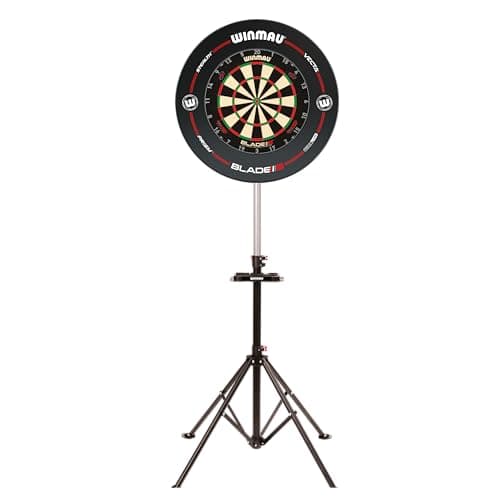
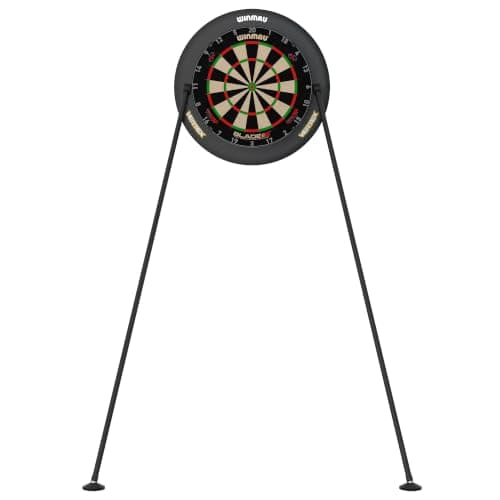
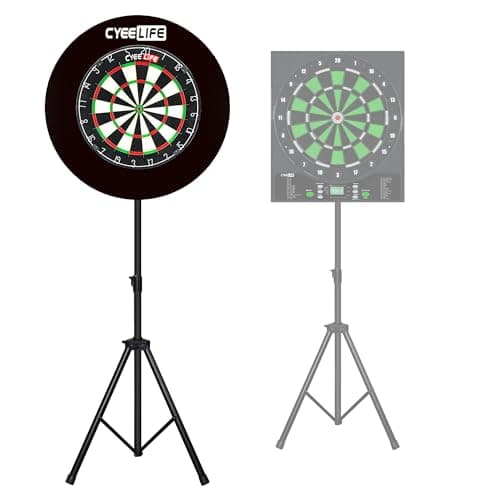
The best dartboard stand is the Winmau Xtreme 2.0: a portable, adjustable stand that is rigid enough to throw at properly and folds down when you are done. The Winmau Vertex is the premium version with more adjustment; the CyeeLife tripod is the light, cheap option that travels; and the Turnart stand is the budget pick if a stand is a temporary fix rather than the setup.
This page exists for one buyer: someone who cannot drill a wall. Renters, people with concrete or tile walls, anyone whose only usable wall has a window in it, anyone who wants the board to live in the garage and come inside for a party. For all of them the question is not whether a stand is as good as a wall — it is not — but which stand is steady enough to be worth playing on.
Are dartboard stands any good? The good ones are, and the difference is the base. A stand with a wide footprint and real mass at the bottom holds the board still when a dart lands; a light tripod moves slightly on impact, which you feel as the board being less willing to hold a point. Weight and footprint are the two specs worth paying for, and the usual trade is that both of them make the stand less convenient to move.
We have not assembled these side by side. The ranking is built from published construction, height adjustment range, footprint and pack-down size, plus owner-review consensus reported as other people's experience — see how we pick. Prices come live from Amazon with the date we verified them.
The short answer
In a hurry? These are the picks we'd buy. Prices are live; tap a card below for the full reasoning.
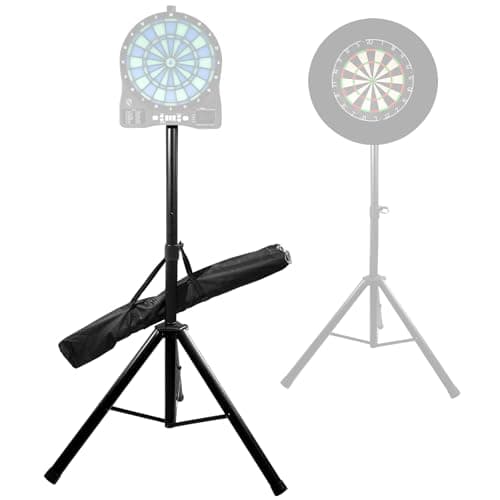
A plain portable dartboard holder at the bottom of the market — fine for occasional play, and the cheapest way to avoid drilling a wall.
Type
Portable stand
Use
Indoor and outdoor
Brand
Turnart
Stores
Breaks down
Pros
The lowest price here for something that holds a board at height
Breaks down into a small bundle for storage
Works outdoors, which a wall mount obviously cannot
Low enough risk to buy before committing to a proper setup
Cons
Least stable of the four — expect some movement
Basic hardware that will not take years of heavy use
No fine height adjustment, so regulation height takes some fiddling
Best for: A temporary setup, or finding out whether darts sticks.
Skip this
The budget traps that look cheap and cost you twice. We'd skip these.
A stand with no backboard behind it
This is the mistake that costs renters their deposit. A stand keeps the board off the wall, but the darts that miss the board carry on and hit whatever is behind it — which, in a rented room, is the wall you were trying to protect. Every stand setup needs a backboard: a <a href="/darts/best-dartboard-surround">surround ring</a> for near misses and a felt sheet or cork panel behind the whole assembly for the wide ones. Some stands include a backboard panel; most do not.
Setting the board height by eye
Wall mounts have one height and you measure it once. Stands are adjustable, which sounds better and in practice means half of them end up an inch or two out — and a board at the wrong height quietly teaches you a wrong throw. Set the bullseye at 5 ft 8 in with a tape measure the first time you assemble it, mark the stand leg with tape at that setting, and reset to the mark whenever it comes out of the cupboard.
How to choose (and what to skip)
Buy for the base, not the pole
Stability comes from footprint and mass at the floor. A wide base with weight in it holds the board still when a dart lands; a narrow tripod flexes slightly and the board moves with the hit, which costs you points you will blame on the darts. If the stand will live set up in one place, buy the heaviest, widest one you can accept. Save the light tripods for stands that genuinely travel.
Check the height adjustment covers 5 ft 8 in
Regulation steel-tip height is a bullseye 5 ft 8 in from the floor, and soft-tip boards hang slightly lower. Most stands cover that range, but the cheap ones adjust in coarse steps that can land either side of it. A stand you cannot set to the exact height is a stand you will quietly stop using, because play on it will never feel like play anywhere else.
Measure the throw line from the board face, not the stand
7 ft 9¼ in is measured from the face of the board, and a stand holds the board well forward of its own base — sometimes by a foot. Set the stand where you want it, then measure from the board face to mark the oche. Getting this wrong by the depth of the stand is the most common reason a stand setup feels harder than a wall setup.
Think about where it goes when it is not in use
The real difference between stands day to day is pack-down. A folding Winmau goes behind a door; a tripod goes in a bag; a bulky flagship stand goes nowhere and lives where it is. Be honest about whether the board is a permanent fixture of the room or a thing that comes out for company, because that single answer picks your stand for you.
Budget for the backboard in the same order
A stand and no wall protection is not a complete setup — the stand protects the wall from the board, not from the darts. Add a surround and a panel behind it, or stand the whole thing in front of a <a href="/darts/best-dartboard-cabinet">cabinet-style backboard</a> if you have one. And if the room is dark, our <a href="/darts/best-dartboard-light">dartboard light picks</a> include lights that mount to the board rather than the wall, which suits a stand perfectly.
Are dartboard stands any good?
The solid ones are genuinely good, and the flimsy ones are frustrating in a way that is easy to misdiagnose. What you want from a board mount is that it does not move at all when a dart hits it — any give absorbs energy that should have gone into holding the point, so darts bounce out more. A wall never moves. A heavy stand with a wide base barely moves. A light tripod moves a little, and that little is the whole difference in feel between a stand that gets used and one that gets resented. So: yes, stands work, provided you buy for mass and footprint rather than for pack-down size.
Who should buy a stand instead of a wall mount
Four buyers, all legitimate. Renters, where drilling is either banned or a deposit risk. Masonry and tile walls, where the fixing is a real job and a mistake is permanent. Rooms with no usable wall — windows, radiators, stairs, a doorway on every side. And people whose board travels, whether that is between the garage and the house or to a friend's place. If none of those describe you, mount it on the wall: it is cheaper, steadier and takes up no floor.
What a stand costs you in floor space
More than people expect, and in an awkward direction. A stand's base projects forward into the room — into the throwing lane, which is the one direction you cannot give up, since you need 7 ft 9¼ in from the board face plus room to step back behind the line. In a narrow room, the base legs end up where your feet want to go. Measure the depth of the base and add it to your lane length before buying, and check which stands have legs that run sideways rather than forward.
Stands that also carry a light
A stand setup has the same shadow problem as a wall setup, and in a rented room the usual fix — a wall-mounted ring — is off the table. The answer is a light that mounts to the board or the surround rather than the wall, which includes most ring lights and all the magnetic-mount ones. Check the stand's upright does not foul the ring's cable exit, and run the cable down the upright with a couple of ties rather than across the floor. Our dartboard light roundup notes the mounting type for each pick.
Setting one up properly in ten minutes
Assemble the stand, hang the board, then measure the bullseye at 5 ft 8 in from the floor and lock the height — mark the leg with tape so it comes back to the same place next time. Put the backboard or surround on before you throw anything. Measure 7 ft 9¼ in from the face of the board along the floor and mark the line with a mat or a strip of tape. Check the diagonal from the bullseye to the throw line as a sanity check; the dartboard height and distance guide has that figure. Then throw a dozen darts and see whether the stand moves — if it does, weight the base.
Frequently asked questions
What is the best dartboard stand?+
The Winmau Xtreme 2.0. It is rigid enough that the board does not shift when a dart lands, adjusts to a true 5 ft 8 in bullseye, and still folds away between uses. The Winmau Vertex is the sturdier flagship for a permanent setup, and the CyeeLife tripod is the one to buy if the board has to travel.
Are dartboard stands any good?+
The heavy ones are. What matters is that the board does not move when a dart hits it — any flex absorbs energy and causes more bounce-outs. A stand with a wide, weighted base is close to a wall in feel; a light tripod moves slightly and you notice. Buy for base width and mass rather than for how small it packs down.
Do you need a stand if you can't drill the wall?+
It is the usual answer for renters, masonry walls and rooms with no clear wall. Just remember a stand only keeps the board off the wall — the darts that miss still fly past it, so you also need a surround or a backboard panel behind the whole assembly to protect what is behind.
How high should a dartboard stand be set?+
The bullseye should sit 5 ft 8 in from the floor for steel-tip play, the same as a wall-mounted board, with soft-tip boards hanging a little lower. Set it with a tape measure the first time and mark the stand's leg with tape at that setting so it returns to the same height every time you set it up.
How much space does a dartboard stand need?+
The throwing lane is 7 ft 9¼ in from the board face plus room to step back behind the line, and a stand adds its own base depth in front of the board — sometimes a foot of it, projecting into that lane. Measure the base depth and add it to the lane length, and prefer stands whose legs run sideways rather than forward in a narrow room.
Can you put a light on a dartboard stand?+
Yes. Use a ring light that mounts to the board or the surround rather than to the wall — magnetic-mount rings are especially easy on a stand. Run the cable down the stand upright with ties instead of across the floor, and check the upright does not block the light's cable exit.
Prices and availability shown here come from Amazon's live data and change often; we re-verify them regularly. Bar Bumper is an Amazon Associate and earns a commission on qualifying purchases at no extra cost to you. Read our full disclosure.