Two hundred dollars is more cue than most home tables will ever need. Ten picks under the cap, ordered by what each step up the price ladder actually changes about the shot.
Updated November 2026 · By Stephen V.
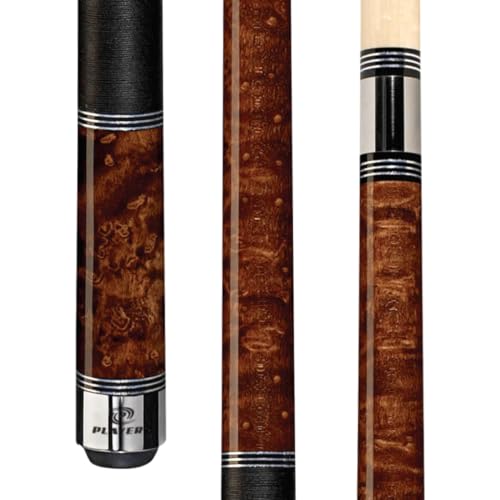
Buy the McDermott Lucky L9. It is the only cue on this page from a maker that still builds custom cues in the United States, it arrives with a case, and it sits comfortably inside the cap. If you want an American-built cue with a published model code instead, the Viking Valhalla 200 Series is the pick; if you want graded hard maple with a linen wrap at the very top of the band, take the Players C-950; and if you only want the cheapest cue that is honestly straight, the Viper Graphstrike costs about a tenth of the cap.
This page exists because "under $200" is where the cue market stops being about marketing and starts being about materials. Below about thirty dollars you are buying a composite stick that will not warp and will not inspire you. Above about four hundred you are buying inlays, a maker's name and a low-deflection shaft. In between - and especially between about fifty and two hundred dollars - every dollar buys something you can name: graded maple instead of generic hardwood, a steel joint instead of a plastic one, a layered leather tip instead of a pressed one, and a weight you chose instead of a weight you were sent.
A quick sanity check before you spend anything. Pool cues average around 59 inches long and are commonly sold from 17 to 21 oz, with 19 oz both the most common retail weight and the average professionals settle on. Tip diameters for pool run roughly 12 to 14 mm. If a listing will not tell you the weight, the length and the tip diameter, it is not a cue worth two hundred dollars - it is a house stick with a price tag.
How we judged these, inside a cap
A capped roundup is a different exercise from an open one. The question is not "which cue is best" - it is "at this price, what did the maker spend the money on, and is that the thing you will feel?" Four criteria, weighted in this order.
What the shaft is made of, and whether the listing says. Quality pool shafts are customarily straight-grained hard rock maple, which is stiff, cheap relative to ash and predictable. Fiberglass and graphite composites are the budget alternative and their genuine advantage is that they will not bow in an unheated basement. Carbon fiber is the expensive end and almost never appears under two hundred dollars. We say which each pick is and we only say "maple" where the listing does.
Weight, and whether you get to choose it. 19 oz is the default for a reason: heavy enough to carry through the cue ball, light enough to control. A cue sold in one unstated weight is a gamble; a cue sold in a weight ladder from 18 to 21 oz is a cue you can match to your stroke. Published weight is a hard requirement for every pick here.
Tip diameter, ferrule and joint - the three parts that wear out. The ferrule holds the tip and absorbs the impact so the shaft wood does not split, and pool ferrules are usually three-quarters to one inch long. The joint is where a cheap cue loosens: traditional fully-threaded joints and quick-release pins such as Uni-Loc both work, plastic-to-plastic does not. We quote the tip diameter and the joint spec wherever the listing publishes them and flag it where it does not.
What else is in the box, at this price. Under two hundred dollars a case is a real part of the value, because a cue stored leaning in a corner is a cue that bows. So is a second cue - a four-stick set changes what a game room can do on a Saturday night more than any single upgrade.
We have not played a match with each of these cues, and nobody can tell you from a listing whether you prefer a 12.7 mm tip to a 13 mm one. The ranking is built from published lengths, weights, tip diameters, joint specs and shaft materials, the maker's standing in the trade, what is included, and owner-review consensus reported as other people's experience — see how we pick. Prices come live from Amazon with the date we verified them. For the cues above this cap and the case for spending more, see our full pool cue roundup.
Where the money actually goes between $30 and $200
Around thirty dollars buys a two-piece composite cue in a published weight. That is not a bad thing to own: a graphite or fiberglass shaft is dimensionally stable, so it is the right cue for a garage or a basement that swings thirty degrees between seasons. What you give up is feel - a composite shaft transmits the hit as a click rather than a thud, and you cannot tell much about contact through it.
Around fifty to a hundred dollars is where maple arrives, along with a published tip diameter and usually a steel joint. This is the biggest single jump in the whole range and the one most home players should buy. It is also where the brands you have heard of start: Viper, Mizerak and Aska all sell graded-maple two-piece cues in this band.
Between about a hundred and two hundred dollars you are buying provenance and finish: a named model from a maker with a cue shop behind it, an Irish linen wrap instead of nylon, a case, and a weight ladder you can pick from. The shot does not change dramatically. What changes is that the cue is replaceable part-by-part in five years instead of landfill, and that it holds some resale value. Above the cap, the next real step is a low-deflection or carbon-fiber shaft, and that is a four-hundred-dollar conversation - which is exactly why two hundred is a sensible place to stop for a table at home.
The short answer
In a hurry? These are the picks we'd buy. Prices are live; tap a card below for the full reasoning.
A carbon-fiber break cue with a published Uni-Loc joint and a 13 mm tip - carbon shafts almost never appear under the cap, and this is the one that does.
A dedicated break cue, and the cheapest honest carbon shaft here
$158.9020% offPrice as of November 22, 2026·#addisclosure
5
Best buy for a game room
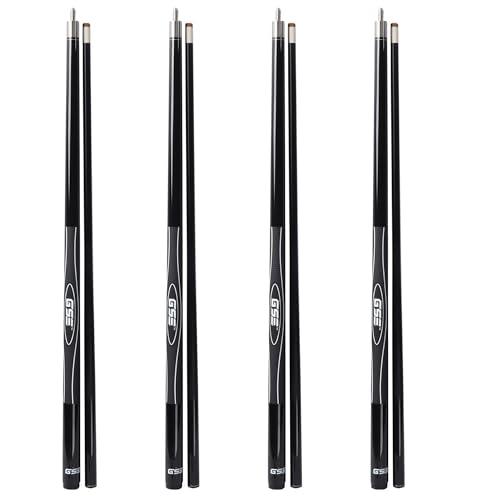
GSE 58-in Fiberglass Graphite Composite Pool Cues (set of 4)
Four composite cues in 18, 19, 20 and 21 oz with a published 12.7 mm tip and a steel joint - the single best use of a hundred dollars on this page if you have guests.
Four cues in four weights, so nobody waits for a stick
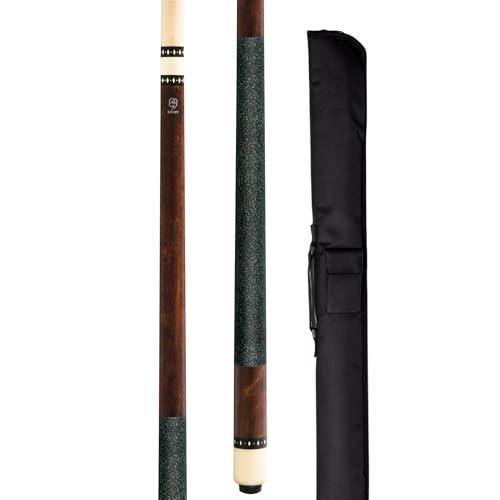
The entry line from an American custom cue shop, sold with a case and a weight choice - the most cue-for-the-money anywhere under the cap.
Series
McDermott Lucky L9
Weight
Sold in a weight choice (21 oz listed)
Included
1x1 soft case
Maker
McDermott Cue, US
Pros
McDermott has built cues in Wisconsin since the 1970s and still runs a custom shop, so the Lucky line is the cheap end of a real catalog rather than a brand license
A case is included, which matters more than any spec at this price - a cue left leaning against a wall is a cue that bows
Sold in a weight ladder rather than one unstated weight, so you can match it to the stroke you already have
Shaft, tip and ferrule are all serviceable parts on a cue from a maker that still sells parts, which is not true of most sticks under two hundred dollars
Cons
The listing does not publish the tip diameter or the joint spec, so you are buying on the maker's reputation rather than on numbers
The weight sold here is at the heavy end of the normal range, which some players find harder to control on soft shots
The soft case is a sleeve, not a hard case - it stops dings and dust, not a dropped cue
Plain finish; if you want inlays or a linen wrap at this money, the Players cue below gives you more to look at
Best for: One good cue you keep, from a maker that still makes cues.
$160.0010% offPrice as of November 22, 2026·#addisclosure
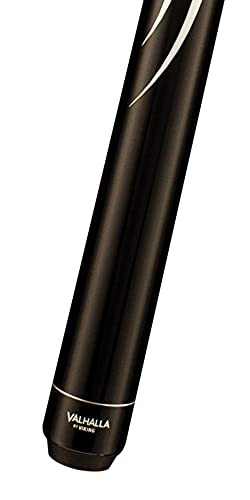
Viking Valhalla 200 Series VA204 58-in Pool Cue (19 oz, no wrap)
Viking's entry series, sold as a specific model (VA204) in a published 19 oz with a wrapless handle - the most traceable cue on this page.
Model
Valhalla 200 Series VA204
Weight
19 oz (published)
Length
58 in (published)
Handle
No wrap
Pros
19 oz is the published weight, and 19 oz is both the most common retail weight and the figure professionals average - you are buying the default rather than guessing
Viking is an established Wisconsin cue maker and Valhalla is its named entry line, so the model code tells you exactly what you own
A wrapless handle is the low-maintenance choice: nothing to unravel, nothing to get sticky, and it wipes clean
58 inches published, which is the standard length and the one every cue rack, case and bridge is built around
Cons
Stock was thin when we checked - the listing read "only 5 left", so this is a pick that may need a different color or a wait
The listing does not publish the tip diameter, the ferrule material or the joint spec
No case included, so budget for one; the cue costs most of the cap on its own
A wrapless handle is slicker than linen in a warm room, and some players sweat through it
Best for: A named model code you can look up, from a Wisconsin cue shop.
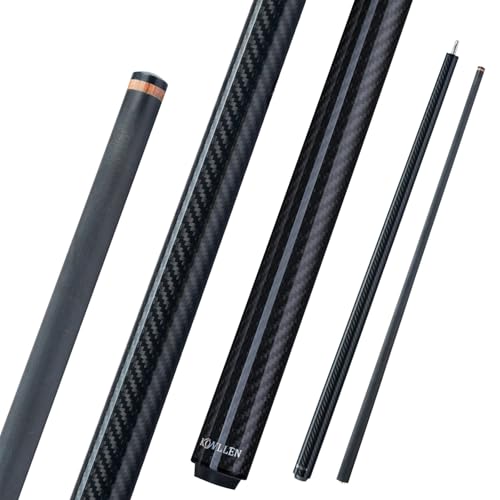
A carbon-fiber break cue with a published Uni-Loc joint and a 13 mm tip - carbon shafts almost never appear under the cap, and this is the one that does.
Shaft
Carbon fiber (published)
Weight
19-20 oz (published)
Tip
13 mm (published)
Joint
Uni-Loc (published)
Pros
Carbon fiber is the material the expensive end of the market is built from, and it does not warp, swell or dry out at all
Uni-Loc is a published quick-release pin standard rather than a proprietary thread, so shafts and extensions from other makers can fit
Built as a break cue, which is the right job for a stiff shaft - a break puts more force through a cue than any other shot
13 mm tip published, at the forgiving end of the 12 to 14 mm pool range, which is what you want for breaking
Cons
This is a break cue, not a playing cue - the tip and the stiffness that make it good at breaking make it worse at everything else
KONLLEN is a direct-to-Amazon brand with no cue-shop history behind it, so there is no service network if something fails
No case, and a break cue means you now own two cues to store
If you only ever play eight-ball with friends on a home table, a dedicated break cue is a luxury - your playing cue will do fine
Best for: A dedicated break cue, and the cheapest honest carbon shaft here.
$99.985% offPrice as of November 22, 2026·#addisclosure
GSE 58-in Fiberglass Graphite Composite Pool Cues (set of 4)
Four composite cues in 18, 19, 20 and 21 oz with a published 12.7 mm tip and a steel joint - the single best use of a hundred dollars on this page if you have guests.
Quantity
Set of 4
Weights
18 / 19 / 20 / 21 oz (published)
Tip
12.7 mm (published)
Joint
3/8-10 (published)
Pros
Four cues for well under half the cap, which is the difference between a table two people can use and a table four people can use
One cue in each of the four common weights, so every player in the room can find the one that suits them
Fiberglass over graphite composite is dimensionally stable - these are the right cues for a basement or a garage that swings in temperature
Published tip diameter and a stainless steel 3/8-10 joint, which is more spec detail than most cues twice the price
Cons
Composite shafts transmit the hit as a sharp click; you learn less about contact through them than through maple
Four identical-looking sticks means the one everyone likes gets fought over and the other three gather dust
No case and no rack, so you need a wall rack to stop four cues leaning in a corner
GSE is a house brand; there is no serviceable parts catalog behind these, and when a tip goes you re-tip it yourself or bin it
Best for: Four cues in four weights, so nobody waits for a stick.
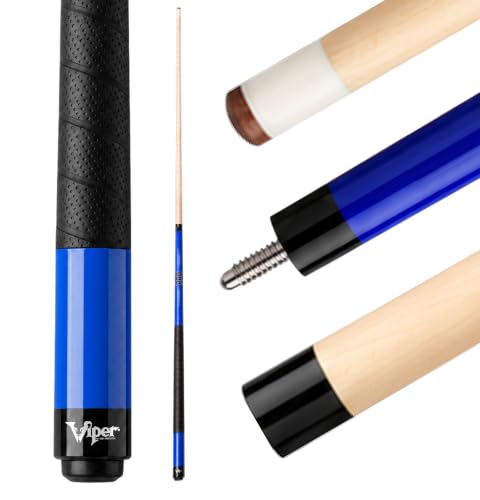
Viper Revolution Sure Grip Pro 58-in Pool Cue (19 oz)
The Revolution Sure Grip Pro in a published 58 in and 19 oz - the grip is the whole point, and it is the thing most cheap cues get wrong.
Length
58 in (published)
Weight
19 oz (published)
Type
Two-piece
Series
Viper Revolution Sure Grip Pro
Pros
A textured grip section is the right answer to the most common complaint about cheap cues, which is that the butt gets slippery after an hour
Published 58 in and 19 oz - the standard length and the default weight, with nothing to guess at
Our top pick on the open <a href="/game-tables/best-pool-cues">pool cue roundup</a>, so it is a cue we rate on its own merits and not just as a budget compromise
Costs about a quarter of the cap, which leaves room for a case, a rack and a tip tool
Cons
The listing does not publish the shaft material, so assume a composite rather than graded maple
No tip diameter or joint spec published
A molded grip is permanent - if you dislike the texture there is no re-wrapping it
Nothing in the box but the cue
Best for: Hands that sweat, and a cue you will hold for three hours.
$48.9941% offPrice as of November 22, 2026·#addisclosure
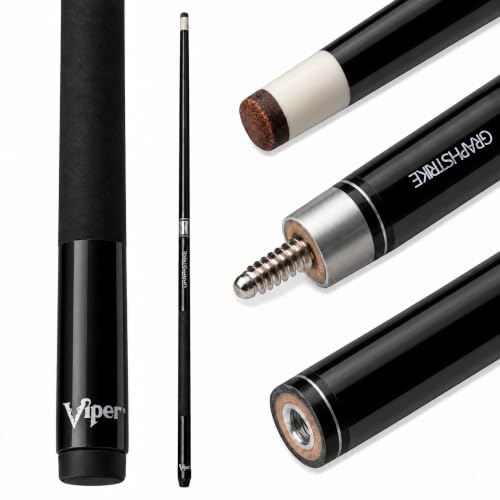
Viper Graphstrike 58-in 2-Piece Pool Cue (19 oz)
A published 19 oz graphite composite two-piece for about a tenth of the cap - the cheapest cue here that is honestly straight.
Length
58 in (published)
Weight
19 oz (published)
Shaft
Graphite composite
Type
Two-piece
Pros
Costs about a tenth of the cap and still publishes the two numbers that matter, 58 in and 19 oz
A graphite composite shaft will not bow in a basement or a garage, which is exactly where most home tables live
Two-piece, so it goes in a case and travels - unlike the one-piece house cues a table ships with
Cheap enough to buy two or three and still be well inside the cap
Cons
Composite feel is a click rather than a thud; you get almost no feedback about contact quality
No tip diameter, ferrule or joint spec published
The finish scratches and the graphics rub off at the bridge hand over time
At this price there is no case, no spare tip and no expectation of service
Best for: Replacing the warped sticks a table came with, for the least money.
Skip this
The budget traps that look cheap and cost you twice. We'd skip these.
A low-deflection shaft at this price
Low-deflection shafts work by removing mass from the front of the shaft, which takes either a laminated construction or a carbon-fiber lay-up and some real engineering. Several cues under a hundred dollars print "low deflection" on the listing anyway, and none of them publish what was done to achieve it. Where a pick here carries that claim we have flagged it in the cons as unproven. If low deflection genuinely matters to you, it is a conversation that starts well above two hundred dollars.
One-piece house cues, even as spares
A one-piece cue is what pool halls stock for communal use, and it exists because it cannot be stolen in a case. At home it has no advantage at all: it will not fit a case, it will not fit most racks, and the one-piece sticks that ship with budget tables are the first thing to bow. Two cheap two-piece cues beat four one-piece ones.
20-piece cue bundles with chalk, gloves and a bridge
The bundle price looks like value and the cues inside it are the cheapest the seller could source, usually with no published weight. Chalk costs a few dollars a dozen and a bridge head is a ten-dollar part. Buy the cue on its specs and add the accessories separately - our <a href="/game-tables/best-pool-table-accessories">pool table accessories roundup</a> covers the racks, covers and ball sets worth owning.
A 48-inch short cue as your main cue
Short cues exist for the specific shot where a wall, a radiator or a staircase is behind you. Used as a general cue, the shorter lever makes every long shot harder, because the same stroke error at the grip hand becomes a bigger error at the tip. Own one short cue for the tight corner if your room needs it - our guide to <a href="/guides/how-much-space-do-you-need-for-a-pool-table">how much space a pool table needs</a> explains when it does - and play the rest of the game with a 58.
What weight cue should you buy under $200?
19 oz, unless you already know otherwise. Pool cues are commonly sold between 17 and 21 oz, 19 oz is the most common weight on the shelf, and professionals average around 19 oz. That is not a coincidence or a marketing convention - it is the weight where a cue is heavy enough to send the cue ball through the shot without being pushed, and light enough that you can stop it on a soft safety.
Where the band matters: a heavier cue, 20 to 21 oz, carries more energy on the break and feels more stable to players with a long, slow stroke. A lighter cue, 17 to 18 oz, is easier to accelerate and suits a short, snappy stroke and finesse play. Both are preferences you can only discover by throwing a few hundred shots, which is the real argument for the four-cue set: it puts 18, 19, 20 and 21 oz on the rack and lets the room find out.
Maple, fiberglass or carbon fiber - what changes
Hard rock maple is what quality pool shafts are customarily made from. It is stiff, straight-grained and it transmits the hit as information: you can feel a thin contact through a maple shaft in a way you cannot through a composite. The cost is that wood moves. A maple cue in a damp basement or a garage that swings between 40 and 90 degrees will not stay as straight as a composite one, and a maple cue stored leaning against a wall will bow.
Fiberglass and graphite composites solve exactly that problem and give up exactly that feedback. They are dimensionally stable, they shrug off humidity and they are almost impossible to warp. If your table lives somewhere unheated, a composite cue is not a compromise - it is the correct engineering answer, and it is why the four-cue set here is composite rather than wood.
Carbon fiber is the material the top of the market has moved to, and under two hundred dollars it shows up in exactly one place on this page: the break cue. That is not an accident. Breaking is the shot that puts the most force through a cue, so stiffness is worth paying for there first. For a playing shaft, carbon fiber at this price would mean cutting corners somewhere you cannot see.
Tip, ferrule and joint: the three parts that decide how long a cue lasts
The tip is the only part that touches the ball and the only part guaranteed to wear out. Pool tips run roughly 12 to 14 mm; a bigger tip is more forgiving of off-center contact and a smaller one gives you more control over spin. Layered leather tips hold their shape longer than pressed ones. All of them are replaceable for the price of a coffee, so a worn tip is never a reason to replace a cue.
The ferrule is the white collar behind the tip. Its job is to hold the tip and take the impact so the shaft wood does not split, and pool ferrules are usually three-quarters to one inch long. Modern ferrules are carbon fiber, melamine or phenolic resin; brass turns up mostly on snooker cues. A cracked ferrule is a repair, not a write-off, but only if the maker sells parts - which is the quiet argument for buying from a cue shop rather than a marketplace brand.
The joint is where cheap cues fail. Traditional joints are fully threaded; newer quick-release pins such as Uni-Loc assemble in a fraction of a turn and are published standards, which means parts interchange. Either is fine. What is not fine is a joint whose spec the listing will not state, because plastic threads in plastic inserts loosen, and a loose joint turns a straight cue into a wobbly one. Only three picks on this page publish a joint spec, and we have said so on every one of the others.
Do you need a break cue under $200?
Probably not, and here is the honest version. A break cue exists to take the abuse of the break - a very hard leather or phenolic tip transfers the full force into the rack and spares your playing cue's tip and ferrule from the shot that wears them fastest. In a league or a pool hall where you break a hundred times a week, that is real. On a home table where four people play a couple of racks after dinner, your playing cue will absorb it for years.
Where a break cue earns its place at home is if you have a slate table and a decent playing cue you care about, because then the break is the one shot that threatens it. The carbon-fiber break cue here is a sensible way to do that inside the cap, and a jump-break cue like the one on our main cue roundup does both jobs from one purchase. If you are still deciding what table all this sits on, start with the pool table roundup or the cheap pool table page.
What to spend the rest of the cap on
If you take the McDermott or the Viking you have almost nothing left, and that is a legitimate way to spend two hundred dollars. If you take one of the cues under a hundred, you have real money left and there are only three things worth putting it toward. A rack, so cues are stored vertically or flat instead of leaning; a case if the cue did not come with one, for the same reason; and chalk, which is the cheapest accuracy upgrade in the sport and the one most home tables simply do not have. Our accessories roundup covers the racks and ball sets, and our pool table felt page covers the surface those balls roll on, which changes the game more than any cue under the cap.
One more thing that is not a cue: light. A table lit from the ceiling throws your own shadow across the shot. If you are furnishing a room rather than just buying a stick, the pool table light roundup is a better next hundred dollars than a better cue is.
Our verdict
Buy the McDermott Lucky L9: a case, a weight choice and a real cue shop behind it, well inside the cap. Buy the Viking Valhalla 200 if you want a published 19 oz and a model code you can look up, and the Players C-950 if graded birdseye maple and an Irish linen wrap are what you want from the top of the band. Buy the four-cue composite set if more than two people will ever play on your table - it is the best hundred dollars on this page. Buy the Viper Graphstrike if you simply need to retire the warped sticks a table came with. And skip anything in this band that will not tell you its weight.
The other game-room buy with a sensible cap
Cues are not the only game-room gear where the cheap end is genuinely fine and the expensive end is a specialist purchase. Darts work the same way: a 90% tungsten barrel at the standard 24 g costs less than the cheapest cue here, and the step up to a 97% barrel buys a fraction of a millimeter of diameter that only helps a player already grouping. Our steel tip darts roundup ranks nine sets on published tungsten content, weight and what is in the box.
Frequently asked questions
Is a $200 pool cue good enough for a home table?+
Yes, comfortably. Under two hundred dollars you can have graded hard rock maple, a published 19 oz weight, a steel joint and a case from a maker that still builds custom cues. The next genuine step up is a low-deflection or carbon-fiber playing shaft, and that starts around double this cap. For a table at home, two hundred dollars is a sensible place to stop.
What is the best pool cue weight for a beginner?+
19 oz. Pool cues are commonly sold from 17 to 21 oz, 19 oz is the most common weight on the shelf, and professionals average around 19 oz. It is heavy enough to carry through the cue ball without being pushed and light enough to control on a soft shot. Move heavier if you have a long slow stroke, lighter if yours is short and quick - but start at 19.
Maple or fiberglass for a basement pool table?+
Fiberglass or graphite composite, if the basement is unheated or damp. Composite shafts are dimensionally stable and will not bow with humidity, which is the single most common way a home cue dies. Maple gives you better feedback through the shot, so it is the better cue in a climate-controlled room - and it must be stored in a case or a rack rather than leaned in a corner.
Do I need a break cue for a home pool table?+
Usually no. A break cue exists to take the force of the break so your playing cue's tip and ferrule do not, which matters if you break a hundred times a week in a league. On a home table that sees a few racks after dinner, your playing cue handles it. If you have a slate table and a cue you care about, a jump-break cue inside this cap is a reasonable insurance policy.
What tip diameter should a pool cue have?+
Pool tips run roughly 12 to 14 mm. A larger tip, around 13 mm, is more forgiving of slightly off-center contact and is the sensible default. A smaller tip gives more precise control over spin and punishes a sloppy stroke. It is also the cheapest part to change: a new tip costs a few dollars, so it is never a reason to pick one cue over another.
Why do cheap pool cues warp?+
Two reasons, and only one of them is the wood. Ungraded maple with run-out grain moves more than straight-grained hard rock maple as it takes up and gives off moisture. But the bigger cause is storage: a cue left leaning against a wall or standing in a damp corner bows under its own weight. A case or a wall rack prevents more warping than spending twice as much on the cue does.
Are four-cue sets worth buying instead of one good cue?+
For a game room with guests, yes. A single good cue means two people play and the rest watch, or the third player uses whatever warped house stick came with the table. A four-cue set under a hundred dollars puts 18, 19, 20 and 21 oz on the rack - which also lets everyone find the weight that suits them, something no single cue can do.
What does the joint on a pool cue actually do?+
It holds the two halves together without letting them move relative to each other, which is why the spec matters. Traditional joints are fully threaded; quick-release pins such as Uni-Loc are published standards that assemble in a fraction of a turn and let parts interchange between makers. Both are fine. A joint whose spec the listing will not state is the one to avoid, because plastic threads in plastic inserts loosen and a loose joint makes a straight cue play crooked.
Prices and availability shown here come from Amazon's live data and change often; we re-verify them regularly. Bar Bumper is an Amazon Associate and earns a commission on qualifying purchases at no extra cost to you. Read our full disclosure.