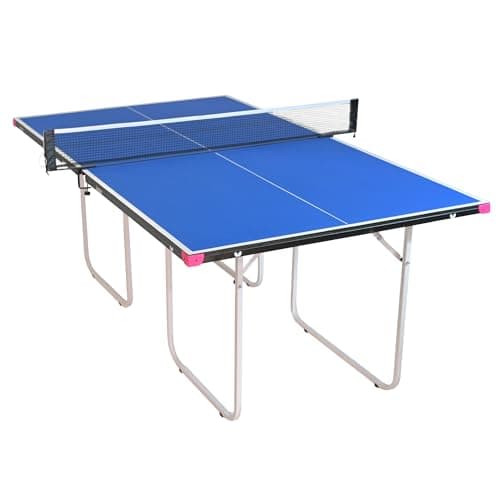
Top thickness is the spec that decides how a table plays. Five table tennis tables ranked on it, on folded footprint, and on how much room they really need.
Updated October 2026 · By Stephen V.
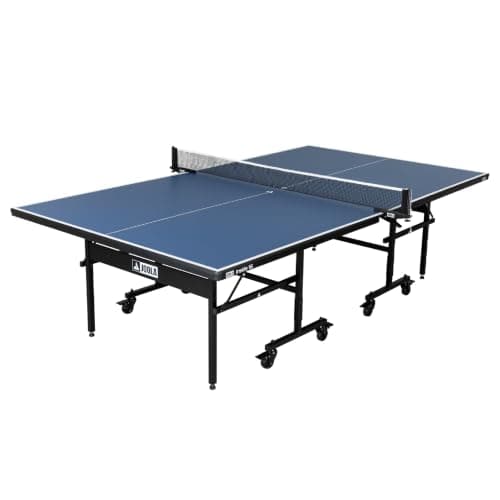
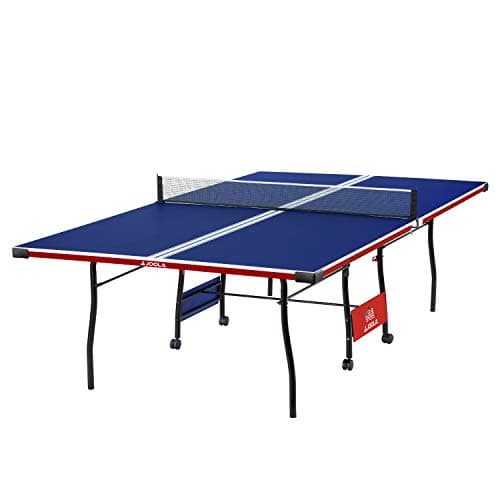
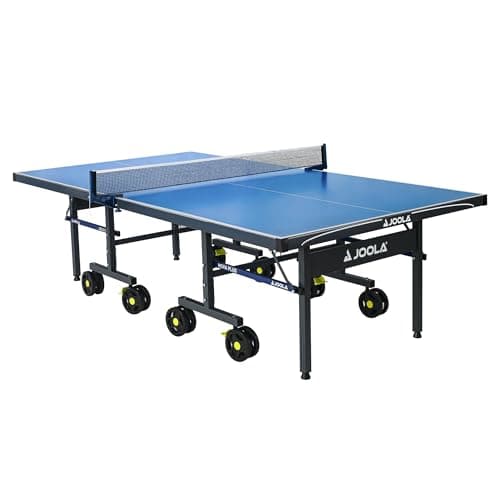
The JOOLA Inside Professional is the best ping pong table for home use: a 25mm MDF top is the point at which a table starts to bounce consistently, and almost nothing else at a household price gets there. If that is more table than you need, the JOOLA 15mm indoor table is the value pick and still plays a proper game with playback mode for solo practice. The JOOLA NOVA is the one to buy if it will live outside, the STIGA Space Saver is the pick for a small room, and the Butterfly Junior is the 3/4-size table for a family room.
Table tennis is the game that gets the most hours out of a game room per dollar spent, and it is also the category where one specification tells you nearly everything. Top thickness. A regulation tournament table is 25mm; serious club tables run 22 to 25mm; mid-range home tables are 15 to 18mm; anything thinner is a toy. Thickness controls bounce height and, more importantly, bounce consistency across the surface, which is what separates a table you keep playing on from one that gets folded up and forgotten.
The second number to settle before you shop is room. A regulation table is 9 by 5 feet, and the playing space you actually want is about 19 by 11 feet — roughly 5 feet behind each end for a player to step back into. You can play in less; you cannot play a long rally in less. If your room cannot give that, skip to our small ping pong table picks, which are chosen for exactly that problem.
We have not played on these tables. The ranking is built from published top thickness, frame and leg construction, net systems, folded dimensions, playback capability and weather ratings, plus owner-review consensus reported as other people's experience — see how we pick. Prices come live from Amazon with the date we verified them.
The short answer
In a hurry? These are the picks we'd buy. Prices are live; tap a card below for the full reasoning.
$574.9518% offPrice as of October 13, 2026·#addisclosure
4
Best for a small room
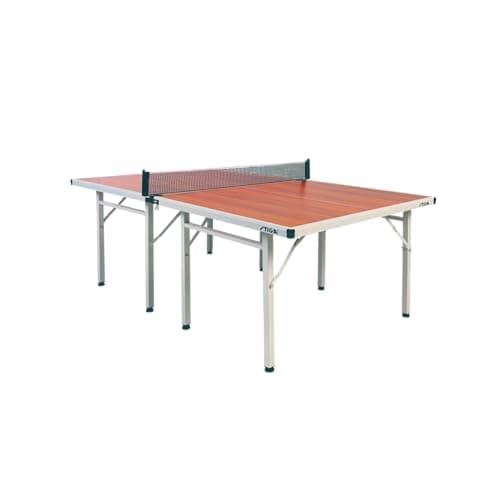
STIGA Space Saver Ping Pong Table (woodgrain)
STIGA's Space Saver is built around the folded footprint rather than the open one — the table for a room that has to be something else most of the week.
STIGA's Space Saver is built around the folded footprint rather than the open one — the table for a room that has to be something else most of the week.
Design
Space-saver / compact
Finish
Woodgrain
Storage
Folds upright
Brand
STIGA
Pros
Folds into a footprint a normal room can actually store
Woodgrain finish does not look like sports equipment in a living space
A 3/4-size stationary table from a brand that makes tournament equipment — the right scale for younger players and a 14-foot room.
Size
3/4 size
Type
Stationary (non-folding)
Brand
Butterfly
Use
Game room / family
Pros
3/4 size suits children and small rooms without being a toy
Butterfly's name is from the competitive side of the sport
Stationary frame is more rigid than a folding one
Cons
Does not fold, so it occupies the room permanently
Adults will outgrow the scale
Dearer than a full-size 15mm table
Best for: Children and casual play in a room that will not take full size.
Skip this
The budget traps that look cheap and cost you twice. We'd skip these.
Any table that does not publish its top thickness
Top thickness is the single best predictor of how a ping pong table plays, and it is a one-line spec. A listing that gives dimensions, frame details and accessory counts but no thickness figure has left out the number that matters. Assume it is thin.
Buying a full-size table for a room under about 18 feet long
A regulation table is 9 feet long and you want roughly 5 feet of step-back room behind each end. In a 15-foot room the table physically fits and the game does not — every deep ball becomes a wall. Either buy a 3/4-size or space-saver table, or play on a conversion top over an existing table only when the room is clear.
How to choose (and what to skip)
Top thickness, in plain numbers
25mm is regulation tournament spec and the point at which the bounce is consistent everywhere on the table. 22mm is a good club table. 15 to 18mm is the home range and plays a decent game with slightly lower, less even bounce. Under 15mm the ball dies in places and spin stops behaving. Spend here before you spend anywhere else.
Measure the room, not the table
A regulation table is 9 by 5 ft. The space you want is about 19 by 11 ft — 5 ft behind each end and 3 ft at each side. Tournament play uses far more. If your room is short, a 3/4-size or space-saver table gives you a real game in the space you have, which beats a full-size table you cannot step back from.
Playback mode is worth more than it sounds
Folding one half vertically turns the table into a rebound wall, which means one person can practice. On a home table that is the difference between the table getting used on a Tuesday evening and only coming out when there are four people in the house. Check that the half locks positively upright rather than just leaning.
Indoor MDF or outdoor composite — decide before you buy
MDF tops are cheaper and play beautifully in a dry, heated room, and they are ruined by damp. An aluminum-composite top costs more, plays slightly faster and harder, and survives a patio or an unheated garage. A garage that gets condensation counts as outdoors for this decision.
Check the folded dimensions and the wheels
Almost every home table folds, and almost nobody checks how big the folded shape is or whether the castors lock. A folded table is about 5 ft wide and 5 to 6 ft tall — that needs a real parking space, and it needs to roll there over whatever flooring you have. Locking castors are what stop it drifting mid-rally.
What makes the best ping pong table for home?
Three things, in order. The top thickness, because it decides bounce. The frame and leg rigidity, because a table that flexes when someone leans on it will not hold a level surface. And the folded footprint, because a home table spends more hours folded than open, and the one that does not fit where you can store it is the one that gets sold. Net systems, bat holders and score counters are nice; they do not change any of the above.
Everything else is secondary to those three. In particular, do not buy on included accessories — bats and balls are a few dollars and are the first thing any regular player replaces anyway.
Do you need a regulation-size table?
If anyone in the house plays in a club or wants to, yes — the geometry of the game is built around 9 by 5 feet and a 2.5-inch-high net, and practicing on a shorter table teaches the wrong distances. For everyone else, no. A 3/4-size table plays a perfectly good game, fits rooms that full size does not, and is a better buy than a regulation table crammed into a space with no step-back room.
The conversion-top alternative
If you already own a pool table, a full-size conversion top is the cheapest route to regulation-size table tennis: it drops onto the pool table, gives you a 9 by 5 surface, and lifts off again. The trade is that the top needs storing somewhere flat, it is heavy and awkward to move alone, and the bounce is only as good as the top's own thickness. It is covered on our small ping pong table page, which treats it as what it really is — a space-saving option.
Looking after a ping pong table
Keep it out of sunlight and away from damp, wipe the surface with a barely-damp cloth and nothing else, and fold it when it is not in use so the top is vertical rather than collecting things. The two failure modes for home tables are a warped MDF top from humidity and a sagging folding hinge from being left open with weight on it. Both are avoidable; neither is repairable.
Where it fits in a game room
Table tennis is the game that shares a room worst, because it needs more clear floor than its footprint suggests and the ball goes everywhere. In a room that also has a pool table, a folding ping pong table or a conversion top is the right answer rather than two permanent tables. In a room of its own, buy the thickest top you can and leave it set up.
Frequently asked questions
What is the best ping pong table for home use?+
A 25mm regulation-size indoor table if the room and the budget allow — 25mm is tournament thickness and gives consistent bounce across the whole surface. For most households a 15mm regulation table with playback mode is the sensible buy, and a 3/4-size or space-saver table is better than a full-size one in a room under about 18 feet long.
What thickness should a ping pong table top be?+
25mm is regulation and the best you will find at household prices. 22mm is a good club table. 15 to 18mm is the normal home range and plays a decent game with slightly lower, less even bounce. Below 15mm the bounce becomes inconsistent and spin stops behaving properly — treat that as the floor.
How much room do you need for a ping pong table?+
A regulation table is 9 by 5 feet, and you want roughly 19 by 11 feet of space — about 5 feet behind each end and 3 feet at each side. Less than that and deep balls put you into a wall. If the room cannot give it, buy a 3/4-size or space-saver table rather than squeezing in a full-size one.
Are outdoor ping pong tables worth it?+
If the table will live anywhere that is not dry and heated, yes. MDF tops swell and warp with humidity and cannot be repaired; aluminum-composite outdoor tops do not. An unheated garage that gets condensation counts as outdoors for this decision. The trade is a slightly faster, harder bounce and a higher price.
What is playback mode on a ping pong table?+
One half of the table folds vertically so you can hit against it and practice alone. On a home table it is one of the more useful features on the spec sheet, because it is what gets the table used when there is only one person in the house. Check that the raised half locks upright rather than just resting.
Can you put a ping pong top on a pool table?+
Yes — full-size conversion tops are made for exactly that and give you a regulation 9 by 5 surface on top of an existing pool table. The catches are weight, needing somewhere flat to store the top, and that the bounce is only as good as the top's thickness. It is the cheapest route to regulation-size play if you already have the pool table.
Prices and availability shown here come from Amazon's live data and change often; we re-verify them regularly. Bar Bumper is an Amazon Associate and earns a commission on qualifying purchases at no extra cost to you. Read our full disclosure.