Foosball is decided by two things a listing rarely highlights: how heavy the cabinet is and how straight the rods run. Size and sticker price tell you much less.
Updated November 2026 · By Stephen V.
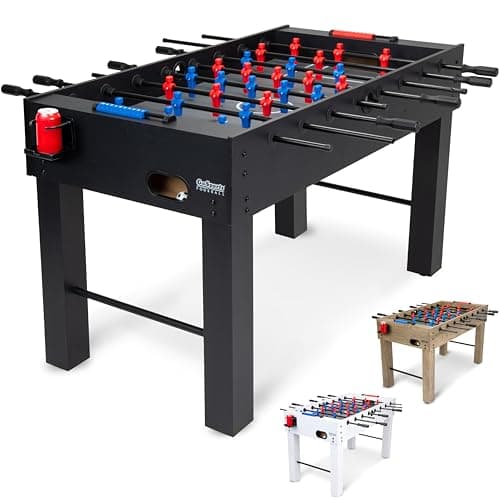
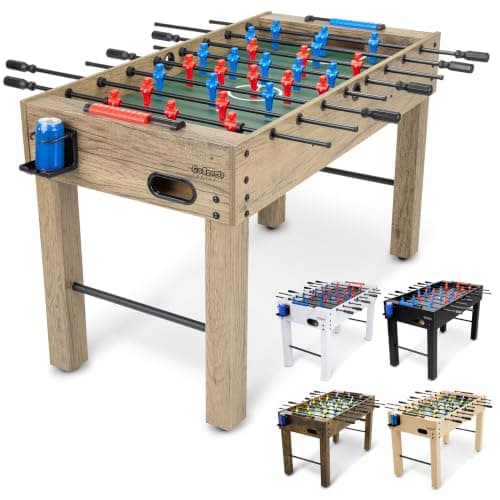
The foosball table to buy for a home game room is the GoSports 54-in Full-Size Foosball Table: it is full size, it is heavy enough not to walk across the floor during a game, and it includes four balls and cup holders. It suits a family or shared game room that will play often but not competitively. If you want a table that lasts a generation of hard play, the Tornado Tournament 3000 is the tournament standard. The budget pick is the GoSports 48-in Game Room table, which is the cheapest full-feature table here.
Two specifications decide whether a foosball table is good, and neither is the headline number. The first is cabinet mass and rigidity. Foosball is a game of hard, sudden impacts; a light cabinet flexes with every shot, the rods bind in their bearings, and the table slides. A heavy cabinet with thick side walls stays put and the rods stay true. The second is rod quality: solid steel rods in decent bearings stay straight; hollow rods bend, and a bent rod is the fault that ends a table's life.
The size question is simpler than it looks. Regulation is 56 inches of playfield, and 54 to 56-inch tables all play the full game. Below that — 48 inches, or the tabletop sets — the pitch is shorter, the rods are closer together and the game is quicker and less tactical. That is a legitimate choice for a smaller room, and our small foosball table page covers it properly. This page is about tables that play the real game.
Allow about three feet of clear standing room at each end and two feet at the sides, which means roughly 11 by 8 feet of floor for a 56-inch table. Prices below are read live from Amazon with the date we checked them stamped under each button.
The short answer
In a hurry? These are the picks we'd buy. Prices are live; tap a card below for the full reasoning.
A 48-inch game room table with four balls and two cup holders — the cheapest table here that does not feel like a toy.
Size
48 in, game room size
Includes
4 balls, 2 cup holders
Suits
Smaller rooms, first tables
Brand
GoSports
Pros
A fraction of the price of the full-size tables with the same eight-rod layout
48 inches fits rooms a 56-inch table cannot
Balls and cup holders included, so nothing else to buy
The right first table if you are not sure the game will stick
Cons
Short pitch changes the game — faster, less tactical than full size
Lighter cabinet moves under hard play unless it is against something
Rods and bearings are the budget part of the build
Best for: The cheapest full-feature table that still plays properly.
Skip this
The budget traps that look cheap and cost you twice. We'd skip these.
A light full-size table bought on size alone
Two tables can both say 56 inches and play completely differently. The cheap one has thin cabinet walls and hollow rods: it flexes on every shot, the rods develop a bend, the bearings start to bind and within a year the table has a dead side. Cabinet mass is the specification that predicts how a foosball table ages, and it is the one almost no listing leads with. If a full-size table is unusually cheap and unusually light, that is the reason. Our <a href="/game-tables/best-quality-foosball-table">quality foosball table page</a> ranks on exactly this axis.
A tabletop foosball set bought as a first table
Tabletop sets are great gifts and genuinely fun for a few minutes at a time, but the rods are short, the figures are small and the game bears only a passing resemblance to foosball on a floor-standing table. If the room can take a 48-inch table, buy the 48-inch table instead — it is a real game. The tabletop sets belong in the <a href="/game-tables/best-game-room-games">game room games</a> list rather than here.
How to choose (and what to skip)
Judge the cabinet, not the playfield graphics
Thick side walls, substantial legs and real weight are what keep a foosball table steady and the rods true. A listing that leads on graphics and leg levellers while being vague about weight is telling you something. Where a shipping weight is published, use it as the comparison: within a size class, heavier is almost always better.
56 inches is regulation; 48 is a different game
Full-size tables at 54 to 56 inches play the real game with correct rod spacing. At 48 inches the pitch is short and the game becomes a scramble — fun, and sometimes the only thing that fits, but not the same sport. Decide which you are buying before you compare prices, because comparing a 48 to a 56 on price alone is comparing two products.
Rods, bearings and handles are the wear items
Solid steel rods in decent bearings stay straight and slide smoothly. Hollow rods bend and bent rods bind. Rubber or wood handles stay comfortable; hard plastic ones blister hands during long games. These three details, more than anything cosmetic, decide whether the table is still good in year five.
Allow three feet at each end
Players stand at the ends and move, so plan three feet of clear space behind each goal and two feet at the sides. For a 56-inch table that is roughly 11 by 8 feet of floor. A table jammed against a wall at one end makes that end unplayable, which halves the table.
Count the balls and plan to buy more
Foosball balls go missing under furniture and they wear smooth, which changes how they travel. Tables that include four balls are doing you a real favour. Keep a spare set with the table; a worn, shiny ball on a good table plays worse than a fresh ball on a cheap one.
Why cabinet weight is the specification that matters
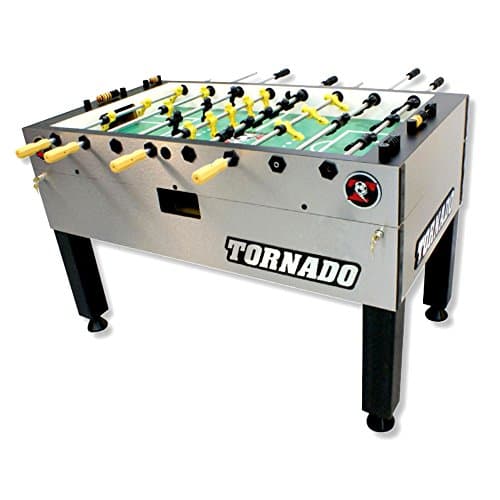
A foosball shot is a short, violent impact transmitted straight into the cabinet through the rod bearings. In a heavy, rigid cabinet that energy goes into the ball. In a light one it goes into flexing the box, which does three things: it robs the shot of power, it loads the bearings off-axis so they wear unevenly, and it moves the whole table a few millimetres at a time until it is somewhere else in the room. Every long-term complaint about home foosball tables — binding rods, sloppy bearings, a table that drifts — traces back to a cabinet that was not stiff enough. That is why the Tornado costs what it does and why it is still playable decades later.
What a perimeter ramp changes
On a flat playfield a ball that stops in a corner is dead, and someone has to reach in and move it. A perimeter ramp slopes the edge of the field so the ball rolls back into play by itself. It sounds like a detail and it changes the rhythm of a game completely, because play stops less often. It is a feature worth looking for on any table that will be played by people who are reasonably good, and it is the reason the Atomic Pro Force plays above its price.
Rod counts, figure styles and the things that do not matter
Eight rods is standard on every full-size table: goalkeeper, two defenders, five midfielders, three forwards per side. Figure style — counterbalanced or not, round-toe or flat-toe — is a genuine preference among serious players and completely irrelevant for a household that plays after dinner. Telescopic rods, which do not poke out of the far side when you shoot, are a safety feature worth having if small children are in the room and a non-issue otherwise. Scoring is either beads or sliders and both work.
Where foosball fits in a game room
Foosball earns its floor space better than almost any other game table, because a game takes four minutes and anyone can play one. That makes it the table that gets used at parties while the pool table waits for the two people who are good at pool. If you are planning a room rather than buying one table, foosball plus a dartboard covers more of an evening than a pool table alone — and both fit against walls, which a pool table cannot. Our game room ideas page covers the layouts, and game room furniture covers the seating.
Our verdict
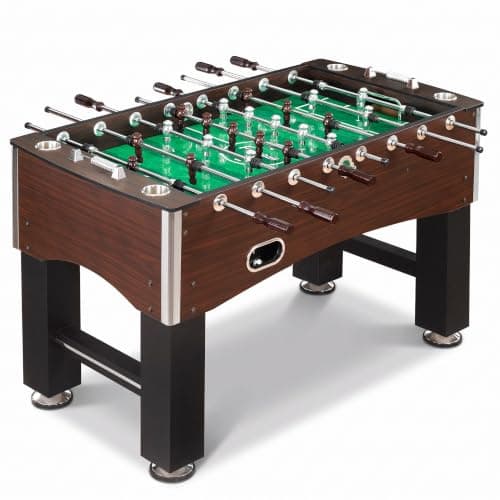
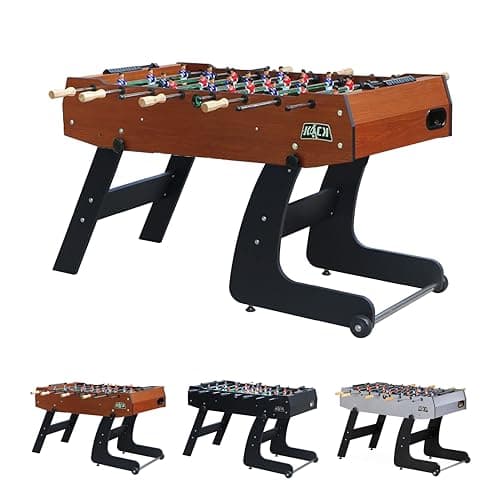
For most people the GoSports 54-inch is the right table: full size, steady, complete in the box, and priced where a family game room can justify it. If the room is finished and matching furniture matters, the Hathaway Primo 56 is the same decision with better clothes. If someone in the house genuinely plays, the Atomic Pro Force is the one that will satisfy them, and the Tornado Tournament 3000 is the one they will stop asking for anything else. Tight on space, buy the folding KICK Monarch 48; tight on money, buy the GoSports 48. Price-capped at $500? See our small foosball tables and quality foosball tables pages for the two ends of that band.
Frequently asked questions
What size is a full-size foosball table?+
Regulation is a 56-inch playfield, and 54 to 56-inch tables all play the full game with correct rod spacing. At 48 inches the pitch is shorter and the game is faster and less tactical — still a real eight-rod game, but a different one.
What makes a good foosball table?+
Cabinet mass and rigidity first, then solid steel rods in good bearings, then comfortable handles. A heavy, stiff cabinet puts shot energy into the ball instead of flexing, which is what keeps rods straight and the table from drifting across the floor.
How much space do you need around a foosball table?+
About three feet of clear floor behind each goal and two feet at the sides, so roughly 11 by 8 feet for a 56-inch table. A table with a wall tight behind one goal makes that end unplayable.
Are expensive foosball tables worth it?+
If the table will be played hard or often, yes — the money buys cabinet mass, better bearings and replaceable parts, which is what separates a table that lasts decades from one that develops a dead side in a few years. For occasional play, a good full-size family table is the better value.
What is a perimeter ramp on a foosball table?+
A sloped edge around the playfield that rolls a stopped ball back into play instead of leaving it dead in a corner. It keeps games flowing and is worth looking for on any table that will be played by reasonably good players.
Prices and availability shown here come from Amazon's live data and change often; we re-verify them regularly. Bar Bumper is an Amazon Associate and earns a commission on qualifying purchases at no extra cost to you. Read our full disclosure.