Home gym equipment for heavier beginners: start with the capacity rating
Most budget equipment publishes a user weight limit. A lot of it publishes nothing at all, and the price tells you almost nothing about which. Here is how to read the numbers and what clears them.
Updated October 2026 · By Stephen V.
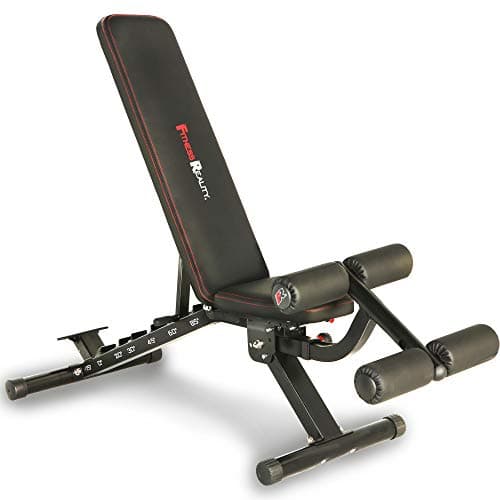
Start with the published rating, not the price — and the single best-rated cheap item on this site is the Fitness Reality 2000 Super Max XL bench, published at 800 lb on the listing we track and 850 lb on the manufacturer's own Super Max XL sheets. For cardio, the MERACH S08 recumbent bike at a published 300 lb is the piece we would buy first, because it is comfortable, has a low step-over and goes easy enough to start on. Both of those are at the cheap end of their categories, which is the point of this page: in budget fitness equipment, price does not predict capacity, and sometimes it runs backwards.
That inversion is worth seeing directly. On our walking pad roundup, the published user ratings fall as the price rises: the cheapest pad we recommend is rated 300 lb and the most expensive one on the page is rated 220 lb. Above a certain point the money buys folding mechanisms, app ecosystems and finish — not more machine. So the premium option is not the safe default here, and the useful filter is not the budget but the spec sheet.
A published rating is a manufacturer user-weight claim, not a tested limit, and that is how it should be read. It is still the most useful number available, for a reason that has nothing to do with engineering: a brand that publishes a figure has committed to it, and a brand that publishes nothing has committed to nothing. In this market, roughly half the listings in some categories state no capacity at all, and the absence is the answer rather than missing information. Our page on weight bench capacity goes deeper on how those bench numbers are constructed.
Two more things to factor in before the picks. First, the rating has to cover you plus the weight you are lifting — a bench rated 800 lb sounds enormous until you remember it is holding you and a loaded barbell. Second, dynamic load is higher than static load: sitting down on a bike puts more through the frame than pedalling does, and each footstrike on a treadmill deck loads it with considerably more than your standing weight. Leave real margin rather than buying a number that just clears your bodyweight.
The short answer
In a hurry? These are the picks we'd buy. Prices are live; tap a card below for the full reasoning.
An 800 lb published capacity on an extra-wide frame with a minimal seat-to-back gap, from one of the few budget bench brands that publishes a full spec sheet.
a bench you can load heavily without thinking about the frame
$200.186% offPrice as of October 6, 2026·#addisclosure
2
Best cardio to start on
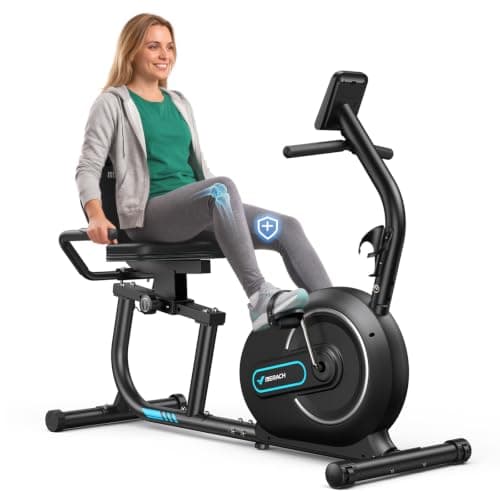
MERACH S08 Recumbent Exercise Bike
A published 300 lb rating, a backrest and a low step-over: the cardio machine that is easiest to get on and off, which is what decides whether it gets used.
comfortable aerobic work with a low step-over and a published 300 lb rating
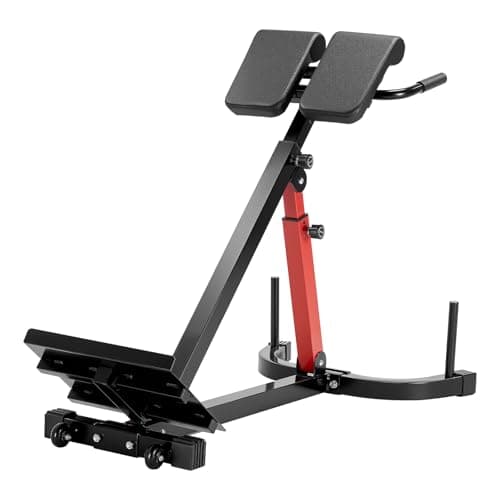
VEVOR Roman Chair Hyperextension Bench, 350 lb (Model 5030)
A published 350 lb rating on a carbon steel frame, which is the figure to look for on any piece of equipment that holds your whole bodyweight at an angle.
back extensions and core work on a frame with a stated number behind it
$200.186% offPrice as of October 6, 2026·#addisclosure
Fitness Reality 2000 Super Max XL Bench
An 800 lb published capacity on an extra-wide frame with a minimal seat-to-back gap, from one of the few budget bench brands that publishes a full spec sheet.
Type
Adjustable (incline + decline)
Capacity
800 lb (listing); 850 lb on mfr XL sheets
Pad gap
Minimal seat-to-back gap
Base
Extra-wide 'Super Max' frame
Folds
Yes, for storage
Pros
The highest published capacity of any bench on this site by a wide margin, and that figure has to cover you plus whatever you are pressing
An extra-wide base is the spec that matters alongside the rating — a wide footprint is what stops a bench feeling tippy under a heavier lifter
A minimal seat-to-back gap, which is the detail cheap benches get wrong and which you feel most when more of you is in contact with the pad
Fitness Reality publishes real dimensions, adjustment ranges and a recommended user height, which is unusual at this price
It folds for storage despite the frame, so the capacity does not come at the cost of a permanent footprint
Cons
The published figure varies by variant: 800 lb on the listing we track and 850 lb on the manufacturer's Super Max XL sheets. Read the number on the exact listing you buy
Assembly takes a while and the frame is heavy. Worth having help for the first lift into position
A folding mechanism is a hinge, and a hinge is the part of any folding bench that eventually develops play
The leg hold-down bar is useful for decline work and is one more thing to detach and store
A capacity rating is a manufacturer claim rather than a tested limit. It is the best number available, not a guarantee
Best for: a bench you can load heavily without thinking about the frame.
A published 300 lb rating, a backrest and a low step-over: the cardio machine that is easiest to get on and off, which is what decides whether it gets used.
Rated capacity
300 lb (mfr)
Resistance
8 levels, magnetic (mfr)
Back support
Adjustable seat and backrest
User height
5 ft 3 in to 6 ft 2 in (mfr)
Footprint
51.97 x 25 in (mfr)
Machine weight
57.3 lb (mfr)
Pros
A published 300 lb rating, which is at the top of what this price band offers and above most folding uprights
Load is spread along a long frame and a wide seat rather than concentrated on a saddle post, which is why recumbents tend to publish higher figures than folding bikes
You sit down into it rather than swinging a leg over, and the backrest means a longer session is comfortable rather than endured
Non-impact, which matters: cycling asks nothing of your joints compared with anything involving landing
Eight numbered magnetic levels that start genuinely easy, so week one is doable and month six is still progressive
Cons
Large and heavy — roughly 52 inches long, 57.3 lb, and it does not fold. Choose its permanent spot before assembly
The published user height range starts at 5 ft 3 in, so check that against the person using it
A supported seat makes coasting easy. Pick a resistance level and a time, or the session drifts
No handlebars to pull on and no standing position, so there is a ceiling on how hard you can work
Assembly involves lifting the frame; not a comfortable one-person job
Best for: comfortable aerobic work with a low step-over and a published 300 lb rating.
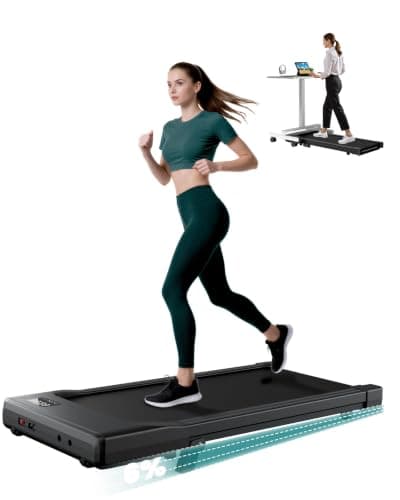
DeerRun Under-Desk Walking Pad (6% incline, 300 lb)
A published 300 lb rating with a manual incline, on a pad that costs a third of the premium names rated 80 lb lower.
Rated capacity
300 lb (listing + mfr)
Speed
0.6-3.8 mph
Incline
6% manual (listing)
Height
4.5 in (mfr, Q2 Urban)
Footprint
45 x 20 in (mfr)
Warranty
1 year + 60-day returns (mfr)
Pros
A published 300 lb rating, which is the highest we have found on a walking pad and 80 lb above the premium pad on our roundup
Walking is weight-bearing, which is a real advantage over seated cardio for bone and for balance
The incline is the most useful feature in the category: 2 mph at 6% is proper work without needing a speed you cannot sustain
A 0.6 mph bottom speed means you can start genuinely slowly and build confidence on the belt
DeerRun publishes dimensions, a warranty and a 60-day return window, and the return window is the more useful number for a motorised product
Cons
No handrail. If balance is a concern at all, a belt moving under your feet with nothing to hold is the wrong purchase
Each footstrike loads the deck with substantially more than your static weight, so leave real margin against the 300 lb figure rather than treating it as a line you can approach
DeerRun sells several near-identical pads under Q1 and Q2 names; read the published capacity rather than the photo
The incline figure differs between the listing (6%) and the manufacturer's Q2 Urban page (7%). Confirm on the listing you buy
No console, no folding. It slides under furniture and that is the storage story
Best for: weight-bearing cardio at home, with the highest published pad rating we have found.
$83.986% offPrice as of October 6, 2026·#addisclosure
VEVOR Roman Chair Hyperextension Bench, 350 lb (Model 5030)
A published 350 lb rating on a carbon steel frame, which is the figure to look for on any piece of equipment that holds your whole bodyweight at an angle.
Model
5030 (A-type)
Rated capacity
350 lb (mfr)
Frame
Carbon steel
Bench weight
38 lb (mfr, +/-3%)
Footprint
48.4 x 26 x 52 in (listing)
Folds
No
Pros
A published 350 lb rating, which is a real number on a category where plenty of listings state nothing
VEVOR publishes the frame material, the bench weight with a tolerance and the full footprint, which is more detail than most budget brands provide
Back extensions are one of the few exercises that strengthen the lower back directly, with no loading required beyond your own bodyweight
Adjustable to suit different heights, which matters because the pad position determines whether the movement works at all
Cons
It does not fold and the footprint is substantial at roughly 48 by 26 inches, so it needs a permanent spot
A single-purpose piece of equipment. If floor space is tight, a bench and a mat cover more exercises for the same room
VEVOR assembly instructions are the weak point of its products; budget more time than the box suggests
Bodyweight-only loading means you progress by adding reps or holding a weight, not by adjusting the machine
350 lb is well above a typical bodyweight but this is a frame holding you at an angle, so the margin matters more than the headline
Best for: back extensions and core work on a frame with a stated number behind it.
How to choose (and what to skip)
What a published capacity figure actually is
It is a manufacturer's stated maximum user weight, and it is a claim rather than a tested and certified limit. There is no common standard behind these numbers across budget fitness brands, which means two products with the same stated figure are not necessarily equivalent. What the number does tell you is that a company was willing to publish it and attach its name to it, which is genuinely useful information in a market where many listings publish nothing at all. Treat a stated figure as a filter and a missing figure as a disqualification.
Why price does not predict capacity
The clearest example on this site is walking pads, where the published ratings run downwards as the price runs upwards: 300 lb on the cheapest pad we recommend, 220 lb on the most expensive one. The reason is that above the value band, money goes into folding mechanisms, app ecosystems, finish and brand support rather than into frame capacity. The same pattern shows up in benches, where a cheap wide-base bench publishes 800 lb and some boutique benches publish far less. If capacity is your filter, shop the spec sheet, not the price tier.
Add the load, not just your bodyweight
This catches people out on benches and racks. A bench rated 800 lb is holding you plus whatever is in your hands, so the usable headroom is the rating minus your bodyweight minus the bar and plates. On a pull-up bar, the published rating has to cover you plus a weighted vest or dip belt if you ever use one. On a rack, it covers the loaded bar in the J-hooks, not you. Work out the real total for how you intend to use the thing, then look for comfortable margin above it.
Dynamic load is the part no spec sheet reports
Every number in this market is a static user weight, and almost nothing you do with equipment is static. Sitting down onto a bike or a bench puts a spike through the frame considerably larger than sitting still. Each footstrike on a treadmill deck loads it with well over your standing weight. Dropping into a dead hang on a pull-up bar does the same. None of this is reported anywhere, which is the practical argument for margin: a rating that sits just above your bodyweight has no room for the way equipment is actually used.
Stability beats the headline number
A wide base, a low centre of gravity and a frame that does not flex matter as much as the stated capacity, and they are easier to judge. On benches, look for an extra-wide base and a minimal seat-to-back gap. On bikes, prefer fixed frames to folding ones — a hinge is a concentrated load path, which is why folding uprights typically publish lower figures than recumbents or fixed frames. On racks and towers, published footprint width tells you more about how something will feel in use than the capacity does.
What to buy, in order
Non-impact cardio first, because it is the thing most likely to be used daily and the recumbent bike is the easiest machine in the house to get on and off. Then resistance: bands or light dumbbells to begin with, a bench when you want pressing, and a rack only if you are heading towards barbell training. Our complete budget build covers the full order, and the beginner buying order is the shorter version. Nothing on either list needs changing because of capacity — it just changes which specific model within each category you buy.
The published numbers across this site
Benches: 800 lb on the Fitness Reality 2000 (850 lb on the manufacturer's XL sheets) — the highest here, and it has to cover you plus the bar.
Back extension benches: 350 lb on the VEVOR 5030. See our back extension bench roundup for the rest of the category.
Recumbent bikes: 300 lb on the MERACH S08, which is at the top of the budget band.
Walking pads: 300 lb on the DeerRun, 265 lb on the UREVO Strol 2E, 245 lb on the Sunny Treadpad, 220 lb on the premium WalkingPad P1 — the inversion in plain numbers.
Pull-up bars: 440 lb on three of our four picks, 300 lb on the fourth. See wall-mounted vs doorway for what the mount changes.
Under-desk machines: 250 lb on the Sunny elliptical, 220 lb on the AGM pedal exerciser.
Which equipment categories to favour, and which to avoid
Favour non-impact and well-supported: recumbent bikes, under-desk ellipticals, resistance bands, wide-base benches, machines where your weight is carried by a seat and a frame. These are the categories where the published ratings are highest, the loads are spread, and nothing depends on balance. Our low-impact cardio comparison covers the cardio side in detail, and the seniors page uses the same logic from a different starting point.
Be more careful with folding frames, narrow bases, anything with a hinge in the main load path, and equipment with no stated figure at all. Folding is a genuine convenience and the ratings are usually honest — a folding upright bike published at 250 lb is a real 250 lb product — but the hinge concentrates load and the published numbers reflect it. If the choice is between a folding frame that just clears your weight and a fixed one with margin, take the margin.
Where capacity stops being the limit
Fairly quickly, and that is worth saying. Resistance bands have no meaningful user weight limit. Dumbbells, kettlebells, barbells and plates have none either — iron does not care who is holding it. The categories where this page matters are the ones with a frame that supports you: benches, bikes, pads, racks, towers and anything you sit or stand on. Once you are past choosing those, the rest of a home gym is just equipment, and the normal advice in our essentials checklist applies unchanged.
Find the stated user weight capacity. If there is none anywhere in the listing or on the manufacturer's site, stop — that is the answer.
Check the manufacturer's own page, not just the marketplace listing. Where the two disagree, as they do on several products we track, note both and plan around the lower one.
Confirm the exact model. Brands sell near-identical variants with different ratings under similar names. The photo will not tell you which one is in the cart.
Add your intended load. Bodyweight plus bar, plus vest, plus whatever else the frame will be holding.
Leave margin for dynamic load. No spec sheet reports it, and sitting down and footstrikes both exceed static weight substantially.
Check the footprint and base width. Stability is what you feel in use; the capacity number is what you read beforehand.
If you want the same method applied specifically to benches, which is where the numbers are largest and most confusing, weight bench weight capacity explained is the page for it, and the budget bench roundup ranks the field with the ratings listed on every pick.
Frequently asked questions
What home exercise equipment has the highest weight capacity?+
On this site, the Fitness Reality 2000 Super Max XL bench is published at 800 lb on the listing we track and 850 lb on the manufacturer's Super Max XL sheets — by far the highest figure. In cardio, the MERACH S08 recumbent bike and the DeerRun walking pad both publish 300 lb, which is the top of the budget band. Pull-up bars commonly publish 440 lb, though that figure describes the bar rather than what you bolt it to.
Does a higher price mean a higher weight capacity?+
No, and sometimes the reverse. On our walking pad roundup the published ratings fall as the price rises — 300 lb on the cheapest pad we recommend and 220 lb on the most expensive. Above the value band, money goes into folding mechanisms, apps and finish rather than frame capacity. Shop the published spec sheet rather than the price tier.
Are published weight capacity ratings reliable?+
They are manufacturer claims rather than independently tested and certified limits, and there is no common standard across budget fitness brands. That makes them imperfect but still the most useful number available: a brand that publishes a figure has committed to it, while a listing that publishes nothing has committed to nothing. Treat a stated number as a filter, leave margin, and treat a missing number as a reason to buy something else.
How much margin should I leave above my bodyweight?+
As much as you reasonably can, because no rating accounts for dynamic load. Sitting down onto a bike or bench spikes well above your static weight, and each footstrike on a treadmill deck loads it considerably more than standing still does. On a bench you also need to add the bar and plates. A rating that only just clears your bodyweight has no room for how equipment is actually used.
What is the best cardio machine for a heavier beginner?+
A recumbent bike, for most people. It is non-impact, you sit down into it rather than climbing on, the backrest makes longer sessions comfortable, and recumbents tend to publish higher capacity ratings than folding uprights because the load spreads along a long frame. Our pick publishes 300 lb. A walking pad is the better choice if you want weight-bearing work and balance is not a concern — but note it has no handrail.
Should I avoid folding equipment?+
Not avoid, but check the number. A hinge is a concentrated load path, which is why folding frames generally publish lower ratings than fixed ones — the folding upright bike we recommend publishes 250 lb against 300 lb for the recumbent. Those published figures are honest. If you have the space for a fixed frame and the choice is between margin and convenience, take the margin.
Does weight capacity matter for dumbbells and barbells?+
Not for you — iron has no user weight limit. Bars do have their own capacity limits for the load on the sleeves, which is a different question and one that only matters once you are lifting a lot. Everything in our free weights section is chosen on the same criteria for everybody; the only decisions this page changes are the frames you sit, stand or lie on.
Is a cheap bench safe for a heavier lifter?+
Some are, and the rating plus the base width tell you which. The bench we recommend here publishes the highest capacity on the site and has an extra-wide frame, both of which are the specs to look for, and it is at the cheap end of the market. What to avoid is a narrow-base bench with no stated rating — our page on bench capacity explains how those numbers are put together and what the wide base is really doing.
Prices and availability shown here come from Amazon's live data and change often; we re-verify them regularly. Bar Bumper is an Amazon Associate and earns a commission on qualifying purchases at no extra cost to you. Read our full disclosure.