Best home exercise equipment for seniors: five budget buys that get used
The equipment that works for an older adult is not a gentler version of a gym — it is kit chosen on step-over height, back support and resistance you can actually dial down. Here are five pieces under that brief.
Updated October 2026 · By Stephen V.
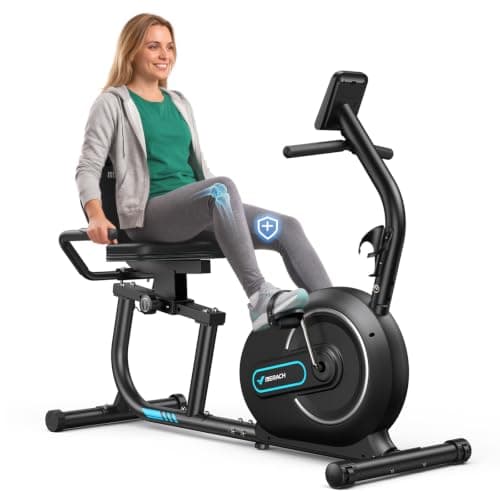
If you buy one thing, buy a recumbent bike — the MERACH S08, with a published 300 lb rating, an adjustable backrest and a low step-over, is the pick. It is the piece most likely to still be in use in a year, because getting on and off is easy, nothing hurts after twenty minutes, and the eight numbered resistance levels go low enough to start gently and high enough to keep mattering. If a bike is already covered, the next most valuable purchase is a resistance band set, because the official activity guidance asks for strengthening work twice a week and bands are the cheapest, lowest-risk way to do it at home.
It is worth stating what the target actually is, because the equipment follows from it. Published US guidance for adults 65 and over asks for at least 150 minutes a week of moderate aerobic activity, muscle-strengthening work on at least two days a week covering all the major muscle groups, and balance activities as a third distinct category. That is three different jobs, and no single machine does all three. A bike does the aerobic part. Bands or light dumbbells do the strength part. Standing on one leg while holding a worktop does the balance part and costs nothing.
So we ranked on the specs that decide whether an older adult will actually use a piece of equipment, which are not the specs the marketing leads with: published weight rating (half the listings in this market omit it), how you get on and off (step-over height, whether you sit down into it or swing a leg over), back support, how low the resistance goes — the bottom of the range matters far more than the top here — and whether it works seated, which is what makes the difference for anyone with balance concerns. We have not tested these with older users; every figure below is a published manufacturer number, labelled as such.
One thing we will not do on this page is pretend to give medical advice. If there is a heart condition, a recent fall, a joint replacement or a diagnosis in the picture, the right first step is a conversation with a doctor or a physiotherapist about what to start with and how hard — not a product recommendation from a website. What follows is equipment selection, which is a different and much smaller problem.
The short answer
In a hurry? These are the picks we'd buy. Prices are live; tap a card below for the full reasoning.
$129.9915% offPrice as of October 6, 2026·#addisclosure
Quick picks
#
Product
Best for
Score
Price
1
Best overall
MERACH S08 Recumbent Exercise Bike
A low step-over, an adjustable backrest, a published 300 lb rating and eight magnetic levels that start genuinely easy: the single most likely piece of home cardio to still be in use next year.
the aerobic half of the week, in comfort, with a published capacity you can rely on
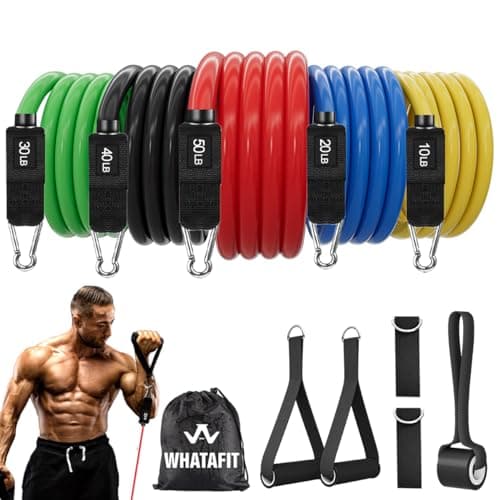
Five stackable tubes, handles, a door anchor and ankle straps for the price of a takeaway: the cheapest way to cover every major muscle group without a single heavy object in the house.
the two days a week of muscle-strengthening work, seated or standing
CAP 100 lb Neoprene Hex Dumbbell Set (with A-frame rack)
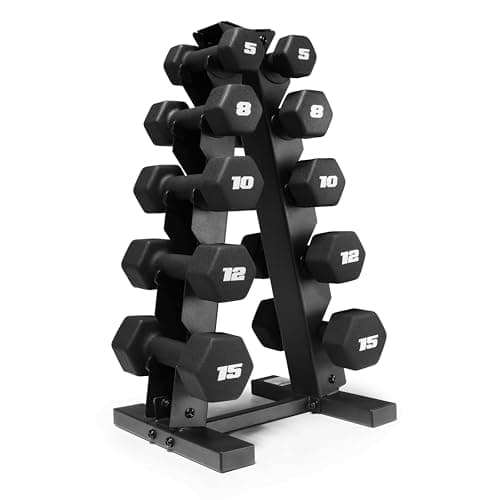
A 100 lb set of light neoprene hex dumbbells with its own A-frame rack, which is the version of dumbbells that gets used — because they are never on the floor.
trackable strength progress with a weight you can put down on a rack
$129.9915% offPrice as of October 6, 2026·#addisclosure
4
Best for a chair
Sunny Health Under-Desk Elliptical
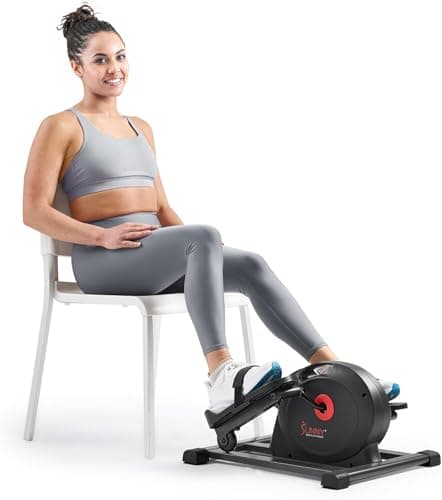
Eight magnetic levels and a published 250 lb rating in a 25 lb unit that slides in front of any chair — the lowest-barrier way to add daily movement there is.
gentle movement from an armchair, with no transfer and no balance required
$139.9914% offPrice as of October 6, 2026·#addisclosure
5
Best if walking is already the habit
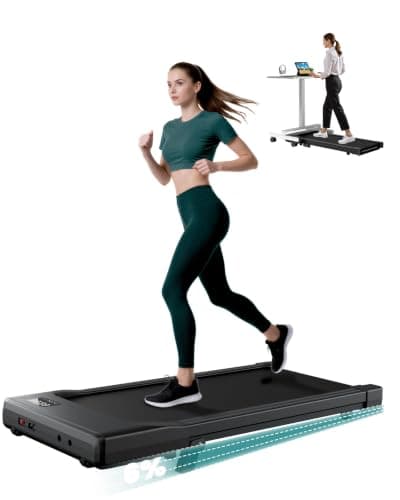
DeerRun Under-Desk Walking Pad (6% incline, 300 lb)
A published 300 lb rating, a 0.6 mph bottom speed and a manual incline, which together make this the cheapest way to keep walking when the weather stops cooperating.
keeping the daily walk going through winter, bad weather and dark evenings
A low step-over, an adjustable backrest, a published 300 lb rating and eight magnetic levels that start genuinely easy: the single most likely piece of home cardio to still be in use next year.
Rated capacity
300 lb (mfr)
Resistance
8 levels, magnetic (mfr)
Back support
Adjustable seat and backrest
User height
5 ft 3 in to 6 ft 2 in (mfr)
Footprint
51.97 x 25 in (mfr)
Machine weight
57.3 lb (mfr)
Pros
You sit down into it rather than swinging a leg over a frame, which is the single most important accessibility feature in home cardio and the one almost no spec sheet highlights
The adjustable backrest means a 45-minute session is comfortable rather than something to be endured, and comfort is what produces consistency
A published 300 lb user rating from a manufacturer that also publishes the recommended user height range and extended leg length — unusually specific, and genuinely useful for deciding whether it fits
Eight numbered magnetic resistance levels that start low. The bottom of the range matters more than the top: level 1 should be easy enough for a first week, and here it is
Magnetic resistance means nothing is in contact, so it is quiet, has no wear parts, and the setting is reproducible week to week
Cons
It is a large object at roughly 52 inches long and it does not fold. Decide where it will live permanently before it is assembled
57.3 lb is heavy to reposition even with transport wheels, so moving it between rooms is not realistic
The published user height range starts at 5 ft 3 in. Below that, reaching the pedals comfortably may not be possible at any seat setting — check the figure against the actual user
Assembly is required and involves lifting the frame. Worth having someone help rather than treating it as a one-person job
A supported seat makes coasting easy. Without a resistance level and a time target, sessions drift into gentle pedalling while reading
Best for: the aerobic half of the week, in comfort, with a published capacity you can rely on.
Five stackable tubes, handles, a door anchor and ankle straps for the price of a takeaway: the cheapest way to cover every major muscle group without a single heavy object in the house.
Type
Tube bands with handles
Set
5 stackable tubes
Includes
Handles, door anchor, ankle straps
Use
Seated or standing
Storage
Fits in a drawer
Needs
A door that closes, for the anchor
Pros
Stackable tubes mean the resistance starts very light and climbs in small steps, which is exactly the progression pattern that suits starting from a low base
Everything can be done seated in a dining chair, which removes balance from the equation entirely for anyone who needs that
Nothing heavy to drop on a foot, nothing to put away, no floor space used. The lowest-risk strength equipment there is
The door anchor converts the set into rows and pulldowns, which covers the back and pulling muscles that bands otherwise miss
Cheap enough to be a no-regrets purchase, and light enough to take to a family member's house or on holiday
Cons
Bands wear and eventually snap. Inspect them for nicks and cracking before each use and replace a tube rather than trusting it
Resistance is hardest at the end of the movement and easy at the start, which is the opposite of how a weight behaves. It is still effective, just different
Band tension is not a number you can log reliably. Progress is harder to track than with dumbbells, where 8 lb is always 8 lb
Handles and clips are the failure points on cheap sets. Check the connections, and never stretch a band towards your face
The door anchor needs a door that closes firmly and opens away from you. Not every room has one in a useful position
Best for: the two days a week of muscle-strengthening work, seated or standing.
$129.9915% offPrice as of October 6, 2026·#addisclosure
CAP 100 lb Neoprene Hex Dumbbell Set (with A-frame rack)
A 100 lb set of light neoprene hex dumbbells with its own A-frame rack, which is the version of dumbbells that gets used — because they are never on the floor.
Type
Neoprene hex set + rack
Set weight
100 lb total (per listing)
Storage
Vertical A-frame rack
Coating
Neoprene
Grip
Soft, non-slip
Shape
Hex — does not roll
Pros
The rack is the reason this is the pick rather than a cheaper loose pair. Weights on a stand at waist height get used; weights on the floor need bending over to pick up
Neoprene is soft, grippy and warm to hold, which matters a great deal for arthritic hands compared with cold knurled steel
Fixed weights are instant and honest: 8 lb is 8 lb every session, which makes progress trackable in a way band tension never is
Hex heads do not roll away when you set them down, and they are stable enough to rest on during a seated set
Light fixed dumbbells are the most useful strength tool for the balance category too — holding a light weight while doing a supported single-leg stand is a real exercise
Cons
A 100 lb set is a real object: it needs about a square foot of permanent floor and it is heavy to move once assembled
Fixed weights mean fixed jumps. If 5 lb is easy and 10 lb is hard, there is nothing in between
Neoprene coating can smell for the first week or two in a closed room, and it eventually scuffs
It will be outgrown on some movements long before others, which is the nature of a light fixed set
Check which pairs the listing actually includes — the set composition varies and the total weight figure is the only number stated consistently
Best for: trackable strength progress with a weight you can put down on a rack.
$139.9914% offPrice as of October 6, 2026·#addisclosure
Sunny Health Under-Desk Elliptical
Eight magnetic levels and a published 250 lb rating in a 25 lb unit that slides in front of any chair — the lowest-barrier way to add daily movement there is.
Rated capacity
250 lb (mfr, SF-E3872)
Resistance
8 levels, magnetic (mfr)
Stride
7 in max (mfr)
Height
12 in (mfr)
Footprint
25 x 20 in (mfr)
Machine weight
25 lb (mfr)
Pros
No transfer, no step-over, no balance. It goes in front of the chair you already sit in, which removes every physical barrier to starting
Eight real magnetic levels, so it can be made genuinely harder over months rather than becoming a token gesture
An elliptical path is smoother on the knees than a tight pedal circle, which is why it beats a basic pedal exerciser for anyone with joint pain
25 lb and pre-assembled, so it can be moved between rooms or put away without help
Quiet enough to use during television or a phone call, which is exactly when it will get used
Cons
The energy cost of seated pedalling is a small fraction of walking. Treat it as a way to accumulate movement, not as a workout, and ignore the calorie claims
12 inches tall, so under a table or desk the clearance needs measuring — your knees need room through a full revolution
It can slide on hard floors under effort. Use it against a wall or on a mat
Sunny sells several similar under-desk models with different ratings and part numbers. Confirm which one the listing is before buying
Does nothing for strength or balance, so it cannot be the only purchase
Best for: gentle movement from an armchair, with no transfer and no balance required.
DeerRun Under-Desk Walking Pad (6% incline, 300 lb)
A published 300 lb rating, a 0.6 mph bottom speed and a manual incline, which together make this the cheapest way to keep walking when the weather stops cooperating.
Rated capacity
300 lb (listing + mfr)
Speed
0.6-3.8 mph
Incline
6% manual (listing)
Height
4.5 in (mfr, Q2 Urban)
Footprint
45 x 20 in (mfr)
Warranty
1 year + 60-day returns (mfr)
Pros
A 0.6 mph bottom speed is genuinely slow, which is the spec that makes a walking pad usable for someone who is not confident on a moving belt
A published 300 lb rating, the highest here, from a brand that publishes dimensions, a warranty and a 60-day return window
Walking is weight-bearing, which is the one thing a bike and a pedal exerciser cannot offer — it matters for bone and for balance in a way seated cardio does not
At 4.5 inches tall it slides under a sofa or a bed between uses, so it does not permanently occupy a room
It keeps an existing walking habit alive through February, which is when outdoor walks stop happening
Cons
There is no handrail. For anyone with balance concerns, a belt that moves under your feet with nothing to hold is the wrong purchase — this is the one pick on this page with a real safety caveat
Start it at the lowest speed with something stable within reach, and get comfortable stepping on and off before using it for any length of time
No console and no folding. It slides under furniture and that is the extent of it
The incline figure differs between the Amazon listing (6%) and DeerRun's own product page (7%). Confirm on the listing you buy
DeerRun sells several near-identical pads under Q1 and Q2 names, so read the published capacity rather than trusting the photo
Best for: keeping the daily walk going through winter, bad weather and dark evenings.
Skip this
The budget traps that look cheap and cost you twice. We'd skip these.
Anything with a high step-over or a saddle
Indoor cycling bikes, rowers and most ellipticals all require either swinging a leg over a frame or balancing on a narrow seat, and both are reasons equipment stops being used. It is not about capability — plenty of people in their seventies ride hard. It is that the first barrier of every session is getting on, and a barrier at the start of a session is the one that wins. A recumbent removes it completely.
An all-in-one multi-gym as the first purchase
They look like the complete answer and they are usually the worst value in this market: a large footprint, a fixed seat position that may not suit you, cable stacks whose lightest setting is often too heavy to start with, and an assembly job measured in hours. Bands plus light dumbbells cover the same muscle groups for a fraction of the money and none of the space. Our page on all-in-one vs separate pieces works through why.
Equipment with no published weight rating
This runs through everything we recommend, and it matters more here than anywhere else. A brand that publishes a user weight rating has committed to a number and will have a support contact when something fails. A listing with a struck-through price, a stock photo and no stated capacity has committed to nothing. For a seated machine that someone is going to transfer on and off several times a week, that published number is the most important spec on the page.
Ankle weights for walking
They are cheap, they look harmless, and they change your gait — which is the one thing you do not want to change in someone working on balance. If the aim is to make walking harder, use the incline on the pad or walk up a hill. Save the added load for the hands, where a light dumbbell does the same job without altering how you move.
How to choose (and what to skip)
Start from the three jobs, not from the equipment
Published US guidance for adults 65 and over asks for three distinct things each week: at least 150 minutes of moderate aerobic activity, muscle-strengthening work on at least two days covering all major muscle groups, and balance activities. Each of our picks maps to one of those. The bike, the pedal elliptical and the walking pad cover aerobic. The bands and the light dumbbells cover strength. Balance needs no equipment at all — it needs a worktop to hold and a few minutes a day. Buying against the three jobs rather than against a product category is what stops a room filling up with one machine that does one of them.
How you get on and off is the spec that decides use
This is the single most useful idea on this page and it appears on no manufacturer spec sheet. Equipment that requires swinging a leg over a frame, climbing onto a platform, or lowering yourself onto a narrow saddle puts a physical obstacle at the start of every session. Equipment you sit down into, or that slides in front of the chair you are already in, has no obstacle at all. When two machines are otherwise comparable, the one that is easier to get onto will produce more sessions — and more sessions beats a better machine every time.
The bottom of the resistance range matters more than the top
Almost every product page sells you the maximum: the heaviest dumbbell, the hardest level, the fastest speed. For starting out, the only number that matters is the easiest setting, because a level-one that is already hard means the machine is unusable in week one. Eight magnetic levels on the bike and the elliptical start genuinely low. Stackable bands start at a single light tube. A 100 lb neoprene dumbbell set includes pairs light enough to be a starting point. Check the bottom of every range before you buy, and ignore the top.
Published capacity, and why we keep insisting on it
Our picks publish 300 lb (MERACH recumbent and DeerRun pad) and 250 lb (Sunny elliptical). These are manufacturer user ratings rather than tested limits, and seated equipment gets loaded by transfer as well as by use — the moment of sitting down puts more through a frame than steady pedalling does. Leave margin. If a product in this market does not state a figure at all, treat that as the answer to the question rather than as missing information. Our page on equipment for heavier beginners goes deeper on reading these numbers.
Seated, supported, standing: pick the right tier
There is a simple hierarchy worth being honest about. If balance is a concern, everything can be done seated: the recumbent bike, the pedal elliptical, bands in a dining chair, dumbbells in a chair. If balance is fine but confidence is low, supported standing work — holding a worktop — covers most of the strength and balance categories. If both are fine, the walking pad becomes the most valuable aerobic purchase on the page because walking is weight-bearing. Buy for the tier you are in now, not the one you hope to be in; the equipment that matches today is the equipment that gets used.
What to buy first, second and third
First, the aerobic piece, because it is the biggest single purchase and the one that sets up the room: the recumbent bike if there is floor space, the pedal elliptical if there is not. Second, the band set, because it covers the strengthening requirement for very little money and no space. Third, the light dumbbell set with its rack, once you know the habit has stuck and you want progress you can log. A fourth purchase is rarely necessary — the balance category needs nothing, and our home gym essentials checklist covers the general case if the room is going to be shared with other people's training.
The three-job shopping list
Aerobic, 150 minutes a week. Recumbent bike if there is room; under-desk elliptical in front of an armchair if there is not; walking pad if walking is already the habit and balance is fine.
Strength, two days a week, all major muscle groups. A stackable band set covers it for very little money. Light fixed dumbbells on a rack make progress trackable.
Balance, regularly. No equipment. Heel-to-toe walking along a worktop, standing up from a chair without using your arms, single-leg stands with a hand on something solid.
Everything else. Optional. A chair, a clear floor and something stable to hold are the only other requirements, and you already own them.
Why resistance training is the part not to skip
Of the three categories, aerobic exercise is the one people start with and strength is the one that matters most for staying independent. Muscle and the ability to produce force quickly are what get you out of a chair, up a kerb and back upright when you stumble — and they are what decline fastest without being trained. The official guidance is deliberately specific: at least two days a week, all the major muscle groups, worked to the point where another repetition would be hard. That is a meaningfully higher bar than most people expect, and it is reachable with a band set and a dining chair.
What it does not require is heavy equipment, a rack or any of the apparatus the rest of this site is about. A home gym for an older adult beginner looks almost nothing like the garage build in our complete budget home gym guide, and that is the correct outcome rather than a limitation. If the goal later becomes lifting properly, that guide and the beginner buying order are the right next reads.
Setting the room up so nothing goes wrong
Clear the floor around the machine. A trailing cable or a rug edge beside a bike is a trip hazard in the exact place you are least steady, getting on and off.
Put something stable within reach. A worktop, a solid chair back or a wall. Not a wheeled chair and not a table that slides.
Mat the floor if it is hard. It stops a pedal exerciser sliding and protects the floor. Our cheap flooring guide covers what is actually worth buying.
Set the seat once, properly. On a bike, a seat too close forces a deep knee bend at the top of the stroke, which is where cycling knee pain comes from. Get it right and leave it.
Keep the bands in sight. Equipment in a drawer gets used less than equipment on a hook. This is the most reliable rule in home training.
Where this overlaps with the rest of the site
Two of the picks here also appear on our under-desk exercise equipment page, which compares them on desk clearance rather than accessibility, and the recumbent bike is the subject of our recumbent vs upright comparison if you want the format argument in full. If joints are the main concern rather than age, the best cardio machine for bad knees is the more directly useful page.
And on brands, because this market is unusually full of anonymous listings: Sunny Health & Fitness and Marcy are the two budget names that consistently publish real spec sheets, capacities and warranty terms, and that is worth more in this category than any feature. Our budget home gym brands guide goes through who actually makes what.
Frequently asked questions
What is the best exercise equipment for seniors at home?+
A recumbent exercise bike, for most people. You sit down into it rather than climbing onto it, the backrest makes longer sessions comfortable, and the resistance starts low enough for a first week. Our pick, the MERACH S08, publishes a 300 lb user rating and eight magnetic levels. Pair it with a resistance band set to cover the strengthening work that official guidance asks for twice a week, and you have both aerobic and strength handled for very little money.
How much exercise do adults over 65 need?+
Published US guidance asks for at least 150 minutes a week of moderate-intensity aerobic activity (or 75 minutes vigorous, or a mix), muscle-strengthening activities on at least two days a week covering all the major muscle groups, and balance activities as a separate third category. The strengthening work should be done to the point where another repetition would be difficult. The balance component needs no equipment at all.
Is a recumbent bike better than an upright for an older adult?+
Usually, yes, and the reason is not difficulty — it is access and comfort. A recumbent has a low step-over so you sit into it, a backrest so your trunk is not working to hold you up, and no saddle to cause the discomfort that ends most budget bike habits. It also tends to publish a higher weight rating than a folding upright. Our recumbent vs upright comparison covers the full trade.
Are resistance bands enough for strength training?+
For covering the muscle-strengthening requirement at home, yes — especially with a stackable set that lets you add tubes to increase resistance in small steps. Bands work every major muscle group, can all be done seated, and nothing heavy can drop on a foot. Their limitations are that the tension is hardest at the end of the movement and that band resistance is hard to log accurately. Light fixed dumbbells are the natural next step when you want numbers you can track.
What weight capacity should I look for?+
Comfortably above the user's weight, and treat a missing figure as a red flag rather than an oversight. Our picks publish 300 lb (recumbent bike, walking pad) and 250 lb (under-desk elliptical). Seated equipment takes extra load during the transfer on and off, which is more than steady use puts through the frame, so margin matters. Our guide for heavier beginners explains how to read these ratings.
Is a walking pad safe for an older adult?+
With caveats. A walking pad has no handrail, so a belt moves under your feet with nothing to hold, and that is the wrong combination if balance is a concern at all. If balance is good, it is an excellent purchase: walking is weight-bearing in a way seated cardio is not, and a 0.6 mph bottom speed is genuinely slow. Start at the lowest speed, keep something stable within reach, and practise stepping on and off before using it for any length of time.
What about balance exercises — do I need equipment?+
No, and this is the easiest of the three categories to cover. Heel-to-toe walking along a kitchen worktop, standing up from a chair without using your arms, and single-leg stands with a hand resting on something solid all count, and all cost nothing. Holding a light dumbbell while doing supported single-leg work makes it harder when you are ready, which is one more reason the light dumbbell set earns its place.
Should I check with a doctor first?+
If there is a heart or lung condition, a recent fall, a joint replacement, dizziness, or any diagnosis that activity might affect, yes — and the useful question is not whether to exercise but what to start with and how hard. We pick equipment on published specs; we are not qualified to advise on health conditions and we will not pretend otherwise. A physiotherapist is often the more practical person to ask about where to start.
Prices and availability shown here come from Amazon's live data and change often; we re-verify them regularly. Bar Bumper is an Amazon Associate and earns a commission on qualifying purchases at no extra cost to you. Read our full disclosure.