Treadmill vs rowing machine: which earns the floor space?
In a small room the question isn't which machine is better. It's which one is worth the square footage it occupies every day, not just the half hour you use it.
Updated August 2026 · By Stephen V.
For most small home gyms, the rower wins — it trains more of your body, makes less noise, costs less, and stands upright in a corner when you're done. The treadmill wins in one specific case: when running is the thing you actually want to do, and no amount of arguing about efficiency will make rowing feel like running.
But the useful version of this comparison isn't about which machine is better in the abstract. In a small room, floor space is the currency, and both machines occupy it for twenty-three and a half hours a day to serve you for thirty minutes. So the honest question is: which one pays that rent? Here's the comparison on the four things that decide it — footprint, noise, training value, and cost — plus the budget picks in each format.
The short answer
In a hurry? These are the picks we'd buy. Prices are live; tap a card below for the full reasoning.
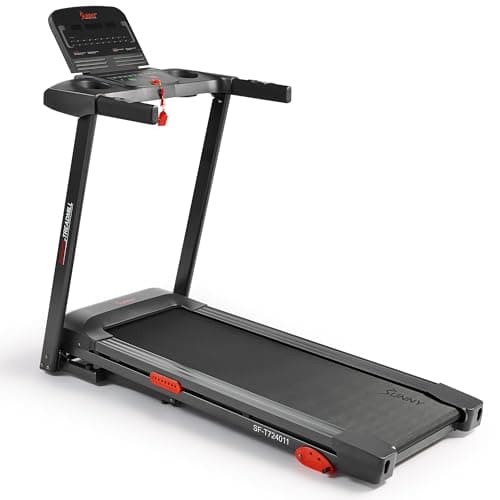
A folding treadmill with incline — the point where a treadmill stops being a walking device and starts being a running one.
Type
Folding treadmill
Incline
Manual
Stored
Folds upright, still large
Impact
Running-level footfall
Pros
Genuinely lets you run indoors in any weather
Incline adds real training range
The specific-need machine nothing else replaces
Cons
Occupies the most floor space here even folded
The noisiest option for neighbors by a distance
Costs more than the rower for a narrower training effect
Best for: actual running indoors.
Skip this
The budget traps that look cheap and cost you twice. We'd skip these.
A full treadmill bought 'to walk on'
This is the single most common cardio purchase mistake in a small home. A full treadmill is bought for the running you might do, used for the walking you actually do, and then resented for the floor it takes. If walking is the honest goal, a walking pad does the same job for a fraction of the money and disappears afterwards.
Assuming 'folding' means 'stored away'
A folding treadmill folds the deck upright. It is still a large, heavy object standing in your room, roughly the footprint of an armchair. It is not comparable to a rower standing on end or a walking pad under a bed, and in a small space that difference decides everything.
An air rower in a small room
Air rowers are superb machines that are effectively fans. In a small enclosed room they are loud, and the noise rises exactly when you work hardest. Magnetic resistance gives you a quiet machine at every intensity, which is what a small shared space needs.
How to choose (and what to skip)
Measure stored footprint and in-use footprint separately
These are two different numbers and both matter. A rower is small stored and long in use; a treadmill is large in both states. Chalk both outlines on your floor before ordering — the in-use outline is the one that tells you whether you can actually train there.
Be honest about run versus walk
This decides the whole comparison. If you will genuinely run, a treadmill is the only machine here that does it and you should buy one, accepting the space and noise. If the truth is that you want daily steps and general conditioning, the rower and the walking pad both serve you better and cheaper.
Consider who's below you
In a flat or on an upper floor, impact noise is a hard constraint rather than a nice-to-have. Rowing puts no impact into the floor; running puts a great deal. That alone rules the treadmill out of many small-space situations regardless of the other arguments.
Count what else the machine displaces
In a small room, the cardio machine competes with the bench, the rack and the floor space you train on. A rower stood on end costs you a corner; a treadmill costs you a wall. Work out what you're giving up before you decide what you're gaining.
Cheap treadmills fail in a way cheap rowers don't
A budget rower's failure modes are minor — a squeaky seat roller, a worn strap. A budget treadmill's failure mode is the motor, which is terminal and happens when an undersized motor is used for running. That asymmetry is worth factoring into a budget decision.
Footprint: the number that decides it
Here's the practical shape of each machine in a small room.
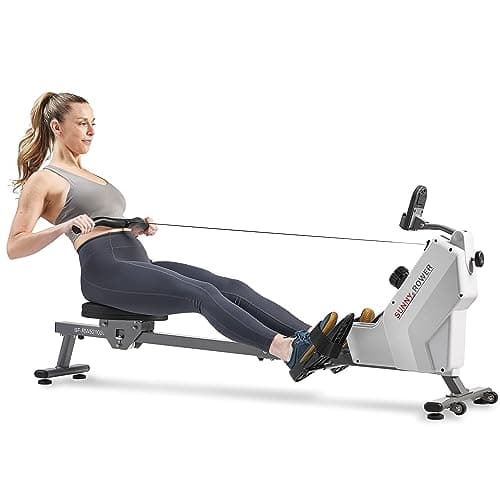
A rower is long and narrow in use — plan for roughly 8 feet of length and a couple of feet of width — but almost every budget rower stands upright when you're finished, occupying a footprint about the size of a bar stool. That's the whole reason it works in a small room: the space is borrowed, not spent.
A folding treadmill needs a similar area in use, but folding it lifts the deck vertical rather than removing the machine. You're left with a heavy object roughly the footprint of an armchair, permanently. It's better than not folding, but it isn't the same category of space saving.
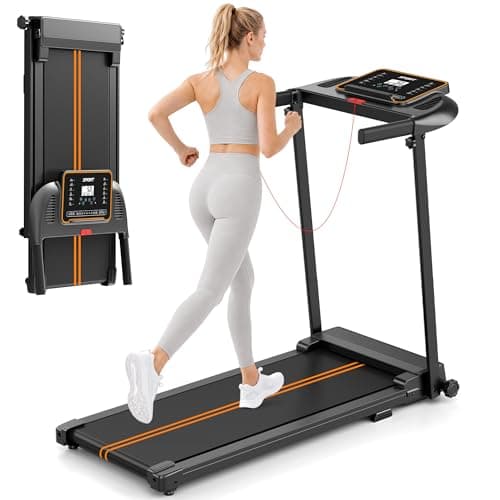
A walking pad is the outlier: it slides under a bed or sofa and genuinely vanishes. That's its whole argument, and in the smallest rooms it's a compelling one.
Training value per minute
Rowing is a full-body movement — the drive comes from your legs, the middle from your hips and back, the finish from your arms. That means more muscle working per minute and, for most people, a higher heart rate at a given perceived effort. It's also zero impact, which matters for joints and for training frequency.
Running does something rowing can't: it loads your skeleton. Impact is not purely a cost — it's the stimulus that keeps bone density up, and it's specific to running if running is a thing you do outdoors. If you're a runner training through winter, a treadmill isn't an inefficient rower, it's the right tool.
Walking sits below both as a stimulus and above both as a habit. Nobody skips a walk because it's hard. If your realistic constraint is consistency rather than intensity, a walking pad you use daily beats a rower you use twice a month, and that's not a small point — it's the whole point.
Noise, and why it's not a footnote
In a small space, noise is usually a shared-space problem. Rowing puts no impact into the floor; the only noise is the seat rolling and a small pull through the frame at each catch, both largely fixed by a dense mat. Running puts repeated impacts at multiple times bodyweight straight into the structure, which travels through joists and re-radiates in the room below.
This is the argument that ends the debate for a lot of people, and it's covered in more depth in our quiet cardio guide. If you're on an upper floor and you were leaning treadmill, read that first.
What each costs to own
Budget rowers and budget treadmills overlap in price, but they don't overlap in what you get for it. A magnetic rower at the bottom of the market is a fully functional machine — the resistance is contactless, so "cheap" mostly means a simpler console and a plainer seat rail. A treadmill at the bottom of the market is compromised where it matters, because the motor is the expensive part and it's the part that gets cut.
That's why our cheap treadmill guide draws the line at walk versus run: a cheap walking machine is genuinely good, and a cheap running machine is a motor waiting to fail. There is no equivalent cliff on the rower side, which makes the rower the safer budget purchase.
The answer by situation
Small room, one machine, general fitness — rower. More training per minute, stores upright, quiet.
Upstairs flat or shared wall — rower, or a walking pad on a dense mat. Not a running treadmill.
You're a runner — treadmill, and buy a real motor. Nothing else scratches that itch.
You want daily steps and no fuss — walking pad. It's cheap, it hides, and you'll use it.
Bad knees or hips — rower or a bike. Zero impact, full range, low joint stress.
You already lift and want conditioning — rower. It complements a strength program better and doesn't compete with leg day the way running does.
The option that isn't on the list
Worth saying: in a genuinely small room, the best cardio machine is sometimes a bike, and the best cardio equipment is sometimes none at all. A magnetic exercise bike is smaller than either machine here, silent, and the easiest of the three to use while watching something. And a band set plus bodyweight circuits takes up a drawer and no floor.
If your room is so tight that this comparison feels forced, that's the real answer — and our small home gym guide works through what fits in genuinely small spaces.
Frequently asked questions
Is a rowing machine better than a treadmill for a small home gym?+
For most people, yes. A rower trains your legs, back and arms in one movement, makes no impact noise, usually costs less, and stands upright in a corner when you're finished. A treadmill takes more permanent space even folded, is far louder for anyone below you, and only justifies itself if you specifically want to run indoors.
How much space does a rowing machine need?+
Roughly 8 feet of length and a couple of feet of width while you're using it, plus room to get on and off. Stored, most budget rowers stand upright and take about the footprint of a bar stool. Measure both numbers — the in-use length is the one that determines whether it works in your room.
Do folding treadmills really save space?+
Less than people expect. Folding lifts the deck vertical but leaves a heavy machine standing in the room, roughly the footprint of an armchair, permanently. That's genuinely better than a non-folding treadmill, but it isn't comparable to a rower stored on end or a walking pad that slides under a bed.
Which burns more calories, rowing or running?+
At a given hard effort they're broadly comparable, with rowing recruiting more upper-body muscle and running being easier for most people to push hard on because the skill demand is lower. The bigger factor by far is which one you'll do consistently — the machine you use four times a week beats the one you use twice a month, whatever the per-minute numbers say.
Can I use a treadmill in a small upstairs room?+
A walking pad, usually yes, on a dense rubber mat. A full treadmill used for running, usually not — running loads the floor at several times bodyweight repeatedly, and that low-frequency thump travels through joists into the room below in a way no mat fully solves. On an upper floor, a rower or a bike is the practical choice.
Prices and availability shown here come from Amazon's live data and change often; we re-verify them regularly. Bar Bumper is an Amazon Associate and earns a commission on qualifying purchases at no extra cost to you. Read our full disclosure.