The quietest cardio you can put in a shared house. Here's which bike format fits your training — and why magnetic resistance is non-negotiable.
Updated July 2026 · By Stephen V.
An exercise bike is the most house-friendly cardio machine there is: no impact noise, a fraction of a treadmill's footprint, and nothing that shakes a first-floor ceiling. It's also a category where the sub-$350 options are genuinely good, because the engineering is simple — a flywheel, a magnet, and a frame. The two decisions that matter are format (spin, upright, folding or recumbent) and resistance type, and getting the second one wrong is what makes a cheap bike unusable. Here's what we'd buy.
The short answer
In a hurry? These are the picks we'd buy. Prices are live; tap a card below for the full reasoning.
$44.9912% offPrice as of September 14, 2026·#addisclosure
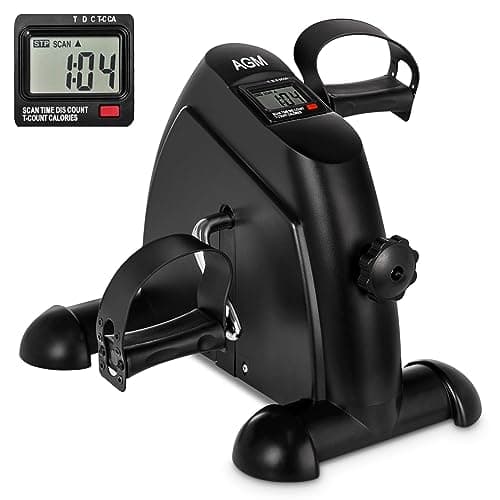
AGM Under-Desk Mini Pedal Exerciser
Not a bike, and not pretending to be — but the cheapest way to add movement to a working day.
Type
Under-desk pedal exerciser
Resistance
Adjustable tension
Use
Legs or arms
Display
LCD
Pros
Costs less than a month of most gym memberships
Works under a desk or in front of a sofa
Usable for arms as well as legs, which helps in rehab
Cons
Not a substitute for real cardio training
Slides on hard floors without a mat
Low resistance ceiling
Best for: desks, rehab and tiny spaces.
Skip this
The budget traps that look cheap and cost you twice. We'd skip these.
Bikes with fan (air) resistance in an apartment
Air bikes are excellent trainers and extremely loud — the fan is the resistance, so noise scales with effort. In a flat or a shared house, magnetic or belt-driven friction resistance is the only version that doesn't start an argument.
Paying extra for a console you'll ignore
Budget bike consoles measure cadence and a guessed calorie count, and their accuracy is poor across the board. Put the money into a heavier flywheel or a better seat instead, and track sessions on your phone.
How to choose (and what to skip)
Magnetic vs friction resistance
Magnetic resistance uses magnets near the flywheel: silent, no contact, nothing to wear out, but usually stepped rather than infinitely variable. Friction resistance presses a pad on the flywheel: infinitely adjustable and better for hard efforts, but the pad wears and needs occasional replacement. For quiet general use, magnetic; for serious cycling training, friction on a heavy flywheel.
Flywheel weight is the ride-feel spec
A heavier flywheel carries momentum through the dead spot of each pedal stroke, which is what makes a bike feel smooth rather than jerky. It's the single spec most worth paying for on a spin bike, and the one budget listings are least likely to make prominent.
Match the format to your body and room
Spin bikes for hard training and small footprints. Uprights for casual sessions in a comfortable position. Folding bikes for shared rooms. Recumbents for back comfort, easy entry and long low-intensity sessions — at the cost of the biggest footprint here.
Check the user height and weight range
Budget bikes publish a recommended height range and a maximum user weight, and both are real constraints. A rider outside the height range can't set a safe knee angle, and exceeding the weight rating is where frames flex. This is the spec to check before price.
Budget for a mat and maybe a seat
A rubber mat under the bike stops it walking on a hard floor, catches sweat and cuts vibration through a ceiling. And the seat on almost every budget bike is the first thing riders replace — a $25 gel cover fixes it, and standard-fit saddles swap straight on.
Which format actually suits you?
Four formats, four different buyers:
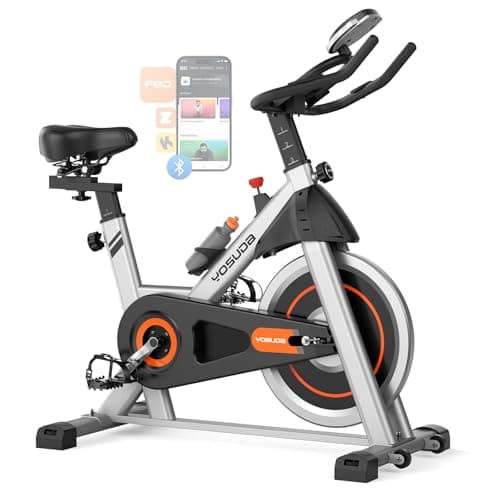
Spin / indoor cycling — heavy flywheel, aggressive position, infinitely adjustable resistance. The choice if you want hard training and a road-bike feel in a small footprint.
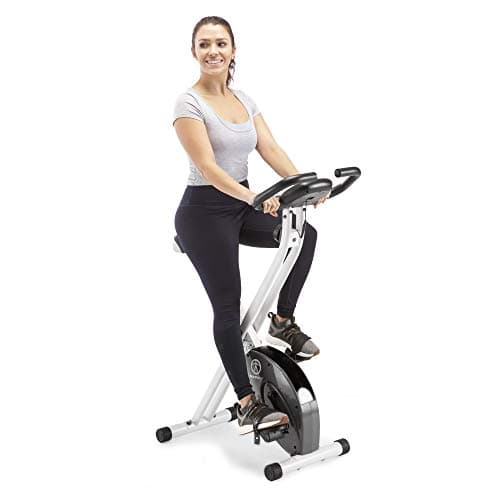
Upright — a more relaxed seated position with a backrest-free frame. Comfortable for moderate sessions, less capable at high intensity.
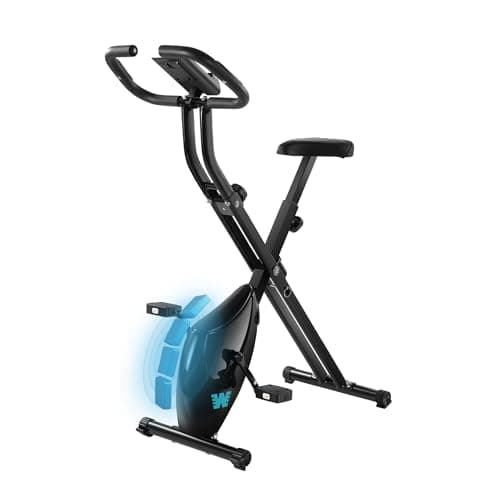
Folding — an upright that stores away. The right answer when the bike lives in a room used for something else.
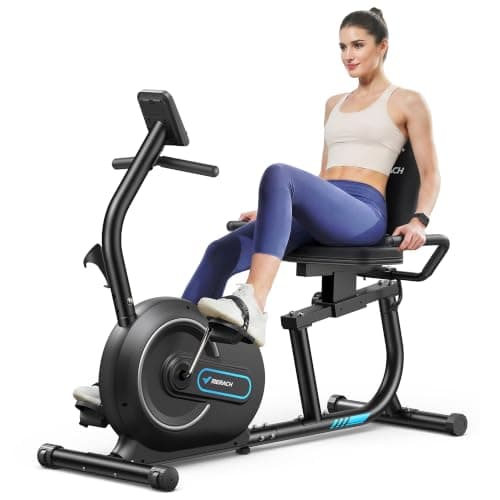
Recumbent — reclined with back support. Easiest on the lower back and the easiest to get on and off, which makes it the common choice for older riders and rehab. Biggest footprint.
Bike vs treadmill vs rower for a home gym
The bike wins on noise, footprint and joint impact, and it's the cheapest of the three to buy at any given quality level. A treadmill is the one that transfers directly to walking and running, but it's louder, heavier and far more expensive to buy well. A rowing machine trains more muscle per session and stores upright, but it demands more technique and a longer floor space.
For an apartment, a shared house, or a room above a bedroom, the bike is usually the correct answer — and it's the cardio piece in our under-$1,000 build for exactly that reason.
Getting the fit right (the part that decides whether you use it)
Most abandoned exercise bikes were set up badly rather than bought badly. Two adjustments do 90% of the work. Set the saddle height so your knee has a slight bend — roughly 25-35 degrees — at the bottom of the stroke; too low is the classic cause of knee ache. Then set the fore-aft position so your forward knee sits roughly over the pedal axle with the cranks horizontal. Handlebar height is comfort, not performance: raise it if your lower back or wrists complain.
What you'll want to upgrade
In order of how often people replace them: the saddle (a gel cover or a standard-fit replacement transforms comfort), the pedals (cheap plastic cages swap for clipless or better straps on standard threads), and on friction bikes the resistance pad, which is a wear item costing a few dollars. None of those are reasons to spend more up front — they're the normal maintenance path of an otherwise good cheap bike.
Consoles, apps and tracking what you actually did
Budget bike consoles report speed, distance and calories, and all three are estimates rather than measurements — there's no power meter in a $200 bike, so the numbers are derived from wheel revolutions and a generic formula. Treat them as a consistency check (same bike, same settings, more distance than last week) rather than as data you'd compare with anyone else's.
If you want tracking that means something, the cheapest honest upgrade is a chest-strap heart-rate monitor paired to your phone. Heart rate is measured rather than estimated, it works on any bike regardless of console, and it's the number that actually tells you whether an easy session was easy. Bikes with Bluetooth apps are a nice convenience, but don't pay a premium for one — the app is rarely the reason people keep training.
Maintenance: fifteen minutes a year
Cheap bikes fail from neglect far more than from use. Three jobs cover almost everything: wipe sweat off the frame and handlebars after sessions (sweat is salty and corrodes bolt heads and the flywheel finish), check the pedal and crank bolts every few months because pedals loosen and a stripped crank thread is the one repair that isn't worth doing, and on a friction bike inspect the resistance pad for grooves and replace it when the felt wears thin. Magnetic bikes have no contact wear at all, which is a genuine argument for them if you're the kind of owner who'd rather not think about it.
Frequently asked questions
Are cheap exercise bikes any good?+
Under $350, yes — the mechanism is simple and budget bikes do it well. Check three things: magnetic or belt-driven resistance rather than a noisy fan, a stated user height and weight range that covers you, and a flywheel heavy enough to feel smooth. Consoles are inaccurate across the whole price band, so don't pay for one.
Magnetic or friction resistance on a budget bike?+
Magnetic if quiet operation and zero maintenance matter most — it's contactless, so nothing wears. Friction if you want infinitely variable resistance for hard interval training and don't mind replacing a cheap pad occasionally.
Is an exercise bike enough cardio on its own?+
For general fitness and heart health, yes. Cycling is low-impact and easy to do consistently, which matters more than the machine. What it won't do is build the bone loading of walking or running, so most people pair it with walking rather than replacing all their movement with it.
Upright or recumbent exercise bike?+
Upright if you want harder training in a smaller footprint. Recumbent if your lower back complains on an upright, if getting on and off matters, or if you plan long easy sessions. Recumbents take noticeably more floor space.
Prices and availability shown here come from Amazon's live data and change often; we re-verify them regularly. Bar Bumper is an Amazon Associate and earns a commission on qualifying purchases at no extra cost to you. Read our full disclosure.