Best budget jump rope: the cheapest real cardio you can buy
Nothing else in a home gym delivers this much conditioning for this little money or this little space. The only things that matter are cable type, handles and length.
Updated August 2026 · By Stephen V.
A jump rope is the highest return-per-dollar item in the whole of home fitness, and it is not close. Under twenty dollars, a shoebox of storage space, ten minutes to get out of breath. Every budget gym should own one, and most do not, because it is hard to get excited about buying a piece of string.
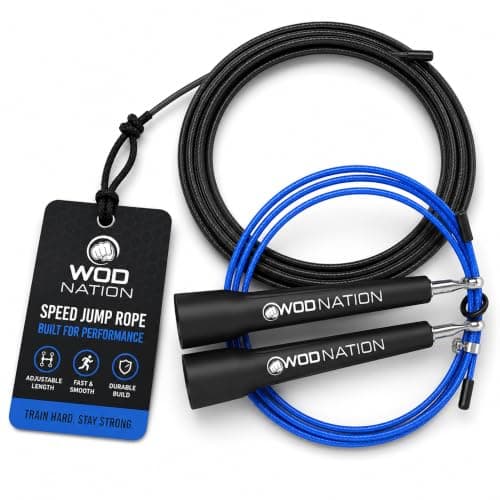
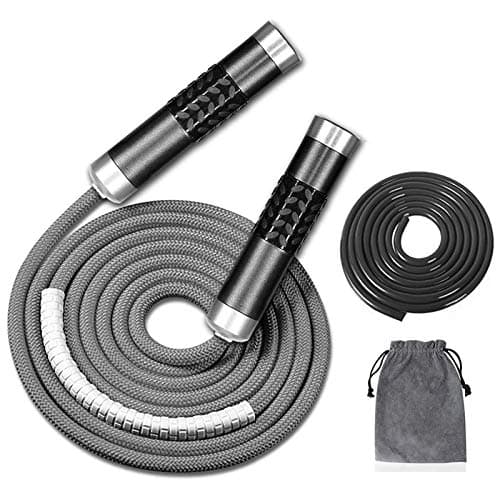
There are exactly three things to get right: the cable type, the handle quality and the length. Get those wrong and you will spend the first month whipping your shins and blaming yourself. Get them right and this is genuinely the most efficient conditioning tool in your gym. Here are the three we would buy and how to size a rope properly.
The short answer
In a hurry? These are the picks we'd buy. Prices are live; tap a card below for the full reasoning.
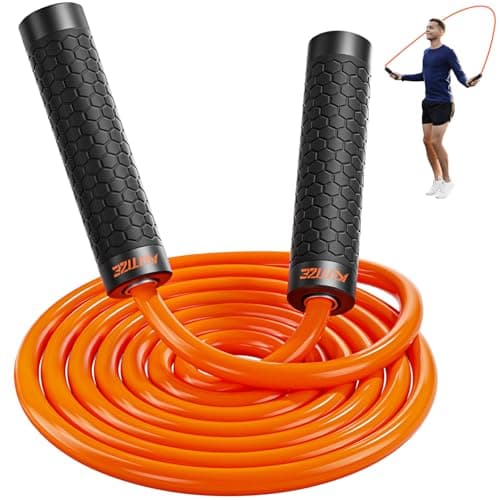
The low-cost weighted option — enough rope to find out whether you will actually use one.
Cable
Weighted (1 lb)
Handles
Ball-bearing
Length
Adjustable
Best for
First rope, general conditioning
Pros
Cheap enough to be an impulse addition to any other order
Bearing handles at a price where many ropes skip them
Adjustable length so it can be sized properly
Cons
Handle finish is basic and gets slippery with sweaty hands
Length adjustment mechanism is fiddlier than the pricier ropes
Coating wears faster on concrete than the better cables
Best for: trying jump rope without committing.
Skip this
The budget traps that look cheap and cost you twice. We'd skip these.
Beaded and plastic-segment ropes for adults
Segmented plastic ropes are made for schoolyards. They are loud, they wear through fast on concrete, and the rotation is uneven enough that timing never quite settles. A coated steel cable or a proper weighted rope costs a few dollars more and behaves consistently.
Ropes with no bearing in the handle
Without a bearing or a proper swivel, the cable twists against the handle instead of rotating freely. That means the rope binds, the rhythm dies, and the cable kinks where it enters the handle — which is where cheap ropes break. Bearings are present on most ropes worth owning, including the cheapest one here.
How to choose (and what to skip)
Size it before you use it
The standard method: stand on the middle of the rope with one foot and pull the handles up along your body. The handle tops should reach roughly armpit height for general use, or somewhere between chest and armpit if you want a faster rope. Almost every adjustable rope ships far too long, and a rope that is too long is the reason most beginners think they cannot skip.
Speed cable or weighted rope
A thin coated steel cable is fast, light and best for double-unders and speed work. A weighted rope rotates more slowly, gives you constant feedback about where the rope is, and adds real shoulder and forearm demand. If you are learning, the weighted rope is genuinely easier. If you already skip well, the speed cable is more fun.
Handles and bearings
The handle needs a bearing or a good swivel so the cable rotates freely, and enough grip texture that it does not slide when your hands are wet. Those two things separate a rope that feels effortless from one that fights you. Handle length matters less than people think.
Mind the surface
Concrete destroys cable coatings and beats up your ankles. A rubber mat, a wooden floor or a smooth section of gym flooring is much kinder to both. This is another argument for a couple of interlocking tiles even in a gym that otherwise has bare concrete.
Ceiling height is a real constraint
You need roughly a foot of clearance above your head with your arms at your sides. In a basement or a low garage, check this before you buy: catching the rope on a joist mid-set is both annoying and a good way to break a light fitting. Our low-ceiling guide covers the wider version of this problem.
Why a rope beats most cardio machines on value
The comparison is almost unfair. A jump rope costs about one percent of a treadmill, occupies no floor space, needs no power, has nothing to break, and produces a heart-rate response that is at least the equal of running. Ten minutes of intervals with a rope is a real conditioning session.
What it does not do is low-impact. Skipping is a repeated small impact, which makes it the wrong tool if your knees or ankles are the reason you left running behind — that is where a budget elliptical or an exercise bike earns its money. It is also noisier downstairs than people expect, which our quiet cardio guide covers.
Learning it without hating it
Two things fix most beginner frustration. Size the rope properly — most people are trying to skip with a rope a foot too long. And start with a weighted rope, because feeling where the rope is at every point in the rotation shortcuts weeks of guessing. Beyond that: small jumps, elbows in, turn the rope with your wrists rather than your arms, and expect to catch your shins for the first week.
For programming, treat it like intervals rather than steady state at first, because unbroken skipping is a skill and your calves will complain before your lungs do. Thirty seconds on, thirty off, for ten rounds is a complete session and takes ten minutes.
Where it fits in a build
A rope belongs in every build list on this site. It is the single cheapest line item in our under $300 build, and it is the answer to the common problem of a gym with plenty of strength equipment and no conditioning. It also travels, which nothing else in a home gym does.
Frequently asked questions
How do I size a jump rope?+
Stand on the middle of the rope with one foot and pull both handles straight up beside you. For general skipping, the tops of the handles should sit around armpit height; for faster work, between chest and armpit. Nearly every adjustable rope arrives far too long, and an oversized rope is the most common reason beginners think they cannot skip.
Weighted rope or speed rope for a beginner?+
Weighted. The extra mass makes the rope's position obvious throughout the rotation, so your timing comes together much faster, and it rotates slowly enough to be forgiving. Move to a thin speed cable later if you want double-unders and higher rotation speeds.
Is jumping rope good cardio?+
Very. It raises heart rate quickly, works the calves, shoulders and forearms, and demands coordination in a way steady machine cardio does not. The trade-off is impact: it is a repeated small landing, so it is the wrong choice if joint impact is the reason you stopped running.
Can I skip in a room with a low ceiling?+
You need roughly a foot of clearance above your head with your arms hanging at your sides, so a standard room is usually fine and a low basement often is not. Measure before you buy, and if the ceiling is genuinely low, look at low-impact machine cardio instead.
Prices and availability shown here come from Amazon's live data and change often; we re-verify them regularly. Bar Bumper is an Amazon Associate and earns a commission on qualifying purchases at no extra cost to you. Read our full disclosure.