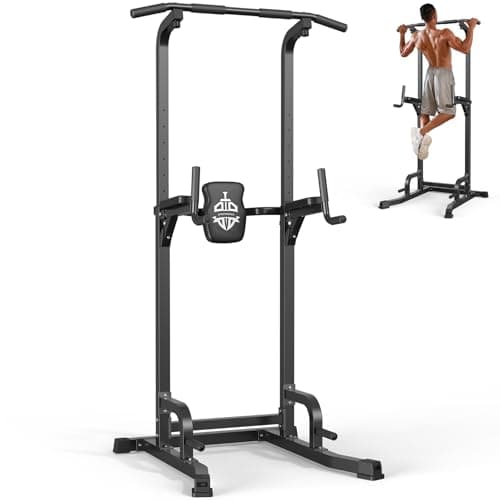
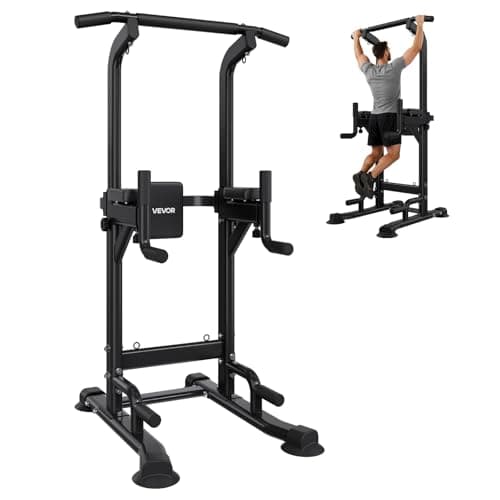
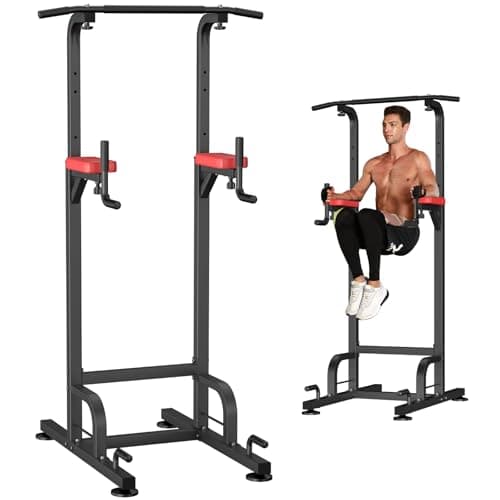
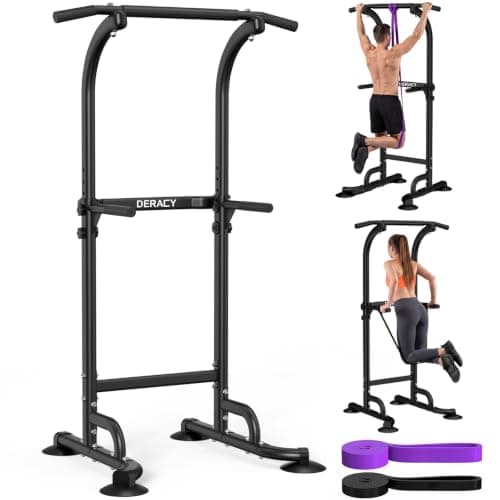
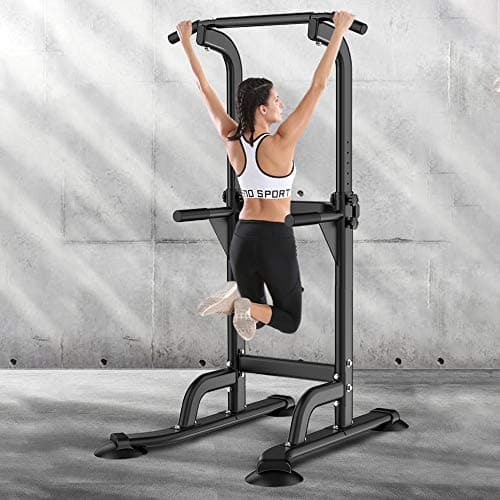
Best budget power tower: 5 cheap dip stations ranked
A power tower is the cheapest way to own real pull-ups and dips. Here are the sub-$250 ones we'd buy — and the single spec that decides whether yours rocks.
Updated July 2026 · By Stephen V.
Pull-ups and dips are the two best upper-body exercises you can do without a barbell, and a power tower is the cheapest honest way to own both. For $80-$220 you get a free-standing steel frame with a pull-up bar, dip handles, and usually a knee-raise station — no drilling, no door frame, no rack. The category is also full of towers that rock alarmingly on the first rep. The difference is almost never the price: it's the base footprint and the frame weight. Below are the five we'd buy, scored on published specs and the design details that decide stability.
The short answer
In a hurry? These are the picks we'd buy. Prices are live; tap a card below for the full reasoning.
$89.9911% offPrice as of September 14, 2026·#addisclosure
SogesPower Power Tower Dip Station
The budget floor for a free-standing tower — fine for controlled reps, not for kipping.
Type
Power tower dip station
Stations
Pull-up, dip
Frame
Steel, free-standing
Price band
Lowest here
Pros
The cheapest way to own pull-ups and dips at home
Small footprint compared with the multi-station towers
Simple assembly
Cons
Lightest frame of the group — it will move under momentum
No knee-raise back pad
Fewer grip positions on the bar
Best for: the tightest budget.
Skip this
The budget traps that look cheap and cost you twice. We'd skip these.
Any tower whose base is narrower than the pull-up bar is wide
A tower tips forward, not sideways. If the feet don't extend past the bar you're hanging from, your body weight swinging forward has nothing to work against. Compare the base depth to the bar width before you compare prices.
Towers sold with no stated weight capacity
A missing capacity number usually means it wasn't tested to one. Any frame you intend to hang from should publish a figure — and you should treat that figure as generous, because it's a static rating, not a dynamic one.
How to choose (and what to skip)
Base footprint beats capacity claims
Capacity ratings describe steel strength under a static load. What actually makes a tower feel safe is a wide, deep base that resists the forward tip you generate on every pull-up. Look for an H-shaped or wide-splayed foot, and prefer the tower with more floor contact even if the printed capacity is lower.
Frame weight is a proxy for stiffness
Two towers can both claim 330 lb; the one that ships at 60 lb will flex less than the one that ships at 35 lb. Shipping weight is the honest tiebreaker between two similar listings, and heavier frames also stay put better when you dip explosively.
Ceiling height and bar height
Measure from your floor to the ceiling, then subtract about 8 inches for your head at the top of a pull-up. Most towers put the bar between 7 and 7.5 feet, which is fine for an 8-foot garage ceiling but marginal in a basement. Adjustable-height towers solve this for the price of a few extra bolts.
Dip handle width
Dip handles that are too wide push your shoulders into an uncomfortable position and turn a chest exercise into a joint complaint. Look for handles roughly shoulder-width apart, and prefer knurled or foam-covered steel over slick plastic.
Anchoring and floor protection
You can dramatically improve any tower by putting rubber mats under the feet — they stop the frame skating and protect a garage slab. A couple of plates set on the rear feet also kill most of the forward rock for less than nothing if you already own weights.
Power tower vs pull-up bar vs rack: which do you actually need?
A power tower sits between the two cheaper and more expensive answers. A doorway pull-up bar costs a third as much and stores in a cupboard, but it gives you exactly one exercise and depends on a door frame you may not trust. A power rack costs more and needs a barbell to be worth owning, but it unlocks squats and presses too. The tower is the right buy when you want serious upper-body work, don't have a barbell yet, and can give up a 4-square-foot corner permanently.
If you already own a rack with a pull-up bar, you almost certainly don't need a tower — add a set of dip bars or rings instead. If you're starting from nothing and your budget is under $150, the tower buys more capability per dollar than anything except a set of adjustable dumbbells.
What a power tower actually trains
The four stations on a typical tower cover a genuinely complete upper body:
Pull-ups and chin-ups — lats, upper back, biceps. The single best back exercise you can do without weights.
Dips — chest, triceps, front delts. The closest bodyweight equivalent to a heavy press.
Hanging or captain's-chair knee raises — hip flexors and abs, with far less spinal load than sit-ups.
Push-ups on the low handles — deeper range of motion than the floor, easier on the wrists.
What it doesn't train: legs, and anything that needs a loaded bar. That's not a criticism — it's the reason a tower and a cheap barbell set together make a better first gym than either alone. Our under-$500 build shows how the pieces fit.
How to stop a budget tower from rocking
Almost every complaint about cheap towers comes down to movement, and almost all of it is fixable for under $20. In rough order of effect: re-tighten every bolt after the first week (frames settle, then loosen), put the tower against a wall so the rear uprights have something to lean into, set rubber mats or a stall mat under the feet to stop skating, and park two weight plates on the rear base tubes to load the back of the frame. Do all four and a $100 tower feels like a $250 one.
The one thing you cannot fix is kipping. Explosive, swinging pull-ups generate horizontal force that no free-standing budget frame is designed to absorb. If that's your training style, you want a bolted or loaded rack, not a tower.
Where the money goes as prices climb
Between the cheapest and most expensive towers here the price roughly triples, and the extra money buys three things: more steel in the frame, more adjustment positions, and better padding. It does not buy a fundamentally different exercise. If you weigh under about 180 lb and train with controlled reps, the cheap end of this list is genuinely adequate. Heavier lifters, anyone planning weighted dips, and anyone who wants the tower to last a decade should spend up the list — the frame weight is what you're paying for.
Assembly, and the maintenance nobody mentions
Budget every tower at two hours for assembly, with a second person for the last few bolts if the frame is tall. The order that saves the most swearing: build the base fully, stand it up, then attach the uprights and crossmembers loosely, square everything, and only then torque the lot down. Tightening as you go is what leaves you with a frame that won't line up at the final bolt.
After that, two maintenance jobs keep a cheap tower feeling solid for years. Re-tighten every bolt after the first week and then every few months — the frame settles under load, and a loose tower is what people mistake for a badly built one. And check the foam grips and pads: they compress and split before anything structural does, and replacement foam tubing costs a few dollars at any hardware store. Neither takes ten minutes, and together they're the difference between a tower that lasts a season and one that outlives the rest of your gym.
Frequently asked questions
Are cheap power towers safe?+
Within their design limits, yes. The failure mode on a budget tower is tipping, not the steel snapping, so the safety fix is stability: put it against a wall, tighten the bolts after the first week, and weight or mat the base. Stay inside the published capacity rating and keep reps controlled rather than kipping.
How much weight can a budget power tower hold?+
Most publish 330-360 lb as a static rating. Treat that as the manufacturer's best case rather than a target: a 200 lb user doing controlled pull-ups is well inside it, while a 250 lb user adding a 45 lb belt is not the use case these frames were designed around.
Do power towers need to be bolted to the floor?+
No, and most can't be. They're designed as free-standing frames with a wide base. If yours rocks, the answer is a wall behind it, rubber under it, and plates on the rear feet — not drilling into your slab.
Power tower or a doorway pull-up bar?+
A tower if you want dips and knee raises too, if you have a corner to give up, or if your door frames are questionable. A doorway bar if space or budget is the binding constraint and pull-ups are all you need. The tower does more; the bar disappears when you're done.
Prices and availability shown here come from Amazon's live data and change often; we re-verify them regularly. Bar Bumper is an Amazon Associate and earns a commission on qualifying purchases at no extra cost to you. Read our full disclosure.