Cheap weighted vests: what the price difference actually buys
A weighted vest is sand or steel in a bag you wear. The expensive ones distribute it better and stay put. Here is when that is worth paying for and when it is not.
Updated August 2026 · By Stephen V.
Autocomplete has a question about weighted vests that tells you everything: "why are weighted vests so expensive?" It is a fair question. The product is weight, in pockets, attached to a garment. There is no motor, no bearing, no electronics. And yet the same nominal 20 lb of load ranges from about $20 to well over $200.
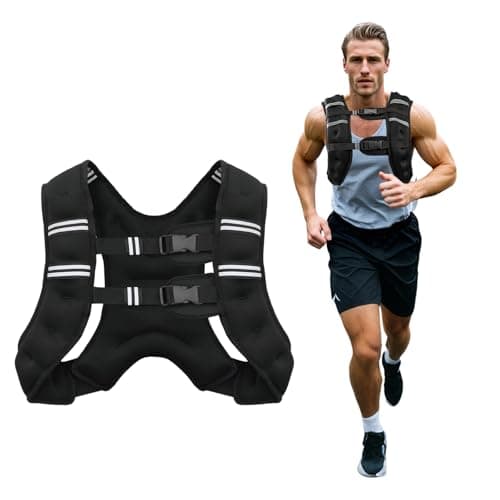
The honest answer is that most of the price difference is in how the load sits on you, not how much load there is. Cheap vests use sand pouches spread over a wide bib; expensive ones use flat steel plates in a close-fitting shell that does not swing. For walking, rucking and bodyweight training, the cheap version is genuinely fine. For running and anything explosive, the swing matters. Here are the three we would buy at different weights.
The short answer
In a hurry? These are the picks we'd buy. Prices are live; tap a card below for the full reasoning.
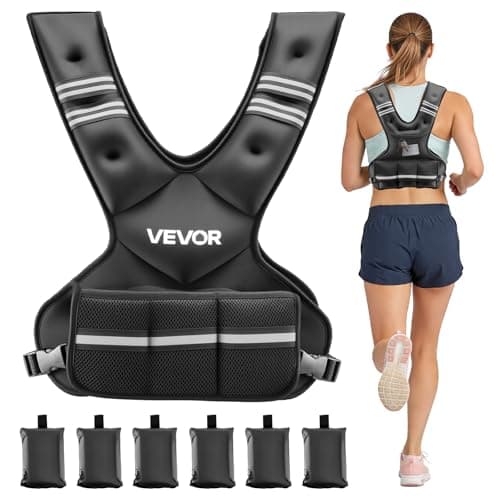
The lowest-cost adjustable vest we would recommend — an 11 lb base load, six small weight bags on top, and padded shoulders at the bottom of the price range.
$30.1815% offPrice as of September 14, 2026·#addisclosure
VEVOR Adjustable Weighted Vest (11-20 lb)
The lowest-cost adjustable vest we would recommend — an 11 lb base load, six small weight bags on top, and padded shoulders at the bottom of the price range.
Weight
11-20 lb adjustable
Adjustable
6 x 1.5 lb removable bags
Shell
Neoprene, padded shoulders
Best for
Walking, light training
Pros
Cheapest way here to find out whether you will actually use a vest
Six 1.5 lb bags give genuinely fine steps between 11 and 20 lb
Padded shoulders, reflective stripes and a mesh pocket at this price
Cons
Tops out too light to matter much on pull-ups or dips
The 11 lb base is sewn in, so you cannot go lighter than that
Iron-pellet bags shift more than the flat plates in a plate-carrier vest
$55.108% offPrice as of September 14, 2026·#addisclosure
RUNFast Pro Weighted Vest (40 lb)
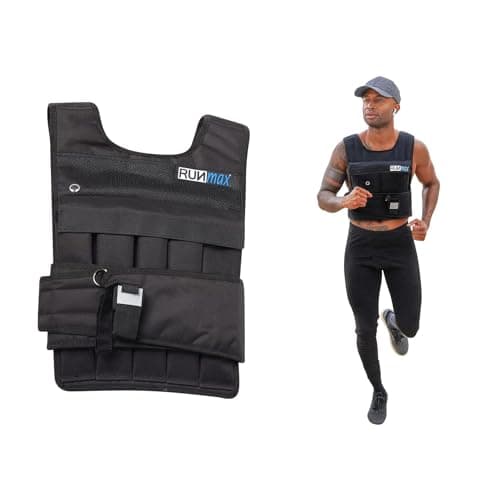
The 40 lb option — the point at which a vest stops being a conditioning accessory and starts being a strength tool.
Weight
40 lb
Adjustable
Yes, removable bags
Best for
Weighted dips, pull-ups, rucking
Fit
Over-the-shoulder bib
Pros
40 lb is enough to make bodyweight movements genuinely hard again
Removable weight bags mean it doubles as a lighter vest
Cheaper per pound than any other vest here
Cons
Bulky across the chest, which gets in the way on push-ups and rows
Heavy loads concentrate on the shoulders without a hip belt
Too much for casual walking unless you strip weight out
Best for: weighted dips, pull-ups and rucking.
Skip this
The budget traps that look cheap and cost you twice. We'd skip these.
Fixed-weight vests with nothing removable
A vest you cannot unload is a vest with exactly one setting. Adjustable vests cost the same or less, let you start where you actually are, and stay useful when you want a light walking load one day and a heavy dip load the next. There is no budget argument for the fixed version.
Buying a vest instead of a dip belt for weighted pull-ups and dips
A vest is convenient and caps out at whatever it holds. A dip belt plus the plates you already own costs less, scales to whatever weight you can hang, and puts the load at your hips instead of your shoulders. If weighted pull-ups and dips are the goal, buy the belt; the vest is for walking and mixed conditioning.
How to choose (and what to skip)
Decide what the vest is for first
Walking and rucking want 10-20 lb, comfort and a slim profile. Bodyweight strength work wants 30-40 lb and does not care much about bulk. Running wants a snug plate carrier that does not bounce, which is the one job budget sand vests do badly. Pick the use case and the right weight follows.
Sand pouches versus steel plates
Budget vests use sand or iron-shot pouches spread across a bib. They are cheap, adjustable in small increments and slightly floppy. Plate vests hold flat steel close to the body, which stays put when you move fast. For walking and calisthenics the pouches are fine; for running, the plate design is what you are paying for.
Adjustable or bust
Removable weight is the single most useful feature in this category. It lets you start light while your shoulders and neck adapt, strip weight for a long walk, and load up for pull-ups. Buy the adjustable version even if you think you know what weight you want.
Check how it sits on the shoulders
All the load in a vest hangs off two shoulder straps. Wider, padded straps spread that; thin webbing digs in and turns a 40 lb vest into a 15-minute vest. If the listing shows narrow unpadded straps at a heavy weight, expect to be uncomfortable before you are tired.
Start lighter than you think
A weighted vest loads your spine, your neck and your knees on every step, not just the muscles you are trying to work. Ramping from nothing to 40 lb of walking in a week is how people end up with a sore neck and an unused vest. Add weight the way you would add plates: in small steps, over weeks.
Where a vest earns its money
The best case for a weighted vest in a budget gym is that it makes free training harder. A walk becomes a loaded carry. Push-ups, pull-ups, dips, step-ups and lunges all get a progression that costs nothing per session. If your gym is small and your plate collection is finite, that is real value — a 20 lb vest can extend the useful life of a bodyweight program by months.
It pairs particularly well with the cheap bodyweight hardware in this site's dip bars and gymnastic rings roundups: a rings-and-vest setup covers a surprising amount of upper-body training for well under $100 total.
Where it does not
A vest is a poor substitute for plates. Twenty pounds spread over your torso is much less training stimulus than twenty pounds on a barbell, because the vest cannot be positioned, cannot be racked, and cannot be added to in the 2.5 lb increments that make progression work. If you are choosing between a vest and your first plate set, buy the plates — our cheap weight plates roundup covers the sensible order.
It is also the wrong tool for running unless you buy a running-specific carrier. Budget vests bounce, and a bouncing load on every stride is an unforced injury risk. Walk with the cheap vest; do not run with it.
Weight ranges that make sense
As a rough framework for a home setup: 10-20 lb is the walking and general-conditioning range and the one most people actually keep using. 20-30 lb is where push-ups and pull-ups change character. 40 lb and up is a strength tool that is uncomfortable to walk in and excellent for dips and pull-ups. Buying at the top of your intended range and stripping weight out is cheaper than buying twice.
Frequently asked questions
Why are weighted vests so expensive?+
Mostly because of how the weight is held, not how much of it there is. Cheap vests use sand or shot pouches spread over a loose bib; expensive vests use flat steel plates in a close-fitting carrier that does not move when you do. You are paying for load stability, shoulder comfort and durability. For walking and bodyweight training, the cheap construction works fine.
How heavy should my first weighted vest be?+
For walking and general conditioning, 10-20 lb. For making pull-ups, dips and push-ups meaningfully harder, 30-40 lb. Buy adjustable so you can start at the bottom of the range and add weight over weeks, because a vest loads your neck, spine and knees on every single step.
Can I run in a cheap weighted vest?+
We would not. Budget vests hold the load in loose pouches, which bounce on every stride and put a repeated shock load through your shoulders and spine. Running with weight wants a snug plate carrier designed for it. Walking, rucking and bodyweight training are what the cheap vests are for.
Vest or dip belt for weighted pull-ups?+
Dip belt, if that is your main use. It costs less, hangs the load at your hips rather than your shoulders, and scales to any weight you can load onto plates you already own. A vest is more convenient and better for mixed sessions, but it caps out at whatever the vest holds.
Prices and availability shown here come from Amazon's live data and change often; we re-verify them regularly. Bar Bumper is an Amazon Associate and earns a commission on qualifying purchases at no extra cost to you. Read our full disclosure.