Cheap gymnastic rings: the highest strength-per-dollar item in a home gym
Nothing else in a budget gym does this much for this little. Rings turn a beam, a rack or a pull-up bar into a full upper-body station — the whole cost is the rings and the straps.
Updated August 2026 · By Stephen V.
Rings are the closest thing to a cheat code in a budget home gym. For roughly the price of a single 25 lb plate you get pull-ups, rows, dips, push-ups, face pulls, flyes and every hard bodyweight progression there is — from one pair of rings and a couple of straps. They pack into a bag, they hang from a rack, a joist or a tree branch, and there is nothing on them to break.
The catch is that rings are unforgiving of a bad hanging point and a little unforgiving of a beginner's shoulders. The buying decision is genuinely simple — wood or plastic, and what kind of strap buckle — but the setup decision matters more than the product. Here are the three ring sets we would buy, the floor alternative if you have nowhere to hang them, and how to rig them without ruining a joist.
The short answer
In a hurry? These are the picks we'd buy. Prices are live; tap a card below for the full reasoning.
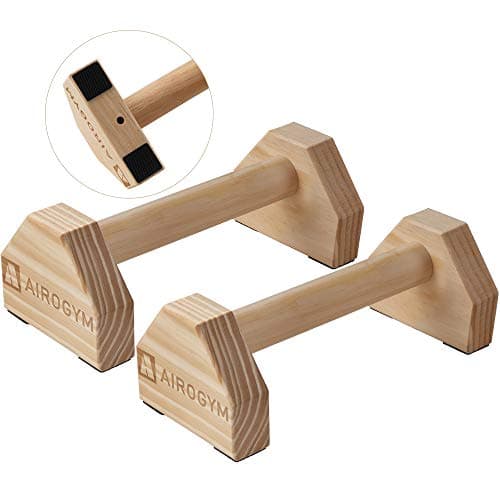
The floor-level answer when nothing in the room will take a hanging load — push-ups, L-sits, dips and handstand work with zero rigging.
Type
Wooden parallettes (pair)
Rigging needed
None
Best for
Push-ups, L-sits, handstands
Storage
Under a bed or sofa
Pros
No joist, beam or rack required — they just sit on the floor
Wooden top bars are kinder to the wrists than a flat floor
Cheap enough to own alongside rings rather than instead of them
Cons
No pulling movements at all — this is a pressing and core tool
Low bars mean tucked knees on dips unless you use a step
Non-slip feet still slide on polished floors without a mat
Best for: apartments, rentals, no beam.
Skip this
The budget traps that look cheap and cost you twice. We'd skip these.
Plastic or resin rings for anything but a garage in the rain
Plastic rings get slick the moment your hands sweat, and the fix is chalk, which sticks to wood far better than it sticks to plastic. The price gap between plastic and wood is small enough that there is no real budget case for plastic unless the rings will be permanently outdoors in the wet.
Hanging rings from a doorway pull-up bar you have not checked
A leverage-style doorway bar is designed for a vertical load between two door casings. Rings add swing, so the load stops being vertical the moment you row or do a ring dip. Hang rings from a joist, a rated beam, a squat rack crossmember or a wall-mounted bar — not from a pressure-fit doorway bar.
How to choose (and what to skip)
Wood over plastic, every time
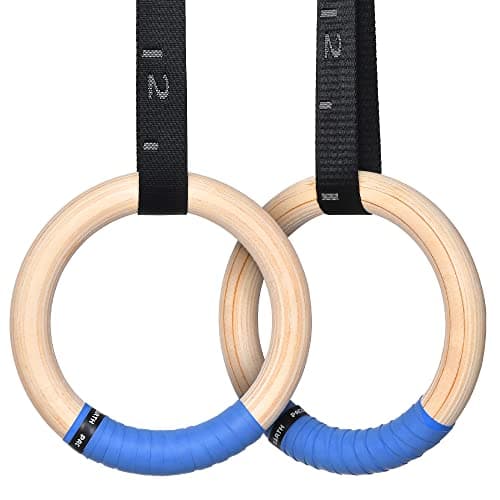
Wooden rings hold chalk, stay grippy when your hands are wet, and feel better under a heavy grip. Plastic rings are cheaper and completely fine for a beginner doing rows, but everyone who trains rings seriously ends up on wood. Buying wood first saves buying twice.
1.25 inches is the standard diameter
The 1.25-inch ring is the competition and general-training standard. A 1.11-inch ring exists for smaller hands and junior gymnasts. Unless you know you want the thinner ring, take the standard — grips, chalk habits and every tutorial you will watch assume it.
The straps are the part that matters
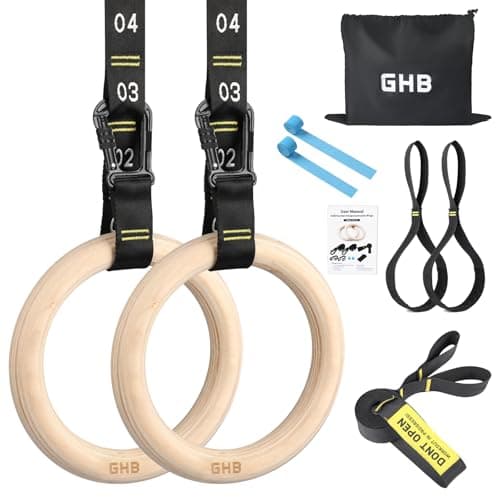
You are trusting two lengths of webbing and two buckles. Look for a rated strap, check the stitching where the webbing loops back on itself, and inspect it every few months for fraying, especially where it passes over an edge. If a set ships with straps too short to loop over your joist, no ring quality will fix that.
Sort your hanging point before you order
This is the real buying decision. A structural beam, an exposed garage joist, a wall-mounted pull-up bar or the top crossmember of a squat rack are all fine. A pressure-fit doorway bar, a decorative ceiling beam or an unknown roof timber are not. If you have no anchor at all, buy parallettes instead of rings and skip the frustration.
Start lower than you think
Rings are humbling. Set them at hip height and do rows and push-ups on them for a few weeks before trying anything hanging. Every ring injury we hear about is a shoulder that went straight to ring dips or muscle-ups from a bar-only training background.
What rings actually replace
It is worth being concrete about the value here, because "rings do everything" is the kind of claim that reads like marketing. A set of rings at a good height covers: pull-ups and chin-ups at any grip, inverted rows at any angle, ring dips, ring push-ups, face pulls, flyes, tricep extensions, biceps curls, and every core hold from a tuck to a front lever progression. In a $300 home gym that is a genuinely large fraction of the upper-body training you would otherwise buy machines to get.
What they do not replace is loading. You cannot progressively overload a ring row past your bodyweight without a vest, and there is no leg training on rings worth the name. Rings pair with a bar and plates, not instead of them — see our budget barbell roundup for the other half of that setup.
Rigging rings without wrecking anything
For a garage, the usual answer is to loop the straps over an exposed ceiling joist, with the loop running along the joist rather than across a sharp corner. If the strap has to cross an edge, put a folded towel or a strip of old mat under it — webbing wears through faster on a corner than most people expect. If you are hanging from a rack, use the top crossmember and keep the rings inside the uprights so a swing cannot take you into the steel.
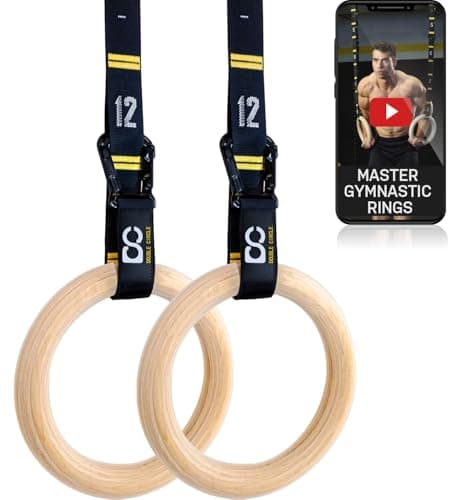
For height: chest height for rows, roughly head height for dips and push-ups, and high enough for pull-ups that your feet clear the floor with straight arms. If you are constantly changing between those, the numbered-strap set pays for itself. Our guide to how much space a home gym needs covers the ceiling-height side of this, and training under a low ceiling covers what to do when there is not enough of it.
Looking after wooden rings
Wooden rings need almost nothing: keep them dry, keep chalk buildup off them with an occasional light sanding, and do not leave them outside. In a damp garage, the same conditions that rust a barbell will raise the grain on rings, so store them indoors over winter if you can. Our garage rust guide covers the humidity side of that in more detail.
Frequently asked questions
Are cheap gymnastic rings as good as expensive ones?+
For training purposes, largely yes. A cheap wooden ring at the standard 1.25-inch diameter performs the same as an expensive one; what you pay extra for is strap hardware, numbering, and finish consistency. The one place not to economize is the strap and buckle, since that is the part carrying your bodyweight.
Where can I hang rings if I do not have a beam?+
A wall-mounted pull-up bar, the top crossmember of a squat rack or power rack, an exposed garage joist, or a sturdy outdoor structure all work. What does not work is a pressure-fit doorway bar, because rings introduce a swinging, non-vertical load that the bar was never designed for. With no anchor at all, parallettes give you the pressing and core work at floor level.
Wood or plastic rings?+
Wood. It holds chalk, it stays grippy when your hands sweat, and it feels better under a heavy grip. Plastic is cheaper and fine for light rows, but the price difference is small and almost everyone who keeps training rings ends up replacing plastic with wood.
Are rings safe for a beginner?+
Yes, if you start at the bottom of the progression. Set the rings low and spend the first weeks on rows and ring push-ups before anything hanging or any dip. Rings let the shoulder rotate freely, which is exactly what makes them good long-term and exactly what makes jumping straight to ring dips a bad idea.
Prices and availability shown here come from Amazon's live data and change often; we re-verify them regularly. Bar Bumper is an Amazon Associate and earns a commission on qualifying purchases at no extra cost to you. Read our full disclosure.