Budget leg extension machine: the cheap way to add a leg station
The one lower-body machine a home gym can actually afford. Plate diameter, machine weight and adjustment points decide whether the cheap ones are usable.
Updated September 2026 · By Stephen V.
Ask why anyone keeps a gym membership alongside a home gym and the answer is almost always the same: the leg machines. A rack, a bar and plates cover squats and deadlifts brilliantly, and they cover isolated quad and hamstring work not at all. That gap is real, and it is the reason our own home gym versus membership guide lists leg press and hack squat as the lifts you cannot cheaply replicate at home.
A leg press or hack squat genuinely is expensive. A leg extension and curl machine is not — and that is the part most budget buyers never find out. Plate-loaded leg developers start below the price of a decent adjustable bench, because there is no stack, no motor and no cables to pay for: a padded seat, a lever arm, a roller and a post to hang plates on. It is the one piece of lower-body machinery where the budget end of the market is genuinely usable.
The catch is that the specs which decide whether a cheap one works are not the ones the listings shout about. Almost none of them lead with plate diameter, and that single number is what strands buyers whose plates do not fit. Below are the criteria that separate a usable machine from a wobbling lever, the picks that meet them, and the route that looks cheapest and usually is not. We have not used any of these ourselves — we read the published specifications, compare them, and say so.
The short answer
In a hurry? These are the picks we'd buy. Prices are live; tap a card below for the full reasoning.
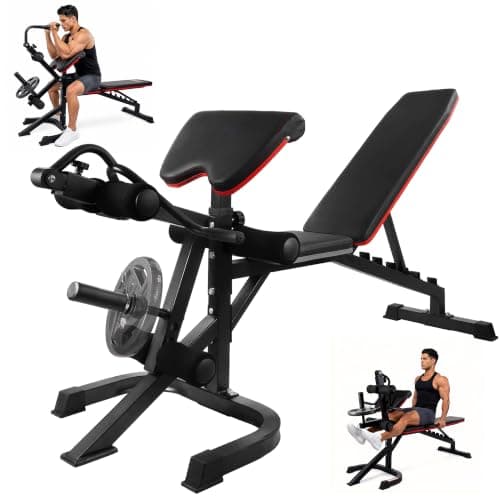
Not a dedicated machine but an adjustable bench with a leg developer and a preacher pad bolted on — the cheapest route to leg extensions if you do not own a bench yet.
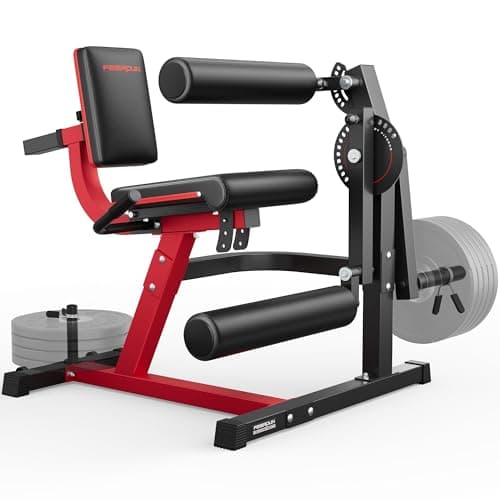
FEIERDUN 4-in-1 Leg Extension Curl Machine (700 lb)
Four movements instead of two, the highest published rating on this page, and the smallest stated footprint — the pick if the corner has to earn its keep.
$119.9910% offPrice as of September 14, 2026·#addisclosure
HulkFit Adjustable Bench + Leg Extension Curl
Not a dedicated machine but an adjustable bench with a leg developer and a preacher pad bolted on — the cheapest route to leg extensions if you do not own a bench yet.
Type
Adjustable bench + leg developer
Plate post
11.42 in, 2 in Olympic plates
Extras
Movable V-handle + preacher curl pad
Upholstery
PU leather over high-density foam
Capacity
Not published for this model
Pros
Cheapest entry point here, and it replaces two purchases if you still need a bench
The preacher pad and V-handle add upper-body work a plain leg machine cannot do
Reinforced base and a steel frame rather than the folding-bench construction at this price
Cons
The plate post takes 2 in Olympic plates only — useless if your gym is on 1 in standard plates
HulkFit does not publish a weight capacity for this model, which is the number you most want
A bench-mounted lever is a compromise on both jobs — it is a bench first and a leg station second
Buying it when you already own a bench means paying for a bench twice
$279.9929% offPrice as of September 14, 2026·#addisclosure
FEIERDUN 4-in-1 Leg Extension Curl Machine (700 lb)
Four movements instead of two, the highest published rating on this page, and the smallest stated footprint — the pick if the corner has to earn its keep.
Capacity
700 lb (mfr rating)
Functions
Extension, curl, hip thrust, calf raise
Footprint
34 x 34 x 37 in
Plates
1 in and 2 in
Fit range
Up to about 6 ft / 270 lb (mfr)
Pros
Hip thrust and calf raise on the same frame — two movements a barbell gym usually improvises badly
700 lb published rating is the highest here by a wide margin
Smallest stated footprint of the four, and it takes both plate diameters
Cons
Priciest pick on this page, and the gap buys functions rather than a heavier frame
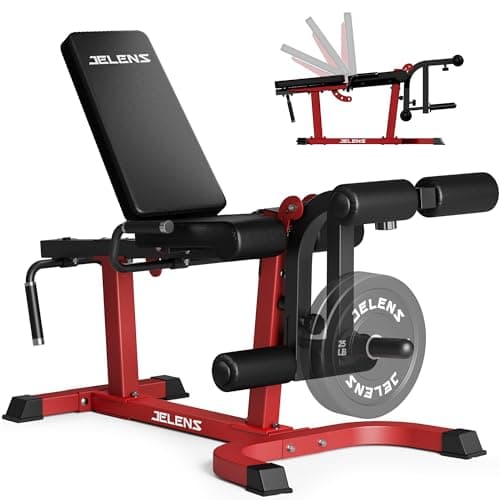
The manufacturer caps fit at roughly 6 ft — tall lifters should look at the JELENS instead
Doing four jobs means compromising the seat and lever geometry for each one
Around 40 minutes of assembly, and the hip thrust setup is a changeover rather than a switch
Best for: one corner doing four jobs.
Skip this
The budget traps that look cheap and cost you twice. We'd skip these.
Any leg machine that will not tell you the plate diameter
This is the single most common way people get stranded. A post sized for 2 in Olympic plates will not take 1 in standard plates, and a 1 in post will not take Olympic ones without adapters that introduce play exactly where you do not want it. If the listing does not state the diameter, message the seller before you order, because a machine you cannot load is not a bargain.
The cheap universal rack attachment as a default choice
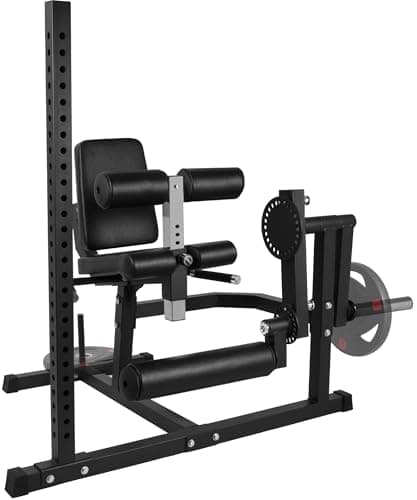
A bolt-on leg extension for a power rack looks like the cheapest route and often is not. The genuinely cheap universal ones tend to sit on thin stock and fit a narrower range of uprights than the listing implies, and the branded ones that definitely fit your rack usually cost more than a whole standalone machine. Check the upright dimensions and hole spacing against your actual rack before you treat this as the budget option.
Expecting a leg extension to replace squatting
It does not, and no honest page should suggest otherwise. Leg extensions and curls are isolation work that add volume to the quads and hamstrings around your main lifts. If you are choosing between a rack and a leg machine, buy the rack. This is an addition to a working gym, not a foundation for one.
Paying up for a selectorized stack at this price
A pin-select stack is the convenience you are giving up at the budget end, and it is the right thing to give up. Selectorized leg machines cost several times these prices, and the stack becomes a hard ceiling the moment your legs outgrow it. Plate-loaded has no ceiling beyond the frame, and you already own the plates.
How to choose (and what to skip)
Plate diameter first, everything else second
Leg developers are loaded on a post, and that post is sized for either 1 in standard plates or 2 in Olympic ones. Get this wrong and the machine is furniture. It is also the spec listings are laziest about, so treat a missing diameter as a reason to ask rather than a detail to sort out later. Machines that take both, like two of the picks here, remove the question entirely and are worth a small premium for that alone.
Machine weight is what stops it moving
You brace against a leg extension machine and drive away from it, which means the frame wants to slide or tip forward exactly when you are working hardest. A heavier frame resists that; a light one needs help. If the machine you want is light, the fix is free: leave spare plates on the storage post permanently and let them act as ballast. Published machine weight is a more useful number here than almost anything on the spec sheet.
Published capacity is your only structural signal
Very few budget listings state steel gauge, so the stated load rating is the closest thing to a structural spec you get. The published numbers on this page run from unstated to 700 lb, and an unstated rating is not automatically bad — but it is unknown, and you should price that uncertainty in. Buy well clear of the weight you expect to use, because a leg extension is a lever and the load at the pad is not the load at the joint.
Adjustment points decide whether it hurts
Thigh length varies enormously between people, and a machine with a fixed backrest and a fixed roller will suit some bodies and dig into others. The adjustments worth having are backrest position, roller height and start position. Start position matters most and is the one cheap machines skip: it sets where the range of motion begins, which is what decides whether the first few degrees feel loaded or feel like a wrench on the knee.
Decide the form factor before you compare prices
There are three routes. A bench with an integrated leg developer is cheapest if you still need a bench, and poor value if you already own one. A standalone machine does one job properly and takes floor space to do it. A rack attachment stores away neatly but has to actually fit your uprights. Comparing prices across those three without deciding which you want is how people end up with a second bench they did not need.
Budget the floor space honestly
These are not large machines by gym standards, with stated footprints here from around 34 in square to roughly 46 by 29 in, but they are a permanent corner rather than something you stow. Measure the corner before ordering, allow room to get in and out of the seat, and put the machine on a mat if the floor is bare concrete, so the feet do not chew it up.
What a leg machine actually adds to a barbell gym
Squats and deadlifts train the legs as a system, which is why they are the foundation. What they do not do is load the quads and hamstrings in isolation through a full range, and that is the specific hole a leg extension and curl machine fills. The practical benefit for most people is volume: you can add quad and hamstring work without adding more spinal loading, which is usually the limiting factor on how much leg training a week you can recover from.
It is worth being blunt about the size of that benefit. This is accessory work. It will not replace a squat, and a gym with a leg machine and no rack is a gym built in the wrong order — the complete budget build sets out the order we would buy in. Once the rack, bar, plates and bench are done, though, a leg station is one of the cheapest genuinely new capabilities you can bolt onto the gym.
The rack attachment route, and why it usually is not cheaper
If you already own a power rack, a bolt-on leg extension looks like the obvious budget answer: no new frame, no new floor space, and the rack supplies the mass. Sometimes it is. Often it is not, for two reasons that are easy to miss until the box arrives.
The first is fit. Rack attachments hang off uprights of a particular tube size and hole spacing, and the cheap universal ones cover a narrower range than the word universal suggests. The second is price: the attachments that state outright which racks they fit are made by rack brands, and they routinely cost more than a complete standalone machine. Measure your uprights, check the hole spacing, and compare against the real total — the same arithmetic we apply on the lat pulldown attachment roundup, where the bolt-on genuinely does win.
Plate diameter: the spec that strands people
Most budget home gyms are on 2 in Olympic plates, but a large minority are on 1 in standard plates, usually inherited with a first bar or a cheap starter set. A leg developer's loading post is sized for one or the other. Buy the wrong one and there is no graceful recovery: adapters exist, but they add slop between the plate and the post on a lever arm, which is the worst place for it.
This is a solved problem if you shop for it. Two of the picks above state that they take both diameters, which removes the risk entirely and also means the machine survives a future upgrade from standard to Olympic plates. If you are unsure which you own, measure the hole: 2 in Olympic plates have a hole a little over two inches across, and standard plates are close to an inch. Our Olympic versus standard barbell guide covers why that difference propagates through everything else you buy.
Where this fits in a budget gym
Buy it late. The order that gets the most training out of the least money is a rack, a bar, plates, a bench, and then whichever accessory closes the biggest gap in what you actually do. For most people that accessory is a cable or lat station, because pulling is the movement a barbell gym misses most. A leg station is the next one after that, and it is a better buy than a second bar or another pair of dumbbells once the basics are covered.
The reason it earns a place at all is that it is cheap in a category where nothing else is. Leg press and hack squat machines remain genuinely out of reach for a budget gym, and pretending otherwise would be dishonest. A leg extension and curl machine is the one lower-body station that is not — and if the leg machines are the last thing keeping a membership alive, it is worth knowing that this particular one costs less than a few months of that membership.
Frequently asked questions
Are cheap leg extension machines any good?+
Better than cheap versions of most gym machines, because there is very little to get wrong. A plate-loaded leg developer is a seat, a lever arm, a roller and a loading post — no motor, no cables, no weight stack. What you give up at the budget end is published capacity, frame mass and the finer adjustments, not the movement itself. The main risk is buying one whose loading post does not match your plates.
Do I need a leg extension machine if I already squat?+
Need, no. Squats and deadlifts are the foundation and nothing here replaces them. A leg machine adds isolated quad and hamstring volume without more spinal loading, which is often what limits how much leg work you can recover from in a week. Treat it as an accessory bought after the rack, bar, plates and bench — not as a substitute for any of them.
Leg extension machine or a rack attachment?+
A standalone machine if you want it to definitely fit and definitely work; a rack attachment if floor space is genuinely the binding constraint and you have checked your upright size and hole spacing. The attachment route is less often the cheaper one than people expect: the models that clearly state which racks they fit tend to be made by rack brands and can cost more than a whole standalone machine.
Will a leg extension machine work with 1-inch standard plates?+
Only if the loading post is sized for them. Posts are built for either 1 in standard or 2 in Olympic plates, and several machines — including two of the picks above — are made to take both. If a listing does not state the diameter, ask before ordering. Adapters technically bridge the gap but introduce play on a lever arm, which is the last place you want it.
How much weight do these machines actually hold?+
Published ratings on this page range from unstated up to 700 lb, and that spread is the most useful comparison available because almost no budget listing states steel gauge. An unstated rating is not automatically a bad machine, but it is an unknown. Whatever the number, buy clear of what you expect to use: a leg extension is a lever, so the load at the pad is not the load the frame sees.
Is a leg extension machine or a leg press better for a home gym?+
For a budget home gym the question mostly answers itself on price. A leg press is a large, heavy machine that costs several times what a leg developer does, and it duplicates work your squats already cover. A leg extension and curl machine is cheap, compact, and adds movements a barbell genuinely cannot. If the budget stretched to a leg press, most people would still get more out of spending it elsewhere in the gym.
Prices and availability shown here come from Amazon's live data and change often; we re-verify them regularly. Bar Bumper is an Amazon Associate and earns a commission on qualifying purchases at no extra cost to you. Read our full disclosure.