Two independent cables is the feature that separates a functional trainer from a lat tower. Here's the cheapest honest way to own it.
Updated July 2026 · By Stephen V.
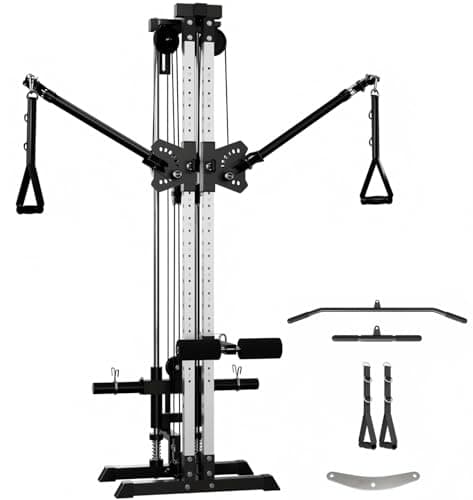
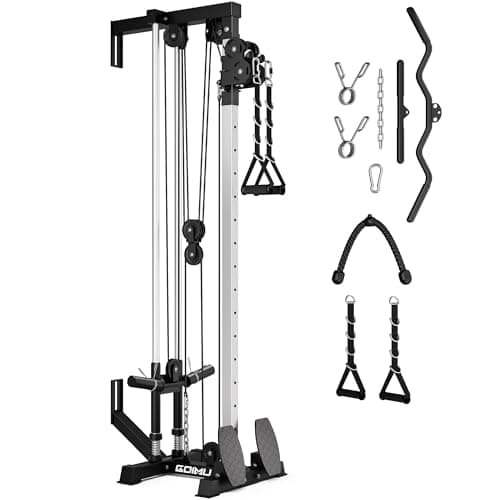
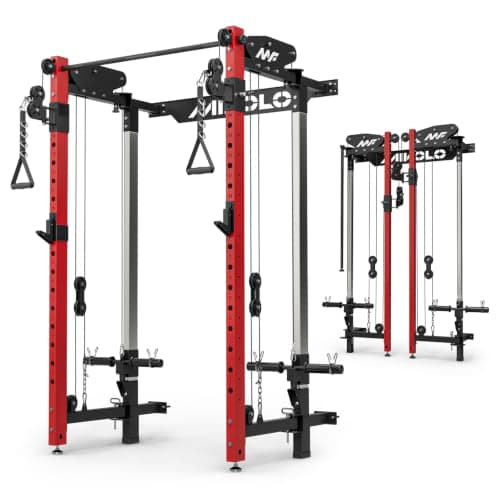
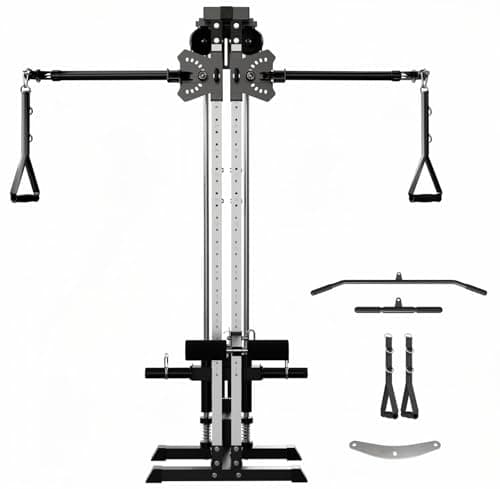
A functional trainer is a cable machine with two independent pulleys that adjust through a full height range. That's the whole definition, and it's what separates it from a lat tower: two lines mean crossovers, single-arm presses, anti-rotation work, and any exercise where your arms move independently. Commercial versions cost thousands. The budget versions here get there by being wall-mounted rather than free-standing, and plate-loaded rather than stack-loaded — two compromises that are much easier to live with than the price gap suggests.
The short answer
In a hurry? These are the picks we'd buy. Prices are live; tap a card below for the full reasoning.
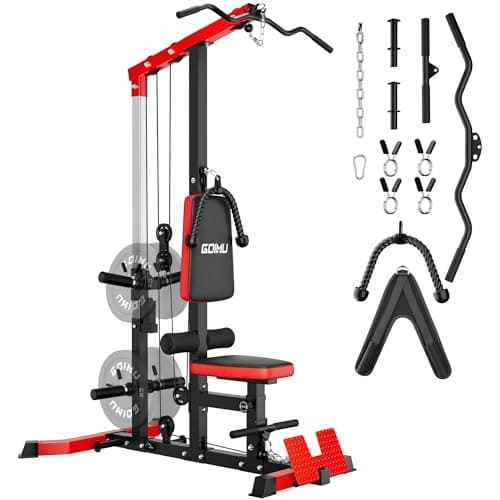
Not a functional trainer, but a free-standing pulldown and low row is the simplest cable station to own — nothing gets bolted to the building.
Type
Lat pulldown + low row
Pulleys
Single line, two stations
Mount
Free-standing
Loading
Plate-loaded
Pros
No wall mounting or drilling required
Covers the two most valuable cable exercises
Goes with you when you move — nothing is fixed to the wall
Cons
One line — no crossovers or independent-arm work
Takes real floor space
Limited height adjustment compared with a trainer
Best for: pulldowns and rows only.
Skip this
The budget traps that look cheap and cost you twice. We'd skip these.
Wall-mounted trainers on unverified walls
Every wall-mounted cable machine transfers its entire load into your wall. Stud-framed walls with the manufacturer's hardware into real studs are fine; drywall anchors, single-layer sheathing or an unknown wall are not. If you can't confirm what's behind it, buy free-standing.
'Functional trainers' with one pulley
The category name gets used loosely. If the machine has a single cable line, it's a lat tower — a useful thing to own, but it can't do crossovers, single-arm presses or anti-rotation work. Count the independent lines before you compare prices.
How to choose (and what to skip)
Two pulleys, or it isn't a functional trainer
Independent lines are the entire point. Two pulleys let each arm move separately, which unlocks crossovers, single-arm rows and presses, chops and anti-rotation work — the exercises a barbell genuinely can't do. One line covers pulldowns and pushdowns and stops there.
Plate-loaded is fine, but budget for the plates
Almost everything at this price is plate-loaded. That's good — no fixed stack to outgrow, and you reuse plates you already own. The trap is discovering all your weight is already on the barbell. Plan a dedicated set of <a href="/free-weights/cheap-weight-plates">plates</a> for the cable side.
Check the pulley ratio
Many budget cable machines run 2:1, meaning the weight you feel is roughly half what you hang. That's not a defect — it doubles your effective range — but it changes how many plates you need. Look for the ratio in the listing and plan your plate budget around it.
Measure the ceiling before the wall
A high pulley needs to sit near the top of the frame, and crossovers want room above your head. Most of these want 8 feet or more of ceiling. In a 7-foot basement the top positions may be unusable, which quietly removes half the exercises you bought it for.
Attachments are the cheap upgrade
A single handle, a rope, a straight bar and an ankle strap cost very little together and roughly triple what the machine can do. Check which of them are included, because the price differences between similar machines are often exactly this.
What a functional trainer does that a barbell can't
A barbell loads the big compound patterns better than anything else. What it can't do is keep constant tension through a full range, load one limb at a time, or resist rotation. Cables do all three:
Crossovers and flyes — chest work with tension at the top, where a dumbbell fly has none.
Single-arm rows and presses — find and fix side-to-side imbalances a barbell hides.
Pallof presses and chops — anti-rotation core work that's genuinely hard to replicate with free weights.
Face pulls and rear-delt work — the shoulder-health exercises most home programs skip.
Lat pulldowns — progressive vertical pulling while you build toward your first pull-up.
Wall-mounted vs free-standing
Nearly every affordable functional trainer is wall-mounted, and that's the compromise that makes the price possible: a free-standing frame needs a heavy base and a lot of steel to resist the load, while a wall lets the building do that work for free. The consequences are that installation matters more than assembly, and that the machine is permanent once mounted.
If you rent, can't verify your wall structure, or expect to move soon, a free-standing lat and row machine or an integrated rack with a pulley is the more sensible purchase, even though it costs floor space.
Do you need one, or would a rack with a pulley do?
Be honest about which exercises you'll actually run. If the answer is pulldowns, rows and pushdowns, an integrated rack with a single pulley is cheaper and simpler, and it doubles as the squat rack you also need. If the answer includes crossovers, single-arm work and core anti-rotation training — or if you already own a rack — the dual-pulley trainer is the right buy and the wall-mounted format costs you nothing in floor space.
Installing one without regretting it
Three rules. Find the studs with a real stud finder and confirm by driving a small test screw — don't trust a tap test on a garage wall. Use the manufacturer's bolts at the specified length; the hardware is engineered for the load and generic screws aren't. And mount to as many studs as the bracket allows, spreading load across the frame rather than concentrating it. If your wall is masonry, use sleeve anchors rated for the load rather than plastic plugs.
Mounting height is the decision people get wrong and can't easily undo. Set the frame so the top pulley sits high enough for a proper pulldown but low enough that you can still reach the adjustment pin, and check the arm swing clears any door, light fitting or garage-door track before you drill. Hold the bracket up and mark it with the machine assembled if you can — ten minutes of dry-fitting beats a second set of holes in your wall.
The attachments that make it a gym
A functional trainer with one lat bar is a lat tower with extra steps. The handles are what unlock the category, and the useful set is small and cheap:
A pair of single handles — the most important purchase. Crossovers, single-arm rows and presses, chops and Pallof presses all need two independent handles.
A rope — pushdowns, face pulls, and cable crunches.
A lat bar — usually included; check.
An ankle strap — direct glute and hip work with no extra machine.
Check the clip standard before you buy extras. Most budget stations use common carabiner-style clips that accept any generic handle; a proprietary connector locks you into one brand's accessory range at their prices.
Space planning around a wall-mounted trainer
The frame costs no floor space; the training does. Plan on roughly six feet of clear floor in front of the unit for crossovers and rows, plus room to stand back for a pulldown. In a garage, that usually means mounting on the wall opposite where you park rather than the one behind the rack — and it's worth checking that the clear space doesn't overlap your rack's loading zone, because two pieces of equipment that each need the same six feet is the most common layout mistake in a small home gym.
Frequently asked questions
What's the difference between a functional trainer and a cable machine?+
A functional trainer has two independent, height-adjustable pulleys, so each arm can move separately. A cable machine may have only one line — typically a lat pulldown and low row. Both are useful; only the dual-pulley version does crossovers, single-arm presses and anti-rotation work.
Are cheap functional trainers worth it?+
The wall-mounted, plate-loaded ones are genuinely good value: you give up a selectorized stack and gain a machine that costs a fraction of a commercial trainer and no floor space. The catch is installation — they're only as safe as the wall they're bolted to.
How much weight do I need for a plate-loaded cable machine?+
It depends on the pulley ratio. At 1:1 you feel what you hang; at 2:1 you feel roughly half, so you need about twice the plate weight for the same resistance. Check the ratio in the listing, then budget for a plate set that isn't already living on your barbell.
Can I mount a functional trainer on a garage wall?+
Usually yes, if it's a stud-framed or solid masonry wall and you use the specified hardware into real structure. What you can't do is mount one into drywall alone or into unknown sheathing. If you can't confirm what's behind the surface, choose a free-standing machine instead.
Prices and availability shown here come from Amazon's live data and change often; we re-verify them regularly. Bar Bumper is an Amazon Associate and earns a commission on qualifying purchases at no extra cost to you. Read our full disclosure.