Cheap medicine balls and slam balls: which one do you actually need?
Three balls that look almost identical do three different jobs. Buying the wrong one is the most common mistake in this category, and it is easy to avoid.
Updated September 2026 · By Stephen V.
Almost nobody gets this category wrong on price. It is cheap: a serious conditioning tool here costs less than a pair of dumbbells. What people get wrong is which ball they buy, because slam balls, medicine balls and wall balls look nearly identical in a listing photo and behave completely differently the moment you use them.
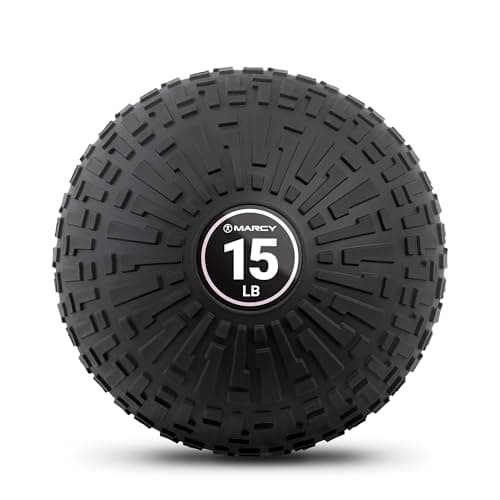
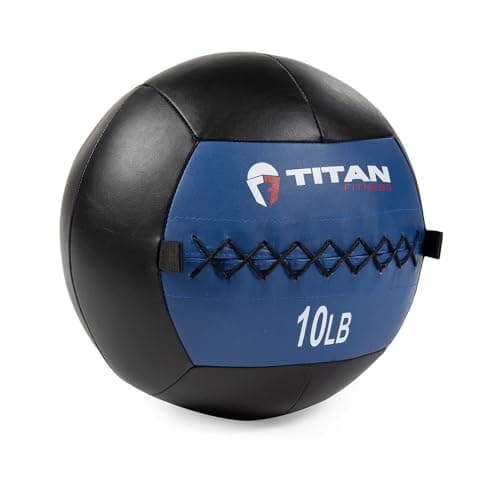
The difference that matters is what happens on impact. A slam ball is sand-filled and dead — throw it down and it stops. A medicine ball is firmer and usually bounces, which makes it good for rebounds and partner work and genuinely dangerous to slam into a hard floor. A wall ball is large, soft and light for its size, built to be thrown at a wall and caught without hurting your hands.
Buy a bouncing medicine ball intending to slam it and it will come back at your face. Buy a slam ball intending to do wall throws and it will be small, hard and unpleasant to catch. Below is a pick for each job, the criteria that separate them, and an honest answer to which one most home gyms should actually own. We have not tested any of these ourselves — we read the published specs, compare them, and say so.
The short answer
In a hurry? These are the picks we'd buy. Prices are live; tap a card below for the full reasoning.
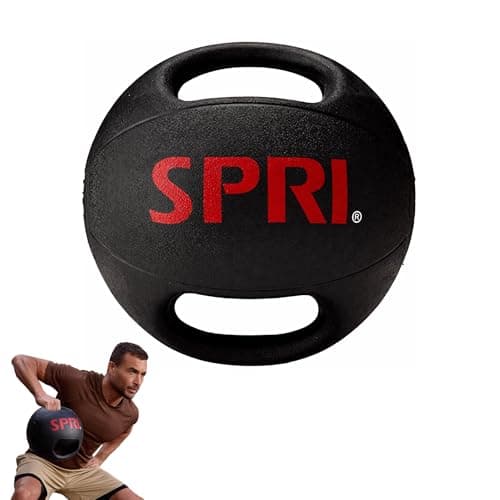
Handles change what a ball can do — swings, controlled twists and carries become possible in a way a smooth ball never allows.
Type
Dual-grip medicine ball
Weight
10 lb
Handles
Two molded grips
Best use
Twists, swings, carries
Pros
Two fixed handles give a secure hold for swings and loaded carries that a smooth ball cannot
Much easier to control for high-rep rotational work, where grip fails before the abs do
SPRI is an established fitness brand rather than an anonymous listing
Cons
Most expensive pick here, and handles are a convenience rather than a capability you cannot get elsewhere
Handles make it awkward to slam or throw, so it is the least versatile ball on this page
A kettlebell does most of the same jobs better if you already own one
Best for: controlled rotational work and weighted carries.
Skip this
The budget traps that look cheap and cost you twice. We'd skip these.
Slamming a ball that bounces
The single most common and most dangerous mistake in this category. A classic medicine ball is built to rebound, so driving one into concrete sends it straight back up at your face at close range. If the listing does not say non-bounce, dead weight or sand-filled, do not slam it. This is the one rule on the page worth remembering above all the others.
Buying a set of five light balls instead of one useful one
Multi-ball bundles look like value and rarely are. The 2 lb and 4 lb balls in those sets are too light to train anything once you are past the first few weeks, and you end up with four ornaments and one ball you use. One ball at a weight that actually challenges you beats a graduated set at this price.
Assuming a wall ball and a slam ball are interchangeable
They are built for opposite jobs and the manufacturers say so. A wall ball is large and soft to be caught; a slam ball is small and dead to be thrown down. Using a soft wall ball for floor slams tears the shell on rough concrete, and using a small hard slam ball for high-rep wall throws is unpleasant on the hands within a few sets.
Buying the ball before the floor
Slams are the loudest, most impact-heavy thing you can do in a home gym, and a bare concrete slab transmits every one of them. A rubber mat under the slam zone protects the floor, kills a surprising amount of the noise, and stops the ball skidding away. It costs less than the ball and it should be bought at the same time, not after the first complaint.
How to choose (and what to skip)
Decide the movement first, then the ball
This is the whole decision and it takes ten seconds. Slamming a ball into the ground means a non-bounce slam ball. Throwing a ball at a wall and catching it repeatedly means a large soft wall ball. Rotational work, partner throws and rebounds mean a classic medicine ball. Loaded carries and controlled twists mean handles. Buy for the movement you will actually repeat, not for the one that looks best in a video.
Bounce is the specification, not the marketing
Almost every product here is called a medicine ball somewhere in its title, which is exactly why the category confuses people. Ignore the name and look for the words non-bounce, dead weight or sand-filled. Their presence tells you it is safe to slam; their absence tells you it is not. If a listing avoids the question entirely, treat that as a no.
Pick a weight you can move fast
Ball training is about speed, not maximum load. A weight you can throw explosively for sets of ten is doing the job; a weight you can barely lift turns a conditioning exercise into a slow strength exercise the ball is badly shaped for. Most people are well served starting somewhere in the 10 to 20 lb range and going heavier only once the movement is genuinely fast.
Grip texture matters more than it sounds
Every one of these exercises ends with the ball leaving your hands deliberately, which means the moments before that need a secure hold. A tread-textured or tacky shell keeps grip when your hands are wet; a smooth glossy one does not. This is the difference between a controlled throw and a ball that leaves early, and it is worth checking before the weight figure.
Expect sand fill to settle
Sand-filled slam balls develop a slightly flat side over months of being dropped on the same spot. This is normal for the construction rather than a defect, and it does not affect training. It does mean the ball will not roll true, which is arguably a feature in a garage where a rolling ball is a nuisance. Rotate which side you land on if it bothers you.
Budget for the surface underneath
A slam zone needs a dense rubber mat, both to protect a concrete slab from repeated impact and to keep the noise survivable for anyone else in the building. This is the cheapest accessory in the whole home gym and the one most often skipped until something gets damaged.
Slam ball vs medicine ball vs wall ball
Here is the short version, because the listings will not give it to you plainly. A slam ball is small, dense, sand-filled and completely dead on impact. Its job is to be thrown at the ground as hard as you can, repeatedly, without coming back. It is the most useful of the three in a garage gym because slamming is the movement that needs a purpose-built tool.
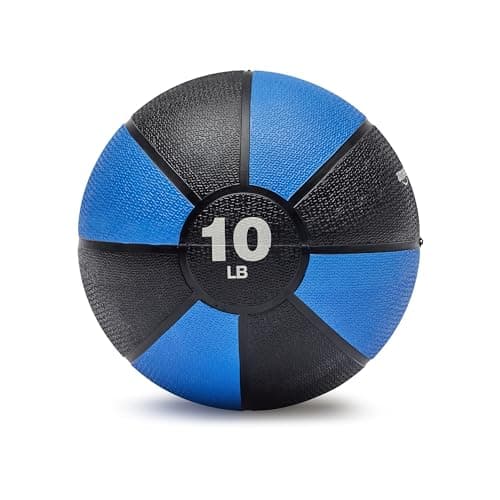
A medicine ball is the traditional one: firmer, usually rubber, and it bounces. That bounce is a feature for rebound drills off a wall or a partner, and a genuine hazard if you slam it into a floor. A wall ball is the outlier — much larger than its weight suggests, soft-shelled, and designed to be caught. Titan states outright that its wall ball is for throwing at a wall and not for slam ball exercises, which is the clearest statement of the difference you will find on any listing.
Practically: if you buy one ball, buy the slam ball. It is the cheapest, it is the safest on a hard floor, and it covers slams, tosses and most core work adequately. Add the others only when a specific movement demands them.
What a ball adds to a barbell gym
Ball work fills a gap barbells genuinely leave: fast, explosive, throwable effort. A barbell has to be decelerated at the end of every rep because you are still holding it. A ball does not — you release it, which means you can accelerate all the way through and stop nothing. That makes slams one of the few home-gym movements that train genuine power output without a platform and bumper plates.
It is also the cheapest conditioning tool that survives a garage. There is no motor, no bearing, no adjustment mechanism and nothing to rust, which is a real advantage in a space that swings between hot and freezing. If damp and cold are your problem, our guides on preventing rust in a garage gym and heating a garage gym cover the equipment that does mind.
The noise problem, honestly
Slams are loud. Not fan-bike loud, which is continuous, but impulsive — a single sharp impact that travels through a concrete slab and into the rest of the building far better than most people expect. In a detached garage this is a non-issue. In an apartment, or a garage under a bedroom, repeated slams are the sort of thing that starts conversations with neighbors.
A dense rubber mat under the landing spot is the fix, and it is genuinely effective because impact noise is about mass and decoupling rather than softness. Our budget flooring roundup covers the cheapest way to cover a slam zone, and how to reduce home gym noise explains why thin foam does nothing for this particular problem.
Where this sits in a budget build
Late, and cheerfully so. A ball is an accessory, not a foundation: it will not build strength the way a rack, a bar and plates will, and a gym that owns a slam ball but no bench has bought in the wrong order. The complete budget build sets out the sequence we would follow.
Once the basics are covered, though, this is one of the best value-per-dollar additions available, and it sits naturally alongside the other cheap conditioning tools — a plyo box for jumps, an ab roller for the core, and a jump rope for the cheapest conditioning of all.
Frequently asked questions
What is the difference between a slam ball and a medicine ball?+
Bounce, and it is the difference that matters. A slam ball is sand-filled and dead, so it stops when it hits the floor and can be slammed safely. A classic medicine ball is firmer and rebounds, which suits partner throws and wall rebounds but makes slamming it into a hard floor genuinely dangerous. Many listings call both a medicine ball, so look for the words non-bounce, dead weight or sand-filled rather than trusting the product name.
Can you slam a regular medicine ball?+
You should not. A bouncing medicine ball driven into concrete comes back up at you at close range and at speed, and you are usually bent over it at that moment. If the listing does not explicitly say non-bounce or dead weight, assume it bounces and keep it off the floor. This is the one safety rule in the category that is worth being strict about.
What weight slam ball should I buy?+
Something you can throw fast for sets of about ten. Ball training is about speed of movement rather than maximum load, so a ball you can barely lift defeats the purpose. Many people land somewhere in the 10 to 20 lb range to start and go heavier only once the movement is genuinely explosive. Most slam ball lines are sold across a wide weight range, so adding a second one later is straightforward.
Is a wall ball the same as a medicine ball?+
No. A wall ball is much larger for its weight, soft-shelled, and built to be thrown at a wall and caught repeatedly without hurting your hands. A medicine ball is smaller, firmer and denser. You can throw a medicine ball at a wall, but catching a small hard ball for high reps gets unpleasant quickly, which is exactly the problem the wall ball's size and softness solve.
Do I need a mat to use a slam ball?+
On bare concrete, effectively yes. A dense rubber mat protects the slab from repeated impact, stops the ball skidding away after every rep, and takes a meaningful bite out of the noise. It is one of the cheapest things in a home gym and it should be bought alongside the ball rather than after the floor gets marked.
Are cheap slam balls durable?+
Generally yes, because there is very little to fail. A slam ball is a thick shell around sand with no moving parts, no bearings and nothing to rust. The realistic failure is the seam splitting after long heavy use on rough ground, and the normal wear is the sand settling into a slightly flat side, which is cosmetic rather than a fault. A mat under the landing zone extends the life considerably.
Prices and availability shown here come from Amazon's live data and change often; we re-verify them regularly. Bar Bumper is an Amazon Associate and earns a commission on qualifying purchases at no extra cost to you. Read our full disclosure.