Cheap plyo boxes: three heights, one box, several jobs
The plyo box is the rare piece of budget equipment that does more than it says on the label — jumps, step-ups, split squats, dips and a seat, from one wooden cube.
Updated August 2026 · By Stephen V.
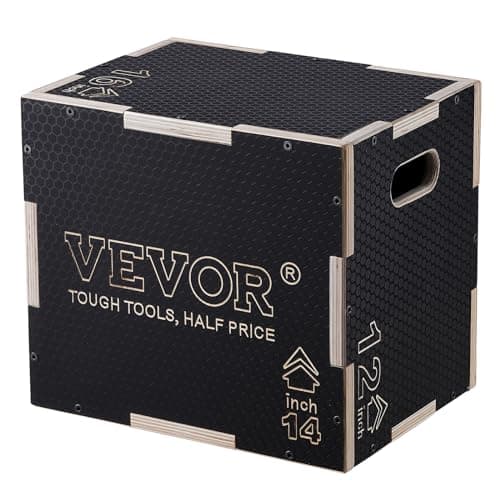
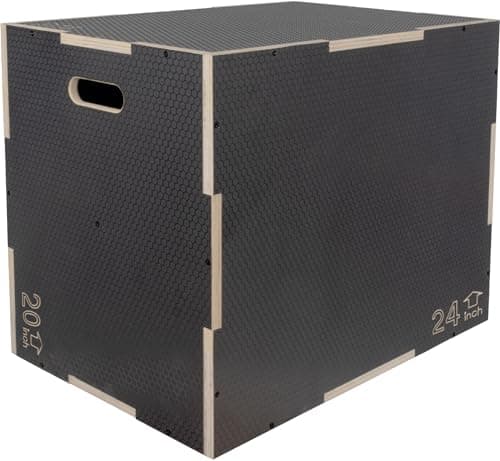
The 3-in-1 plyo box is a rectangular box with three different dimensions, so tipping it onto a different face gives you three heights from one purchase. It is sold for box jumps, which is the least interesting thing it does. In a budget gym it is a step-up platform, a rear-foot rest for split squats, a low dip station, a box-squat target, a hip-thrust bench and somewhere to sit between sets.
The only real decision is wood or foam. Wood is cheaper, stiffer and better for everything except missing a jump. Foam is more forgiving of a mistimed box jump and costs more. Beyond that, the things to check are whether it arrives assembled, how the joints are made, and whether the surface will hold you when your shoes are damp.
The short answer
In a hurry? These are the picks we'd buy. Prices are live; tap a card below for the full reasoning.
$73.4816% offPrice as of September 14, 2026·#addisclosure
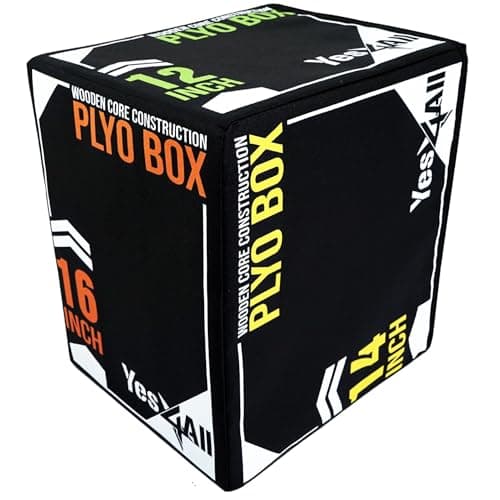
Yes4All 3-in-1 Soft-Padded Plyo Box
The padded version, with a wooden core for stability and foam where your shin would otherwise hit.
Material
Foam over wooden core
Heights
3-in-1
Surface
Non-slip cover
Best for
Box jumps, mixed conditioning
Pros
Foam edges turn a missed jump from an injury into an embarrassment
Wooden core keeps it stable for step-ups, unlike all-foam boxes
Non-slip cover works with damp shoes
Cons
Most expensive of the three
Foam surface compresses slightly, so it feels less solid on heavy step-ups
Covers eventually wear at the corners with heavy use
Best for: box jumps without shredded shins.
Skip this
The budget traps that look cheap and cost you twice. We'd skip these.
All-foam boxes used as a step-up or squat platform
A box made entirely of foam is safe to jump on and unstable to stand on with load. If you want a box for weighted step-ups, split squats or box squats — which is most of what a plyo box does in a strength-focused home gym — you want a wooden core underneath the padding, or plain wood.
Box jumps as your introduction to jumping
Box jumps are the movement with the worst risk-to-benefit ratio in most home programs, because the failure mode is your shin catching a hard edge at speed. If jumping is the goal, start with jumps onto a low box, step down rather than jumping down, and add height slowly. The box is not the risk; the ego is.
How to choose (and what to skip)
Wood or foam depends on what you will do
For step-ups, split squats, box squats, hip thrusts and dips — the strength uses — wood is stiffer, cheaper and better. For actual box jumps, foam edges are meaningfully safer. If you want both, a foam box with a wooden core is the compromise, and it is the reason that construction exists.
Check the three heights against your legs
The standard 20 / 24 / 30 inch box is sized for general use. If you are short, the 30-inch face may be unusable and the 20-inch face becomes your main working height; if you are tall, the reverse. Look at the actual dimensions rather than assuming all 3-in-1 boxes are the same, because they are not.
Assembly quality is your responsibility
Most wooden boxes arrive flat-packed. A box assembled slightly out of square rocks, and a rocking box is genuinely dangerous under a loaded step-up. Assemble it loosely, square it on a flat floor, then tighten everything down — and re-tighten after a couple of weeks.
Surface grip matters more than it sounds
Bare varnished plywood plus damp trainers is a slip waiting to happen. A non-slip surface, a rubber top, or a strip of grip tape on the working face solves it for very little money. If you buy the cheapest wooden box, budget a few dollars for grip tape at the same time.
Weight capacity for loaded work
Step-ups and split squats with dumbbells put you plus the weight on one face of the box, often on one foot. Check that the box is rated for meaningfully more than that combined load, and treat the corners as the weak point on cheap flat-pack construction.
What a plyo box replaces in a budget gym
This is one of the few pieces of equipment that genuinely reduces the number of other things you need to buy. It is the rear-foot rest for Bulgarian split squats, which is otherwise a bench you cannot use for anything else at the same time. It is a step-up platform for a movement most home gyms skip. It is a box-squat target, which is the easiest way to learn depth consistency without a coach. And it is a low dip and elevated push-up station.
That range is why it appears in our under $500 build ahead of several more obvious purchases. Paired with a pair of dumbbells it covers most single-leg training, and single-leg work is what most budget gyms are missing — see our cheap dumbbells roundup.
Ceiling height and floor space
Box jumps need more headroom than people plan for: your standing height plus the box plus your jump. In a garage with a low ceiling or an exposed light fitting, that math matters. If your ceiling is tight, use the box for step-ups and split squats and do your jumping on the floor — our low-ceiling guide covers the wider set of workarounds.
On the floor, put the box on rubber rather than bare concrete. It stops the box skating on a hard slab and takes the bang out of landings, which your household will appreciate. Our budget flooring roundup covers the cheapest way to do that over a small area.
The free alternative, honestly
A sturdy staircase, a solid bench or a heavy wooden crate does most of what a plyo box does for step-ups and split squats. If money is genuinely tight, use those first and see whether the movement earns a permanent purchase. What improvised platforms do badly is height adjustment and stability under load, which is exactly what the 3-in-1 box is for.
Frequently asked questions
Is a plyo box worth it for a home gym?+
It is if you use it for more than jumping. As a step-up platform, a split-squat rest, a box-squat target and a hip-thrust bench it earns its space easily. Bought purely for box jumps, it is a single-exercise purchase with a real injury risk attached, and there are cheaper ways to train jumping.
Wood or foam plyo box?+
Wood if the box is mainly a strength platform for step-ups, split squats and box squats — it is stiffer and cheaper. Foam if you genuinely intend to do box jumps, since a padded edge turns a missed rep into a bruise rather than an injury. A foam box with a wooden core does both, at a price.
What size plyo box should I buy?+
The common 3-in-1 sizing of roughly 20, 24 and 30 inches suits most people, giving a low face for step-ups and a tall one for jumps. Shorter users get more use from the lower two faces and taller users from the upper two, so check the actual dimensions rather than assuming every 3-in-1 box is sized identically.
Can I use a plyo box instead of a bench?+
For hip thrusts, dips and elevated push-ups, yes. For barbell bench pressing, no — a plyo box gives you no back support, no stability under a moving load, and nowhere safe for a bar. It supplements a bench in a small gym; it does not replace one.
Prices and availability shown here come from Amazon's live data and change often; we re-verify them regularly. Bar Bumper is an Amazon Associate and earns a commission on qualifying purchases at no extra cost to you. Read our full disclosure.