Cheap kettlebells: cast iron, vinyl and adjustable
One bell covers swings, presses, squats and carries. Here's the right weight to start with, and which cheap format survives being dropped.
Updated July 2026 · By Stephen V.
A kettlebell is the highest-value single object in fitness: one bell gives you swings, goblet squats, presses, rows, carries and a conditioning workout that needs four square feet of floor. It's also a category where cheap works — a cast-iron bell is a solid lump of metal, and there's very little a premium brand can do to it. What separates a good cheap bell from a bad one is the handle: its width, its smoothness, and whether the casting seam has been finished. Here's what we'd buy.
The short answer
In a hurry? These are the picks we'd buy. Prices are live; tap a card below for the full reasoning.
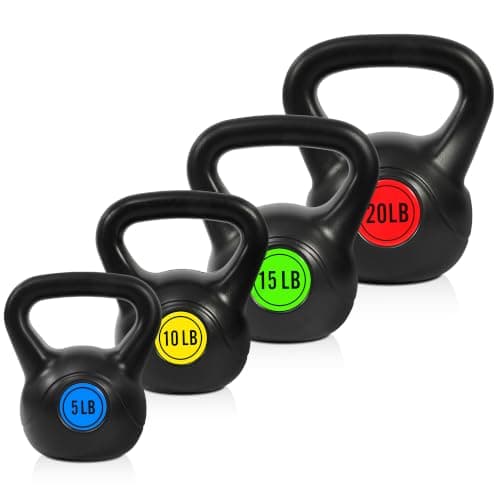
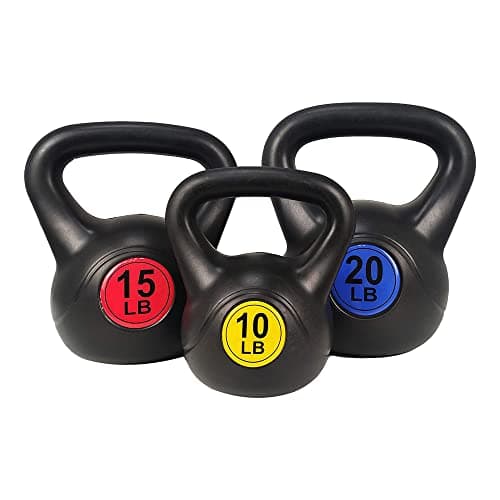
Three vinyl-coated bells for less than one 30 lb cast-iron bell — fine for circuits, not for heavy swings.
Type
Vinyl-coated cement set
Includes
10 / 15 / 20 lb (per listing)
Total
45 lb (per listing)
Handle
Wide loop, color-coded bells
Pros
Three usable weights in one purchase, at the bottom of the set price range
Cement under vinyl is rust-free, quiet and kinder to a slab than bare iron
Wide loop handle takes two hands on every bell in the set
Cons
Cement bells are physically larger than iron for the same weight — the 20 lb is 7 x 7 x 11 in
Shells can crack if dropped on concrete
Not the format for heavy, repeated swings
Best for: circuits and light conditioning.
Skip this
The budget traps that look cheap and cost you twice. We'd skip these.
Any kettlebell with a rough casting seam on the handle
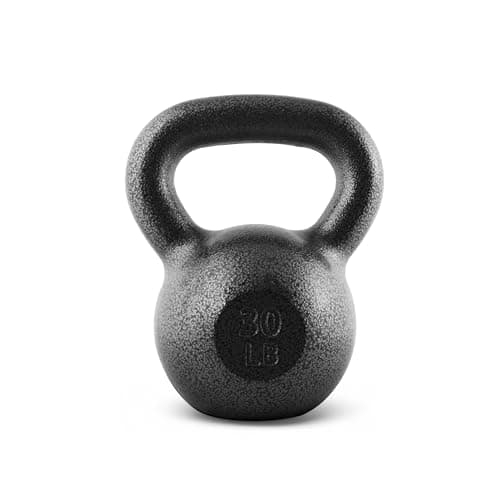
The seam left by the mold runs exactly where your fingers wrap. On a finished bell it's ground smooth; on the worst budget bells it's sharp enough to tear skin during swings. If the listing photos show a visible ridge across the handle, keep scrolling.
Buying a 10 lb bell for swings
Kettlebell swings are a hip-hinge power movement, not an arm exercise. Most adult men start around 26-35 lb and most women around 18-26 lb. A 10 lb bell is useful for shoulder work and technique drills, but it will teach you to lift the bell with your arms.
How to choose (and what to skip)
The handle is the whole product
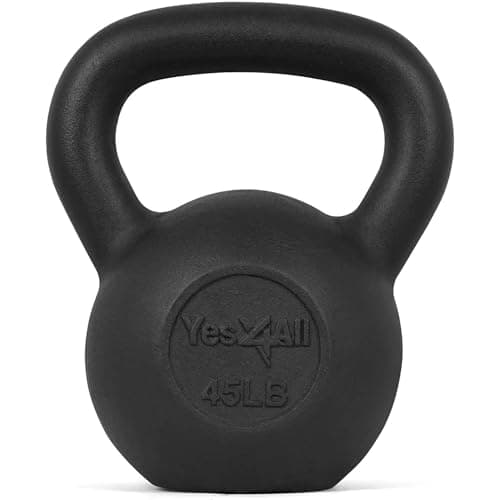
You want a handle wide enough for two hands, thick enough not to dig in, and smooth where your fingers sit. Powder-coated cast iron grips well with chalk; glossy painted handles get slippery when your hands are damp; vinyl handles are comfortable but bulky. Check the photos for a ground-flush seam.
Pick your first weight honestly
As a rough starting point, most men do well with 26-35 lb and most women with 13-26 lb for two-handed swings and goblet squats. Presses need less, swings need more. If you can only buy one, buy for the swing — you can press a heavy bell for fewer reps, but you can't swing a light one usefully.
Cast iron vs vinyl vs cement
Cast iron is the standard: dense, compact, durable. Vinyl-coated iron adds floor and noise protection at the cost of a chunkier handle. Cement-filled vinyl is the cheapest and the bulkiest — acceptable for light circuits, poor for heavy swings, and the shell is the failure point.
Adjustable only if space is the constraint
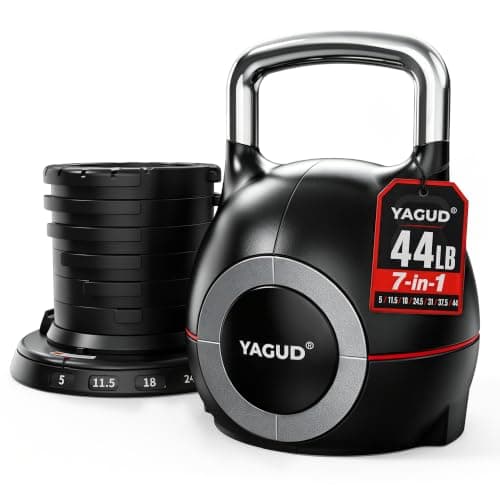
An adjustable bell genuinely replaces a rack of weights, and for an apartment that's decisive. But it costs more than two fixed bells covering the same range, and every mechanism is one more thing to fail. Fixed bells if you have the floor; adjustable if you don't.
Plan where it lands
Kettlebells get set down hard, and the corner of a bell concentrates a lot of force into a small area. A single rubber mat in your swing zone protects the floor and stops the ringing noise that travels through a house at 6 a.m.
What one kettlebell actually gets you
A single bell in the right weight covers more ground than any other one-item purchase:
Swings — hip power and conditioning in one movement, with almost no spinal loading compared with running.
Goblet squats — arguably the best squat variation for learning position, and self-limiting so it's safe to do alone.
Presses and push presses — overhead strength without a rack or a bar.
Rows and cleans — pulling work that doesn't need a bench or a pull-up bar.
Carries — the most underrated conditioning and core exercise, and the easiest to program: pick it up, walk.
That's a complete full-body session from one object that costs less than a month of most gym memberships. It's why a kettlebell is on our essentials checklist even for gyms that already own a barbell.
One bell, two bells, or a set?
Start with one. The classic progression is a single mid-weight bell for six months, then a heavier one for swings and a lighter one for presses and technique. That gives you three weights covering everything, bought over a year rather than in one go — and it means your second purchase is informed by what you actually train rather than a guess.
A four-bell light set is a different product for a different buyer: it's for circuits, conditioning classes and shared households, not for building a heavy swing. If two people of different strengths will use it, the set is genuinely the better value.
Kettlebell or dumbbell, if you can only buy one?
The kettlebell wins for swings, carries and conditioning; the dumbbell wins for pressing, curls and anything where a balanced load matters. The offset center of mass that makes a kettlebell great for ballistic work makes it slightly awkward for a flat bench press. If your training is conditioning-led, buy the bell. If it's a classic push-pull-legs program with a bench, buy a pair of dumbbells first and add the bell later.
Looking after a cheap bell
Cast iron rusts, and a garage in a humid summer is exactly where it happens. The fix costs nothing: wipe the bell down after chalky or sweaty sessions, keep it off a damp concrete floor (a mat or a scrap of plywood is enough), and hit any surface rust with a wire brush and a wipe of oil. A well-kept $60 bell will outlive most of the equipment around it.
A simple program for one bell
The most common reason a kettlebell ends up as a doorstop is that nobody tells you what to do with it. A complete session from a single bell, twice or three times a week:
Goblet squats — 3 sets of 8-10. Warms up the hips and teaches squat position at the same time.
Two-handed swings — 5-10 sets of 10, resting as needed. This is the conditioning work; keep the back flat and drive with the hips.
Single-arm presses — 3 sets of 5 per side. Overhead strength without a rack.
Single-arm rows — 3 sets of 8 per side, braced on a bench or a knee.
Suitcase carries — 4 walks of 30-40 seconds per side. The most underrated core exercise there is.
That's 25-30 minutes, needs four square feet, and covers hinge, squat, push, pull and carry — the five patterns any sensible program is built from. When it gets easy, add reps before you buy a heavier bell.
Swing safely: the three rules
Kettlebell swings are safe and effective when they're a hip hinge, and a reliable way to irritate a lower back when they're a squat with an arm raise. The rules that keep them honest: hinge at the hips with a flat back rather than squatting down, let the bell float rather than lifting it with your arms, and keep the bell traveling back between your legs on the backswing instead of dropping it straight down. If your lower back is fatiguing before your glutes and hamstrings, the hinge has turned into a squat — drop the weight and rebuild the pattern.
Frequently asked questions
What weight kettlebell should a beginner buy?+
As a general starting point, most men do well with 26-35 lb and most women with 13-26 lb for two-handed swings and goblet squats. If you're buying a single bell, size it for the swing rather than the press — a heavier bell can be pressed for fewer reps, but a light bell can't be swung usefully.
Are cheap cast iron kettlebells any good?+
Yes, with one check. The bell itself is a solid lump of iron and cheap ones weigh the same as expensive ones. What varies is handle finishing — look for a smooth, ground casting seam, because a sharp ridge across the handle is the one flaw that ruins a bell for swings.
Are adjustable kettlebells worth it?+
If floor space is the constraint, yes — one adjustable bell replaces four or five fixed weights. If you have room, two fixed bells cover the same useful range for less money and with nothing to break. Adjustables also shouldn't be dropped, which limits heavy swing work.
Can I use a kettlebell instead of dumbbells?+
For swings, squats, carries and single-arm pressing, easily. For flat bench pressing and anything needing a balanced load in each hand, dumbbells are more comfortable. Most budget gyms end up with one bell and one pair of dumbbells rather than choosing.
Prices and availability shown here come from Amazon's live data and change often; we re-verify them regularly. Bar Bumper is an Amazon Associate and earns a commission on qualifying purchases at no extra cost to you. Read our full disclosure.