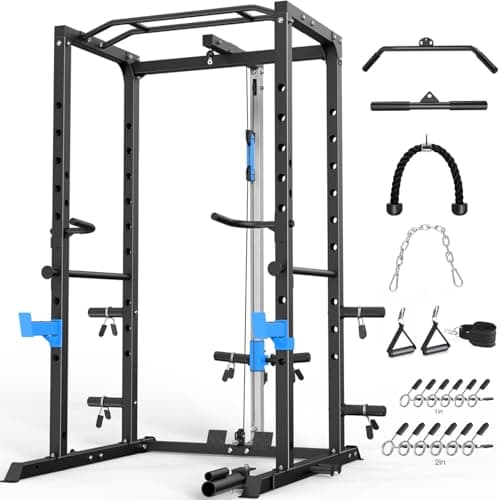
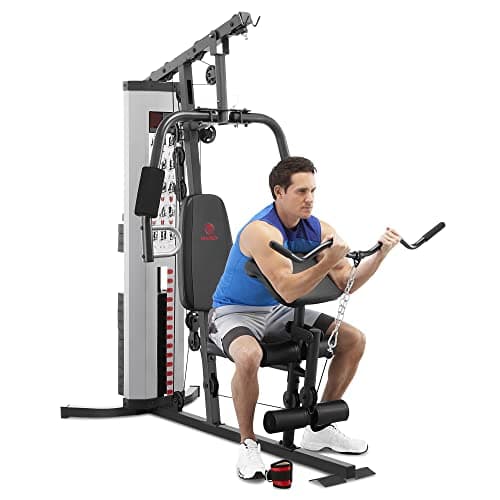
All-in-one machine vs separate pieces: which actually builds a gym?
One machine looks like the whole gym in a box. Separate pieces look like a project. For most budgets the box is the more expensive option — but not for everyone.
Updated August 2026 · By Stephen V.
The all-in-one machine is the most tempting purchase in a home gym, and for most budget buyers it's the wrong one. One delivery, one assembly, one object, every exercise printed on the box — against the alternative of researching a rack, a bar, plates, a bench and flooring separately. The appeal is obvious.
The problem is what you get for the money. A single-stack multi-station typically arrives with a fixed weight stack you can outgrow in months, a footprint as large as a power cage, and no upgrade path — you can't add plates to a stack that doesn't take them. The same money spent on separate pieces buys a rack, a barbell, plates and a bench that keep working for decades. Below is the honest comparison, including the cases where the machine genuinely is the right call.
The short answer
In a hurry? These are the picks we'd buy. Prices are live; tap a card below for the full reasoning.
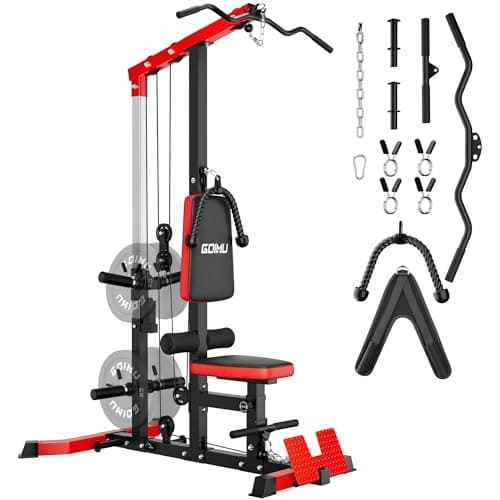
A plate-loaded lat and row tower adds the one thing an all-in-one has over free weights, for a fraction of the price.
Type
Lat pulldown / low row tower
Load
Plate-loaded
Covers
Pulldowns, rows, pushdowns
Ceiling
Limited only by your plates
Pros
Closes the cable gap that makes people consider an all-in-one
Uses the plates you already bought for the barbell
Costs a fraction of a multi-station
Cons
Needs plates, which is only cheap if you already own them
Pulley ratio changes what the weight feels like
One station, not four
Best for: the cable movements free weights miss.
Skip this
The budget traps that look cheap and cost you twice. We'd skip these.
An all-in-one as a first-time buyer's entire gym
It's the classic expensive mistake. You spend your whole budget on a machine with a fixed light stack, discover in month four that leg presses on it are too easy and there's no way to add weight, and find the resale market is unforgiving. Build the free-weight base first and add cable work after.
Judging an all-in-one by the number of exercises listed
The box says 30, 50, 100 exercises. Most of those are minor grip variations on the same four stations. Judge it on the number of genuinely distinct stations and the stack weight, and the number gets small quickly.
Buying separates without a rack
The mirror-image mistake. A barbell and plates without a rack means every heavy set starts from the floor, which caps your squat at what you can clean and makes benching alone unsafe. If you're going the separates route, the rack is part of the first purchase, not a later upgrade.
How to choose (and what to skip)
Compare like for like, including everything
The honest comparison is not machine price versus rack price. It's machine price versus rack plus bar plus plates plus bench. Do that sum before deciding — it's usually much closer than people expect, and the separates side comes with no weight ceiling.
Find the weight ceiling before you buy
An all-in-one's stack is its hard limit, and it applies most painfully to lower-body work: a 150 lb stack is plenty for a triceps pushdown and nowhere near enough for leg press within a year. Ask what the stack weighs and whether add-on plates exist, and assume the answer to the second is no.
Count the friction, honestly
The case for the machine is real: no plates to load, no bar to control, no spotting, no setup. If the difference between training and not training is that friction — and for plenty of people it genuinely is — that's worth paying for. Just buy it knowingly rather than because it looked like more gym.
Think about the exit
Racks, bars and plates sell locally in days and hold most of their value. Multi-station machines are large, hard to move, and sit unsold. If there's any chance this gym gets sold, moved or upgraded, separates are worth substantially more when you're finished with them.
Space is often a wash
People assume the machine is more compact. It usually isn't — a single-stack multi-station occupies a similar footprint to a power cage, and unlike the cage it can't be used for anything else. If space is the constraint, look at a folding wall rack rather than a machine.
What an all-in-one is actually good at
Let's give the machine its due, because the standard internet answer ("just buy a barbell") ignores real people. An all-in-one removes friction. There's nothing to load, nothing to unload, nothing to balance, and no way to get pinned. You sit down, move a pin, and train. If you're coming back from a long lay-off, if the technique of barbell lifting is genuinely intimidating, or if you'll be sharing the gym with a partner or teenager with different weights, that low friction converts into sessions completed.
The guided paths also mean you can train to failure safely on your own, without setting safeties or thinking about a bail-out. And the whole thing lives in one corner as one object, which some households simply prefer to a rack, a bar rack, a plate tree and a bench.
What it's genuinely bad at
The ceiling. A selectorized stack has a number on it, and that number is the most weight the machine will ever provide. For upper-body isolation work, a moderate stack is fine for years. For anything involving your legs or back, it's often outgrown inside the first year — and there is no upgrade. You can't add a plate to a stack that doesn't accept one.
The second problem is that the pulley ratios on budget machines mean the number on the stack isn't what you feel. A 150 lb stack at a 2:1 ratio delivers substantially less than 150 lb at the handle. That's not dishonest, it's just how pulleys work, but it means the effective ceiling is often lower than the sticker.
The third is resale. Racks and plates are commodities that sell locally in a day; multi-station machines are large, awkward, and priced to move by people who want them gone. That's a real cost, paid at the end.
What separate pieces give you
The counter-argument is capability per dollar and, more importantly, a ceiling you'll never hit. A rack, a bar, and plates cost roughly what a mid-range all-in-one does, and there's no maximum weight — when you get stronger, you buy another $40 of iron. Each piece can be upgraded, sold, or replaced independently. And free-weight training trains stabilizing muscles and coordination that fixed paths don't.
The trade is friction and responsibility. You have to load plates, set safeties, learn technique, and think about safety. Our solo lifting guide covers the last part, and it's the part that puts people off — understandably, because it's the part the machine does for you.
The hybrid that solves it for most people
There's a third path that gets ignored because it isn't a single product. Build the free-weight base — rack, bar, plates, bench — and then add a plate-loaded cable tower for the pulldowns, rows and pushdowns that free weights genuinely can't do.
That combination gives you everything an all-in-one offers plus everything it doesn't, usually for a comparable total, and the cable tower loads with plates you already own so it costs less than its sticker suggests. It's the setup our under-$1,000 build lands on, and it's what we'd recommend to almost anyone asking this question.
Decide with these five questions
Will you actually train hard? If yes, the stack ceiling will bite. If your goal is consistent moderate exercise, it won't.
Does barbell technique worry you? If it's a genuine barrier rather than mild uncertainty, the machine converts into more sessions done.
Who else uses it? Shared households with mixed strength levels benefit disproportionately from pin-select weight changes.
Will you keep it for five years? If yes, separates win on both capability and resale. If you're testing whether home training suits you, the machine's simplicity has value.
What's the real budget, all in? Price the machine against rack + bar + plates + bench, not against the rack alone.
Answer those honestly and the decision usually makes itself. For most budget buyers it lands on separates, which is why our complete build is built that way — but "most" isn't "all", and buying the machine knowingly is a better outcome than buying a rack you're too intimidated to use.
If you do buy the all-in-one
Two things make it a much better purchase. First, check whether the stack can be supplemented — some machines accept add-on weights that hang on the top plate, which meaningfully extends the life of the machine. Second, plan the pairing: an all-in-one plus a pair of adjustable dumbbells covers the free-weight gap for very little money and removes most of the ceiling problem for upper-body work.
And measure the footprint properly before ordering. The single most common complaint in owner reviews of these machines isn't the stack — it's that the assembled machine is larger than the buyer pictured, and that once built it's essentially impossible to move.
Frequently asked questions
Is an all-in-one home gym better than free weights?+
For convenience and safety, yes; for capability and long-term value, no. An all-in-one removes setup, spotting and technique barriers, which genuinely helps some people train more. But its weight stack is a hard ceiling that lower-body work hits quickly, there's no upgrade path, and resale is poor. For most budget buyers, a rack, bar, plates and bench deliver more for the same money.
What's cheaper, an all-in-one machine or separate equipment?+
They're usually closer than people expect once you compare like for like — the machine against a rack plus barbell plus plates plus bench, not against the rack alone. The difference is what happens afterwards: adding capability to separates costs about $40 of plates, while adding capability to a fixed stack usually isn't possible at all.
Do all-in-one home gyms take up less space?+
Generally no. A single-stack multi-station occupies a similar footprint to a power cage, and unlike a cage it can't double as a pull-up station or a place to store plates. If floor space is your binding constraint, a folding wall-mounted rack saves far more than any all-in-one machine.
Will I outgrow an all-in-one home gym?+
On upper-body isolation work, possibly not for years. On anything involving your legs or back, most people outgrow a typical stack within the first year — and budget machines often use pulley ratios that make the effective weight lower than the number on the stack. Check the stack weight and whether add-on plates exist before buying.
What should I buy if I want cable exercises but not a whole machine?+
A plate-loaded lat pulldown and low-row tower. It adds the pulldowns, rows and pushdowns that free weights can't replicate, loads with plates you already own for the barbell, and costs a fraction of a multi-station. Paired with a rack, bar, plates and bench, it covers everything an all-in-one does with no weight ceiling.
Prices and availability shown here come from Amazon's live data and change often; we re-verify them regularly. Bar Bumper is an Amazon Associate and earns a commission on qualifying purchases at no extra cost to you. Read our full disclosure.