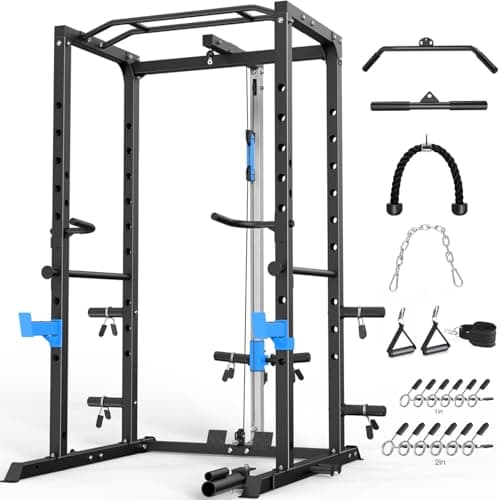
A cage with a pulley station is the cheapest way to own squats and cable work in one footprint — if you accept the compromises. Here's what each approach costs you.
Updated July 2026 · By Stephen V.
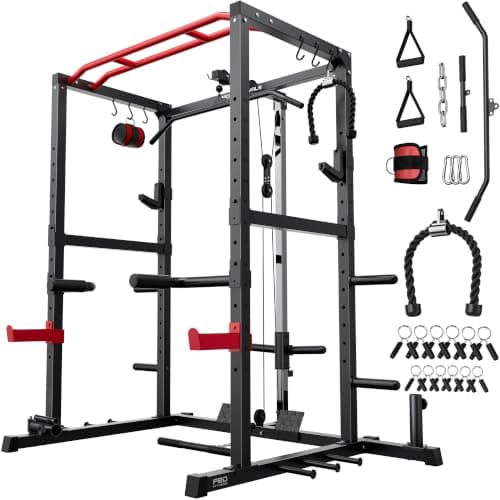
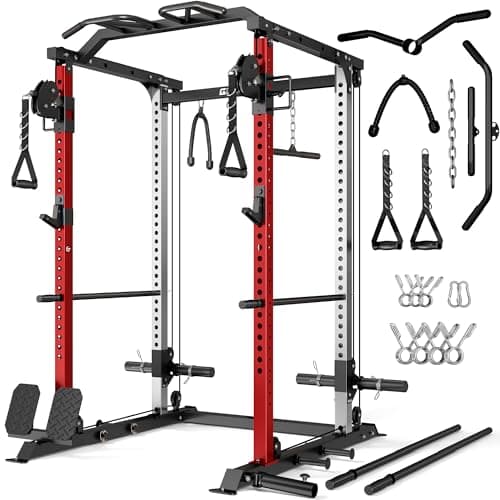
Adding cables to a rack is the single biggest capability jump in a budget home gym: lat pulldowns, rows, triceps pushdowns, face pulls and crossovers are all things a barbell can't do well. There are two ways to get there. Buy a rack with an integrated pulley, or buy a plain cage and bolt a separate cable station next to it. This page compares the real options in both camps, because the right answer depends almost entirely on your floor space and whether you already own a rack.
The short answer
In a hurry? These are the picks we'd buy. Prices are live; tap a card below for the full reasoning.
$319.996% offPrice as of September 14, 2026·#addisclosure
ULTRA FUEGO Power Cage
Buy the safe cage now, add the pulley when the budget recovers — the lowest-risk path.
Type
4-post power cage
Cable option
Yes (add-on pulley)
Safety arms
Included
Attachments
J-hooks, dip handles, landmine
Pros
Cheapest entry into a full cage with safeties
Cable pulley can be added later
Spreads the cost over two purchases
Cons
Total cost is higher if you always intended to add cables
Add-on pulleys are single-position, not crossovers
Two assembly sessions instead of one
Best for: phased budgets.
Skip this
The budget traps that look cheap and cost you twice. We'd skip these.
A cable rack you can't load enough plates onto
Plate-loaded pulleys usually run at a 1:1 ratio, so a lat pulldown needs real plate weight to be useful. If your entire plate collection is 110 lb and it's already on the barbell, budget for a second set of plates or the cable station will sit unused.
Buying a cable rack for a room that can't take the depth
Integrated pulley racks add 12-24 inches of depth behind the cage for the weight carriage or pulley arm. Measure the full assembled depth, not the cage footprint, or you'll discover the problem after assembly.
How to choose (and what to skip)
Integrated or separate: the honest rule
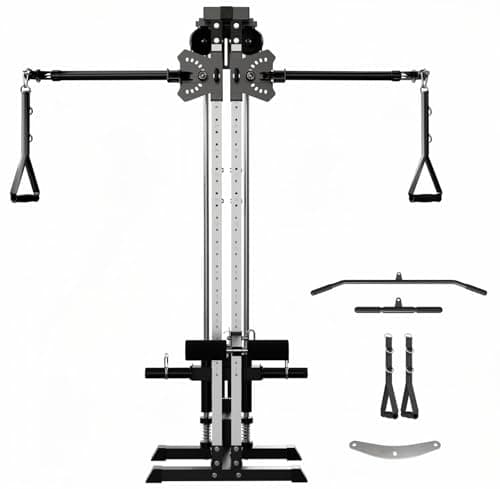
If you own no rack, integrated is cheaper and simpler — one delivery, one assembly, one price. If you already own a cage you like, a separate wall-mounted cable station is better value than replacing the whole rack, and it usually offers more useful cable angles.
Count the pulleys, not the attachments
One high pulley gives you pulldowns and pushdowns. One low pulley adds rows and curls. Two independent pulleys add crossovers, single-arm work and anti-rotation training. The attachment list in the product photos is far less important than how many independent lines the frame actually runs.
Plate-loaded vs weight stack
Nearly everything at this price is plate-loaded, which is good news: no fixed stack to outgrow, and you reuse the plates you already own. The trade-off is changing weight takes longer, and you need enough plates that the cable station and the barbell aren't fighting over them.
Wall-mounted needs real structure
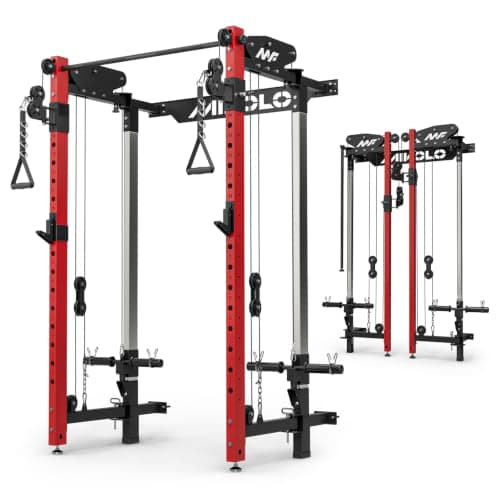
Folding racks and wall cable stations are the best answer for small rooms, but they transfer everything into your wall. That means locating studs (or masonry anchors), using the specified hardware, and being honest about whether a stud-framed garage wall is up to it. If in doubt, free-standing is the safer buy.
Cable height and your ceiling
A high pulley wants to sit near the top of the frame, and a crossover wants room above your head. Standard 8-foot ceilings work for almost everything here, but a 7-foot basement will limit pulldown range on some frames. Check the assembled height before ordering.
What cables actually add to a barbell gym
A barbell is unbeatable for loading the big compound lifts, and genuinely poor at three things: constant-tension work, single-arm work, and pulling movements in the vertical plane. Cables fix all three. The practical additions are lat pulldowns (the accessible substitute for pull-ups while you're building strength), seated and standing rows, triceps pushdowns, face pulls for shoulder health, and cable crossovers or flyes for chest volume without a spotter.
For most budget lifters the pulldown alone justifies the upgrade. It's the movement that lets a beginner train their back with progressive load from day one instead of waiting months for a first pull-up — and it pairs directly with the bar work you're building toward.
The cost comparison, plainly
There are three routes to a rack with cables, and they land at different prices for different reasons:
Integrated rack + pulley — one price, one frame. Almost always the cheapest total for someone starting from nothing, and the least floor space per feature.
Plain cage now, add-on pulley later — lowest entry price, highest total. The right call if the immediate priority is a safe place to squat and cables are a next-year problem.
Cage plus a separate wall cable station — highest total for a new buyer, best value for someone who already owns a rack. Also the most flexible, because the cable arms aren't bound to the cage geometry.
The live prices on this page update as they move, so compare the running numbers rather than the ones any article quotes. Our under-$1,000 build shows where a cable station sits in a complete gym budget.
Don't forget the plates
The most common disappointment with a plate-loaded cable rack is discovering that all your weight is already on the barbell. A pulldown at a 1:1 ratio needs meaningful load — more than most beginners think — and stripping the bar between exercises gets old within a week. Budget for a second set of cheap plates alongside the rack, or accept that you'll be doing a lot of plate shuffling.
Which one should you buy?
Starting from nothing with 6x6 feet or more: buy the integrated cage with a pulldown — it's the best capability per dollar in this entire category. Starting from nothing in a shared garage: buy the folding wall-mounted rack and reclaim the floor between sessions. Already own a cage: add a wall cable station and keep the rack. Tight on cash today but committed to lifting: buy the plain cage with safeties, because a safe place to squat matters more than cables, and add the pulley next year.
Attachments: what to buy with it, and what to skip
Cable machines are sold on the frame and lived with through the attachments, and the difference between a station you use for two exercises and one you use for a dozen is about $60 of handles. The four worth owning from day one:
A lat bar — pulldowns and straight-arm pulldowns. Usually included; check before you assume.
A rope — triceps pushdowns, face pulls and cable crunches. The single most-used attachment in most home gyms.
Single handles (a pair) — crossovers, single-arm rows and presses, and every unilateral fix for a side-to-side imbalance.
An ankle strap — cable kickbacks and abductions, and the cheapest way to add direct glute work without a machine.
What to skip: chrome-plated novelty bars, tricep V-bars (the rope does it better), and any attachment set sold as a 20-piece bundle. Also check the clip standard — most budget stations use a common carabiner-style clip, but a proprietary connector means you're buying that brand's accessories forever.
Cable wear, and how long these last
The steel cable is the one genuine consumable on a plate-loaded station. It runs over pulleys under load thousands of times, and eventually the outer coating cracks and individual strands fray — usually first at the point that sits over a pulley at rest. Check it every few months by running a cloth along its length; the cloth snags before your eye catches the broken strand. A replacement cable costs a fraction of the machine, and swapping one is a 20-minute job. Ignore it and the cable fails under load, which with a loaded plate stack is the one genuinely dangerous failure mode in this category.
Frequently asked questions
Is a power rack with a lat pulldown worth it?+
For most budget home gyms, yes. It adds the entire vertical-pulling and cable-accessory category for less than buying a rack and a cable machine separately, and it uses the plates you already own. The trade-offs are extra depth in the room and, on single-pulley racks, no true crossover.
Can I add a cable pulley to a rack I already own?+
Often, yes — many budget cages sell a bolt-on lat pulldown attachment for the same frame. Check that the attachment is listed for your exact model, because upright spacing and hole patterns vary. If nothing fits, a wall-mounted cable station next to the rack is usually the better upgrade anyway.
How much weight do I need for a plate-loaded cable station?+
More than you'd guess. Most budget pulleys run close to 1:1, so a pulldown that challenges you needs roughly the same load you'd row with. Plan on a dedicated set of plates for the cable side rather than sharing with the barbell.
Are folding wall-mounted racks strong enough?+
When they're bolted into real structure, yes — the wall is doing what a heavy base would otherwise do. The risk is installation, not design: they need located studs or proper masonry anchors and the manufacturer's hardware. If you can't verify what's behind the wall, buy free-standing.
Prices and availability shown here come from Amazon's live data and change often; we re-verify them regularly. Bar Bumper is an Amazon Associate and earns a commission on qualifying purchases at no extra cost to you. Read our full disclosure.