Not for most of what you do — and the research is clearer about that than the gym-floor arguments suggest. Here is what a belt measurably changes, what it does not, and when it is worth twenty dollars.
Updated October 2026 · By Stephen V.
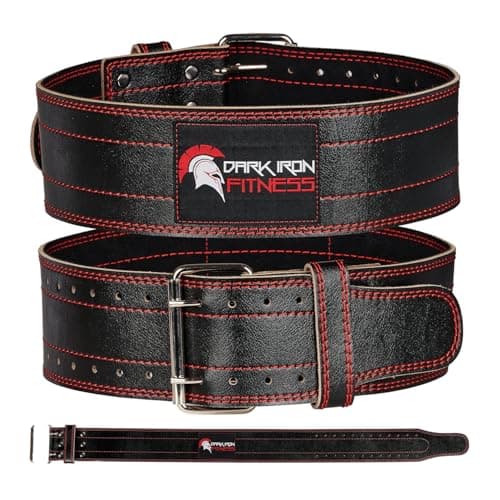
No, not to start — and when you do want one, a 4-inch leather belt with a prong buckle like the Dark Iron Fitness belt is the one to buy. A belt is a performance tool for heavy sets, not safety equipment and not a back support, and the published research is reasonably specific about what it changes. If you are squatting and deadlifting weights you can comfortably control for sets of eight, a belt will do almost nothing for you. When your top sets get genuinely heavy, it starts to matter — most visibly on the deadlift.
What a belt actually does is give your abdominal wall something to brace against, which raises the pressure inside your trunk. The measured effect is real: studies report intra-abdominal pressure rising by roughly a quarter to a bit over a third with a belt, with one squat study measuring around 99 mmHg unbelted against 120 mmHg belted, and a deadlift study at 90% of one-rep max measuring around 156 mmHg unbelted against 175 mmHg belted. That pressure stiffens the trunk from the inside, and it shifts some of the load off the spinal erectors — one commonly cited figure is a reduction of close to 20% in erector spinae demand, redistributed to the abdominal region.
Two findings matter as much as those numbers. First, the effect is lift-specific: peak pressure came out significantly higher with a belt for the deadlift, but not for the squat or bench press, even though average pressure was higher across all of them. Second, a belt does not increase activation of the spinal erectors or the external obliques — so it is not “switching your core on”, and it is not training anything. Belted squats have been measured as faster, particularly under fatigue, which is the clearest performance case for owning one.
What that adds up to, practically: a belt is worth buying when heavy squats and deadlifts are a regular part of your training, and it is a waste of money before then. The things worth sorting a belt on are width (4 inches is right for most people, 6 is not), material (leather is stiffer and better for heavy singles, nylon is more comfortable for mixed training), and closure. Everything else — tooling, branding, padding — is decoration.
The short answer
In a hurry? These are the picks we'd buy. Prices are live; tap a card below for the full reasoning.
A 4-inch genuine leather belt with a double-prong buckle is the standard tool for the job: stiff enough to brace hard against and simple enough that there is nothing to fail.
heavy squats and deadlifts, where you want something genuinely stiff to brace against
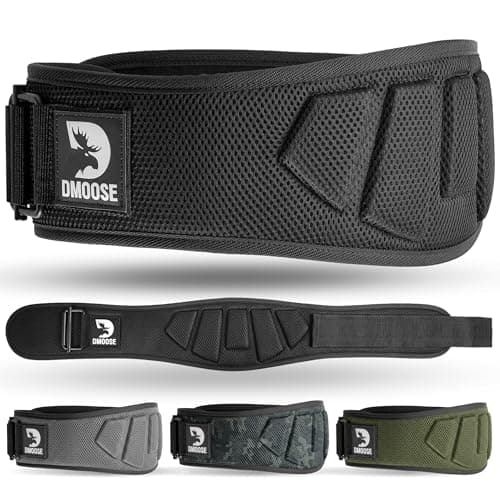
A nylon belt gives up some stiffness and gains everything else: it is comfortable, it fastens in a second, and it is the belt that will actually get used in a varied session.
general training where the belt goes on and off repeatedly in one session
$21.2415% offPrice as of October 6, 2026·#addisclosure
3
Best padded option
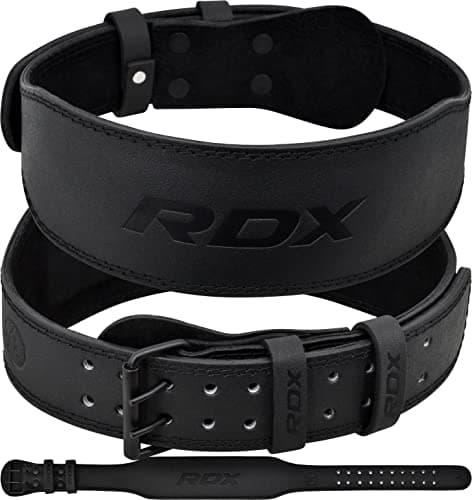
RDX Cowhide Leather Lifting Belt
Cowhide leather with a padded lumbar section and a multi-hole prong closure — the compromise between a stiff competition belt and something you can wear for a whole session.
anyone who finds a stiff flat belt genuinely uncomfortable but wants leather
A 4-inch genuine leather belt with a double-prong buckle is the standard tool for the job: stiff enough to brace hard against and simple enough that there is nothing to fail.
Material
Genuine leather
Width
4"
Closure
Double prong
Best for
Squats, deadlifts, presses
Stiffness
High — breaks in over weeks
Pros
Leather is stiff, and stiffness is the entire mechanism — your abs need something that does not give in order to generate pressure against it
4 inches is the width that works for almost everybody: wide enough to brace into, narrow enough not to jam into your ribs or hips when you fold at the hip
A prong buckle holds at a fixed, repeatable tightness. You will know which hole you squat on and which one you deadlift on, which matters more than it sounds
Nothing to break. A leather belt with a steel buckle is a decades-long purchase at a cost well under most single plates
The same belt works for squats, deadlifts and standing presses, which covers every lift where a belt measurably helps
Cons
It needs breaking in. A new stiff leather belt is uncomfortable for the first few weeks and will not conform to your torso immediately
A double prong is slower to fasten and unfasten than a lever or a buckle, which is mildly annoying between sets
Not comfortable for anything but heavy work. Nobody wants a stiff leather belt on for a circuit or a conditioning session
Sizing is by waist measurement at the belt position, not by trouser size, and getting it wrong means a return. Measure before ordering
Genuine leather needs to stay dry. In a damp garage it will eventually mildew if it lives on the floor — hang it up
Best for: heavy squats and deadlifts, where you want something genuinely stiff to brace against.
$21.2415% offPrice as of October 6, 2026·#addisclosure
DMoose Nylon Lifting Belt (6")
A nylon belt gives up some stiffness and gains everything else: it is comfortable, it fastens in a second, and it is the belt that will actually get used in a varied session.
Material
Nylon
Width
6" back
Closure
Adjustable buckle
Best for
Mixed sessions, general training
Break-in
None — comfortable immediately
Pros
On and off in a second, which is the difference between a belt you use on your heavy sets and a belt you leave in the bag
Comfortable from the first session with no break-in period, and far more tolerable for higher-rep work than stiff leather
Infinitely adjustable rather than fixed to prong holes, so you can run it looser for moderate sets and tighter for heavy ones
Lighter, washable and indifferent to damp, which makes it the better belt for a garage that is not climate controlled
Usually the cheapest of the three, which makes it a sensible first belt if you are not yet sure you need one
Cons
Less stiff than leather, so there is less for your abs to generate pressure against. For maximal singles that is a real reduction in the effect you are buying
A 6-inch back is wide. It can catch on your ribs or hips when you fold at the hip in a deadlift, and many lifters find 4 inches more comfortable despite the larger number sounding better
A velcro or buckle closure drifts over time and is harder to set at exactly the same tightness twice
Nylon stretches with use, which is the slow version of the same problem
Not what you want if powerlifting is the direction of travel — the sport's belt standards are built around stiff leather
Best for: general training where the belt goes on and off repeatedly in one session.
Cowhide leather with a padded lumbar section and a multi-hole prong closure — the compromise between a stiff competition belt and something you can wear for a whole session.
Material
Cowhide leather
Width
4" and 6" options
Closure
Prong, multi-hole
Padding
Padded lumbar section
Best for
Longer sessions, comfort-first lifters
Pros
Padding makes a leather belt tolerable for longer than a bare one, which for some people is the difference between using it and not
Available in both 4 and 6 inch widths, so you can take the narrower one if you fold at the hip a lot — which most people should
Multi-hole prong closure gives repeatable settings, same as the top pick
RDX is an established strength-equipment brand rather than a marketplace name, with a real product range behind the belt
Cons
Padding reduces the stiffness that is the whole point. You are trading some of the pressure effect for comfort, and it is worth being clear that is the trade
Bulkier than a flat leather belt, which is noticeable in the bottom of a squat where the belt meets your thighs
The 6-inch version has the same hip-fold problem as any wide belt. Default to 4 inches unless you specifically know otherwise
Padded belts are not legal in most powerlifting federations, so this is not the belt if competing is the plan
Best for: anyone who finds a stiff flat belt genuinely uncomfortable but wants leather.
How to choose (and what to skip)
What the research supports, and what it does not
Supported: a belt raises intra-abdominal pressure substantially — figures around a 25 to 40% increase appear in the literature, with one squat study measuring roughly 99 mmHg unbelted against 120 mmHg belted and a deadlift study at 90% of one-rep max measuring around 156 against 175 mmHg. That pressure stiffens the trunk and redistributes load away from the spinal erectors, with a figure close to a 20% reduction in erector spinae demand commonly cited. Belted squats have been measured as faster, especially under fatigue. Not supported: that belts increase erector spinae or external oblique activation, that they prevent injury, or that they strengthen anything. A belt is a lever for performance, not a safety device.
Why the deadlift is the lift where it shows up most
This is one of the more useful specifics in the research. Average intra-abdominal pressure was higher with a belt across squat, bench and deadlift, but peak pressure was significantly higher with a belt only for the deadlift. That fits what lifters report: the deadlift is the lift where a belt makes the most obvious difference to how a heavy set feels, and the bench press is the lift where it makes the least. If you are buying one belt for one lift, buy it for your deadlift.
Width: 4 inches, almost always
Six-inch belts sound like more support and are usually worse. The problem is geometry: when you fold forward at the hip in a squat or a deadlift, a wide belt has to go somewhere, and where it goes is into your ribs at the top and your hip crease at the bottom. Four inches clears both and still gives your abdominal wall plenty to brace against. The exception is tall lifters with long torsos, who sometimes get on fine with six. If you are buying blind, buy four.
Leather vs nylon vs lever
Leather is stiff, which is the mechanism, and it is what you want for heavy singles and anything approaching a maximum. Nylon is softer and more comfortable, fastens instantly, and is the better belt for mixed sessions where it goes on and off repeatedly — which in practice means it gets used more. A lever belt is a leather belt with a faster closure and a fixed tightness; good if you only ever use one setting, annoying if you want different tightness for squats and deadlifts. For a first belt, leather if you are mainly lifting heavy, nylon if you are not yet sure.
How to actually use one
Not as tight as possible. A belt works by giving your abs something to push against, which means you need room to expand into it: take a breath into your belly, brace outward against the belt, then lift. Cinched so tight you cannot breathe in, it does the opposite of what you bought it for. Put it on for your heavy sets and take it off for your warm-ups and accessory work — partly because you want the unbelted bracing practice, and mostly because wearing it all session is uncomfortable and achieves nothing.
When to buy one, and what to buy first
Buy a belt when heavy squats and deadlifts are a regular feature of your training and your top sets are genuinely near your limit — not in your first few months. Before that, the money is better spent on things that change what you can train at all. If you are deciding between a belt and your next piece of equipment, our budget build order and essentials checklist put belts well down the list, and they are right to.
The short answer, by situation
First year of training. No. Learn to brace without one; the pressure you can generate unbelted is the foundation the belt amplifies later.
Heavy deadlifts. Yes, this is where the measured effect is largest and where lifters notice it most.
Heavy squats. Yes for top sets. Measured as faster with a belt, particularly under fatigue.
Bench press. Barely. Peak pressure was not significantly different with a belt for the bench in the research.
Back pain. No — a belt is not a back support and not a treatment. Get the cause looked at.
Conditioning and circuits. No. Nothing in that work is near the loads where a belt matters.
What a belt is not
It is not safety equipment. The research shows load being redistributed within your trunk, not removed from it — and a belt does nothing about the technique problems that actually hurt people. It is not a brace for an injured back, and wearing one to lift through pain is a way to postpone a conversation you should be having. And it is not a substitute for bracing: because a belt does not increase erector spinae or external oblique activation, there is nothing in the evidence suggesting it switches your core on for you. Your abs still do the work; the belt gives them something to work against.
The one claim it is worth being hardest on is the “belts make your core weak” argument, which is equally unsupported. There is no good evidence that using a belt for your heavy sets weakens anything, particularly if your warm-ups and accessory work are unbelted, which they should be anyway. Both of the popular positions on belts overstate their case; the measured effect is narrower and more specific than either.
Where a belt sits against other cheap upgrades
If the problem is that heavy pulls hurt your lower back, a belt is the third thing to try, not the first. The first is technique. The second is often a different implement: a trap bar measurably lowers the peak moment at the lumbar spine compared with a straight bar, and a safety squat bar does something similar for squats by removing the need to hold a bar on your back. Both cost more than a belt and both change the mechanics rather than just the bracing.
If grip is what limits your deadlift rather than your back, a belt will not help at all and straps will. That is the most common misdiagnosis in this part of the market: people buy a belt when the thing that gave out was their hands. Our grip strength equipment page covers the cheap fixes, chalk first.
Buying one that fits
Measure your waist where the belt will actually sit — above your hip bones, below your ribs — and buy to that measurement, not to your trouser size. Belt sizing is notoriously inconsistent between brands and this is the main reason belts get returned. Expect a stiff leather belt to be uncomfortable for a few weeks and then to conform; expect a nylon belt to be comfortable immediately and to stretch slowly. And hang it up rather than leaving it on a garage floor, because leather and damp concrete are a poor combination — the same point our garage gym maintenance guide makes about everything else in the room.
If you want the individual listings ranked rather than the should-I question answered, our cheap weightlifting belt roundup is the page for that, and it covers a wider span of options than the three here.
Frequently asked questions
Do you need a lifting belt?+
Not for most training, and not in your first year. A belt raises intra-abdominal pressure and shifts some load off the spinal erectors, which helps on heavy squats and deadlifts near your limit. On moderate sets, accessory work and conditioning it does essentially nothing. Buy one when heavy squats and deadlifts are a regular part of your week, not before.
Does a lifting belt actually do anything?+
Yes, measurably. Published studies report intra-abdominal pressure rising by roughly a quarter to a third with a belt — around 99 to 120 mmHg in one squat study, and around 156 to 175 mmHg in a deadlift study at 90% of one-rep max. That pressure stiffens the trunk and redistributes load away from the spinal erectors, with a reduction close to 20% in erector spinae demand commonly cited. Belted squats have also been measured as faster, particularly under fatigue.
Do you need a belt for deadlifts?+
It is the lift where a belt does the most. In the research, peak intra-abdominal pressure was significantly higher with a belt only for the deadlift — not for the squat or bench press. That matches what lifters report about how a heavy pull feels. If you are buying one belt for one lift, buy it for the deadlift, and use it for your top sets rather than your warm-ups.
Will a lifting belt weaken my core?+
There is no good evidence that it does. A belt does not increase or decrease spinal erector or external oblique activation — it gives your abdominal wall something to brace against. Keep your warm-ups and accessory work unbelted and you get plenty of unbelted bracing practice anyway. Both popular positions on this question overstate their case; the measured effect is narrower than either.
Will a belt help my back pain?+
A belt is not a back support and not a treatment, and using one to keep lifting through pain postpones the conversation you should be having with a clinician. What it does is redistribute load within your trunk on heavy sets. If pulling hurts, the useful order is technique first, then a more forgiving implement such as a trap bar, and medical advice alongside both.
Is a 4 inch or 6 inch belt better?+
Four inches, for almost everyone. A six-inch belt sounds like more support but has to go somewhere when you fold at the hip, and where it goes is into your ribs and your hip crease. Four inches clears both while still giving your abs plenty to brace against. Tall lifters with long torsos sometimes prefer six; if you are buying without being able to try, buy four.
Leather or nylon lifting belt?+
Leather if you are mainly doing heavy squats and deadlifts, because stiffness is the mechanism and leather is stiffer. Nylon if your sessions are mixed and the belt will go on and off repeatedly, because it fastens in a second, is comfortable immediately and will therefore actually get used. For powerlifting specifically, stiff leather is the standard and padded belts are generally not permitted.
How tight should a lifting belt be?+
Tight enough to brace against, loose enough to breathe into. You need room to take a breath into your belly and push outward against the belt — that outward pressure is the whole point. Cinched as tight as it will go, you cannot expand into it and the belt does less, not more. A prong or multi-hole closure helps here because you can find the right hole once and keep using it.
Prices and availability shown here come from Amazon's live data and change often; we re-verify them regularly. Bar Bumper is an Amazon Associate and earns a commission on qualifying purchases at no extra cost to you. Read our full disclosure.