Cheap weightlifting belts: what you give up, and what you do not
A belt is a wall for your abs to push against. That job does not cost $150. Here is where the cheap belts are genuinely fine, and the one place they are not.
Updated August 2026 · By Stephen V.
A lifting belt does one thing: it gives your abdominal wall something to push out against, which raises the pressure inside your trunk and makes your spine more rigid under load. That is the whole mechanism. It is not a back brace, it does not hold anything in place, and it does not make a weak back strong. Understanding that is what tells you where the money goes.
Because the job is "be a stiff wall around the waist", a well-made $30 belt does most of what a $150 belt does. The premium buys thickness, a specific closure system, and the ability to pass a federation gear check. If you lift in a garage rather than on a platform, the honest budget answer is a mid-thickness leather belt or a good nylon one. Here are the three we would buy.
The short answer
In a hurry? These are the picks we'd buy. Prices are live; tap a card below for the full reasoning.
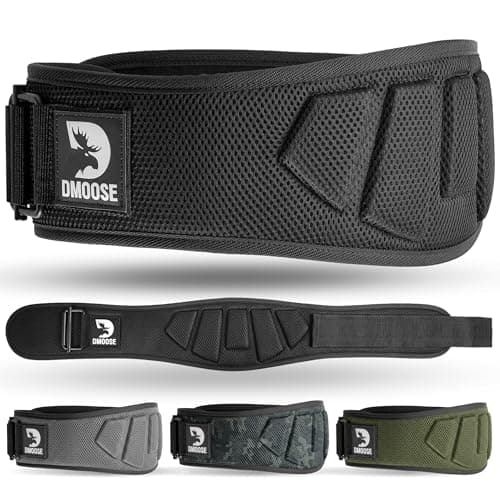
The comfortable everyday option — quicker on and off than leather, and far easier to live with in a mixed session.
Material
Nylon
Width
6" back
Closure
Adjustable buckle
Best for
Mixed sessions, general training
Pros
On and off in seconds, which matters when you belt for one set in five
Comfortable immediately — no break-in period at all
Flexes enough to wear through a whole session without digging in
Cons
Noticeably less rigid than leather at genuinely heavy loads
Velcro-style closures lose grip as they collect dust and chalk
Not permitted in most powerlifting federations
Best for: general training, CrossFit-style sessions, comfort.
Skip this
The budget traps that look cheap and cost you twice. We'd skip these.
Wide-back, narrow-front tapered belts sold as back support
The 6-inch-back, 2-inch-front belts sold in the general fitness aisle are shaped for comfort, not bracing. The front is where your abs push, so a belt that narrows to two inches at the navel gives you less of the thing you bought the belt for. If you want the tapered shape for comfort, fine — just do not expect it to brace like a flat belt.
Belts bought a size up because they look adjustable
Belt sizing runs on your actual waist measurement at the navel, not your trouser size, and every brand runs slightly differently. A belt that only cinches on its last hole cannot be tightened enough to brace against, and one that runs out of holes in the other direction is dead weight. Measure first, then buy.
How to choose (and what to skip)
A belt does not support your back
It gives your abs a rigid surface to push against, which raises intra-abdominal pressure and stiffens the trunk. That is why the front of the belt matters as much as the back, why you tighten it to about a hand-slid-in fit rather than as tight as it will go, and why a belt cannot compensate for a technique problem.
Leather versus nylon
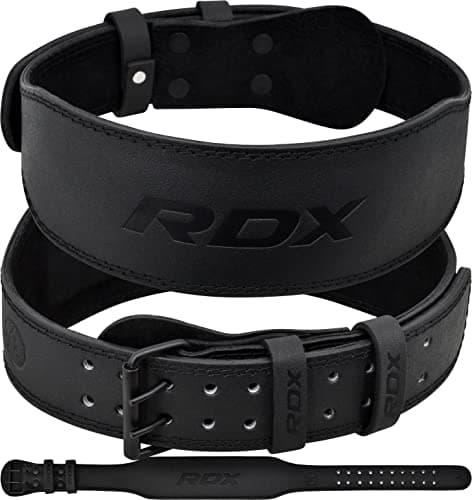
Leather is stiffer, which is what you want at genuinely heavy loads, and it holds shape for years. Nylon is more comfortable, quicker to put on, and easier to wear through a varied session. For a budget garage gym doing squats and deadlifts, buy leather. For general training with a belt going on and off constantly, nylon is the more pleasant tool.
Width: 4 inches is the sweet spot
Four inches all the way round is the standard for a reason. It is wide enough to brace against, and narrow enough not to jam into your ribs at the bottom of a squat or dig into your hips on a deadlift. Taller lifters can carry a wider belt; shorter lifters often find 3 inches more comfortable and lose very little.
Prong, lever or quick-release
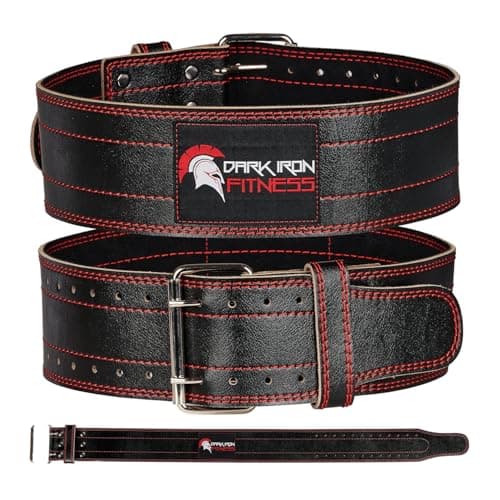
Double prong is the budget default: secure, adjustable in fixed increments, slow to fasten. Levers are fast and repeatable, but changing the setting means unscrewing and moving the lever, and cheap levers are the one component we would not economize on. Nylon quick-release buckles are the fastest and the least rigid. Any of the three is fine for a home gym.
Thickness is where premium belts differ
Serious powerlifting belts are usually 10-13 mm thick. Budget leather belts are commonly thinner, which is why they are more comfortable, break in faster and brace slightly less. For anyone not competing, that is a trade most people should take. If you already squat well over double bodyweight, thickness is the one upgrade worth paying for.
Do you need a belt at all?
Not at first. A belt makes a strong brace stronger; it does not create one. If you are new to squatting and pulling, spend the first months learning to breathe and brace unbelted, because that skill is the foundation the belt amplifies. The usual sensible trigger point for buying one is when your working sets on squats and deadlifts start feeling like the limiting factor is your trunk rather than your legs or your grip.
Once you own one, use it selectively. Most people belt their top sets and leave it off for warm-ups and accessories. That is not a rule, but wearing a belt for everything is a good way to end up with a belt-shaped dependency and no idea how to brace without it.
Where the cheap belt genuinely loses
Three places. First, thickness: budget leather is thinner, so at very heavy loads there is less to push against. Second, closure hardware: cheap levers and cheap Velcro are the components most likely to fail, and a belt that pops mid-rep is worse than no belt. Third, consistency: budget leather varies batch to batch in stiffness and finish, so two identical belts can feel different. None of those matter much at the loads most home lifters use, which is exactly why the cheap belt is a good buy.
If you compete, that calculus changes completely — federations specify width, thickness and construction, and a $30 belt will not pass gear check. That is a competition requirement, not a training one.
Sizing without returning it twice
Measure around your bare waist at navel height, standing relaxed, and buy to that number using the manufacturer's chart rather than your trouser size. Aim to land in the middle of the belt's range so you have holes in both directions. If you are between sizes and buying leather, size down — leather stretches slightly with use, nylon does not.
Frequently asked questions
Is a cheap weightlifting belt as good as an expensive one?+
For home-gym training, close enough that the difference rarely matters. A belt works by giving your abs a rigid surface to brace against, and a $30 leather belt does that. Expensive belts buy more thickness, better hardware, more consistent leather and federation legality for competition. If you are not competing and not squatting far beyond double bodyweight, the cheap belt is the sensible buy.
Leather or nylon for a budget belt?+
Leather if your main lifts are heavy squats and deadlifts, because it is stiffer and holds its shape for years. Nylon if you want comfort, speed on and off, and a belt that is pleasant to wear through a varied session. Nylon supports less at maximal loads; for most general training, that gap is smaller than the comfort gain.
How tight should a lifting belt be?+
Tight enough that you can push your abs out hard into it, loose enough that you can still take a full breath into your belly and slide a flat hand between the belt and your stomach. Cranking it to the last hole restricts the breath you need to brace with, which defeats the purpose.
Does a belt prevent back injuries?+
No, and treating it as a safety device is the mistake to avoid. A belt increases trunk stiffness under load, which can help you lift more with better position. It does nothing for a technique fault, a load you are not ready for, or fatigue, and it is not a substitute for building the back itself.
Prices and availability shown here come from Amazon's live data and change often; we re-verify them regularly. Bar Bumper is an Amazon Associate and earns a commission on qualifying purchases at no extra cost to you. Read our full disclosure.