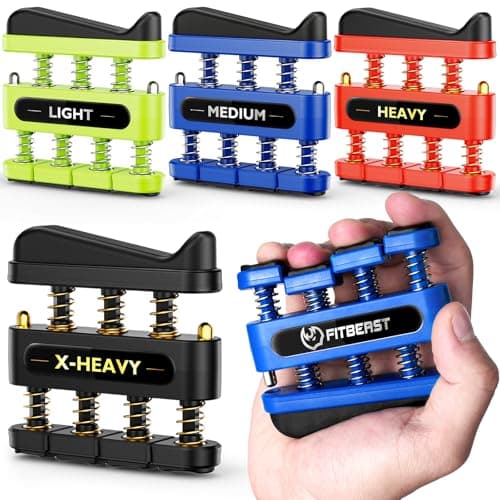
Grip is the limiter on every pull you do. Here's the cheap kit that actually moves it — and the three different kinds of grip you need to train.
Updated July 2026 · By Stephen V.
Grip is the quiet limiter in a home gym: it's why your deadlift stalls before your legs do and why the last two reps of a heavy row disappear. It's also cheap to train — the entire category costs less than a single weight plate. The catch is that grip isn't one quality. Crushing grip (closing your hand), supporting grip (hanging on to something heavy), and pinching and extension work are trained by different tools, and buying three grippers doesn't cover any of the others. Here's the cheap kit worth owning, sorted by what it actually builds.
The short answer
In a hurry? These are the picks we'd buy. Prices are live; tap a card below for the full reasoning.
$15.9919% offPrice as of September 14, 2026·#addisclosure
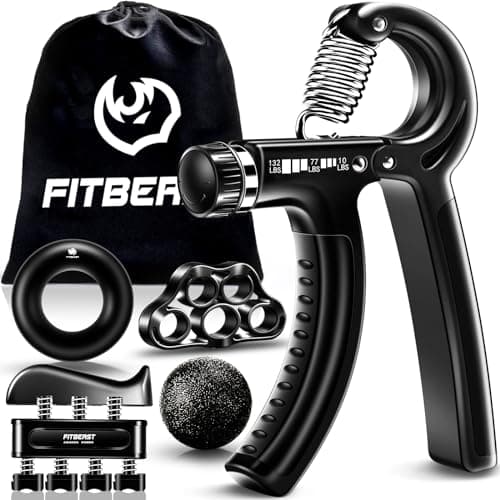
FitBeast Finger Strengthener (4-pack)
Individual-finger work and extension training — the half of hand strength grippers ignore.
Type
Finger exerciser (4-pack)
Trains
Individual fingers, extension
Levels
Multiple resistances
Use
Climbing, music, rehab
Pros
Trains fingers individually, which grippers can't
Multiple resistance levels in the pack
Genuinely useful for climbers and instrument players
Cons
Not a strength tool for heavy lifters
Small parts are easy to lose
Progression steps are coarse
Best for: climbers, musicians and rehab.
Skip this
The budget traps that look cheap and cost you twice. We'd skip these.
Fixed-resistance novelty grippers
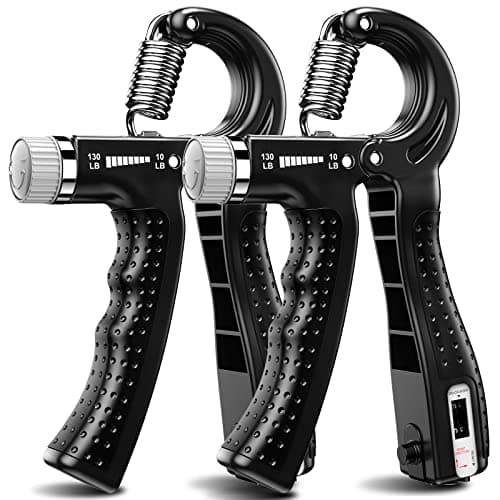
A gripper with one fixed setting is a tool you outgrow in a month and then can't progress on. Adjustable grippers cost the same and keep working for a year. If you're serious about crushing strength, a calibrated gripper set is the next step up, not another fixed unit.
Buying grip gear to replace lifting straps
Grip training and straps solve different problems. Straps let you overload your back today; grip work fixes the limiter over months. If your rows are capped by your hands, buy both — use straps on the heaviest sets and train grip separately.
How to choose (and what to skip)
Know which grip you're training
Crushing grip closes your hand against resistance (grippers). Supporting grip holds a heavy object without opening (thick bars, carries, hangs). Pinching grip holds something between thumb and fingers (plate pinches). Extension is the opposing muscles, which almost nobody trains. A cheap kit that covers three of the four beats an expensive gripper that covers one.
Adjustable beats fixed, every time
Grip strength climbs quickly at first, so a fixed-resistance tool becomes a paperweight fast. Anything with a dial, a screw or a plate hanger keeps being useful. This is the single biggest difference between grip gear that gets used and grip gear that ends up in a drawer.
The cheapest upgrade is on kit you already own
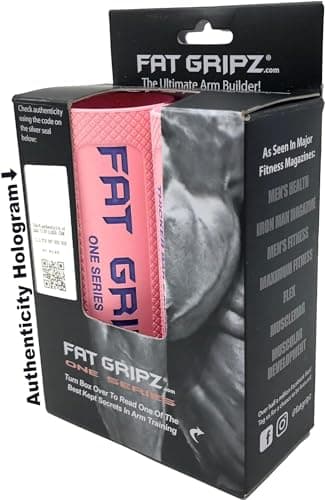
Thick-bar sleeves cost under $30 and turn every dumbbell row, barbell curl and farmer's carry into forearm training. If you already lift, that's more grip stimulus per dollar than any dedicated tool, and it costs zero extra training time.
Train extension or expect angry elbows
Everything in a gym trains the closing muscles and nothing trains the opening ones. That imbalance is a common contributor to elbow tendon pain in lifters and climbers. Rubber extension bands are usually included in the multi-piece kits and take two minutes a session.
Frequency beats intensity
Grip responds to short, frequent work far better than to one brutal session a week. That makes portability a real feature: a gripper on the desk gets used daily, while one in a gym bag in the garage does not.
Why grip is worth training at all
Three reasons, in order of how much they'll matter to you. First, grip is the limiter on pulling: deadlifts, rows, pull-ups and carries all end when your hands open, often well before the target muscles are done. Second, forearm size is one of the few visible markers of training that shows year-round. Third — and best supported — grip strength tracks with general strength and is used clinically as a rough proxy for overall physical capacity.
For a budget home gym there's a fourth, practical reason: grip work is the cheapest possible progression. When the plate you need costs $40 and a gripper costs $9, the grip session is the one you can always afford.
The four grip types, and what trains each
Crushing — closing the hand. Trained by adjustable grippers. This is what most people mean by 'grip strength' and the easiest to measure progress on.
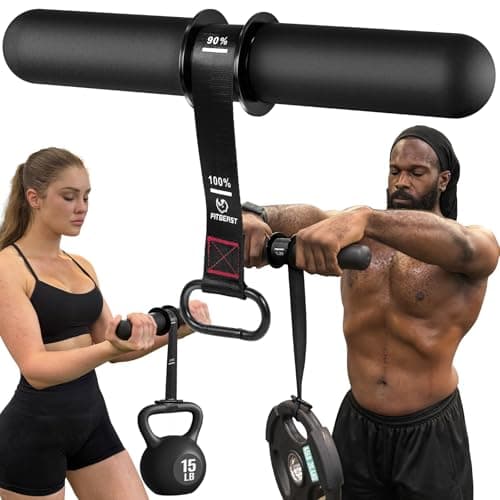
Supporting — holding on. Trained by dead hangs from a pull-up bar, farmer's carries with dumbbells, and thick-bar sleeves. The type that actually saves your deadlift.
Pinching — thumb against fingers. Trained by pinching two smooth plates together, which costs nothing if you own plates.
Extension — opening the hand against resistance. Trained by rubber bands around the fingertips. Prevents the imbalance that irritates elbows.
A ten-minute-a-week grip routine
You don't need a program, you need a habit. Two or three short sessions a week, tacked onto the end of what you already do: three sets on the gripper to a couple of reps short of failure; one or two sets of dead hangs, aiming to add five seconds a week; one wrist-roller run down and up; and two minutes of band extensions. That's it. The single biggest mistake is training grip to complete failure every session — the hands recover slowly and it starts eating into your pulling work.
If you only do one thing, make it dead hangs from a pull-up bar. They're free, they train supporting grip directly, and they double as shoulder decompression after a day at a desk.
When to buy straps instead
Grip gear fixes the limiter over months. Lifting straps remove it today. If your back training is being capped by your hands right now, buy a $12 pair of straps, use them on your heaviest sets only, and train grip separately with the tools above. Using straps on everything is how people end up with a strong back and hands that can't hold a suitcase — but refusing to use them at all means your back never gets loaded properly either.
Chalk: the cheapest grip upgrade there is
Before any gripper, buy chalk. A block of gym chalk costs a few dollars, lasts a year, and does more for your working grip than any tool here — sweat, not weakness, is what makes the bar slip on set three. Liquid chalk is the version that works in a shared or carpeted space, because it doesn't leave dust on everything. In a garage gym, a block and a small bowl is all you need.
Measuring progress without a dynamometer
Grip work is easy to do and easy to do aimlessly. Three cheap ways to know whether it's working: time a dead hang from your pull-up bar once a fortnight and watch the seconds climb; record the gripper setting and reps you can close cleanly; and note the heaviest farmer's carry you can hold for 30 seconds. All three are free, repeatable, and much more useful than a number on a spring gauge.
Expect progress in weeks, not days — the hands respond quickly at first and then slowly, and the biggest gains usually show up as an unexpected extra rep on rows rather than as a dramatic number on any test.
Frequently asked questions
Does grip strength equipment actually work?+
Yes, for the specific quality you train. Adjustable grippers build crushing strength, thick-bar sleeves and hangs build supporting strength, and band extensions balance the hand. What doesn't work is expecting one tool to cover all of it — grip is several separate qualities that transfer only partially between each other.
How often should I train grip?+
Two or three short sessions a week, stopping short of failure. Grip responds better to frequent, submaximal work than to one exhausting session, and hammering it every day will interfere with your pulling exercises rather than help them.
What's the cheapest way to improve grip strength?+
Dead hangs from a pull-up bar you already own, plus farmer's carries with your heaviest dumbbells. Both are free. If you want to spend money, adjustable grippers and thick-bar sleeves are the two highest-value purchases in the category.
Do grip strengtheners help with forearm size?+
Partly. Grippers mostly train the hand and lower forearm flexors, so they add some size. A wrist roller loaded with plates trains the forearm through a much larger range and under progressive load, which is why it has a reputation for building forearms that grippers don't.
Prices and availability shown here come from Amazon's live data and change often; we re-verify them regularly. Bar Bumper is an Amazon Associate and earns a commission on qualifying purchases at no extra cost to you. Read our full disclosure.