Adjustables get the attention, but fixed dumbbells are cheaper per pound, last forever and never jam. Here's where each one wins.
Updated July 2026 · By Stephen V.
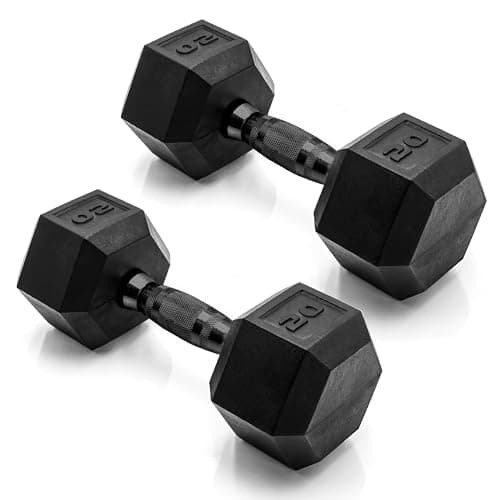
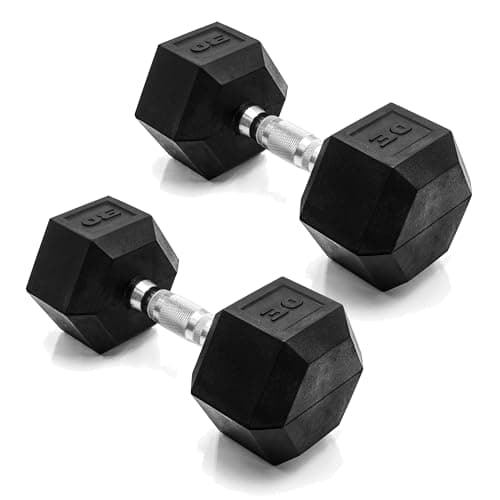
Fixed dumbbells are the unglamorous answer. They don't adjust, they take up a shelf, and they're the cheapest, most durable weight you can buy: rubber-coated hex pairs run roughly $1-2 per pound and have no mechanism to fail, jam or drop a plate. Adjustables win on space and range; fixed pairs win on cost per pound, on grab-and-go convenience, and on lasting three decades. This page ranks the cheap fixed sets we'd buy, and shows the exact point where an adjustable becomes the better purchase instead.
The short answer
In a hurry? These are the picks we'd buy. Prices are live; tap a card below for the full reasoning.
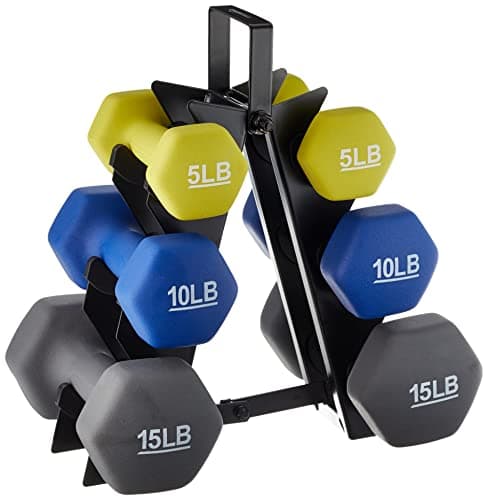
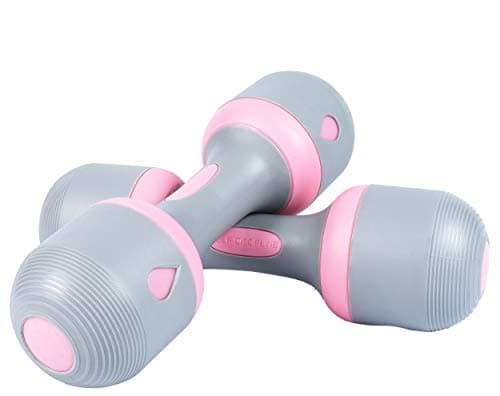
When shelf space is the binding constraint, one adjustable pair replaces the whole rack.
Type
Adjustable, neoprene
Adjust
Plate-based
Footprint
One pair
Best for
Light-to-moderate work
Pros
Replaces several fixed pairs in a fraction of the space
Cheapest entry into adjustable weights
Neoprene finish is apartment-friendly
Cons
Changing weight interrupts a superset
Lower top-end weight than fixed pairs of the same price
Mechanism is a failure point fixed weights don't have
Best for: small rooms.
Skip this
The budget traps that look cheap and cost you twice. We'd skip these.
Vinyl-coated cement or sand-filled dumbbells
The cheapest 'dumbbells' on any marketplace are cement in a plastic shell. They're bulky for their weight, the shells split, and the sizing is inconsistent between pairs. Cast iron under rubber or neoprene costs a little more and lasts effectively forever.
A full 5-50 lb fixed set as your first purchase
It's a tempting picture and a poor use of a first budget. Most beginners use three or four pairs, and the money tied up in the ones you skip would buy a bench or a rack. Start with the pairs you'll actually load, add later.
How to choose (and what to skip)
Cost per pound is the number that matters
Divide the price by the total weight before you compare anything else. Rubber hex pairs typically land near $1-2 per pound, sets with racks a little more, and adjustables higher still. Cost per pound is also the honest way to compare a 20 lb pair against a 100 lb set.
Hex beats round, rubber beats bare iron
Hex ends stop dumbbells rolling across a sloped garage floor and let you use them as push-up handles. Rubber or neoprene coating protects your slab, cuts the noise that annoys everyone else in the house, and stops rust in a damp garage.
Handle diameter and knurling
A knurled steel handle grips far better than smooth chrome or coated plastic when your hands are sweaty. If you have small hands, check the handle diameter — some budget hex dumbbells use a thick handle that makes heavier pairs harder to hold than they should be.
Plan the storage before the purchase
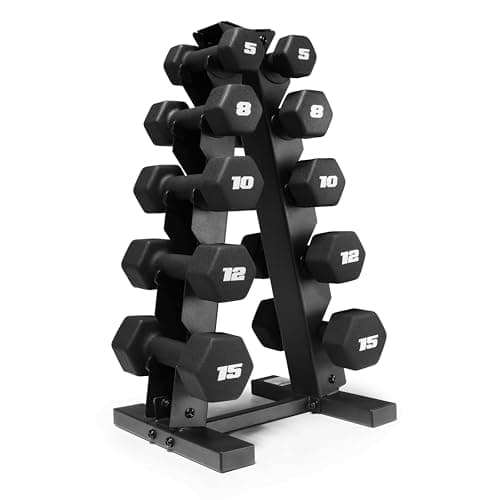
Fixed dumbbells only stay pleasant to own if they have a home. An A-frame rack included in the set is worth real money; otherwise budget for a rack or a sturdy shelf, because dumbbells on the floor become the thing you trip over and stop using.
Buy in pairs, and buy the jump you'll actually use
Progression in dumbbell work happens in 5 lb-per-hand steps at the light end and 10 lb steps higher up. Buying every increment wastes money; buying too few leaves a gap you can't bridge. Two or three well-chosen pairs beat a full set you half-use.
Fixed or adjustable? The break-even is about four pairs
The honest rule: if you want up to about four fixed pairs, buying them individually is cheaper and more durable than any adjustable set. Past that, the adjustables win on both price and floor space. That's why the answer changes with your training, not your budget — a beginner doing full-body circuits needs three pairs, while someone running a dumbbell-focused program wants eight, and should buy an adjustable pair instead.
The second factor is interruption. Fixed dumbbells are instant; adjustables take 5-20 seconds to change, which matters in supersets and drop sets. If that sounds trivial, it isn't — it's the most common reason adjustables end up used at one weight. Our full comparison lives in adjustable vs fixed dumbbells, and the adjustable picks are in cheap adjustable dumbbells.
What weights should you actually buy?
For a first purchase, most people are well served by three pairs rather than a full rack:
A light pair (5-10 lb) — lateral raises, rear delts, rotator-cuff work, warm-ups. You will always use these.
A medium pair (15-25 lb) — curls, presses, goblet squats, rows for most beginners.
A heavy pair (30-50 lb) — rows, lunges, and single-arm work once you've built a base. This is the pair people underestimate and buy twice.
If your budget only stretches to two pairs, skip the light one. A 5 lb pair is the easiest thing to substitute (bands, a plate, a water jug); a heavy pair isn't.
Coatings, and which ones survive a garage
Rubber-coated cast iron is the most durable and the quietest, and it's what we'd buy for a garage or basement. Neoprene is softer, more colorful and easier on hands, but it tears if you drag it across concrete — better suited to a carpeted room. Bare cast iron is cheapest and fine if you keep it dry, but it will surface-rust in a damp garage and it's brutally loud on a slab. Chrome dumbbells look sharp and mark floors like nothing else.
Whatever coating you choose, put something under them. A cheap rubber mat is far less expensive than repairing a cracked slab or a dented floorboard.
Dumbbells alone, or dumbbells plus a barbell?
A pair of dumbbells and a bench covers an enormous amount of training: presses, rows, lunges, curls, carries and most accessory work. What it can't do well is heavy lower-body loading — you'll be limited by grip and by what you can safely get into position long before your legs are challenged. If squats and deadlifts are the goal, dumbbells are the accessory purchase and a barbell and plates are the main event. If they're not, dumbbells plus a bench is a complete and much cheaper gym.
Buying used, and what to check
Fixed dumbbells are close to the perfect used purchase: cast iron doesn't fatigue, and cosmetic rust is a wire brush away from fine. The economics are the catch. Used dumbbell prices tend to sit near new prices because everyone knows they last forever, and shipping 60 lb of iron costs more than the discount — so used only wins on local pickup.
If you do buy used, three checks take a minute: spin each dumbbell to confirm the heads are tight on the handle (a loose head on a welded dumbbell is scrap), look for splits in rubber or neoprene where the coating meets the handle, and weigh one on a bathroom scale if the pairs came from different sets. Budget dumbbells are cast with real tolerance variation, and a mismatched pair is more annoying than a slightly rusty one.
Two things to skip on the used market: cement-filled vinyl weights of any age, because the shells split with time whether or not they've been used, and adjustable sets with a selector mechanism you can't test in person. A used cast-iron hex dumbbell is exactly as good as a new one; a used mechanism is a gamble on how the last owner treated it.
Frequently asked questions
Are cheap dumbbells worth it?+
Fixed rubber-hex dumbbells are one of the safest cheap buys in a home gym: there's no mechanism to fail, the cast iron doesn't wear out, and the price per pound is the lowest you'll find. The cheap products worth avoiding are cement-filled vinyl weights, where the shell splits and the weights are inconsistent.
How many dumbbells do I need for a home gym?+
Three pairs covers most people: light for shoulders and warm-ups, medium for presses and curls, heavy for rows and lunges. Buy the heavy pair before the light one if the budget is tight — light weights are the easiest to improvise.
Are hex dumbbells better than round ones?+
For home use, yes. Hex ends stop them rolling on an uneven floor, they sit flat for push-up and renegade-row variations, and they stack more predictably on a rack. Round dumbbells mainly exist because they're easier to make.
Should I buy a whole dumbbell set or individual pairs?+
Individual pairs, unless the set includes a rack and lands under about $1.50 per pound. Most complete sets include increments you'll rarely touch, and that money buys a bench or a rack instead.
Prices and availability shown here come from Amazon's live data and change often; we re-verify them regularly. Bar Bumper is an Amazon Associate and earns a commission on qualifying purchases at no extra cost to you. Read our full disclosure.