Walking pad vs exercise bike: which one should you buy?
The two most common budget cardio buys, and they suit almost opposite people. One adds activity to your day. The other lets you train hard in a small room.
Updated September 2026 · By Stephen V.
These are the two machines most people end up choosing between at the budget end, and the honest answer is that they are not really competitors. They solve different problems. A walking pad adds activity to a day that does not have much; an exercise bike adds training to a week that needs some. Working out which of those you actually want settles the decision in about a minute.
Both are genuinely good cheap, which is not true of most cardio. Neither has a component that is under-specified at the budget end — the walking pad's small motor is sized for walking, and the bike's magnetic resistance comes from you rather than from anything the manufacturer had to pay for. So this is a fit question, not a quality question.
The short answer
In a hurry? These are the picks we'd buy. Prices are live; tap a card below for the full reasoning.
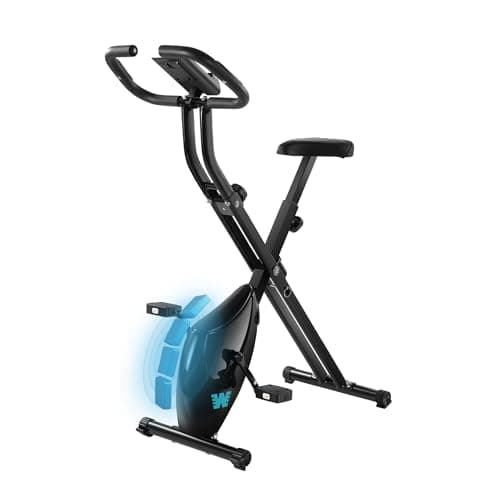
A folding magnetic bike is the honest middle: most of the bike's training benefit, with some of the walking pad's ability to disappear.
Type
Folding upright bike
Resistance
Magnetic
Storage
Folds
Ceiling
Moderate to high
Pros
Folds, so it solves the bike's single biggest drawback in a small home
Magnetic and quiet, like the full-size bikes
Usually cheaper than a comparable non-folding upright
Cons
A folding frame is lighter and moves more under hard, out-of-the-saddle effort
Less adjustable than a dedicated cycling bike, so shared use is a compromise
Folding it every session is a small friction that many people stop bothering with
Best for: wanting a bike without losing the floor space.
Skip this
The budget traps that look cheap and cost you twice. We'd skip these.
Buying a walking pad expecting to run on it
The most common regret in this comparison. Walking pads use small motors matched to walking loads. Running on one is how you find the motor's limit, and that failure is usually terminal. If running is the goal, neither machine on this page is the right answer and a cheap motorized treadmill is not either.
Buying a bike when the real problem is sitting all day
If you sit for nine hours and do nothing else, the fix is more total movement, not one hard session. A bike delivers intensity but does not change the other nine hours; a walking pad does. People in this situation who buy the bike often use it twice a week and stay sedentary the rest of the time.
Assuming the folding bike gets folded
Be honest about this before paying for the feature. A folding bike only saves space if you actually fold it, and a machine that has to be set up is a machine that gets used less. If it will live in the corner unfolded anyway, buy the sturdier non-folding bike instead and get the better ride.
How to choose (and what to skip)
Decide whether you want activity or training
This is the whole decision. Activity means raising the floor of your day — more steps, less sitting, no session required. Training means raising the ceiling — deliberate effort that gets harder over time. A walking pad is the best cheap answer to the first and a poor answer to the second. A bike is the reverse. Most people know which one they need as soon as it is put that way.
Be realistic about whether it stows
A walking pad's biggest advantage is that it disappears, and that only counts if it genuinely will. Measure the gap under the bed or sofa before buying. A bike does not fold at all unless you buy a folding one, so treat its footprint as permanent and make sure the room can lose that corner for good.
Noise decides it in an apartment
Both are quiet by cardio standards, but not equally. A magnetic bike is near-silent in both directions and is the safest choice above someone else's ceiling. A walking pad is quiet as a machine, but footfall is impact, and impact travels through a floor in a way that a mat softens rather than removes. Upstairs, the bike is the lower-risk purchase.
Consider what your knees prefer
Cycling is non-impact and is usually the friendlier option for knees, because your feet never leave the pedals and you control the resistance. Walking is impact, though far gentler than running. If joints are the deciding factor rather than a side concern, start from that constraint instead of from the machine.
Budget for the accessory that makes it work
For the bike that is a better saddle or padded shorts, because saddle discomfort ends more budget cycling than boredom does. For the walking pad it is a desk or laptop stand at the right height, because the whole value proposition is walking while doing something else. Neither costs much and both decide whether the machine keeps getting used.
The case for the walking pad
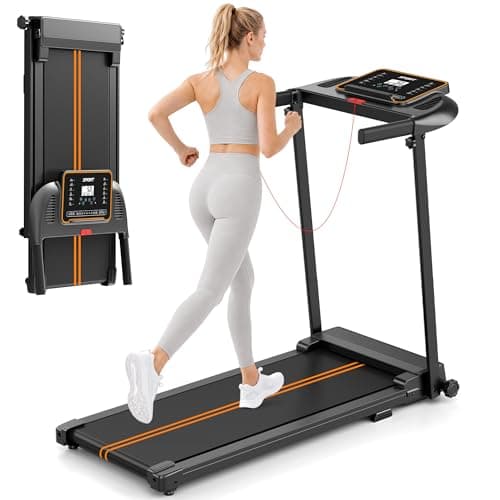
The walking pad wins on the thing that actually predicts results, which is not intensity but frequency. It requires no session, no kit and no shower. It runs under a standing desk while you answer email, and it folds away when you are done. For someone whose real problem is nine sedentary hours a day, that is worth more than a harder workout twice a week.
It is also the lower-risk purchase in a small home. It is the cheaper of the two, it does not permanently claim floor space, and if it turns out not to suit you it is easy to store or sell. The limit is real though: no incline and a low top speed means it cannot get harder once you adapt to it, so it raises your floor without raising your ceiling.
The case for the exercise bike
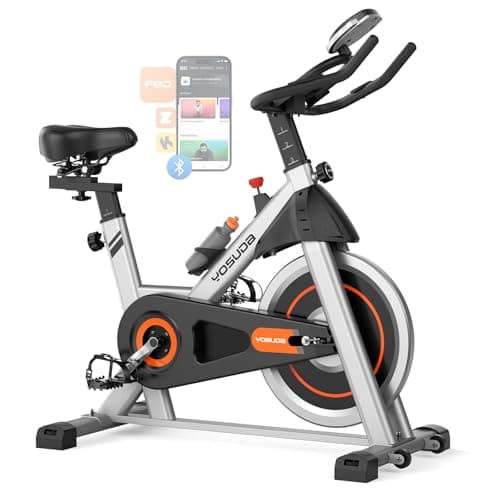
The bike wins on ceiling. Resistance is continuously variable and the effort comes from you, so the machine never becomes the limiting factor — the same cheap bike suits a beginner and someone genuinely fit. It handles a long easy ride and a set of hard intervals equally well, and it is near-silent doing both.
It is also the better apartment machine. Magnetic resistance is contactless, so there is nothing to wear out and no impact going into the floor. The costs are that it never folds, and that riding is a dedicated session rather than something that slots into a working day. If you will not commit to the session, the bike becomes an expensive clothes rail.
Can you have both?
Cheaply, yes, and it is often the right answer. Both machines sit at the affordable end of budget cardio, and together they cover activity and training without much overlap. If the budget only stretches to one now, buy the one that solves your actual constraint and add the other later. If space is the binding limit rather than money, the folding bike above is the honest compromise between them.
Is a walking pad or an exercise bike better for weight loss?+
Neither has a meaningful edge from the machine itself — total energy expenditure across a week is what matters, and that is driven by how often you use it and how hard you work. The bike produces more work per minute; the walking pad produces more total minutes for most people because it fits into a working day. Pick the one you will genuinely use more, because that is the variable that actually differs.
Which is better for a small apartment?+
The walking pad on space, the bike on noise. A pad folds flat and stows under furniture, which a standard bike cannot do. But footfall is impact and impact travels through floors, so above a neighbor the near-silent magnetic bike is the safer choice. If you need both advantages, a folding magnetic bike is the compromise.
Can you run on a walking pad?+
You should not. Walking pads use small motors matched to walking loads, and running is a much higher demand on both the motor and the deck. Doing it occasionally may be survivable; doing it regularly is the standard way these machines fail. If you want to run indoors, that needs a treadmill with real continuous-duty motor headroom, which is a different purchase entirely.
Is a walking pad worth it if I already walk outside?+
Its value is highest when the alternative is not walking at all — bad weather, no daylight, small children asleep upstairs. If you already walk outdoors reliably, the honest answer is that a pad adds less than you would hope, and an exercise bike adds a capability you do not currently have. Buy the thing that fills the gap rather than duplicating what works.
Are cheap exercise bikes durable enough?+
A decent one is. The parts that wear are the resistance pad, if it has one, and the saddle, and both are cheap and replaceable. What decides long-term survival is frame rigidity and the flywheel bearings, which is why frame stability under hard riding is worth more attention than any console feature.
Prices and availability shown here come from Amazon's live data and change often; we re-verify them regularly. Bar Bumper is an Amazon Associate and earns a commission on qualifying purchases at no extra cost to you. Read our full disclosure.