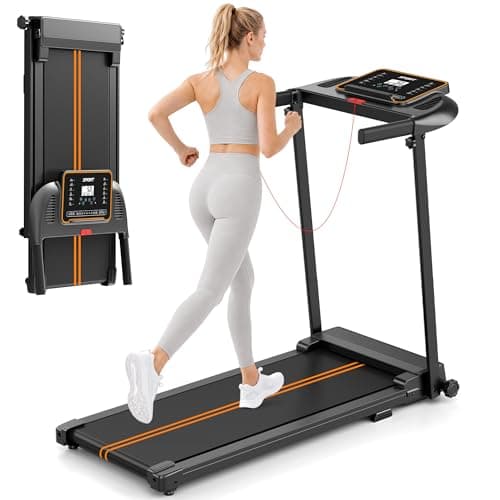
A walking pad is a treadmill with the handrails, the incline and the running removed. For the right person that is a bargain. For the wrong one it is a very flat storage problem.
Updated August 2026 · By Stephen V.
The walking pad is the most-bought new category in home fitness and the one most likely to end up under a bed. It is a slim motorized belt with no handrails, no incline and a top speed built for walking rather than running. It slides under furniture, it is quiet, and it costs a fraction of a treadmill.
Whether it is worth it comes down to one question that has nothing to do with the product: are you trying to walk more, or are you trying to do cardio? Those are different goals and the walking pad only answers one of them well. Here is the honest breakdown.
The short answer
In a hurry? These are the picks we'd buy. Prices are live; tap a card below for the full reasoning.
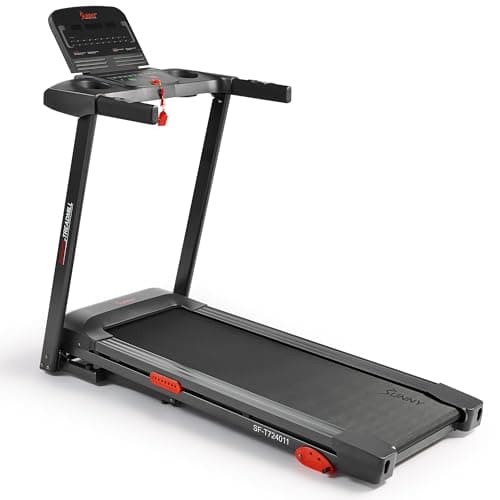
A folding treadmill with incline and a proper deck — the answer if the goal is cardio rather than step count.
Type
Folding treadmill
Incline
Manual incline
Use
Walking and running
Best for
Cardio training
Pros
Handles running, which no walking pad does
Incline is the cheapest way to make walking genuinely hard
Still folds, so it is not a permanent floor commitment
Cons
Far bigger and heavier than a walking pad
Noticeably louder, which matters in an apartment
Costs more, and takes real floor space when in use
Best for: running, incline work, real cardio.
What a walking pad actually is
Strip a treadmill down and remove the handrails, the incline mechanism, the tall console and the high-power motor, and what is left is a walking pad. The deck is shorter, the belt is narrower, the motor is sized for walking speeds, and the whole thing is designed to fold flat and disappear. That list of removals is exactly what makes it cheap, quiet and storable — and exactly what limits it.
The absence of an incline matters more than people expect. On a treadmill, incline is where the difficulty comes from at walking speeds; a brisk walk on a slope is a genuine cardio session, and the same walk on the flat is not. Without it, a walking pad delivers volume rather than intensity.
Who it is genuinely worth it for
Three groups. People with desk jobs who want to convert sitting hours into walking hours: this is the strongest case, because a pad under a standing desk accumulates real daily volume that would otherwise not happen. People in small apartments who want to move on days they cannot get outside. And people who are returning to activity after a long break, where walking is genuinely the right training intensity.
In all three cases the value comes from the same place: the pad gets used because it is frictionless. It is out and running in ten seconds and away again just as fast. A treadmill in a spare room needs a decision; a pad under the desk does not.
Who should buy something else
If your goal is cardiovascular fitness rather than daily movement, a walking pad is an inefficient way to get there. Without incline or running speed, reaching a meaningful training heart rate takes a long time. A budget exercise bike, a rower or a budget elliptical all deliver a harder session in less time and cost in the same broad range.
If you want to run at home, you want a treadmill — a walking pad's deck length, belt width and motor are not built for it, and using one that way is how they break. And if balance is a concern, the lack of handrails is a genuine safety issue rather than a preference.
The things nobody mentions
Deck height. A pad sits a few inches off the floor, which matters if you are using it under a standing desk — your desk needs to go higher than you think, and in a room with a low ceiling that clearance comes off the top. Our low ceiling guide covers the wider version of that.
Noise transmission. Walking pads are quiet in the room and less quiet through a floor, because the impact of each step goes into the deck and then into the structure. In an upstairs apartment, a mat underneath makes a real difference — see quiet cardio for apartments.
And walking speed while working. Most people find that typing accurately caps out at a slow walking pace, well below a brisk walk. That is fine — the point is accumulated volume, not intensity — but it does mean the pad delivers steps rather than training.
The honest verdict
A walking pad is worth it if the alternative is not walking. It converts otherwise sedentary hours into movement, at a low price, in a footprint that fits a flat. That is a genuinely good outcome and it is why the category exists.
It is not worth it as your only piece of cardio equipment if you are training for fitness, and it is not a treadmill. If you are choosing between a walking pad and a treadmill for a home gym rather than a home office, the treadmill is the better cardio buy every time. Our budget treadmill roundup covers that side, and is a cheap treadmill worth it covers where budget treadmills compromise.
Frequently asked questions
Is a walking pad as good as a treadmill?+
No, and it is not trying to be. A walking pad has no incline, no handrails, a shorter deck and a motor sized for walking, which is what makes it cheap, quiet and storable. A treadmill can run and can climb, and incline is where most of a treadmill's training value comes from at walking speeds.
Can you lose weight with a walking pad?+
It can contribute, because accumulated daily walking adds up and a pad makes that walking far more likely to happen. What it cannot do is deliver a high-intensity session quickly, since there is no incline and no running speed. If time-efficient training is the goal, a bike, rower or elliptical does more per session.
Can you run on a walking pad?+
You should not. The deck length, belt width and motor rating are specified for walking, and running on one is both unsafe and the fastest way to shorten its life. If running at home matters to you, buy a treadmill designed for it.
Are walking pads quiet enough for an apartment?+
In the room, yes — they are among the quietest cardio options there is. Through a floor, less so, because each footfall transmits into the structure. A mat underneath makes a substantial difference, and it is worth doing before your downstairs neighbor asks you to.
Prices and availability shown here come from Amazon's live data and change often; we re-verify them regularly. Bar Bumper is an Amazon Associate and earns a commission on qualifying purchases at no extra cost to you. Read our full disclosure.